
戴密斯·哈薩比斯:AlphaGo背后的超強大腦
2016-06-12 21:15:06
新東方英語·中學版 2016年6期
戰勝世界冠軍的AlphaGo自然是非比尋常的,但AlphaGo背后的那個人更加非比尋常。隨著AlphaGo名聲大噪,其背后的超強大腦、DeepMind公司的創始人之一戴密斯·哈薩比斯的履歷開始被人們津津樂道。國際象棋冠軍、少年天才、電子游戲冠軍、學者、創業家……種種炫目頭銜的背后其實是一個聰慧、堅定、努力而又樂于挑戰的人。
Tony Corfe still remembers the time he first saw Demis Hassabis play chess. He was in charge of the primary schools team in Barnet, north London, and looking for new recruits1) when one week a thin six-year-old boy turned up.
"He was brilliant," Corfe says. "He was determined, and he definitely wanted to win. Of all the schools that I had contact with, he was the best player. He was top of the infants2)."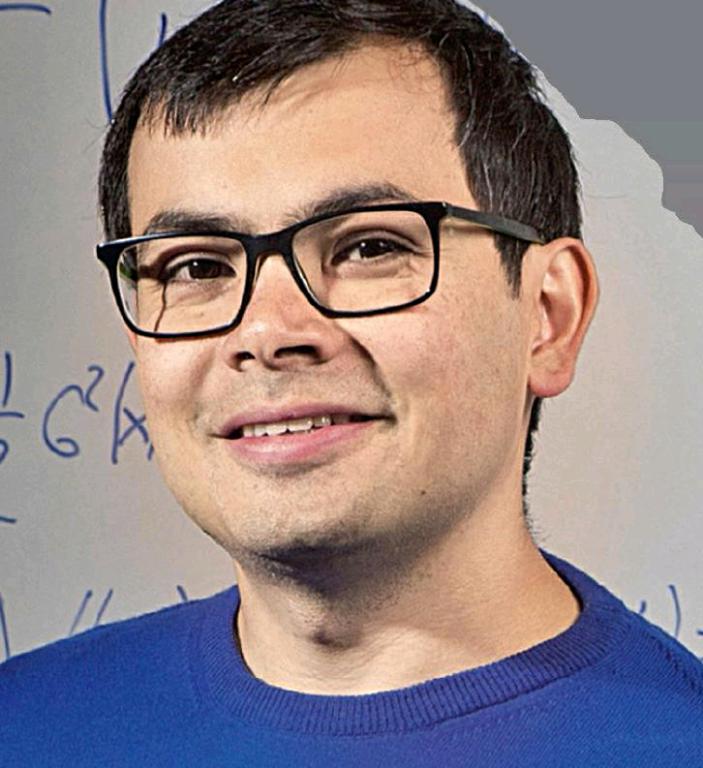
The boy quickly developed into a chess prodigy, winning dozens of tournaments3) before representing England in competitions. By the age of 13, he had reached the standard of chess master.
Now, 39-year-old Hassabis is the founder and chief executive of DeepMind. In his friends' eyes, he is shy but determined. "He is not a showman, and he keeps his head down," says Prof Geraint Rees, director of the Institute of Cognitive Neuroscience at University College London (UCL), where Hassabis studied for a PhD. "Nerdy is the wrong word, but he is definitely of a technical talent. His determination and drive are quite striking."
A glance at his CV4) will prove that. He left school at 16, having taken his A-levels. He spent his gap year5) gaining experience in computer games programming, which was to become his first career, by co-writing Theme Park, one of the most successful games of the Nineties.
After graduating with a double first6) in computer science from Cambridge, he set up his own games business, Elixir Studios, which was responsible for such hits7) as Evil Genius and Republic, the latter being nominated for a BAFTA award.
"He is extraordinary," says Joe McDonagh, who co-founded Elixir with Hassabis. "He was only 21 when we set it up [McDonagh was 25], but he had an incredibly old head on such young shoulders." Although he credits Hassabis's intelligence, McDonagh says his more important ability was to inspire a team. "He truly believes the thing you are working on will change the world and will be remembered for ever. That is incredibly inspiring. Most of us are held back by fear, but Demis takes the attitude that everything is possible."
Nevertheless, Hassabis's path has not been completely smooth. According to friends, he grew frustrated with the more mundane8) aspects of managing Elixir. In 2009, Hassabis returned to academia9), completing his PhD in cognitive neuroscience at UCL. In three years, he wrote a dozen research papers and succeeded in systematically linking memory with imagination for the first time. The journal Science described his achievement as one of the breakthroughs of the year. In 2011, he left academia to co-found a London-based artificial intelligence company, DeepMind Technologies. On 27 January, 2014, DeepMind was acquired by Google for ?400 m.
With DeepMind, Hassabis is trying "to get to the point where machines can learn rather than being taught". This may seem a daunting10) mission, but it is unlikely to faze11) Hassabis. "I'm actually more worried about not taking risks and playing safe [than taking chances]," he once said. "I've always been prepared to jump in at the deep end12) and see if I can swim13) or not."
托尼·科爾夫依然記得第一次看見戴密斯·哈薩比斯下國際象棋時的情景。科爾夫當時負責倫敦北部巴尼特地區的小學國際象棋隊,正在為象棋隊物色新人,有一周,一個身材瘦小的六歲男孩出現了。
“他天資聰穎,”科爾夫說,“意志堅定,而且一心想要奪冠。我接觸了那么多學校,他是其中最好的棋手。他是幼兒組里下得最好的。”
這個男孩很快就成長為一個國際象棋神童,贏得了幾十個錦標賽的冠軍,之后還代表英國參加各種比賽。到13歲時,他已經達到了國際象棋大師的水平。
哈薩比斯現已39歲,是DeepMind公司的創始人兼首席執行官。在朋友眼中,他性格靦腆卻意志堅定。“他不愛出風頭,為人很低調。”杰蘭特·里斯教授說。里斯教授是倫敦大學學院認知神經學研究所的主任,哈薩比斯曾在該研究所讀博。“用書呆子這個詞來形容他不太恰當,但他絕對是個技術天才。他的決斷力和干勁兒相當驚人。”
只消看一眼他的簡歷就可以證明這一點。他16歲就完成了A-level課程(譯注:英國學生的大學入學考試課程),畢業離校。在間隔年里,他與人共同編寫了上世紀90年代最成功的電子游戲之一《主題公園》的程序,從而積累了電子游戲編程方面的經驗,而電子游戲編程在之后成了他人生的第一份事業。
以雙優成績從劍橋大學計算機科學專業畢業后,哈薩比斯創建了自己的電子游戲公司——Elixir工作室。該工作室發布了像《邪惡天才》和《共和國》這樣風靡一時的游戲,后者還曾獲得英國電影和電視藝術學院游戲大獎的提名。
“他異常優秀。”喬·麥克多納說。他同哈薩比斯共同創建了Elixir。“我們創立公司時他才21歲[麥克多納當時25歲],但他年輕的肩膀上卻有一顆成熟得令人難以置信的頭腦。”雖然麥克多納對哈薩比斯的聰明才智大加稱贊,但他說哈薩比斯更重要的能力是可以激勵整個團隊。“他真心相信你現在所做的事將會改變世界并被永遠銘記。這種態度有著令人難以置信的激勵效果。我們大多數人都會因膽怯而退縮,但戴密斯卻始終抱著一切皆有可能的態度。”
然而,哈薩比斯這一路走得并不完全順利。據他的朋友們說,Elixir日常管理中更為世俗的工作就曾讓他屢屢受挫。2009年,哈薩比斯重返學術界,拿到了倫敦大學學院認知神經學專業博士學位。三年時間里,他撰寫了十幾份論文,并首次成功地在記憶與想象之間建立了系統的聯系。《科學》雜志將其成就列為年度科學突破之一。2011年,他離開學術界,和別人共同創辦了總部設在倫敦的人工智能公司DeepMind科技公司,該公司后于2014年1月27日被谷歌以四億英鎊收購。
哈薩比斯創立DeepMind公司,是希望“機器能達到自主學習而不是人為去教的水平”。這看似是一個令人卻步的任務,但卻不可能嚇退哈薩比斯。“實際上,[相比于冒險一試]我更擔心不去冒險、一味求穩,”他曾說,“我隨時準備著去挑戰沒有做過的困難任務,看自己能不能成功。”
