井下節(jié)流氣井的生產(chǎn)動(dòng)態(tài)模擬新方法
2016-07-09 08:46:16安永生曹孟京蘭義飛高
天然氣工業(yè) 2016年4期
關(guān)鍵詞:模型
安永生曹孟京蘭義飛高 月
1.中國(guó)石油大學(xué)石油工程教育部重點(diǎn)實(shí)驗(yàn)室 2.中國(guó)石油長(zhǎng)慶油田公司勘探開(kāi)發(fā)研究院
?
井下節(jié)流氣井的生產(chǎn)動(dòng)態(tài)模擬新方法
安永生1曹孟京1蘭義飛2高月1
1.中國(guó)石油大學(xué)石油工程教育部重點(diǎn)實(shí)驗(yàn)室 2.中國(guó)石油長(zhǎng)慶油田公司勘探開(kāi)發(fā)研究院
安永生等. 井下節(jié)流氣井的生產(chǎn)動(dòng)態(tài)模擬新方法. 天然氣工業(yè), 2016,36(4):55-59.
摘 要為了防止天然氣水合物的生成以及井底積液的產(chǎn)生,鄂爾多斯盆地蘇里格氣田很多氣井在井底都安裝了井下節(jié)流裝置,此類(lèi)氣井的產(chǎn)氣量和井底流壓均隨著生產(chǎn)時(shí)間的增長(zhǎng)而逐漸下降,沒(méi)有一個(gè)絕對(duì)穩(wěn)定階段,故如何利用數(shù)值模擬的方法來(lái)實(shí)現(xiàn)對(duì)安裝井下節(jié)流裝置氣井的動(dòng)態(tài)模擬,是當(dāng)前亟待解決的問(wèn)題。為此,從油藏流動(dòng)模型和井下節(jié)流氣嘴流動(dòng)模型出發(fā),以井底為求解節(jié)點(diǎn),通過(guò)耦合處理,提出了定氣嘴尺寸生產(chǎn)的新理念;建立了氣藏滲流、井下節(jié)流裝置嘴流的計(jì)算模型,推導(dǎo)了新的數(shù)值模擬源匯項(xiàng)方程,實(shí)現(xiàn)了氣藏滲流與井下節(jié)流裝置嘴流的相互耦合。實(shí)例計(jì)算結(jié)果表明:新的數(shù)值模擬方法能夠更加準(zhǔn)確地體現(xiàn)安裝井下節(jié)流裝置氣井的生產(chǎn)動(dòng)態(tài)特征,能有效地應(yīng)用于產(chǎn)能預(yù)測(cè)和穩(wěn)產(chǎn)期評(píng)價(jià),同時(shí)也為類(lèi)似氣井的產(chǎn)能計(jì)算提供了技術(shù)支撐。
關(guān)鍵詞井下節(jié)流 天然氣水合物 氣嘴 生產(chǎn)動(dòng)態(tài) 生產(chǎn)能力 模擬 評(píng)價(jià) 鄂爾多斯盆地 蘇里格氣田
鄂爾多斯盆地蘇里格氣田具有低滲透、低產(chǎn)能的特點(diǎn),氣井在降壓生產(chǎn)中井筒和地面節(jié)流過(guò)程有可能形成天然氣水合物(以下簡(jiǎn)稱(chēng)水合物)。為防止水合物的生成以及井底積液的產(chǎn)生,廣泛采用了安裝井下節(jié)流裝置的方式進(jìn)行生產(chǎn)[1-7]。實(shí)踐證明此類(lèi)氣井的產(chǎn)量和井底流壓均隨著生產(chǎn)時(shí)間增長(zhǎng)而逐漸下降,沒(méi)有一個(gè)絕對(duì)穩(wěn)定階段,而在常規(guī)的數(shù)值模擬計(jì)算過(guò)程中,一般只能采用定產(chǎn)量或者定井底流壓的方式對(duì)氣井的內(nèi)邊界條件進(jìn)行限制[8-13],這顯然與實(shí)際生產(chǎn)動(dòng)態(tài)不符。因此,如何利用數(shù)值模擬方法實(shí)現(xiàn)對(duì)安裝井下節(jié)流裝置氣井的動(dòng)態(tài)模擬,是當(dāng)前亟待解決的問(wèn)題。針對(duì)這一問(wèn)題,筆者通過(guò)將油藏流動(dòng)模型和井下節(jié)流氣嘴流動(dòng)模型相結(jié)合的方法,首次提出了“定氣嘴尺寸生產(chǎn)”的概念,建立了新的安裝井下節(jié)流裝置氣井的數(shù)值模擬方法,并進(jìn)行了實(shí)例計(jì)算分析。
1 安裝井下節(jié)流氣嘴裝置氣井?dāng)?shù)學(xué)模型
1.1 假設(shè)條件
假設(shè)氣藏為封閉外邊界,天然氣單相流動(dòng),整個(gè)流動(dòng)過(guò)程為等溫過(guò)程且遵守達(dá)西定律,井下節(jié)流裝置安裝在氣藏中深位置,忽略偏差因子的變化。
天然氣從氣藏經(jīng)過(guò)滲流流入氣井井底,然后通過(guò)井下節(jié)流氣嘴進(jìn)入采氣井筒[14-18],最后通過(guò)垂直管流流到地面(圖1)。在滲流階段,天然氣流量主要受到生產(chǎn)壓差的影響,井底流壓越低,流量越大;在嘴流階段,天然氣流量主要受到嘴前壓力影響,井底流壓越低,流量越小[19-22]。因此,兩種流動(dòng)存在一定的耦合關(guān)系,既不是定產(chǎn)量生產(chǎn),也不是定井底流壓生產(chǎn),而是一種定氣嘴尺寸生產(chǎn),需要對(duì)其進(jìn)行耦合求解。
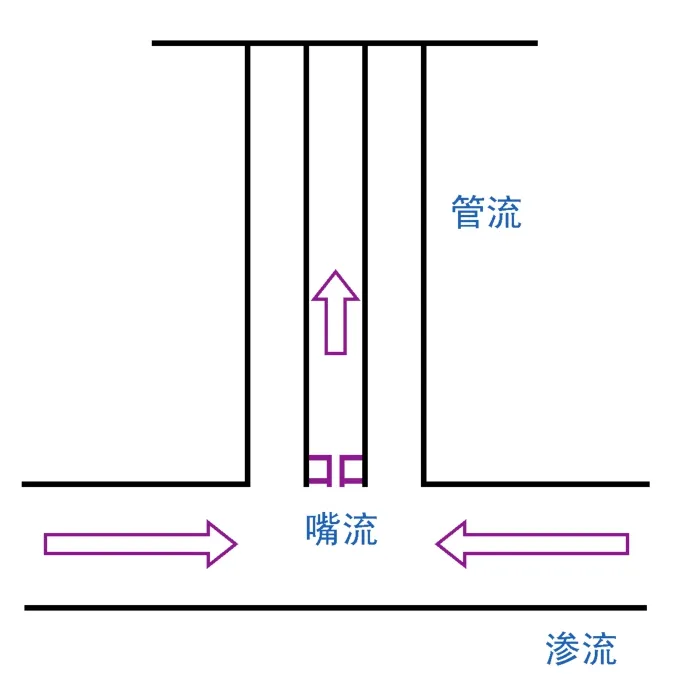
圖1 安裝井下節(jié)流裝置的氣井示意圖
1.2 氣藏流動(dòng)模型
在氣藏?cái)?shù)值模擬中,氣體單相流動(dòng)數(shù)學(xué)模型為:

式中K表示氣藏絕對(duì)滲透率,mD;μg表示氣相黏度,mPa·s;Bg表示氣相體積系數(shù),m3/m3;Φg表示氣相的勢(shì),MPa;Qg表示單位時(shí)間流出的體積流量,m3/s;φ表示油藏孔隙度;t表示生產(chǎn)時(shí)間,s。

式中WI表示氣井井指數(shù);pblock表示氣井所在網(wǎng)格的壓力,MPa;pwf表示井底流壓,MPa。
1.3 井下氣嘴流動(dòng)模型
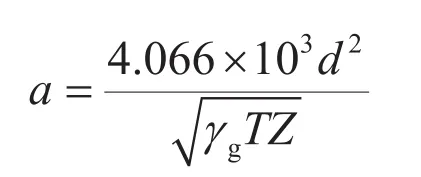
天然氣通過(guò)井下節(jié)流裝置的流動(dòng)近似為可壓縮絕熱流動(dòng),其流動(dòng)狀態(tài)可分為亞臨界流與臨界流[23-25],筆者以臨界流為例介紹其流動(dòng)模型。即

式中d表示節(jié)流氣嘴直徑,mm;γg表示氣體相對(duì)密度;T表示氣藏溫度,K;Z表示天然氣偏差因子,無(wú)因次。
1.4 耦合流動(dòng)模型
通過(guò)聯(lián)立氣藏流動(dòng)模型中的產(chǎn)量方程(2)與井下節(jié)流氣嘴流動(dòng)方程(3),可以得到新的耦合流動(dòng)模型:

其中
2 數(shù)值模擬技術(shù)實(shí)現(xiàn)
2.1 源匯項(xiàng)修改方法
在數(shù)值模擬技術(shù)中,對(duì)源匯項(xiàng)的處理方法如下:

其中

采用新的井下氣嘴流動(dòng)模型后,忽略偏差因子(Z)的變化,系數(shù)a在計(jì)算過(guò)程中可以認(rèn)為是常數(shù),γg、d和WI均表示常數(shù)。μg、Bg、pblock表示壓力的函數(shù),因此在數(shù)值模擬軟件中對(duì)源匯項(xiàng)進(jìn)行重新處理,即

其中

2.2 矩陣修改方法
以1口直井氣井為例,位于3×3×3的油藏網(wǎng)格中,在氣藏最中心的網(wǎng)格(2,2,2)進(jìn)行射孔(圖2)。
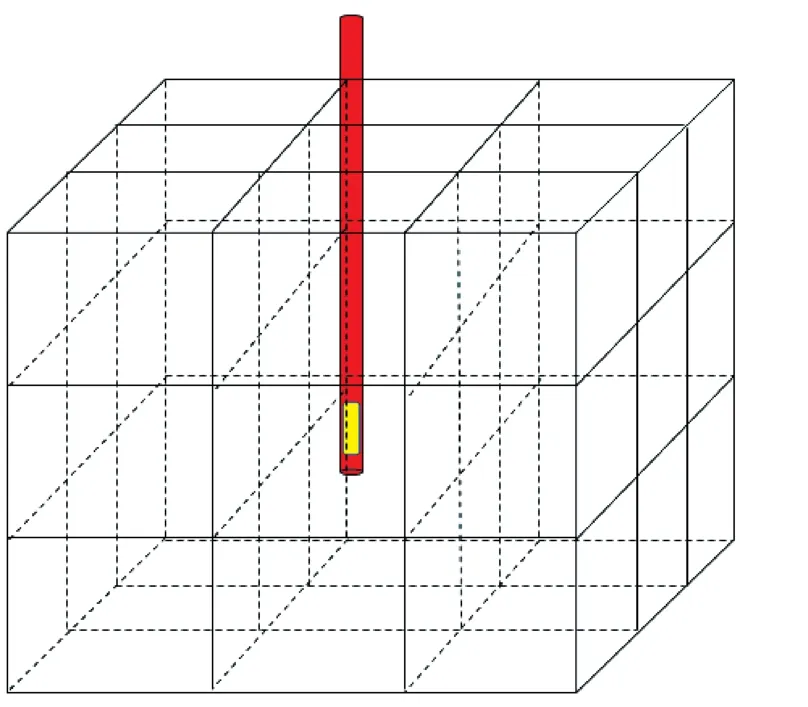
圖2 安裝井下節(jié)流裝置氣井?dāng)?shù)值模擬網(wǎng)格劃分示意圖
在數(shù)值模擬中,主矩陣為七對(duì)角矩陣(圖3),只需要對(duì)射孔位置的源匯項(xiàng)系數(shù)進(jìn)行修改,而無(wú)需對(duì)矩陣結(jié)構(gòu)進(jìn)行任何變化,就可以實(shí)現(xiàn)安裝井下節(jié)流裝置氣井的數(shù)值模擬。

圖3 安裝井下節(jié)流裝置氣井?dāng)?shù)值模擬矩陣示意圖
3 實(shí)例應(yīng)用
安裝井下節(jié)流裝置氣井?dāng)?shù)值模擬技術(shù)可應(yīng)用多個(gè)領(lǐng)域,以氣藏工程中應(yīng)用較為廣泛的氣井穩(wěn)產(chǎn)能力計(jì)算為例,可采用如下步驟進(jìn)行:
1)輸入儲(chǔ)層物性參數(shù)和流體參數(shù)建立數(shù)值模擬模型。
2)根據(jù)歷史生產(chǎn)數(shù)據(jù)和套壓數(shù)據(jù),計(jì)算歷史井底流壓。
3)生產(chǎn)數(shù)據(jù)歷史擬合。
4)計(jì)算不同氣嘴尺寸下氣井的穩(wěn)產(chǎn)能力。
5)結(jié)果輸出與匯總。
以西部某氣田1口氣井(H1井)的穩(wěn)產(chǎn)能力計(jì)算為例。氣井的氣藏壓力為24.6~29.1 MPa,平均為27.8 MPa,平均壓力系數(shù)為0.89,地溫梯度為3.09 ℃/100 m,儲(chǔ)層平均有效孔隙度為9.6%,平均滲透率為0.73 mD,儲(chǔ)層平均厚度為8.1 m。
氣相物性數(shù)據(jù)如表1所示。
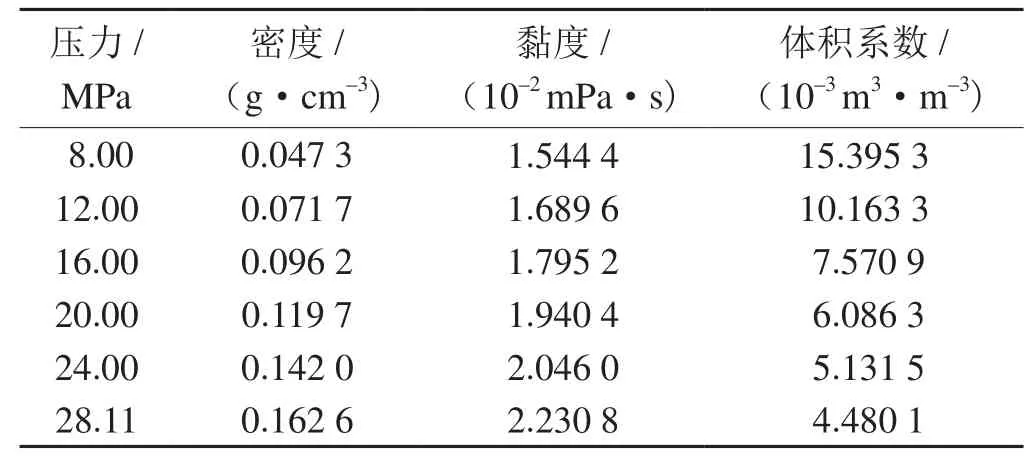
表1 氣藏物性數(shù)據(jù)表
H1井當(dāng)前產(chǎn)氣量為1.491 8×10⁴m3/d,產(chǎn)水量為1.71 m3/d,套壓為16.98 MPa,油壓為1.27 MPa,井底流壓為21.29 MPa。
采用氣嘴直徑分別為3 mm(氣嘴實(shí)際尺寸)、3.2 mm、4.3 mm和5.2 mm 4種情況進(jìn)行計(jì)算。產(chǎn)氣量和井底流壓隨時(shí)間變化曲線分別如圖4和圖5所示。

圖4 H1井產(chǎn)氣量動(dòng)態(tài)曲線圖

圖5 H1井井底流壓動(dòng)態(tài)曲線圖
通過(guò)與生產(chǎn)動(dòng)態(tài)數(shù)據(jù)對(duì)比可以看出,井下節(jié)流氣井的生產(chǎn)動(dòng)態(tài)模擬新方法的計(jì)算結(jié)果更加貼近實(shí)際,在固定井下節(jié)流氣嘴直徑的情況下,隨著生產(chǎn)時(shí)間的增長(zhǎng),產(chǎn)量在下降的同時(shí),井底流壓也同步在下降。
井下節(jié)流氣嘴直徑越大,初期產(chǎn)量越高,井底流壓下降越快,達(dá)到廢棄壓力的時(shí)間也就越短。
根據(jù)動(dòng)態(tài)曲線進(jìn)行算術(shù)平均,所得到的穩(wěn)產(chǎn)能力計(jì)算結(jié)果如表2所示。從表2中可以看出,利用筆者所提出的數(shù)值模擬新技術(shù)計(jì)算結(jié)果更加貼近生產(chǎn)實(shí)際,預(yù)測(cè)結(jié)果也更加具有可參考性。

表2 H1井3年穩(wěn)產(chǎn)能力計(jì)算結(jié)果表
4 結(jié)論
1)分析了氣藏滲流、井下節(jié)流裝置嘴流的特點(diǎn),首次提出了安裝井下節(jié)流裝置氣井屬于“定氣嘴尺寸生產(chǎn)”的概念。
2)建立了氣藏滲流、井下節(jié)流裝置嘴流的計(jì)算模型,推導(dǎo)了新的數(shù)值模擬源匯項(xiàng)方程,實(shí)現(xiàn)了氣藏滲流與井下節(jié)流裝置嘴流的相互耦合。
3)實(shí)例計(jì)算結(jié)果表明,安裝井下節(jié)流裝置氣井?dāng)?shù)值模擬新模型,計(jì)算結(jié)果更加貼近生產(chǎn)實(shí)際,預(yù)測(cè)結(jié)果也更加具有可參考性。
參 考 文 獻(xiàn)
[1] 劉鴻文, 劉德平. 井下油嘴節(jié)流機(jī)理研究及應(yīng)用[J]. 天然氣工業(yè), 1990, 10(5): 57-62. Liu Hongwen, Liu Deping. Throttling mechanics of downhole choke and its application[J]. Natural Gas Industry, 1990, 10(5): 57-62.
[2] 雷群. 井下節(jié)流技術(shù)在長(zhǎng)慶氣田的應(yīng)用[J]. 天然氣工業(yè), 2003, 23(1): 81-83. Lei Qun. Application of downhole choking techniques in Changqing Gas Field[J]. Natural Gas Industry, 2003, 23(1): 81-83.
[3] 韓丹岫, 李相方, 侯光東. 蘇里格氣田井下節(jié)流技術(shù)[J]. 天然氣工業(yè), 2007, 27(12): 116-118. Han Danxiu, Li Xiangfang, Hou Guangdong. Downhole choke technique applied in Sulige Gas Field[J]. Natural Gas Industry, 2007, 27(12): 116-118.
[4] 田冷, 何順利, 舍治成. 蘇里格氣田井下節(jié)流技術(shù)現(xiàn)場(chǎng)應(yīng)用[J].重慶科技學(xué)院學(xué)報(bào): 自然科學(xué)版, 2008, 10(6): 24-26. Tian Leng, He Shunli, She Zhicheng. Analysis and application of the downhole throttle technology in Sulige Gas Field[J]. Journal of Chongqing University of Science and Technology: Natural Sciences Edition, 2008, 10(6): 24-26.
[5] 王熒光, 裴紅, 劉文偉, 郭振, 裴巧卉. 蘇里格氣田井下節(jié)流綜合預(yù)測(cè)[J]. 天然氣工業(yè), 2010, 30(2): 97-101. Wang Yingguang, Pei Hong, Liu Wenwei, Guo Zhen, Pei Qiaohui. An integrated forecast for downhole throttling at the Sulige Gas Field[J]. Natural Gas Industry, 2010, 30(2): 97-101.
[6] 牟春國(guó), 胡子見(jiàn), 王惠, 韓勇. 井下節(jié)流技術(shù)在蘇里格氣田的應(yīng)用[J]. 天然氣勘探與開(kāi)發(fā), 2010, 33(4): 61-65. Mou Chunguo, Hu Zijian, Wang Hui, Han Yong. Application of downhole choke technology to Sulige Gas Field[J]. Natural Gas Exploration and Development, 2010, 33(4): 61-65.
[7] 吳革生, 王效明, 韓東, 徐勇. 井下節(jié)流技術(shù)在長(zhǎng)慶氣田試驗(yàn)研究及應(yīng)用[J]. 天然氣工業(yè), 2005, 25(4): 65-67. Wu Gesheng, Wang Xiaoming, Han Dong, Xu Yong. Experimental investigation and application of downhole throttle technology in Changqing Gas Field[J]. Natural Gas Industry, 2005, 25(4): 65-67.
[8] 楊正明, 張松, 張訓(xùn)華, 黃延章. 氣井壓后穩(wěn)態(tài)產(chǎn)能公式和壓裂數(shù)值模擬研究[J]. 天然氣工業(yè), 2003, 23( 4): 74-76. Yang Zhengming, Zhang Song, Zhang Xunhua, Huang Yanzhang. The steady-state productivity formula after fracturing for gas wells and fracturing numerical simulation[J]. Natural Gas Industry, 2003, 25(4): 74-76.
[9] 王宇, 李穎川, 佘朝毅. 氣井井下節(jié)流動(dòng)態(tài)預(yù)測(cè)[J]. 天然氣工業(yè), 2006, 26(2): 117-119. Wang Yu, Li Yingchuan, She Chaoyi. Prediction of downhole bean performance of gas well[J]. Natural Gas Industry, 2006, 26(2): 117-119.
[10] 蔣代君, 陳次昌, 鐘孚勛, 伍超, 唐剛. 天然氣井下節(jié)流臨界狀態(tài)的判別方法[J]. 天然氣工業(yè), 2006, 26( 9): 115-117. Jiang Daijun, Chen Cichang, Zhong Fuxun, Wu Chao, Tang Gang. Discriminance of the fow state in downhole choke of natural gas wells[J]. Natural Gas Industry, 2006, 26(9): 115-117.
[11] 馬青印, 李才學(xué), 畢建霞, 蘇道敏, 蔣森堡.白廟致密砂巖凝析氣藏水平井優(yōu)化設(shè)計(jì)[J].西南石油大學(xué)學(xué)報(bào): 自然科學(xué)版, 2014, 36(2): 85-90. Ma Qingyin, Li Caixue, Bi Jianxia, Su Daomin, Jiang Senbao. Optimization design of horizontal wells in tight sandstone reservoir in Baimiao condensate gas[J]. Journal of Southwest Petroleum University: Science & Technology Edition, 2014, 36(2): 85-90.
[12] 李志軍, 戚志林, 宿亞仙, 李繼強(qiáng), 嚴(yán)文德.基于水侵預(yù)警的邊水氣藏動(dòng)態(tài)預(yù)測(cè)模型[J].西南石油大學(xué)學(xué)報(bào): 自然科學(xué)版, 2014, 36(3): 87-92. Li Zhijun, Qi Zhilin, Su Yaxian, Li Jiqiang, Yan Wende. Dynamic prediction model of edge-water gas reservoir based on water invasion early warning[J]. Journal of Southwest Petroleum University: Science & Technology Edition, 2014, 36(3): 87-92.
[13] 劉占良, 石萬(wàn)里, 孫振, 成育紅, 唐婧. 人工神經(jīng)網(wǎng)絡(luò)在氣井管理及動(dòng)態(tài)預(yù)測(cè)中的應(yīng)用[J]. 天然氣工業(yè), 2014, 34(11): 62-65. Liu Zhanliang, Shi Wanli, Sun Zhen, Cheng Yuhong, Tang Jing. Application of artifcial neural network to gas well management and performance prediction[J]. Natural Gas Industry, 2014, 34(11): 62-65.
[14] 蔣代君, 陳次昌, 伍超, 唐剛. 井下節(jié)流嘴對(duì)天然氣井簡(jiǎn)流場(chǎng)的影響[J]. 工程熱物理學(xué)報(bào), 2007, 28(4): 595-597. Jiang Daijun, Chen Cichang, Wu Chao, Tang Gang. The infuence of flow field in gas wellbore by downhole-choke[J]. Journal of Engineering Thermophysics, 2007, 28(4): 595-597.
[15] 李蓮明, 譚中國(guó), 喬亞斌, 焦廷奎, 龍運(yùn)輝. 井下節(jié)流技術(shù)在低溫分離工藝中的配套應(yīng)用[J]. 天然氣工業(yè), 2008, 28(11): 96-98. Li Lianming, Tan Zhongguo, Qiao Yabin, Jiao Tingkui, Long Yunhui. Matching application of downhole throttling technology in low temperature separation process[J]. Natural Gas Industry, 2008, 28(11): 96-98.
[16] 張宗林, 郝玉鴻. 榆林氣田井下節(jié)流技術(shù)研究與應(yīng)用[J]. 石油鉆采工藝, 2009, 31(1): 108-112. Zhang Zonglin, Hao Yuhong. Research and application of downhole throttling technology in Yulin Gas Field[J]. Oil Drilling & Production Technology, 2009, 31(1): 108-112.
[17] 劉永輝, 任桂蓉, 薛承文, 關(guān)志全, 胡利平. 凝析氣井井筒壓力計(jì)算[J]. 天然氣工業(yè), 2014, 34(9): 64-69. Liu Yonghui, Ren Guirong, Xue Chengwen, Guan Zhiquan, Hu Liping. Calculation of the wellbore pressure of a condensate gas well[J]. Natural Gas Industry, 2014, 34(9): 64-69.
[18] 張培軍, 程緒彬, 劉榮和, 楊繼輝, 鄭可. 土庫(kù)曼斯坦薩曼杰佩氣田氣井異常積液與對(duì)策[J]. 天然氣工業(yè), 2015, 35(4): 62-67. Zhang Peijun, Cheng Xubin, Liu Ronghe, Yang Jihui, Zheng Ke. Abnormal liquid loading in gas-producing wells of the Samandepe Gasfeld in Turkmenistan and countermeasures[J]. Natural Gas Industry, 2015, 35(4): 62-67.
[19] 陳磊, 郭昭學(xué), 萬(wàn)穎, 蔣維, 劉云, 唐一元, 等. 油氣井井下節(jié)流技術(shù)研究與應(yīng)用[J]. 石油礦場(chǎng)機(jī)械, 2010, 39(2): 22-25. Chen Lei, Guo Zhaoxue, Wan Ying, Jiang Wei, Liu Yun, Tang Yiyuan, et al. Development and application of downhole choke technique for oil and gas well[J]. Oil Field Equipment, 2010, 39(2): 22-25.
[20] 宋中華, 張士誠(chéng), 王騰飛, 沈建新, 段玉明, 劉蘭英. 塔里木油田高壓氣井井下節(jié)流防治水合物技術(shù)[J]. 石油鉆探技術(shù), 2014, 42(2): 91-96. Song Zhonghua, Zhang Shicheng, Wang Tengfei, Shen Jianxin, Duan Yuming, Liu Lanying. Downhole throttling technology for gas hydrate prevention in deep gas wells of Tarim Oilfeld[J]. Petroleum Drilling Techniques, 2014, 42(2): 91-96.
[21] 劉永輝, 張中寶, 陳定朝, 唐治平, 胡世強(qiáng). 高氣液比氣井井下節(jié)流攜液分析[J]. 新疆石油地質(zhì), 2011, 32(5): 495-497. Liu Yonghui, Zhang Zhongbao, Chen Dingchao, Tang Zhiping, Hu Shiqiang. Analysis of liquid-carrying capacity in high GLR gas wells with downhole choke[J]. Xinjiang Petroleum Geology, 2011, 32(5): 495-497.
[22] 朱紅鈞, 林元華, 劉輝, 朱達(dá)江. 天然氣井井下節(jié)流后物性參數(shù)的變化模擬[J]. 石油天然氣學(xué)報(bào), 2010, 32(3): 147-151. Zhu Hongjun, Lin Yuanhua, Liu Hui, Zhu Dajiang. Simulation on physical parameter changes in gas wells after downhole choke[J]. Journal of Oil and Gas Technology, 2010, 32(3): 147-151.
[23] 曾焱, 陳偉, 段永剛, 唐治平. 井下節(jié)流氣井的生產(chǎn)動(dòng)態(tài)預(yù)測(cè)[J]. 西南石油大學(xué)學(xué)報(bào): 自然科學(xué)版, 2009, 31(6): 110-112. Zeng Yan, Chen Wei, Duan Yonggang, Tang Zhiping. Production performance prediction of downhole throttling gas well[J]. Journal of Southwest Petroleum University: Science & Technology Edition , 2009, 31(6): 110-112.
[24] 曾文廣, 任勇, 馬清杰, 姚麗蓉, 勞勝華. 凝析氣井井下節(jié)流流態(tài)變化預(yù)測(cè)研究及應(yīng)用[J]. 石油天然氣學(xué)報(bào), 2013, 35(12): 153-157. Zeng Wenguang, Ren Yong, Ma Qingjie, Yao Lirong, Lao Shenghua. Prediction of fow variation of downhole throttling in condensate gas wells and its application[J]. Journal of Oil and Gas Technology, 2013, 35(12): 153-157.
[25] 葉長(zhǎng)青, 劉建儀, 吳革生, 胡世強(qiáng). 氣井井下雙節(jié)流油嘴設(shè)計(jì)方法[J]. 天然氣工業(yè), 2007, 27(10): 73-74. Ye Changqing, Liu Jianyi, Wu Gesheng, Hu Shiqiang. Design of downhole double-throttling choke for gas wells[J]. Natural Gas Industry, 2007, 27(10): 73-74.
(修改回稿日期 2016-01-11 編 輯 韓曉渝)
A new production behavior simulation method for gas wells equipped with a downhole throttling device
An Yongsheng1, Cao Mengjing1, Lan Yifei2, Gao Yue1
(1. MOE Key Laboratory of Petroleum Engineering, China University of Petroleum, Beijing 102249, China; 2. Exploration and Development Research Institute of PetroChina Changqing Oilfield Company, Xi’an, Shaanxi 710018, China)
NATUR. GAS IND. VOLUME 36, ISSUE 4, pp.55-59, 4/25/2016. (ISSN 1000-0976; In Chinese)
Abstract:In the Sulige Gas Field, Ordos Basin, many gas wells are equipped with a downhole throttling device at the bottom holes to prevent the formation of gas hydrate and the accumulation of downhole liquid. And their production rate and bottomhole flowing pressure decrease gradually with the progress of production without an absolute stable stage. At present, the urgent problem lies in the dynamic simulation on gas wells equipped with a downhole throttling device by means of numerical simulation. In this paper, therefore, based on the reservoir flowing model and downhole throttling choke flowing model, a new concept of gas well production with a constant choke size was presented through coupling treatment with the bottom hole as the solution node. Then, the computation model of gas reservoir seepage and downhole throttling choke flow was built. And finally, the source-sink equation of the new numerical simulation was developed. As a result, gas reservoir seepage and downhole throttling choke flow were coupled with each other. It is shown from case computation results that this novel numerical simulation method can describe more accurately the production behavior of gas wells equipped with a downhole throttling device and can perform productivity prediction and stable production evaluation effectively. And furthermore, it provides a technical support for the productivity calculation of similar gas wells.
Keywords:Downhole throttling; Gas hydrate; Choke; Production behavior; Production capacity; Simulation; Evaluation; Ordos Basin; Sulige Gas Field
DOI:10.3787/j.issn.1000-0976.2016.04.008
基金項(xiàng)目:北京市自然科學(xué)青年基金項(xiàng)目“粗糙壁微型水平井筒氣液兩相流動(dòng)機(jī)理研究”(編號(hào):3154039)、北京市青年英才計(jì)劃項(xiàng)目“超短半徑徑向水平井井筒與油藏耦合模型研究”(編號(hào):YETP0673)。
作者簡(jiǎn)介:安永生,1979年生,助理研究員,博士;主要從事采油采氣工程理論與技術(shù)方面的教學(xué)和研究工作。地址:(102249)北京市昌平區(qū)府學(xué)路18號(hào)。電話:(010)89734339。ORCID:0000-0002-1171-4258。E-mail:an_yongsheng@126.com
猜你喜歡
童話王國(guó)·奇妙邏輯推理(2024年5期)2024-06-19 16:03:38
網(wǎng)絡(luò)安全與數(shù)據(jù)管理(2022年1期)2022-08-29 03:15:20
導(dǎo)航定位學(xué)報(bào)(2022年4期)2022-08-15 08:27:00
中學(xué)生數(shù)理化·中考版(2022年8期)2022-06-14 06:55:24
新世紀(jì)智能(數(shù)學(xué)備考)(2021年9期)2021-11-24 01:14:36
成都醫(yī)學(xué)院學(xué)報(bào)(2021年2期)2021-07-19 08:35:14
新世紀(jì)智能(數(shù)學(xué)備考)(2020年9期)2021-01-04 00:25:14
中學(xué)生數(shù)理化·七年級(jí)數(shù)學(xué)人教版(2020年10期)2020-11-26 08:24:50
數(shù)學(xué)物理學(xué)報(bào)(2020年2期)2020-06-02 11:29:24
光學(xué)精密工程(2016年6期)2016-11-07 09:07:19