
三氧化鉬納米帶/石墨烯納米復合材料的簡單制備及其在超級電容器中的應用
2016-11-28 08:06:55李會華周錦華曾文進馮曉苗
無機化學學報 2016年11期
李會華 宋 娟 周錦華 曾文進 馮曉苗
(有機電子與信息顯示國家重點實驗室培育基地,南京郵電大學信息材料與納米技術研究院;材料科學與工程學院,南京210023)
三氧化鉬納米帶/石墨烯納米復合材料的簡單制備及其在超級電容器中的應用
李會華宋娟周錦華曾文進馮曉苗*
(有機電子與信息顯示國家重點實驗室培育基地,南京郵電大學信息材料與納米技術研究院;材料科學與工程學院,南京210023)
采用簡單的超聲自組裝法制備了石墨烯/三氧化鉬納米帶復合材料。最終產物的組成和結構采用多種不同的手段進行了表征,包括掃描電鏡、透射電鏡、X射線衍射、拉曼光譜以及熱分析等。該復合材料可以用作超級電容器電極材料。電化學實驗結果表明石墨烯/三氧化鉬納米帶復合材料比電容可達到285.5 F·g-1,且在電流密度為1 A·g-1時經過1 000次循環后其電容值能保持初始值的99.5%.
三氧化鉬;石墨烯;納米復合材料;超級電容器
0 Introduction
With the rising demand for energy,electrochemical capacitors(also called supercapacitors),as one of the most potential electrochemical energy-storage systems have attracted special attention.They have high energy density and long cycle stability than that of dielectric capacitors[1-3].According to the charge/discharge mechanisms,supercapacitors can be divided into two categories:electrical double layer capacitors(EDLCs)and pseudocapacitors.The former storage mode which commonly use carbon active materials relies on a surface charge separation process based on the electrolyte interface and electrode,while the latter which use redox-active transition-metal-oxide materials or conductive polymers is a chemical process which relies on redox reactions happening in the electrode materials and electrolyte ions[4].However,the capacitances of the EDLCs are lower than that of pseudocapacitors,but have better cycle stability. Therefore,the separate capacitor cannot meet all the requirements of supercapacitors.In order to improve the capacitive performance of supercapacitors, electrode materials with good conductivity and high active surface area which can store both electrical double layer capacitance and pseudocapacitance are required urgently.
As we know,good electrode materials must have high specific capacitance[5-6].Ruthenium oxide(RuO2)is widely recognized as the best ideal choice.However,it is very expensive that limits its extensive application. Therefore,other low-cost transitionmetal oxides,such as Fe2O3,MnO2,NiOx,CoOx,and MoOxhave been evolved into the available substitute[7-11].Among these candidate materials,molybdenum trioxide(MoO3),which has drawn increasing attention[12].MoO3,as a potential supercapacitive nanomaterial has a lot of advantages, such as high electrochemical activity,low cost,and environmentally friendly nature[13-19].Nevertheless,the application of MoO3has been hindered due to its low inherent electrical conductivity and structuredegradation issues,which results in poor faradaic redox kinetics,low power density,and a lumping capacity damping during cycling at higher scan rates[20-19].Therefore,lots of efforts have been done to improve the electrochemical performance of MoO3as electrode materials by combining with other effective materials to enhance its conductivity,capacitance,and cycling stability[21-23].
Graphene is a one-atom-thick two-dimensional layer of sp2-bonded carbon atoms in a honeycomb crystal lattice,which has attracted great attention due to its high electronic properties at the condensed matter physics research and materials science[24-27].As we know,graphene not only can become one dimensional structure of carbon nanotubes(CNTs),but can be stacked into three-dimensional(3D)graphite. In addition to,it can be wrapped into a spherical fullerene.In a sense,it is ancestor of all graphite materials[27].It has been reported that the combination of graphene and MoO3can enhance the electrical conductivity of MoO3and prevent the exfoliation of active material from the substrate[28].MoO3has been intensively investigated for its application as supercapacitor electrodes,catalysts and biosensors. For example,Zhang et al.reported MoO3nanobelts/ polypyrrole hybrid with a specific capacitance of 129 F·g-1[29].Hu et al.prepared MoO3decorated graphene sheets showing a specific capacitance of 86.3 F·g-1[30].The intertwined porous MoO3-MWCNT nanocomposites have been synthesized by hydrothermal method,delivering a specific capacitance of 210 F·g-1[31].
Herein,we show a simple an ultrasonic selfassembly method to synthesize MoO3nanobelts/ graphene nanocomposites.The graphene shows a typical wrinkled morphology and the MoO3nanobelts are attached onto the surface of graphene.Scanning electron microscopy(SEM),Transmission Electron Microscope(TEM),X-ray diffraction(XRD),Raman spectra,thermogravimetric analysis(TGA)are used to study the structure and composition of MoO3nanobelts/graphene nanocomposites.Furthermore, electrochemical experimental results of MoO3nanobelts/graphene nanocomposites exhibit high specific capacitance and remarkable long-term cycle stability,demonstrating the nanocomposite has potential to act as a high-performance supercapacitor electrode material.
1 Experimental
1.1Materials
Natural graphite flake(about 325 mesh)was purchased from Alfa Aesar Chemical Reagent Co.and used for synthesis of graphene oxide(GO).GO was prepared by acid oxidation of natural graphiteaccording to a Hummers method[32].Ammonium molybdatetetrahydrate((NH4)6Mo7O24·4H2O),poly(diallyldimethyl ammonium)chloride(PDDA,Mr=200 000~350 000,20%in water)were purchased from Aladdin Chemistry Co.Ltd.Acetylene black,poly-tetrafluorene ethylene(PTFE),HNO3and ethanol were purchased from Shanghai Chemical Reagent Co.All reagents and solvents were of analytical grade and used as received without further treatment.
1.2Preparation of the MoO3nanobelts
The MoO3nanobelts were synthesized by hydrothermal method.The detailed steps were as follows:500 mg(NH4)6Mo7O24·4H2O were dispersed in 20 mL deionized water by stirring for 30 min.15 mL HNO3(68%)was dropped into above solution and kept stirring for another 30 min.Then the solution was transferred to a Teflon-lined pressure vessel and the temperature maintained at 180℃for 12 h.After cooling down to room temperature,the resulting suspension was separated by centrifugation and washing with deionized water and ethanol for several times.Then the resulting MoO3nanobelts were dried overnight at 60℃under a vacuum.
1.3Preparation of functionalized graphene
The oxygen-containing functional groups of GO surface were removed by hydrothermal treatment method to obtain graphene.To synthesize graphene dispersion,10 mg of GO was added into 12.5 mL of deionized water under vigorous stirring for 30 min. Then the solution was transferred to a Teflon-lined pressure vessel and heated to 170℃for 20 h.After the suspension was maintained at room temperature, the resulting black suspension was separated by centrifugation and washing with deionized water.Then the as-fabricated precipitate was dispersed in 10 mL of deionized water under ultrasonication for 30 min. Finally,1%of PDDA was dropped and formed a uniform suspension under sonication for 30 min.The surface charge of graphene was changed from negative to positive after functionalization by PDDA.The black homogeneous dispersion was used for the following fabrication of composites.
1.4Preparation of the MoO3nanobelts/Graphene composites
30 mg MoO3nanobelts were dispersed in 5 mL deionized water and 10 mL of functionalized graphene suspension was dropped into above solution under sonication.Under sonication for 30 min,the mixture was centrifuged and washed with deionized water and ethanol for several times.Then the as-fabricated MoO3nanobelts/graphene nanocomposite was dried in a vacuum at 60℃for 12 h.
1.5Preparation of the MoO3nanobelts/Graphene composites modified electrodes
To evaluate the electrochemical performance of MoO3nanobelts/graphene nanocomposite,a threeelectrode configuration was fabricated.The asfabricated MoO3nanobelts/graphene nanocomposite was mixed with acetylene black and PTFE in the weight ratio of 70∶25∶5,and then a few drops of ethanol were added to form a suspension.Then the slurry was pasted onto a graphite electrodes as working electrodes and dried under vacuum at 80℃for 12 h.In addition,saturated calomel and platinum wire electrodes were used as the reference and counter electrodes,respectively.An aqueous solution of 1.0 mol·L-1H2SO4acted as the electrolyte.
1.6Material characterization
The morphologies of the as-synthesized MoO3nanobelts/graphene were examined by Scanning electron microscopy(SEM,S-4800)and Transmission electron microscopy(TEM HT7700-SS).X-ray diffraction(XRD)patterns of samples were detected using a Philip XRD X′PERT PRO diffractometer with Cu Kα X-ray radiation(λ=0.154 nm).Raman spectra of MoO3nanobelts/graphene composites were recorded on DXR spectrometers using the 532 nm laser line and measurements were made in backscattering geometry.Thermogravimetric analysis of MoO3nanobelts /graphene composites were measured under air atmosphere on a TG-60.To test the electrochemical properties of the samples,a typical three-electrode test cell was used for electrochemical measurements on a CHI660C electrochemical working station (Chenhua,Shanghai,China).The electrochemicalbehaviors of the supercapacitor systems were estimated by cyclic voltammograms(CV)and galvanostatic charge-discharge.All of the measurements were manipulated with the potential windows of-0.2~0.8 V in 1 mol·L-1H2SO4electrolyte solution at room temperature.A saturated calomel electrode(SCE)and platinum sheet were used as the reference and counter electrodes,respectively.The composite modified graphite electrode was used as the working electrode.
2 Results and discussion
Sonochemistry method has been successfully proven as a useful technique for generating novel materials with unusual properties[33].The method has been successfully used for the fabrication of metal oxide nanostructures at room temperature,ordinary pressure,and short reaction time[34].In this work,the MoO3nanobelts/graphene was synthesized by an ultrasonic self-assembly method.The MoO3nanobelts were synthesized by hydrothermal method.Along the [001]direction of MoO3,the energy release is greater than that of the other crystal orientations.Hence,the MoO3can grow into nanobelt-like morphology along the[001]direction to the MoO3nanobelts[35-36].After hydrothermal reduction,there were still some oxygen containing functional groups on the surfaces and edges of graphene.The presence of oxygen containing functional groups on the surfaces and edges of graphene nanosheet resulted in its negatively charged nature with the zeta potential of-42.85 mV.The zeta potential of coating graphene with monolayer polymer PDDA is 48.44 mV,showing graphene surface charge can be changed successfully with opposite charged polymer.The negatively charged MoO3nanobelts were uniformly anchored on the surfaces of positively charged graphene through an electrostatic interaction under ultrasonic condition.Theζpotential of composites is-46.47 mV indicating MoO3nanobelts anchored on the surfaces of graphene.As shown in Fig.1A,the SEM image exhibits the combination of uniform MoO3nanobelts and wrinkled graphene,it is obvious that the prepared MoO3nanobelts with widths of 800 nm adsorbed on the surface of graphene.TEM image(Fig.1B)shows further information about the structure and morphology of the MoO3nanobelts/ graphene nanocomposites.During the preparation of samples for SEM and TEM,the samples were treated by a long time of sonication,they were still firmly overlapped and intertwined.This may improve the~electrochemical properties depending on the fast charge transfer through the underlying graphene layers to the MoO3nanobelts.
The X-ray diffraction(XRD)pattern of the MoO3nanobelts/graphene is shown in Fig.2.It can be seen that all the identified peaks can be assigned to MoO3[35,37-38],indicating MoO3nanobelts were formed on the surface of graphene sheets.No characteristic peaks of GO were observed,showing the surfaces of graphene were decorated by MoO3.
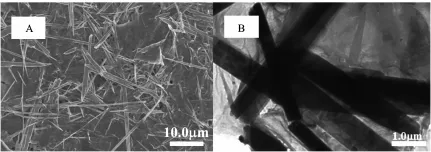
Fig.1 SEM(A)and TEM(B)images of MoO3nanobelts/grapheme
Fig.3gives FTIR spectra of GO and MoO3nanobelts/graphene.The FTIR spectrum of the oxygen-containing functional groups of GO exhibits bands at 1 727,1 403,1 250 and 1 071 cm-1,which associated with the stretching vibrations of C=O, carboxy C-OH,epoxy C-O and alkoxy C-O groups from carbonyl and carboxylic groups,respectively.In addition,the bands at 3 210 and 1 609 cm-1can be correspond to O-H stretching vibrations and bending vibrations of residual water molecules[39].However,inthe composites,the intensities of absorption peaks of oxygen-containing functional groups decreased dramatically showing some of the surface oxygencontaining functional groups had been deoxygenated during the hydrothermal process.In Fig.3,the FTIR spectrum of the composites,three typical peaks at 994,857 and 571 cm-1were attributed to the terminal Mo=O bond of the layered orthorhombic MoO3phase, the doubly coordinated oxygen(Mo2-O)and the bending vibration of the Mo-O-Mo entity[29],respectively.
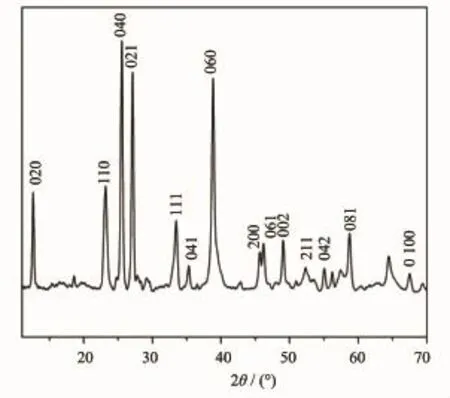
Fig.2 X-ray diffraction pattern of MoO3nanobelts/ graphene

Fig.3 FTIR spectra of GO and MoO3nanobelts/graphene
The Raman spectrum of MoO3nanobelts/ graphene is shown in Fig.4.Two characteristic bands were observed.The peak at 1 345 cm-1(D band)is attributed to the sp3hybridized C-C bonds and peak at 1 599 cm-1(G band)can be assigned to the sp2hybridized C-C bonds in a two-dimensional hexagonal lattice[35].In addition,three sharp characteristic bands of MoO3can be observed from the Raman spectrum of the MoO3nanobelts/graphene composite.The band at 993 cm-1can be attributed to the vibration of Mo-O[40], and the peak at 817 cm-1is assigned to the asymmetrical and symmetrical stretching vibrations of the terminal Mo=O bonds,while the band at 663 cm-1can be assigned to the asymmetrical stretching vibration of OMo-O bonds[35,39].These observations are correspond well to the previously published literature[41].

Fig.4 Raman spectrum of MoO3nanobelts/graphene
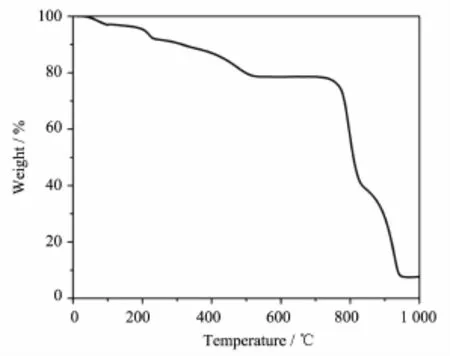
Fig.5 TGA curve of MoO3nanobelts/graphene
Thermogravimetric properties of MoO3nanobelts/ graphene were investigated in air atmosphere and the curves were shown in Fig.5.As shown in Fig.5,the weight losses of MoO3nanobelts/graphene between room temperature and 1 000℃.The mass loss below 230℃can be attributed to the evaporation of the remaining water,solvents,and decomposition of the labile oxygen-containing functional groups[41-42].Theslow mass loss observed from 258 to 520℃for the asprepared MoO3nanobelts/graphene composites,owing to the pyrolysis of some residual oxygen functional groups and oxidation of graphene to carbon dioxide in air atmosphere[43].The most of mass loss above 730℃is attributed to the continuous decomposition of crystalline MoO3nanobelts[38],and the mass percent of MoO3nanobelts in the composites was 71.4%.
Electrochemical measurements were researched with a three-electrode system in 1 mol·L-1H2SO4electrolyte to investigate the electrochemical properties of the MoO3nanobelts/graphene.Fig.6A showed CV curves of the MoO3nanobelts/graphene at different scan rates of 2,5,10,25,50,75,and 100 mV·s-1in 1 mol·L-1H2SO4aqueous solution with potential windows from-0.2 to 0.8 V,respectively.All of the CV curves display a quasi-rectangle shape without obvious redox peaks,indicating an excellent behavior of MoO3nanobelts/graphene with fast chargingdischarging processes.In addition,the shapes of the CV curves are gradually deformed from rectangular with the scan rate is increased from 2 to 100 mV·s-1, proving the presence of pseudocapacitance and doublelayer capacitance[44].The specific capaci-tances(Cs) could be calculated from the CV curves according to the following formula[45]

Where I represents the response current density(A· g-1),V is the potential window(V),v is the potential scan rate(mV·s-1),and m is the mass of the active material in the electrode(g).The mass loading of active materials on the electrodes were about 10 mg in which the graphene content is about 13%according to thermogravimetry results.The specific capacitance of MoO3nanobelts/graphene is 203.1,167.7,151.3, 133.8,120.4,111.7 and 104.6 F·g-1at 2,5,10,25, 50,75 and 100 mV·s-1,respectively.The specific capacitance is decreased with the increase of scan rates mainly due to the increase in ionic resistivity and not easy to close to the surface of the electrode at high charging-discharging rates.
Galvanostatic charge-discharge tests were performed to obtain more information about the capacitive performance of the MoO3nanobelts/ graphene as an electrode material for supercapacitor. As shown in Fig.7A,the galvanostatic chargedischarge curves of MoO3nanobelts/graphene examined at different current densities with the voltage window of-0.2~0.8 V in 1 mol·L-1H2SO4electrolyte.The specific capacitances(Cs)were calculated according to
Cs=(It)/(mV)
where I is the constant discharge current(A),V is the potential window(V),t is the discharge time(s),and m is the mass of the active material in the electrode (g)[46].The corresponding specific capacitance are 285.5, 211.7,195.1,158.9 and 131.3 F·g-1at 0.6,0.8,1.0, 2.0 and 5.0 A·g-1,respectively(Fig.7B).As displayed in Fig.7A,in the process of charging and discharging, the charge curve of MoO3nanobelts/graphene is nearly symmetric to its corresponding discharge counterpartwith a trivial bending,proving high reversibility of the nanocomposites[47].In addition,the high specific capacitance values are achieved at low current densities,mainly because the inner active sites of the electrode can be fully accessed.
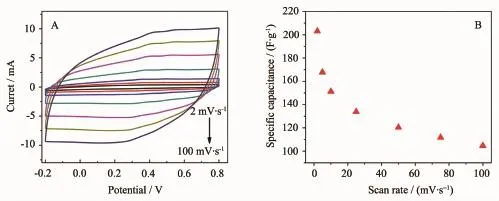
Fig.6(A)CV curves of the MoO3nanobelts/graphene at different scan rates(B)the corresponding specific capacitances of MoO3nanobelts/graphene electrodes at different scan rates
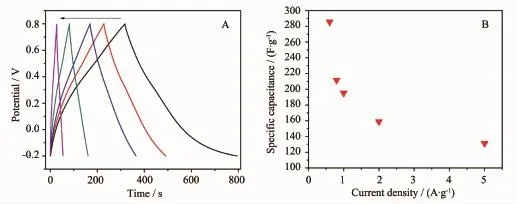
Fig.7(A)Galvanostatic charge-discharge curves at different current densities;(B)Specific capacitances of the MoO3nanobelts/graphene at different current densities
The electrochemical stability is one of the most important factors to estimate the electrochemical behavior of the MoO3nanobelts/graphene based supercapacitor.In further investigated,the cycle stability of the MoO3nanobelts/graphene was studied by a galvanostatic charge-discharge test at a current density of 1.0 A·g-1in 1 mol·L-1H2SO4aqueous solution in a potential range from-0.2 to 0.8 V.As shown in Fig.8,the specific capacitance of the MoO3nanobelts/graphene nearly still remains 99.5%of its initial value after 1 000 cycles at a current density of 1.0 A·g-1,indicating excellent cycling stability and long lifetime.
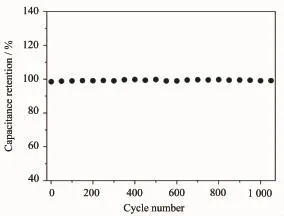
Fig.8 Specific capacitance changes of MoO3nanobelts/ graphene at a constant current density of 1.0 A· g-1as a function of cycle numbers
3 Conclusions
In this work,the high-quality MoO3nanobelts/ graphene nanocomposites were synthesized via a facile ultrasonic self-assembly method.MoO3nanobelts were uniformly anchored on the surfaces of graphene through an electrostatic interaction under ultrasonic condition.Electrochemical experiments show the composite has remarkable specific capacitance as high as 285.5 F·g-1and impressive cycling stability of nearly 99.5%after 1000 cycles at a current density of 1 A·g-1.This advantage indicating the hybrid material promising application as an excellent electrode material for high-performance supercapacitors and this facile one-step method may lead to the development of other metal oxide with graphene materials for stable and high-performance energy storage.
References:
[1]Simon P,Gogotsi Y.Nat.Mater.,2008,7:845-854
[2]Stoller M D,Park S,Zhu Y,et al.Nano Lett.,2008,8:3498-3502
[3]Zhang L L,Zhao X.Chem.Soc.Rev.,2009,38:2520-2531
[4]Liu C,Li F,Ma L P,et al.Adv.Mater.,2010,22:E28-E62
[5]Hu C C,Chang K H,Lin M C,et al.Nano Lett.,2006,6: 2690-2695
[6]Huang H S,Chang K H,Suzuki N,et al.Small,2013,9: 2520-2526
[7]Jena A,Munichandraiah N,Shivashankar S.J.Power Sources,2013,237:156-166
[8]Li Z,Mi Y,Liu X,et al.J.Mater.Chem.,2011,21:14706-14711
[9]Liao M,Liu Y,Hu Z,et al.J.Alloys Compd.,2013,562:106-110
[10]Nasibi M,Golozar M A,Rashed G.Mater.Lett.,2013,91: 323-325
[11]Wang F,Xiao S,Hou Y,etal.RSC Adv.,2013,3:13059-13084
[12]Tang W,Liu L,Zhu Y,et al.Energy Environ.Sci.,2012,5: 6909-6913
[13]Brezesinski T,Wang J,Tolbert S H,et al.Nat.Mater., 2010,9:146-151
[14]Liu X,Shi S,Xiong Q,et al.ACS Appl.Mater.Interfaces, 2013,5:8790-8795
[15]Mai L Q,Hu B,Chen W,et al.Adv.Mater.,2007,19:3712-3716
[16]Mendoza-Sanchez B,Brousse T,Ramirez-Castro C,et al. Electrochim.Acta,2013,91:253-260
[17]Murugan A V,Viswanath A K,Gopinath C S,et al.J.Appl. Phys.,2006,100:074319-074315
[18]Shakir I,Shahid M,Yang H W,et al.Electrochim.Acta, 2010,56:376-380
[19]Zhou L,Yang L,Yuan P,et al.J.Phys.Chem.C,2010,114: 21868-21872
[20]Huang L,Wei Q,Sun R,et al.Front.Energy Res.,2014,2: 43
[21]Mahmood Q,Yun H J,Kim W S,et al.J.Power Sources, 2013,235:187-192
[22]Shakir I,Shahid M,Cherevko S,et al.Electrochim.Acta, 2011,58:76-80
[23]Shakir I,Shahid M,Nadeem M,et al.Electrochim.Acta, 2012,72:134-137
[24]Neto A C,Guinea F,Peres N,et al.Rev.Mod.Phys.,2009, 81:109
[25]Novoselov K,Geim A K,Morozov S,et al.Nature,2005, 438:197-200
[26]Novoselov K S,Geim A K,Morozov S,et al.Science, 2004,306:666-669
[27]Schedin F,Geim A,Morozov S,et al.Nat.Mater.,2007,6: 652-655
[28]Li H,Zhou H.Chem.Commun.,2012,48:1201-1217
[29]Zhang X,Zeng X,Yang M,et al.ACS Appl.Mater.Interfaces, 2014,6:1125-1130
[30]Hu J,Ramadan A,Luo F,et al.J.Mater.Chem.,2011,21: 15009
[31]Shakir I,Shahid M,Cherevko S,et al.Electrochim.Acta, 2011,58:76-80
[32]Feng X M,Li R M,Ma Y W,et al.Adv.Funct.Mater., 2011,21:2989-2996
[33]Kumar R V,Diamant Y,Gedanken A.Chem.Mater.,2000, 12:2301-2305
[34]Zolfaghari A,Ataherian F,Ghaemi M,et al.Electrochim. Acta,2007,52:2806-2814
[35]Dong Y,Li S,Xu H,et al.Phys.Chem.Chem.Phys.,2013, 15:17165-17170
[36]Zang J,Ryu S,Pugno N,et al.Nat.Mater.,2013,12:321-325
[37]Mondal A K,Su D,Wang Y,et al.J.Alloys Compd.,2014, 582:522-527
[38]Yang X,Ding H,Zhang D,et al.Cryst.Res.Technol., 2011,46:1195-1201
[39]Xia X,Hao Q,Lei W,et al.J.Mater.Chem.,2012,22: 8314-8320
[40]Klionsky D J,Abdalla F C,Abeliovich H,et al.Autophagy, 2012,8:445-544
[41]Chang J,Jin M,Yao F,et al.Adv.Funct.Mater.,2013,23: 5074-5083
[42]Choi E Y,Han T H,Hong J,et al.J.Mater.Chem., 2010,20:1907-1912
[43]Hu J,Ramadan A,Luo F,et al.J.Mater.Chem.,2011,21: 15009-15014
[44]Xiong G,Hembram K,Reifenberger R,et al.J.Power Sources, 2013,227:254-259
[45]Zhu J,He J.ACS Appl.Mater.Interfaces,2012,4:1770-1776
[46]Wang Y T,Lu A H,Zhang H L,et al.J.Phys.Chem.C, 2011,115:5413-5421
[47]Chen S,Zhu J,Wang X.ACS Nano,2010,4:6212-6218
MoO3Nanobelts/Graphene Nanocomposites:Facile Synthesis and Application in Supercapacitors
LI Hui-Hua SONG Juan ZHOU Jin-Hua ZENG Wen-Jin FENG Xiao-Miao*
(Key Laboratory for Organic Electronics&Information Displays,Institute of Advanced Materials and School of Materials Science &Engineering,Nanjing University of Posts&Telecommunications,Nanjing 210023,China)
The MoO3nanobelts/graphene nanocomposites were prepared via facile ultrasonic self-assembly method. The composition and structure of the final product were characterized by various characterization techniques including scanning electron microscopy(SEM),transmission electron microscopy(TEM),X-ray diffraction(XRD), Raman spectra,and thermogravimetric analysis(TGA).The composites could be used as supercapacitive electrode materials.The electrochemical results showed that the specific capacitance of MoO3nanobelts/graphene nanocomposite was 285.5 F·g-1.Furthermore,the prepared supercapacitor nearly remained 99.5%of its initial capacitive value after 1 000 cycles at a current density of 1 A·g-1showing its excellent cycle stibiliy.
MoO3;graphene;nanocomposites;supercapacitor
O614.61+2
A
1001-4861(2016)11-2041-08
10.11862/CJIC.2016.252
2016-05-23。收修改稿日期:2016-08-17。
教育部創新團隊(No.IRT1148)、國家自然科學基金(No.20905038,61504066)、江蘇省自然科學基金(No.BK20141424,BK20150838)、東南大學生物電子學國家重點實驗室(No.I2015010)和江蘇省六大人才高峰(No.2015-JY-015)資助。
*通信聯系人。E-mail:iamxmfeng@njupt.edu.cn,Tel:025-85866396
猜你喜歡
中國自動識別技術(2023年6期)2024-01-12 08:13:22
環球時報(2022-08-16)2022-08-16 15:13:53
建材發展導向(2021年14期)2021-08-23 00:56:16
紡織科技進展(2021年3期)2021-06-09 08:07:14
纖維復合材料(2018年3期)2018-04-25 07:22:58
電子測試(2017年11期)2017-12-15 08:57:13
金色年華(2017年8期)2017-06-21 09:35:27
中國化肥信息(2016年41期)2016-05-17 04:25:59
新高考·英語進階(高二高三)(2016年1期)2016-03-05 09:05:18
連環畫報(2015年8期)2015-12-04 11:29:31
