倫敦市中心改變世界的研究所 - 弗朗西斯?克里克研究所 英國倫敦
2017-06-05 15:23:20
世界建筑導報 2017年2期
倫敦市中心改變世界的研究所 - 弗朗西斯?克里克研究所 英國倫敦
World-Changing Research, The Francis Crick Institute London, UK
項目規模:91 000平方米
HOK服務:建筑設計、室內設計、實驗室規劃、場地規劃
完工日期:2016年
英國綠色建筑評估體系認證 - 預期BREEAM優異等級
“一所為克里克研究所量身定做的、代表世界最先進技術水平的新家最近落成……。我們今后在這里所取得的研究成果將進一步鞏固我們在倫敦、英國以至全球科學界的領先地位。”——保羅?納斯爵士,弗朗西斯?克里克研究所總監
弗朗西斯?克里克研究所由六家世界領先的醫學研究和學術機構共同投資創辦,是歐洲規模最大的生物醫學和成果轉化研究中心之一。
研究所以發現DNA結構的著名科學家弗朗西斯?克里克( Francis Crick)命名,研究所的成立本身也是一次世界一流機構間協同合作的里程碑。參與的機構包括英國最大的三所生物醫學研究基金--英國醫學研究理事會、英國癌癥研究中心、英國惠康基金會;以及三所頂尖大學--英國倫敦大學學院、倫敦大學帝國學院和倫敦大學國王學院。
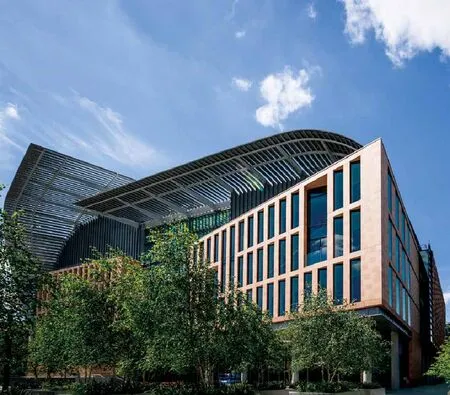
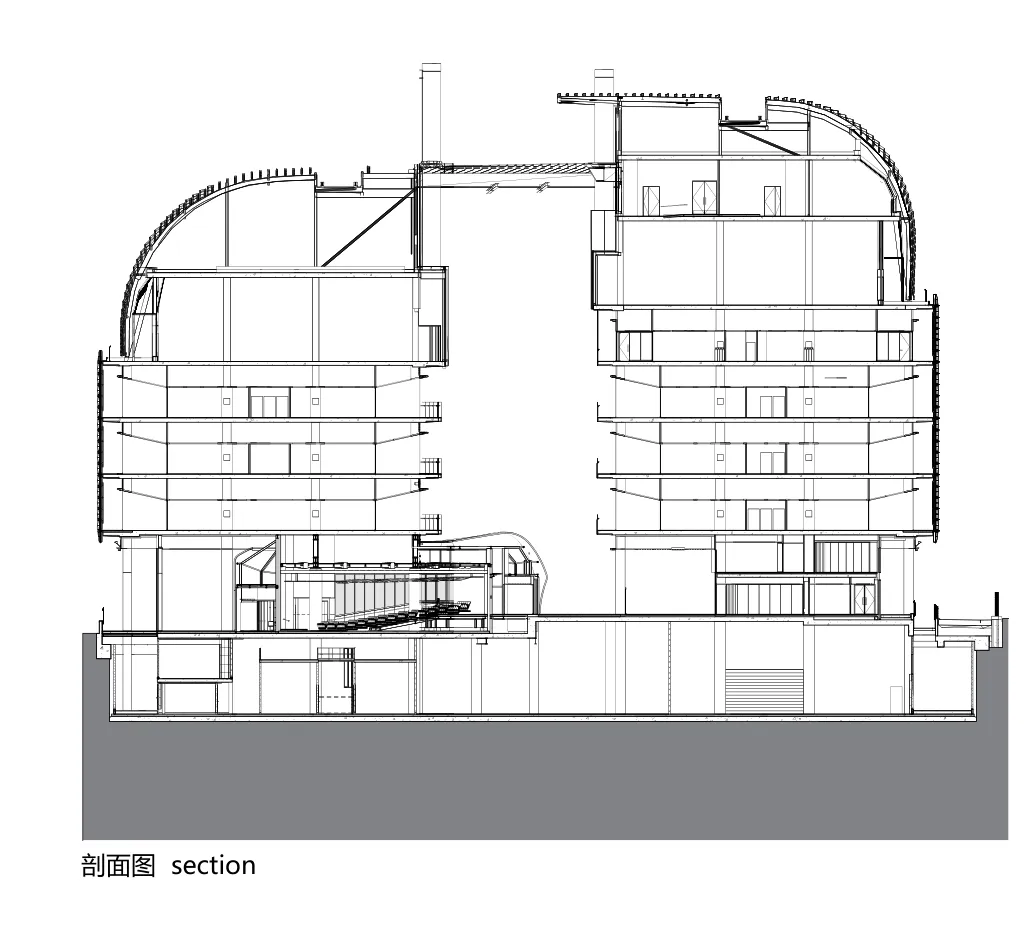
研究所座落在倫敦市中心,占據一整個城市街區,外墻由鋼、玻璃和陶板幕墻覆蓋,與周邊的歷史建筑形成鮮明的形象對比和視覺沖擊。大型懸挑式飄窗以及挑高的玻璃中庭緩減了建筑物對街道的影響,同時將自然光引進辦公場所和公共區域。為減少建筑物的外露體量,三分之一的建筑結構設置在地底,而弧形的穹頂將大樓柔和的一面呈現于社區。
設計鼓勵生物學家、化學家、物理學家、工程師、計算機科學家和數學家等跨專業研究人員在不同學科之間的協作和互動。
大樓通過兩個中庭被劃分成四個實驗室區域,中庭在建筑物中心交叉形成一個可以供休憩或非正式合作的匯聚空間,內部有一個大的中央樓梯以及為整個樓層服務的禮賓區。人行步道和非正式會議空間縱橫交錯在兩個前庭之間,將不同實驗室區域相連。
中庭不僅將自然光引進實驗室和其他空間,同時提升了人們在大樓內和不同樓層間的可視性。玻璃外墻讓人們能清楚看見實驗室內部,提高了實驗的透明度和開放性。除了個別區域需要設置封閉空間外 ,所有實驗室區域均采用開放式設計以鼓勵互動交流。
實驗室區域的設計靈活機動,以滿足隨著研究的進展不斷變化的空間需求。一個高度集中的服務分配系統可以確保在不同的空間組合模式下,可以像組裝零部件一樣隨時將預先確定的空間模塊放進主服務體系中,以滿足不同使用的需求。
HOK于2008年獲邀成為該項目的建筑師和主設計師,負責為項目提供整體建筑設計、室內設計和景觀設計。PLP 作為幕墻顧問于2010年加入項目,與HOK一起共同打造大樓獨特而引人注目的建筑形態。
Size: 91 000 sq. m.
Service: Architecture, Interior Design, Laboratory Planning, Site Planning
Opening: 2016
BREEAM CERTIFICATION - BREEAM Excellent anticipated
“A fantastic state-of-the-art new home for the Crick has been built ... it will be the discoveries we make here that cement our place in London, in the UK and at the forefront of science worldwide.” - Sir Paul Nurse, Director of Francis Crick Institute
Six leading medical research and educational organizations have partnered to form the Francis Crick Institute, one of Europe’s largest biomedical and translational research centers. Named after Francis Crick, the scientist who helped discover the structure of DNA, the institute is a landmark partnership between the UK’s three largest funders of biomedical research—the Medical Research Council, Cancer Research UK and the Wellcome Trust—and three of its leading universities: University College London, Imperial College London and King’s College London.
Located in central London, the steel, glass and terra-cotta clad building occupies a full city block and creates strong architectural links to historic local buildings. Large cantilevered bay windows and tall glass atria reduce the building’s impact at street level and maintain natural light in workspaces and public areas. To reduce its visible mass, one-third of the structure is below ground, while the curved roof presents a gentle face to the community.
The design encourages collaboration and interaction among multidisciplinary researchers including biologists, chemists, physicists, engineers, computer scientists and mathematicians. The facility is divided into four “laboratory neighborhoods” connected by two atria. The atria cross at the center of the building to create a hub with break areas, informal collaboration space, a large central stair and a concierge serving the entire foor. Walkways and informal meeting areas crisscross the main atrium and connect neighborhoods.
The atria bring daylight into all of the labs and other spaces while enhancing the visibility of people throughout the building and between foors. Glass walls allow for views into labs, promoting transparency and openness. Unless specific functions require closed walls, lab neighborhoods are open to encourage interaction.
Designed with flexibility, lab neighborhoods can support rapid reconfiguration as research programs change. A centralized service distribution system enables a kit-of-parts approach in which predetermined components can be plugged into service spines in different combinations.
In 2008, HOK was appointed architect and ?lead designer responsible for the project’s overall design concept, interior design and landscape architecture. PLP was selected in 2010 to collaborate with HOK in shaping the building’s distinctive form and striking architectural expression.

猜你喜歡
瘋狂英語·初中天地(2021年6期)2021-08-06 09:03:24
中國外匯(2019年21期)2019-05-21 03:04:06
電子競技(2019年22期)2019-03-07 05:17:26
電子競技(2019年21期)2019-02-24 06:55:52
電子競技(2019年20期)2019-02-24 06:55:35
電子競技(2019年19期)2019-01-16 05:36:09
少年漫畫(藝術創想)(2018年12期)2018-04-04 05:29:10
中國科技博覽(2016年2期)2016-04-25 20:32:39
小學生導刊(2016年34期)2016-04-11 00:49:44
電測與儀表(2015年5期)2015-04-09 11:30:52