艾森施塔特國會文化中心奧地利艾森施塔特
2017-09-07 03:47:35RolandHalbe
世界建筑導報 2017年4期
艾森施塔特國會文化中心奧地利艾森施塔特
Eisenstadt Culture Congress Center Eisenstadt, Austria
業主:BELIG Beteiligungs- und Liegenschafts GmbH
日期:設計啟動:2009年/施工:2010年/
竣工:2012年11月
面積:基地面積:3 296.24 平方米/建筑面積:9 534.41平方米/占地面積:2 992.35平方米
建筑容積:57 997.77立方米
攝影:Roland Halbe
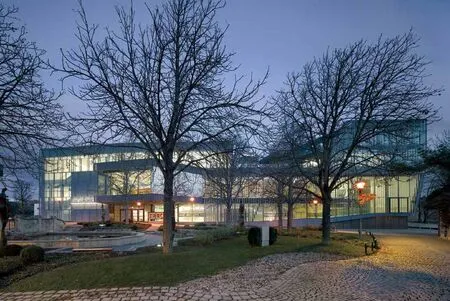
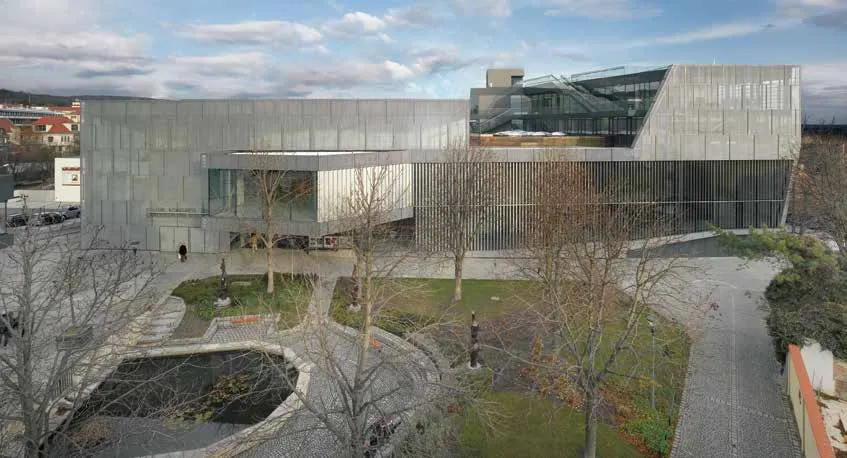
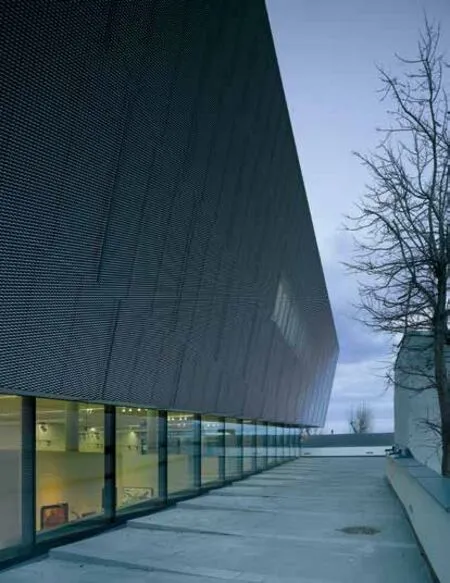
該項目外部設計的構想是通過在向外延伸的大型要素外部一層看似多孔的外觀,使整個項目看起來是一座完整的建筑。這種設計方法強調了建筑群的緊湊性,但也考慮了與外部的城市環境的協調配合。
這個建筑的主要部分集中在與現有建筑物的直接相連處,然后逐級平緩通向涉及區域東南部的小型結構物。
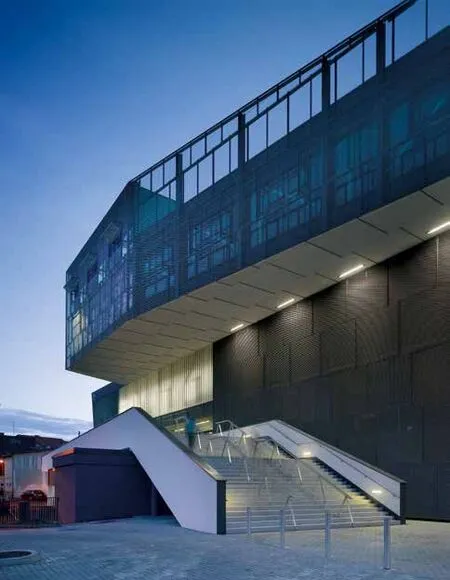
讓整個建筑分布在不同高度,可以在這個城市的這個地區提供充足的光線和空氣,同時也使這座建筑整體上與Osterwiese的宏觀布局協調一致。該區域作為Festival大樓的東側前院,其設計在城市規劃中得到了新的闡釋,地位也得到了提升。連續的透明外墻讓這座建筑看起來不像“后院”,透明外墻上甚至可以投影,這樣,Osterwiese甚至可以說成了一座露天禮堂或夏季室外電影院或其他類似的場所。無論如何,這座建筑的設計初衷是把這座城市新延伸的地區與Schubertplatz 之間(以及相鄰的步行區)之間很好地連接起來。在(Osterwiese)變電站前面造一道樓梯,是市議會改善城市交通的一項舉措。這個項目不但有效地實現了城市規劃的整體升級,而且也為在Osterwiese上停放汽車的游客提供了前往文化中心的良好通道。
沿著幾乎整個通道行人都可以看到Landesgalerie,景觀本身也提升了這條通道的魅力。
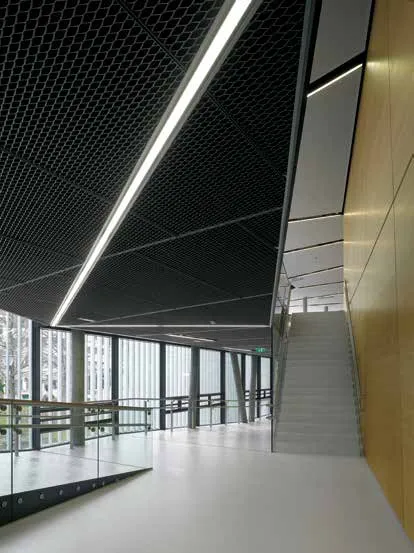
在面向Schubertplatz的一側,這座建筑物最高的兩層形成了一個U形庭院般的區域,與鄰近建筑物圍繞庭院形的縮進式開放空間分組布局的風格遙相呼應。沿著走廊中的盥洗室和門廳以及上一層新酒吧所在區域和相鄰的會議室、售票處及書店,可以看到這些依次排列的凹凸有致的構建物。
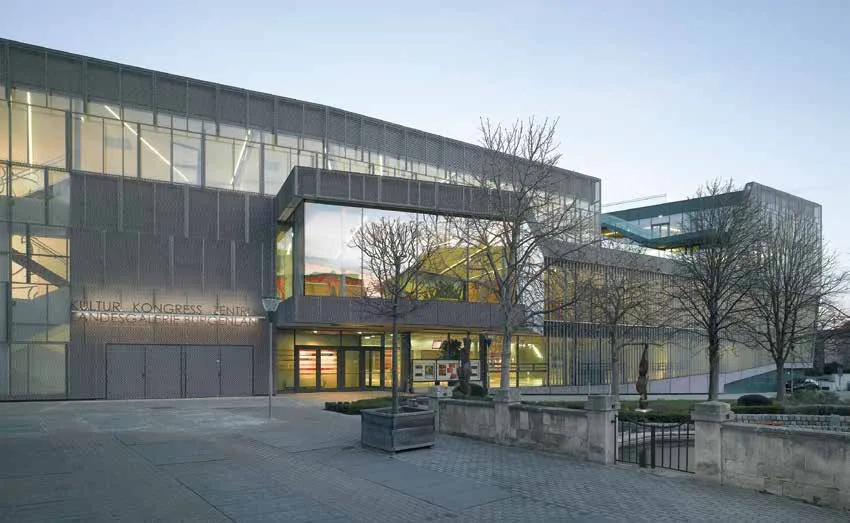
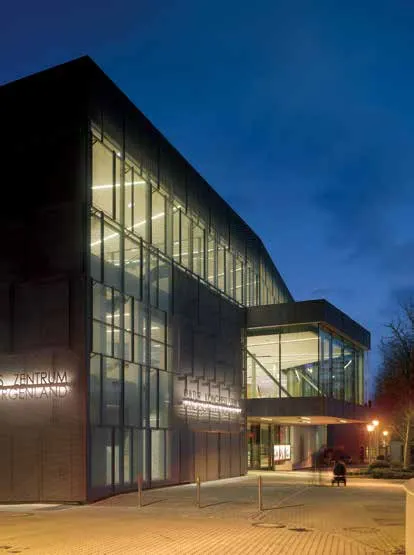
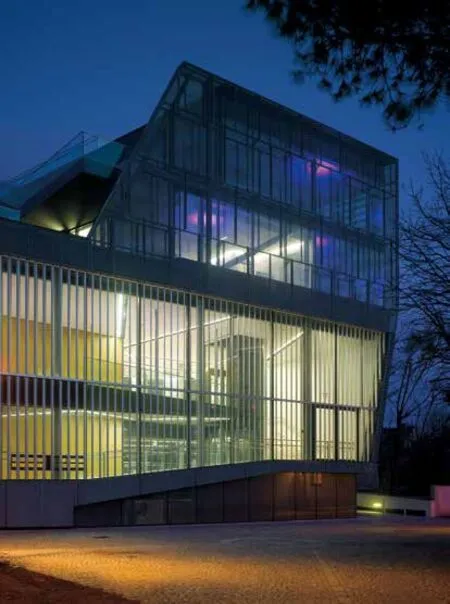
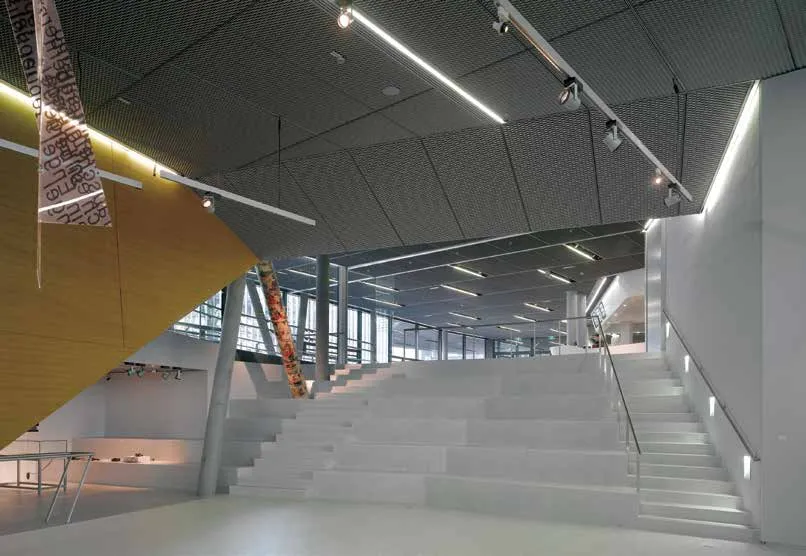
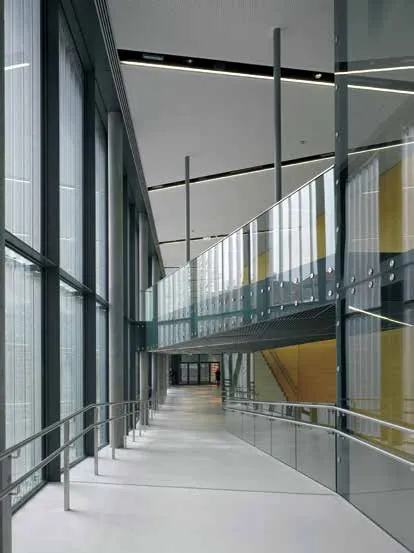
在較低的樓層,垂直百葉窗外新安裝的連續玻璃構成了Schubertplatz 的主立面,清晰地表明了這座建筑的公用設施的特點。外部的公共廣場與建筑物內部有機聯動,使這座建筑成為公共空間的組成部分,在外面的游客看來,門廳也是一個社交場所。
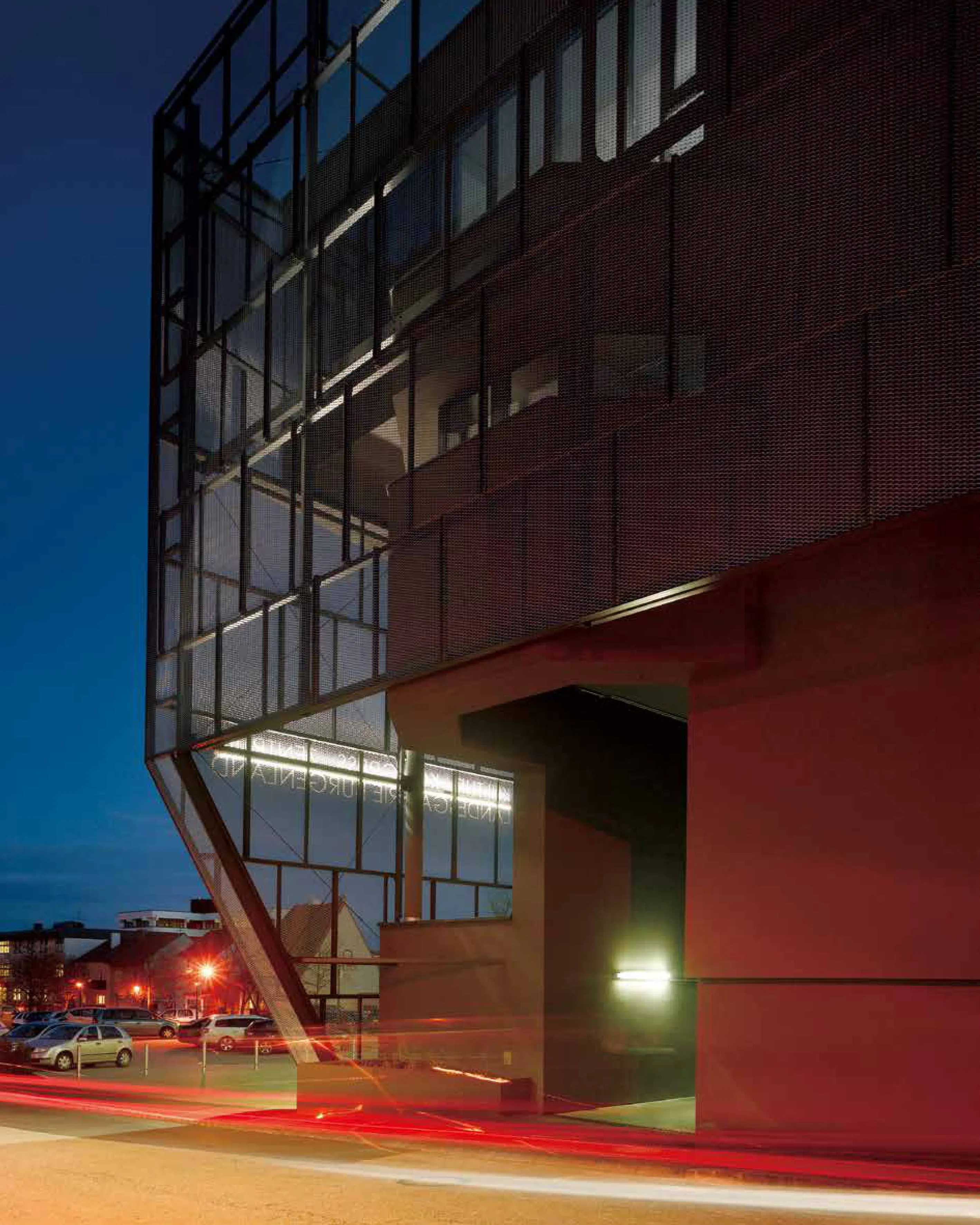
與這個立面相連的一座新建造的天橋利用了多個現有的空間和結構連接處,與現有的的天橋相對,這座新建的漏斗形的天橋不斷變寬,伸向上一層的門廳。
在這座天橋下方,新建的與現有布局相似的主入口設計為一個有棚頂的區域。
Client: BELIG Beteiligungs- und Liegenschafts GmbH
Year: Start of Design: 2009 / Start of Construction: Nov. 2010 /
Completion: Nov 2012
Areas: Site Area: 3,296.24 m2/ Floor Area: 9,534.41 m2/
Built-up Area: 2,992.35 m2
Cubage: 57,997.77 m3
Photos: Roland Halbe
This project is conceived so that externally it looks like a single entity. This is achieved by wrapping a perforated envelope around large parts of the extension and the existing building. Although this design approach strongly emphasizes the compactness of the building complex, clear references to the urban context are also made.
The major part of the volume is concentrated at the immediate point of connection to the existing building and then steps down to the small-scale structure to the south-east of the planning area.
Stepping the building in height helps to provide sufficient light and air for this area of the city, while the mass of the building responds more to the larger scale of the Osterwiese. The new significance of this area as the eastern forecourt of the Festival Building is both articulated and upgraded in urban planning terms. By cladding it with a continuous transparent screen the building at this point no longer seems like a “rear”. It is even conceivable that projections could be shown here, which would give the Osterwiese the function of an open-air auditorium, a summer outdoor cinema or similar.
Whatever the case, it is planned to create a good connection between the new extension and Schubertplatz (and consequently to the pedestrian zone). Building a front stairs over the transformer station (on the Osterwiese site) is intended as the town council’s contribution to improving urban circulation. Here an efficient symbiosis is achieved between an overall upgrading in urban planning terms and providing a good connection to the Cultural Centre for visitors who park their cars on the Osterwiese.
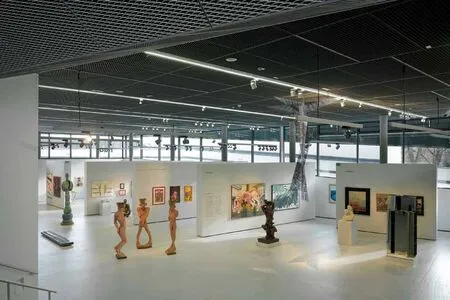
The attractiveness of this route is further heightened by the fact that, along almost its entire length, pedestrians have a view inside the Landesgalerie (where the nature of exhibits makes this possible).
On the side facing onto Schubertplatz a U-shaped, courtyard-like area cut out of the two uppermost floors of the building responds to the way the neighbouring buildings are grouped in clusters around courtyard-shaped, indented open spaces. These indentations, transformed in scale, are encountered again in the foyer in the layout of the cloakrooms, the ticket desks and the bookshop, and on the upper floor in the area of the new bar and the adjoining seminar rooms.
On the lower floors the new continuous glass front of vertical louvers forms the main fa?ade onto Schubertplatz, where the public character of the building is clearly expressed. The public square flows inside the building, making it a part of public space, while for viewers from outside the foyer is revealed as a place of social interaction.
A new bridge developed out of this fa?ade uses the existing spatial and structural linking points. In contrast to the existing bridge the new element widens like a funnel towards the foyer on the upper floor. Below this bridge, analogous to the existing fabric, the new main entrance is conceived in the form of a covered area.
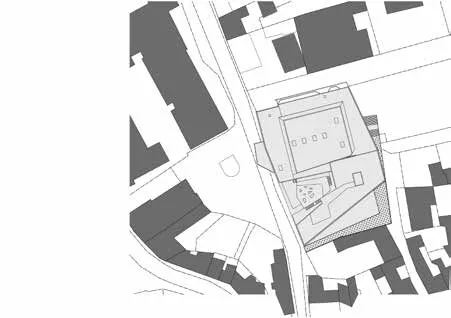
總圖 master plan
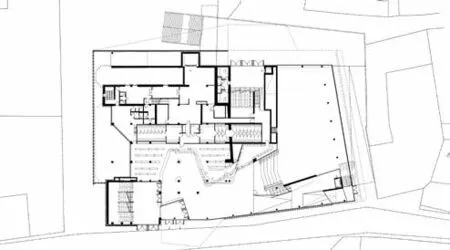
首層平面圖 ground floor plan
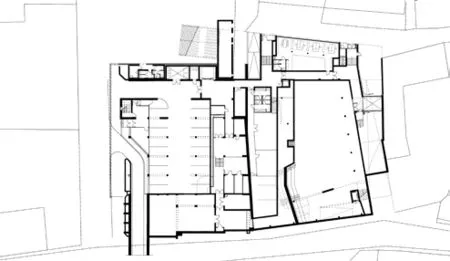
地下層平面圖 level-1 floor plan
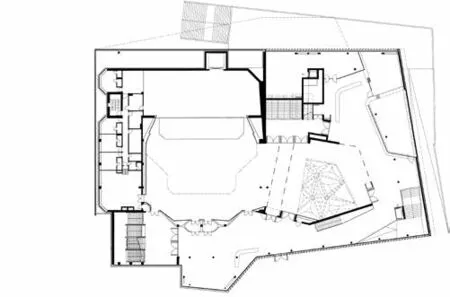
二層平面圖 level+1 floor plan
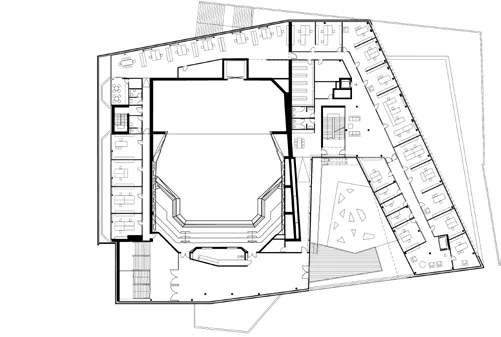
三層平面圖 level+2 floor plan
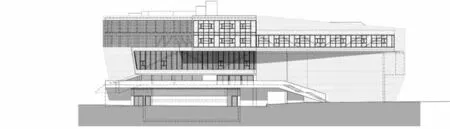
東立面圖 east elevation
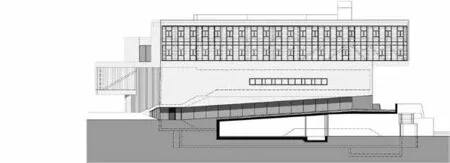
南立面圖 south elevation
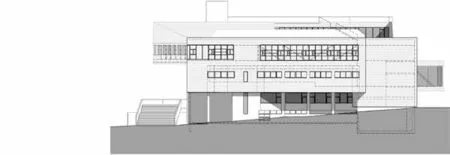
北立面圖 north elevation
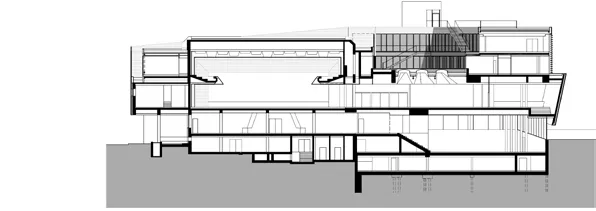
縱剖面圖 longitudinal section
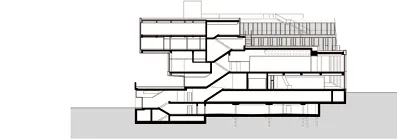
橫面圖B cross section B
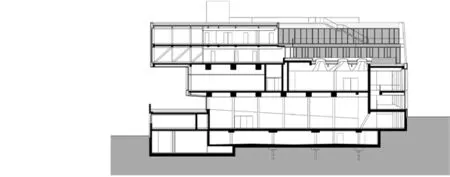
橫面圖C cross section C
猜你喜歡
北方建筑(2021年6期)2021-12-31 03:03:54
文苑(2020年10期)2020-11-07 03:15:36
現代裝飾(2020年6期)2020-06-22 08:43:12
藝術啟蒙(2018年7期)2018-08-23 09:14:18
海峽姐妹(2017年7期)2017-07-31 19:08:17
Coco薇(2017年5期)2017-06-05 08:53:16
中國科技博覽(2016年2期)2016-04-25 20:32:39
小學生導刊(2016年34期)2016-04-11 00:49:44
少兒科學周刊·兒童版(2015年6期)2015-11-24 03:49:38
電測與儀表(2015年5期)2015-04-09 11:30:52