
HOW TO SPOT FAKE NEWS
2017-09-21 07:44:39
漢語世界 2017年5期
HOW TO SPOT FAKE NEWS
BY SUN JIAHUI (孫佳慧)
A surprisingly simple guide to filtering rumors from reality
面對網絡謠言,可要擦亮雙眼
Every day, lurid tales circulate WeChat, and the more sordid the story, the more likely we are to “Share” it with shaking hands. In the world of rumors, the economy is constantly on the brink of collapse; vegetables eaten at the wrong time of day will cause agonizing death; gangs roam the country, kidnapping children from shopping malls; and every pop star is actually in the closet.
In 2016, the Lab for Big Data and Communication at Sun Yatsen University, in cooperation with WeChat’s security team, analyzed over 2,000 “fake news” articles that were widely shared on WeChat that year. The study showed that 31.4 percent of these articles were inaccurate or madeup news reports; 15.1 percent were about health, including food safety and disease prevention; and celebrity gossip made up 13.5 percent.
In the information economy, recognizing a lie has become a survival skill (a lucky few may be able to teach their acquaintances not to share rumors in the first place, but we can’t promise miracles). The first to any myth-busting proficiency is the same as in the West—look at the headline. Dodgy sources often boast headlines with capitalized words and multiple exclamation points; the phrase“breaking news” is common. Terms like “shocking” or “urgent alert” are thrown around with abandon. The first rule of thumb is, the harder an article is trying to provoke an extreme reaction, the more likely it is to be dubious.
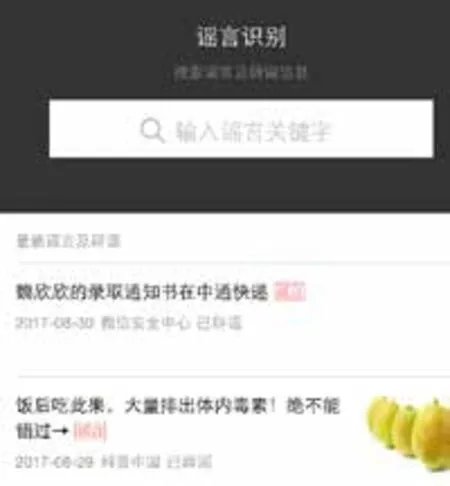
A WeChat service monitors fake news for subscribers
[Shocking!] Eating the following will lead to certain death!!!
[Zhènjīng!] Chī xia zhège bì sǐ wú yi!!!
【震驚!】吃下這個必死無疑!!!
[Urgent alert!] Poisoned seafood is pouring into the market!
[Jǐnji tōngzhī!] Yǒudú hǎixiān liúrù shìchǎng!
【緊急通知!】有毒海鮮流入市場!
The breaking-news angle is a great way to stir up fear, particularly when coupled with an absurdly threatening tale.
Escaped serial murderer has come to town!!! Stay safe!!!
Zaitáo liánhuán shārénfan zai běnchéng chūmò!!! Zhùyì ānquán!!!
在逃連環殺人犯在本城出沒!!!注意安全!!!
Emergency alert: Hundreds of human
trafckers have entered city, grabbing kids in the streets!!!
Jǐnji tōngzhī: Jǐ bǎi gè rénfanzi jìnrù běnchéng, zhuānmén dāngjiē qiǎng xiǎoháir!!!
緊急通知:幾百個人販子進入本城,專門當街搶小孩兒!!!
How is it that the police can’t catch these fugitives, yet someone on WeChat knows exactly when and where they’ll show up? The rumormongers never address this question, and click-bait titles like these are often anathema to actual law enforcement. In fact, they offer one reason behind the censorship of some crime-related media and the “clean internet” anti-rumor campaigns, though popular Weibo bloggers and genuine reports about social unrest tend to get inexplicably caught in the crossfire too.
Still, the rumor mill can turn even censorship to its advantage:
Read it now before it’s deleted! A new epidemic has killed dozens but the government is still hiding information!
Shān qián sù kan! Xīnxing chuánrǎnbìng yǐ zhì shù shi rén sǐwáng, zhèngfǔ réng yǐnmán xiāoxi!
刪前速看!新型傳染病已致數十人死亡,政府仍隱瞞消息!
The words 刪前速看 (shān qián sù kan), literally “read quickly before deletion,” are a cunning ploy: Everyone in China knows that the censors delete news, and information about epidemics has been hushed up before. Claiming that an article is already doomed makes readers believe it holds important truths, and of course, they’ll want to open it before its time runs out.
If you do ever see these words, check what news outlet first published the piece and when; then ask yourself why it hasn’t been pulled yet, as predicted. As the above example shows, health is always a source of public concern. Food safety is a favorite topic of rumormongers, because it can be hard to tell a lie from just another foodindustry horror.
Food rumors can be divided into three types. The first type stigmatizes a particular item:
Stop eating meat foss! It’s all made of dyed cotton!
Búyao zai chī ròusōng le! Na dōu shì rǎnsè miánhuā zuò de!
不要再吃肉松了!那都是染色棉花做的!
Excess levels of heavy metal found in crayfsh, that’s why foreigners never eat them!
Xiǎolóngxiā zhòngjīnshǔ chāobiāo, suǒyǐ waiguórén cónglái bù chī!
小龍蝦重金屬超標,所以外國人從來不吃!
Putting aside why foreigners are always the ultimate arbiter of acceptability, these reports will often go on to quote some dubious experts, usually followed by the initials of some plausible but non-existent organizations, to support the discovery of a new “scandal,” taking attention away from credible scandals deserving of media attention.
The second type of food-safety rumor deals with the supposed negative health effects of particular food items, usually “cancer” or“death.”
Heavens! This common dish actually causes cancer!
Tiān a! Zuì cháng chī de cai jìngrán zhì ái!
天啊!最常吃的菜竟然致癌!
Eating tomatoes with milk could kill you!
Niúnǎi hé xīhóngshì yìqǐ chī kěnéng zhì sǐ!
牛奶和西紅柿一起吃可能致死!
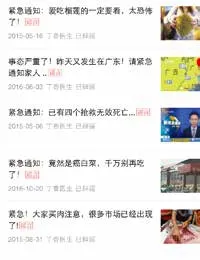
Mix any two ingredients together, or pick any food found in an ordinary kitchen, and there’s an expert predicting lethal consequences. But sometimes these generic “Dr. Lius”and non-existent “Harvard Liver Research Institutes” will rally around certain foods for their positive effects, such as a common garden vegetableturned-panacea, usually capable of treating, yes, cancer:
Eat this every day, keep cancer away!
Měitiān chī tā, yuǎnli áizhèng!
每天吃它,遠離癌癥!
Health organizations aside, state apparatuses are favorite sources for rumormongers to cite to make their rumors sound more reliable, especially for misleading pieces about the economy or social policies.
CCTV reports house prices will fall to 2007 levels before year’s end.
Yāngshì baodao chēng niánnèi fángjia huì xiajiang zhì èr ling ling qī nián shuǐping.
央視報道稱年內房價會下降至2007年水平。
Defense Department urges everyone to stop using iPhones, because the US has bugged them.
Méiguó zai pingguǒ shǒujī shang ānzhuāng le qiè tīngqì, guófángbù hūyù dajiā tingyòng.
美國在蘋果手機上安裝了竊聽器,國防部呼吁大家停用。
Celebrities or overseas leaders also have authority, and unlike the government, fabricated quotes from these sources can be as shocking, irritating, and inflammatory as the writer wishes. Patriotic issues lend themselves easily to click-bait missives, and Vladimir Putin, Barack Obama, and Shinzo Abe are the preferred vehicles for delivering them:
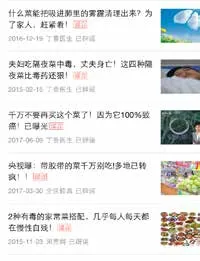
Putin’s speech alarms 1.3 billion Chinese people!
Pǔjīng de yìfānhua zhènjīng le shi sān yì zhōngguórén!
普京的一番話震驚了十三億中國人!
The whole nation is furious! Here’s what Obama said!
Quánguó rénmin dōu nù le, Aobāmǎ jūrán zhème shuō!
全國人民都怒了, 奧巴馬居然這么說!
These types of rumors used to be easier to spot—given the delicacy required in international relations, it was difficult to imagine any world leader casually insulting 1.3 billion people. But this commonsense rule may no longer apply in the era of US President Trump. After all, a typical Trump speech contains more clickbait fodder, fake news, or fire and fury than even the internet can keep up with.

For more articles like this, go to the language section on our website, theworldofchinese.com
