
The implementation of the “Belt and Road” initiative needs a “precise stroke”
2017-10-20 06:49:31TextbyZhaoLeiTranslationbyTaoWenjiaPhotosbyCFP
空中之家 2017年10期
Text by Zhao Lei Translation by Tao Wenjia Photos by CFP
The implementation of the “Belt and Road” initiative needs a “precise stroke”
Text by Zhao Lei Translation by Tao Wenjia Photos by CFP
Firstly, it is necessary to accumulate models and experiences of cooperation that can work in different situations. Therefore, we need to explore modes of cooperation with the principles of marketing, internationalisation and professionalism. Taking into consideration both the economic and social benefi ts, we need to fi nd modes of cooperation that are mutually benefi cial and reproducible, so that we can promote such models in different areas. The models we choose eventually are much more signifi cant than resources and market share.
Secondly, it is important to enhance Chinese enterprises' attention to brand awareness and brand value. We must not only have executives in the enterprise, but also have real entrepreneurs who have the spirit of exploration because it is the latter that can help create a successful "business empire." In my opinion, the rise of a business is not only about economic growth, but also about building a unique culture which can win the hearts of employees and consumers.
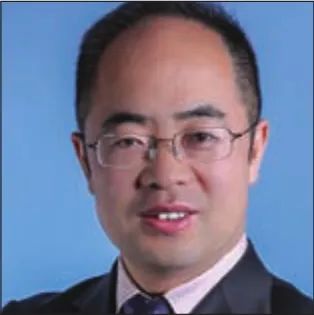
Zhao Leiprofessor at the Institu te for International Stra tegic Studies of the Pa rty School of the Centr al Committee of the CP C, a director of the Res earch Office for Interna tional Relations and Na tional Unity. Mr. Zhao heads a key research project on the Belt and Road Initiative at CPS,and is the founder of th e forum “The Belt and R oad 100”.趙磊中共中央黨校國際戰略研究院教授、國際關系與國家統一研究室主任、中央黨校“一帶一路”重點研究課題主持人,“一帶一路百人論壇”發起人。
Thirdly, the internationalisation of the “China Standard” is an integral part of the Belt and Road Initiative. At present, many projects are land-related projects instead of projects related to people,culture or standards. The internationalisation of the"China Standard" should include the innovation and progress of technology, legal system, and talents.
Fourthly, it is crucial that the initiative should be implemented step by step. We cannot rush to a quick success. Before a comprehensive promotion of a certain model, we need to fi rst identify key countries, key areas, and key projects to have the model fully tested, enough experience accumulated, and hard-working talents found.Currently, the early results of the Belt and Road Initiative are mostly for infrastructure and other heavy-assets projects. Exemplary light-assets projects are still too few. Many companies simply never think of light-assets projects. In addition to industrial production capacity cooperation, we need to promote cultural, educational, medical and agricultural cooperation so that more experience in such areas can be accumulated.
Fifthly, by following the rules of market economy,we need to achieve a healthy interaction among business, society, and government. The Belt and Road Initiative should follow the path of the market.Under the principle of "Led by business, operated commercially, participated by the society, and promoted by the government", it is possible that we can implement relevant projects through different means such as joint ventures, PPP,franchise, etc.
Last but not least, a dynamic evaluation of the Belt and Road Initiative is very much needed. The goal of the evaluation is to take out the rough ones to gain the fi ne ones and take out the failed ones to reserve success. It is not only a self-evaluation and refl ection of the Chinese, but also a demonstration of being responsible to international society.
“一帶一路”落地要“精準發力”
“一帶一路”要落地,要“精準發力”。
首先,要積累可復制、可推廣的“一帶一路”合作模式與經驗。要按照市場化、國際化、專業化的原則,兼顧經濟效益和社會效益,探索互利共贏,以及可復制、可推廣的“一帶一路”合作模式。模式比資源和市場份額更重要。
其次,要增強中國企業的品牌意識與品牌價值意識。我們不僅要有在企業工作的高管人員,更要有具有企業家精神的企業家,后者能夠幫助企業打造成功的“商業帝國”。在筆者看來,一家企業的崛起,不僅是經濟事件,更是收獲人心的文化事件。
第三,“中國標準”的國際化是“一帶一路”的應有之義。目前很多項目是與土地相關的項目,而不是與人、文化或標準相關的項目。“中國標準”的國際化包括技術、法律、人才的創新與進步。
第四,循序漸進,不可急功近利。要以點帶面,在全面推廣之前,要找準重點國家、重點領域、重點項目進行充分試驗,積累經驗,積累實干型人才。目前“一帶一路”的早期成果項目大多還是基建等重資產項目,輕資產的示范項目依然太少,甚至很多企業根本想不到要上輕資產項目。在工業產能合作之外,要加強文化產業、教育醫療、農業技術等方面的推進與試點。
第五,充分遵循市場經濟規律,實現企業、社會、政府三者良性互動。“一帶一路”應該走市場化路徑,按照“企業主導、商業運作、社會參與、政府推動”的原則,通過合資、PPP、特許經營權等方式進行項目合作,讓有關項目盡快落實。
對“一帶一路”的動態性評估必不可少,評估的目的是“去粗取精”“去偽存真”。這一過程,既是對中國人的自我教育,也展現了對國際社會的負責任態度。
猜你喜歡
金橋(2022年10期)2022-10-11 03:29:46
城市道橋與防洪(2022年4期)2022-07-01 06:04:12
當代水產(2022年5期)2022-06-05 07:55:06
當代水產(2022年3期)2022-04-26 14:27:04
當代水產(2022年2期)2022-04-26 14:25:10
云南畫報(2020年9期)2020-10-27 02:03:26
中國外匯(2019年12期)2019-10-10 07:26:56
當代陜西(2019年8期)2019-05-09 02:22:48
動漫星空(興趣百科)(2019年3期)2019-03-07 07:23:10
商周刊(2018年12期)2018-07-11 01:27:18
