日常建筑,一個反思的實踐:閱讀張永和
2017-10-20 08:27:23朱劍飛黃華青
世界建筑 2017年10期
朱劍飛 黃華青 譯
日常建筑,一個反思的實踐:閱讀張永和
朱劍飛 黃華青 譯
本文閱讀張永和自1980年代初至2016年的有關寫作,提出一個論點,認為張氏在1990年代末期,在關于設計的基本態度上,有一個突破和一個構架的建立。本文進一步認為,張氏思想構架的基本內涵是人文的、反思的、批判的,也是中國急需的,無論在建筑學還是其他領域。
張永和,基本建筑,材料,建造,1990年代末期,新鄉土
盡管我曾在多種場合為張永和寫過文章1),包括2004年和2012年非常建筑事務所成立10周年及20周年時,但最近閱讀他的新論著及項目,并重讀他較早的作品,放在當下所處的新歷史時代之下,依然是耳目一新、發人深思的。我想,如今我針對張永和的思想及實踐發展,可以提出一個假說。
1 6篇文字:一個突破
這個假說就是,盡管張永和發表了大量文章,參與了眼花繚亂的建筑或其他領域的活動及項目,我們依然可遴選出一組核心文字——集中發表于1996-2000年,它們對于張永和的建筑設計進路的建立過程,是關鍵且 “完成”的——這條進路對于當時的他來說是嶄新的,自此從未遠離。那幾年,張永和的職業生涯似乎攀上了一座高原或山頂,自此他獲得了一種完整的視野,持續至今。例如,對海恩斯·賓尼菲特的援引,就從1998年一直延續到2016年。我認為,這組文字是張永和極其重要的分水嶺,亦可幫助我們理解他的思想及喜好。以這幾篇文章為基礎,我們不難閱讀他的其他文章,并定位其各自的位置。不僅如此,他的建成、未建成或在建項目和設計,皆可借由這幾篇文章來閱讀和分析。
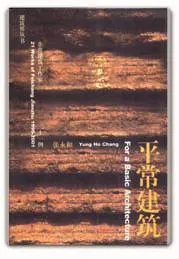
這幾篇文章的寫作時段,是他剛在中國渡過的最初的創作摸索期(1993-1996)、即將進入實踐活躍期之時。它們作于他的兩本著作之間:1997年的《非常建筑》(圖1)和2002年的《平常建筑:一種基本建筑學》 (圖2)。前3篇論文題為《十二月令》《園》與《宅》,收錄于第一部著作(是他過去15年中關于敘述性裝置和概念設計的文集)的前兩部分,分別作為前言和緒論,可視為他的一次思想綜述和反思性觀察。如果說《園》與《宅》建立了兩種基本建筑類型(即不再是裝置),那么《十二月令》則建立了一個他將進一步探索的概念框架——其中論述了多個話題,包括:將建筑客體外部化的西方透視法的使用;讓觀者與世界相互內化的中國繪畫;中國繪畫及造園文化中“內向的”世界觀;將中西方觀察方式結合的必要性;設計過程的重要性;設計圖紙本身的必要性——“不草的草圖”。[1]2)
這組核心論述還包括在第一本書出版后的另外3篇:《文學與建筑》(圖3)、《平常建筑》和《向工業建筑學習》(圖4),分別發表于1997年、1998年和2000年;后兩篇文章亦收錄于《平常建筑:一種基本建筑學》(2002)一書中。第一篇文章,張永和探索了文學與建筑的關聯(三島由紀夫、維克多·雨果、翁貝托·艾柯、阿蘭·羅伯-格里耶以及評論家羅蘭·巴特)。在以羅布-格里耶的實踐和巴特的理論分析了“客觀文學”之后,他亦探討了它在建筑學中可能的對應物。張永和探索的是一種“零度建筑”,就像巴特所定義的“零度寫作”一樣。在這篇論中,張永和第一次明確定義了“基本建筑”的概念:
“如果建筑也拒絕意義……如果建筑的能指所指產生重合,建筑只表達自己。如果建筑也回到基本的時空經驗,而不是特定的風格化的審美經驗……那么建筑可能成為活人的建筑;如果建筑的每一個細部都被(概念性地)顯微,從而超越現實,建筑反而可能成為現實的也是尋常的建筑;如果建筑回到建造,就可能成為建筑的建筑。”[2]3)
在之后一年撰寫的《平常建筑》中,張永和針對這一問題做了更清楚的陳述。在我看來,這篇1998年發表的文章可視為一篇宣言。該文提到了幾位著名或不那么知名的建筑師,尤其是密斯·凡·德·羅、朱塞佩·特拉尼和海恩斯·賓尼菲特,以及他們各自的代表作:鄉村磚宅、但丁紀念堂和巴巴尼克住宅。張永和自己的作品也作為一種衍生嘗試而被納入探討。這篇文字中,張永和建立了“基本建筑”的核心陳述,以下兩段話尤為重要——第一段出現在文章第一部分,論述了密斯的鄉村磚宅之后:
“我最終的興趣并不在于密斯,而是想通過密斯分析一個更廣泛的現象:一個將建造而不是理論(如哲學)作為起點的設計實踐。也是一種建筑定義:即建筑等于建造的材料、方法、過程和結果的總合。就這個定義而言,建造形成一種思想方法,本身就構成一種理論,它討論建造如何構成建筑的意義,而不是建造在建筑中的意義。”[3]

1
2

3
Although I have written for the tenth and twentieth anniversary of Yung Ho Chang's office Feichang Jianzhu (FCJZ) in 2004 and 2012, and in other occasions1), a recent review of his new writings and projects, with a re-reading of his older pieces, in a new historical time we find ourselves in today, is refreshing and enlightening. I think I now have a hypothesis on Yung Ho Chang in terms of his development in thinking and practice.
1 Six Essays of the Late 1990s: a Breakthrough
The hypothesis is that, despite the prolific publication of many essays and a dazzling parade of activities and projects architectural and otherwise, there is a single cluster of key essays -published quickly between 1996 and 2000 - that are essential and "completed" in setting up his approach to architecture, something new to him then and something he has not departed from since. Somehow, in his career, Chang had arrived on a plateau or a hilltop, in these few years, and a whole vision was found, which remains today. The reference to Heinz Bienefeld, for example, remains in 1998 as in 2016. I am suggesting that this cluster of essays was a crucial threshold for Chang and is essential for us in understanding his ideas and obsessions. With this few pieces identified, other pieces can be read and their positions understood.Further, his projects and designs, built, unbuilt and yet to-be-built, can also be read and analysed in the light of these few pieces.
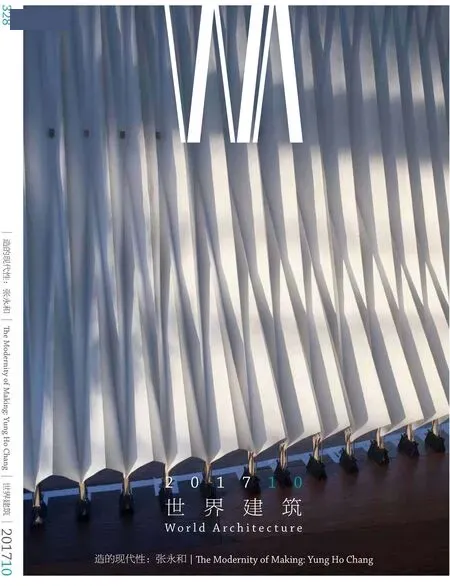
These few essays were written after a period of initial practice in China (1993-1996) and before launching into an active practice. They were written between two books of him, one in 1997 and the other 2002, titled respectively as Feichang Jianzhu (Un/conventional Architecture, Fig.1) and Pingchang Jianzhu: for a Basic Architecture (Fig.2). The pieces titled "Shier yueling" (calendar paintings), and "Yuan"(the garden) and "Zhai" (the residence), as a preface and an introduction of part one and two of the first book (a collection of essays over the previous 15 years on narrative installations and conceptual designs),acted as an overview and a reflective observation.If "Yuan" and "Zhai" had established two basic typologies of architecture (i.e. not installations any more), "Shier yueling" had arrived at a conceptual framework that he would explore further - and here he covered on the use of western perspectives that externalizes the architectural object, Chinese paintings that internalize the viewer and the world into each other, an "internal" worldview in Chinese culture in painting and garden design, a need to combine western and Chinese ways of seeing, the importance of design process, and the need for design drawings on their own - "sketches that are not sketchy" (bu cao de caotu).[1]2)
The cluster of key essays also includes three pieces written after the first book. They are Wenxue yu jianzhu (Literature and Architecture, Fig.3),Pingchang jianzhu (Basic Architecture), and Xiang gongye jianzhu xuexi (Learning from Industrial Architecture, Fig.4), published in 1997, 1998 and 2000 respectively; the latter two were reprinted in Pingchang Jianzhu: for a Basic Architecture (2002).In the first piece, Chang explored relations between literature and architecture (as in Yukio Mishima,Victor Hugo, Umberto Eco, Alain Robbe-Grillet, as well as critic Roland Barthes) and, after identifying an "Objective Literature" practiced in Robbe-Grillet and studied in Barthes, asked what an equivalent in architecture would look like. Chang was exploring architecture at degree zero, like Barthes' "writing degree zero". Here, for the first time, Chang was putting forward in clear terms his definition of a"basic architecture":
"If architecture also rejects meaning … and if its signifier and signified become one, architecture then expresses itself only. If architecture also returns to the basic spatial-temporal experience,rather than a particular style …, then architecture can serve people alive; if details of architecture are(conceptually) magnified, to surpass reality, then it becomes reality and normality; if architecture returns to architecture, then it can be an architecture of architecture" (my translation from Chang's original in Chinese).[2]3)
In Pingchang Jianzhu (Basic Architecture) in the following year, Chang made another statement on this, clearer this time. This piece of 1998, in my judgment, should be read as a manifesto. The writing here made reference to a few architects known or not so known, including, importantly,Mies van der Rohe, Giuseppe Terragni and Heinz Bienefeld, as well as their key works, such as Brick Country House, the Danteum, and Babanek House of the three architects respectively. Chang's own works were also discussed as an inspired attempt.In this essay where Chang developed his central statement on his "Basic Architecture", the following two are especially important - the first was after a description of Mies' Brick Country House in the first part of the essay:
"My final interest is not on Mies, but rather a general condition that can be arrived at by studying Mies: a practice that departs not from theory or philosophy but from building and construction. This leads to a definition: architecture is a total sum of the construction of material, method, process and outcome. From this perspective, the logic and the use of construction itself become a method, and a kind of theory on its own, which concerns how meaning in architecture is made through material construction, and not how meaning is constructed in architecture" (my translation).[3]
In the section on Terragni's Danteum that concludes the essay, Chang had written arguably the most beautiful and accurate statement about his"basic architecture":
"... though it was not built, the drawings revealed Terragni's deep and refined thinking in the use of material, construction, form and space. What he had constructed with these is not a building but a poem. … But I don't think the poetics of Danteum comes from a relationship between architecture and poetry. The poetry of Danteum, instead, originates from the poetics of loadbearing stone walls, the poetics of a courtyard, the poetics of stone columns,the poetics of a relationship between columns,the poetics of a change of floor levels, the poetics of the steps, the poetics of a doorway, the poetics of a skylight, the poetics of a rectangular shape,the poetics of a square in shape, the poetics of the right angle for an intersection of two parts, the poetics of a narrow spatial passage, the poetics of glazing, the poetics of glass columns, the poetics of a relationship between columns and the ceiling,the poetics of an interstitial space, the poetics of a stone-paved floor, the poetics of an enclosure, the poetics of a basic architecture" (my translation).[3]34
It is obvious that this "basic architecture"is an austere and tectonic construction in a modernist persuasion. In the following piece Xiang gongye jianzhu xuexi (Learning from Industrial Architecture) of 2000, Chang promoted a pure,autonomous and independent architecture or better "building" - one which "needs no ornament"and is devoid of layers of meaning artificially added. And here, Chang is clear about his support for modernism and is putting forward a succinct description of his "basic architecture":
"In terms of value orientation, modernist architects privileged buildings over architecture, to resist a traditional idea that architecture was more than a mere building. This subversion is both a failure and a success. Firstly, it is a failure, because these architects could not finally escape from architecture. Yet the success is more profound: when the layers of meaning are stripped away, a building is a building on its own, it is an autonomous existence,and is not a tool of signification nor a secondary existence for something else" (my translation).[4]
These six pieces - three published in Feichang Jianzhu (1997) and three after - as written between 1996 and 2000, marked a core of Chang's prolific writings and above all a core of his thinking for design practice. We may add another exceptional piece, written much earlier, to this core - a central essay in forming his approach at a conceptual or methodological level. This is Guocheng sixiang,(Thinking as a Process) written in 1987-1988 when Chang was teaching in the United States.Quoting Michel Foucault's essay on René Magritte's juxtaposition of a painting of a smoking pipe and a text This is not a Pipe, and finding a rewarding understanding of complex relations between a statement and a visual representation, Chang argues that a subversion of a truth statement, a reverse in thinking against an accepted idea, notion or understanding, can be illuminating in a true,positive and creative sense - such a process 'provides a condition for a new work to be initiated'. Reversing or changing in thinking, according to Chang, "is helpful in exposing a problem, … in overcoming a conventional assumption, … in recovering a sense of strangeness".[1]194-197Chang had worked surely in this manner, where a bicycle wheel, a door, a floor, a window, etc, is suspended in their normal or "true"condition, and was subverted and creatively remixed or renewed or reshaped, challenging not only a conventional truth statement, but also artificial ideologies applied onto a building to become architecture. The posture here is critical, in design,in thinking, and in a whole outlook concerning more than a mere business of design.
在文章末尾關于特拉尼的但丁紀念堂的論述之后,或許是張永和關于其“基本建筑”理念最優美、準確的一段陳述:
“……羅馬的但丁紀念堂沒能建起來,但不難從保存下來的圖紙中看到建筑師特拉尼對材料、建造、形態與空間精深的造詣。他用這些質量構成的不僅是建筑而是詩……但我不認為但丁紀念堂的詩意出自于建筑與詩歌的關系。但丁紀念堂的詩意更是石承重墻的詩意,庭院的詩意,石柱的詩意,柱與柱之間關系的詩意,高差的詩意,踏步的詩意,門洞的詩意,天光的詩意,矩形的詩意,方形的詩意,正交的詩意,窄的詩意,玻璃的詩意,玻璃柱的詩意,頂棚與柱之間關系的詩意,縫隙的詩意,石鋪地的詩意,圍合的詩意,基本建筑的詩意。”[3]34
顯然,“基本建筑”是在現代主義信念指引下、一種樸素而建構的建造。在后一篇寫于2000年的文章《向工業建筑學習》中,張永和推出了一種純粹、自治、獨立的建筑,或更準確地說是“房屋”——“不需任何裝飾”,亦擺脫了人為添加的層層意涵。在此,張永和明確表達對現代主義的支持,也提出了“基本建筑”理念的簡明論述:
“就價值判斷而言,現代主義建筑師將房屋置于建筑之上,對立于建筑高于房屋的傳統觀念。這次顛覆既是失敗的又是成功的。首先是失敗的,因為現代主義建筑師們終究未能擺脫建筑。然而成功更深刻——清除了意義的干擾,建筑就是建筑本身,是自主的存在,不是表意的工具或說明它者的第二性存在。”[4]
以上6篇論文——前3篇刊載于《非常建筑》(1997),后3篇刊載于《平常建筑》,都是于1996-2000年寫作的,構成了張永和豐富論著的內核——尤其是他建筑設計思想的內核。我們或可在其中再添加一篇出色的文章,寫于更早,這篇文章對于他的理念或方法論進路的形成十分重要。那就是《過程思想》,寫于1987-1988年,當時張永和在美國教書。他援引米歇爾·福柯關于雷尼·馬格利特將一幅煙斗的油畫與“這不是一只煙斗”的文字并置的文章,深刻辨析了真理陳述和視覺表征之間的復雜關系。張永和提出,對真理陳述的顛覆,對公認概念、觀點或理解的逆向思考,能夠在一種真實、積極、創造性的意義上給人啟發——這樣的過程“提供了開啟新工作的條件”。在張永和看來,逆向或轉變性的思考,“能幫助我們暴露問題……克服慣常的預設……重塑一種陌生感。”[1]194-197張永和自己顯然也在以這種方式工作,無論是一只自行車輪、一扇門、一層樓板或一扇窗等等,都從常見的、“真實的”狀態中剝離,經過推翻和創造性的混合、更新或重塑,不僅挑戰了慣用的真理陳述,也顛覆了那些附加在房屋之上、使其成為建筑的人工意識形態。這樣一種姿態在設計、思考和他的全部工作中都至關重要——他關注的遠不只是一種作為生意的設計實踐而已。

4
2 整體脈絡
我之所以說1996-2000年的這組文字非常重要,是因為它們出現于張永和個人及職業發展軌跡的特殊時刻。那是張永和15年“學術”研究生涯的末端(從1981年至1996年,他在美國學習、教書,直至1990年代中葉;自1993年開始回到中國試驗他的理念);它們也標志著張永和在中國活躍實踐期的開啟,至今已延續了20余年。盡管1990年代末的這幾篇論述總結了他過去15年的諸多思想,但它們更是一次突破、一個轉折點,開始探討一些從未真正探討過的論題(至少從未明確談過)——尤其是“基本建筑”的相關概念,讓“建筑回到建造,成為建筑的建筑”,“建筑就是建筑本身,是自主的存在”。他的生涯早期研究,主要是藉由裝置和概念設計所表達的生活經驗敘事;而至1990年代末的這些文章,則完全回到建筑的主題,探討建造與建筑空間、形式之間的關系——這個問題,是張永和在1990年代末期真正踏入實踐生涯之后所必須面對的。那一刻,張永和必須做出一個劇烈、也可能很困難的轉折,從羅德尼式、源于AA的對生活的敘事性研究及概念裝置研究,轉向真正設計實踐的完整模式,并適應于其所在的高速發展的經濟環境。因此,關于“建筑”應為何物的提法——過去張永和不需回答,如今卻必須創造并發展。
1990年代末這次從學術研究到商業實踐的轉變,也伴隨著地緣政治和地緣文化意義上的轉型。張永和在1993年回到中國,在太平洋兩岸往返一段時間后,于1996年定居北京,開始建筑實踐。矛盾的是,當他回到故鄉的這一刻,他反而進入、或是被帶到了世界面前,并且在一個更高的平臺上。自1996年以來在中國的20年實踐生涯,對張永和來說也是一趟全球交互之旅:他不僅先后在密歇根大學、哈佛大學、麻省理工學院任教,也獲得了AA(倫敦)、the Aedes(柏林)、Gallery MA(東京)及威尼斯雙年展的設計委托和展覽邀約。在90年代乃至后來,張永和一度是唯一的、或是極少幾個來自中國的、能夠為西方建筑師及評論家所理解的聲音,原因是他曾在美國學習和執教。更關鍵的是,張永和在過去20年中不僅向西方傳遞著中國的聲音,同時也在中國傳播西方的思想。他和其他若干建筑師帶到中國的西方當代價值,對于中國這樣一個奮力進入國際現代社會的國家來說,有著不可低估的作用。這一點我會在后文再次論述。

5

6
因此,1990年代末期的這幾篇論文夾在過去15年和未來20年之間,不僅是分水嶺,也是連接點。作為一道分水嶺,前后兩個時期之間存在著巨大的張力與不同。之前,他的焦點是建立在繪畫、文字或空間手段上的日常經驗敘事,而從1993年、尤其是1996年開始,則轉移至實際項目設計之中。盡管過去的某些關切依然延續或表達于新的設計實踐中,但實際上這并不容易,因為一座建筑或城市設計,不可能當作一件純粹的藝術作品或抽象裝置——這樣的張力和區別,是應該認識到的。
當然,這一組論文也是一道連接之橋,讓過去的理念——尤其是視野和再現的問題、關于基本建筑的客觀文學、對于日常生活及其物件的關切——得以在設計實踐中繼續發揮重要作用。為此,我們需要簡要列舉張永和在第一階段的主要關切和主題——盡管它們并未全部進入實際設計之中。從物件到話題來看,這些主題包括:自行車、煙斗、門、樓板、家具、窗戶和開洞、框景裝置、觀看方式、不同文化中的視覺表征、東西文化比較、中國空間的內向性、作為內化空間的園林與庭院、性別關系、謀殺案、偵探小說、建筑的觀念藝術、創造過程中的逆向批判思維,以及電影、文學和建筑的關系。盡管這份名單看似冗長而無盡,但關注焦點卻是清晰的。它們全都以個體切身經歷的日常生活為核心,而對它的敘述則建立在文字、視覺、空間或影像構筑之上。
讓我們回到主題。1996-2000年的6篇論文,不僅是對他之前所關切問題的總結,也是對即將開始的設計階段的基本準則的概述。如果說《十二月令》集合了過去偏向于視覺和文化的主題,《園》與《宅》兩篇短文則為下一階段建立了兩種基本建筑類型——真正的建筑必須表達直接、首要的關切。而接下來的3篇論文《文學與建筑》 《平常建筑》和《向工業建筑學習》,則明確了這條思想線索——從客觀文學到基本建筑,最終走向自治的現代主義。其中的核心概念是一種讓“房屋”理性高于“建筑”文化(經典的、風格驅動的、裝飾性的)的基本建筑——這樣一種建筑,不表達其他任何概念,只作為一棟實體房屋而存在。基本建筑的四要素是:材料、建造、形式和空間。在張永和看來,以此為準則進行實踐的英雄,就是密斯、特拉尼和賓尼菲特。
如今,盡管張永和在過去20年中積累了大量閱歷和經驗,但他在2016年發表的文章,依然保持著延續性。他最近發表的若干寫作中,有兩篇尤其重要,其中的兩個問題仍是他關切的核心:那就是“看”和“造”——一邊是視野和表征,另一邊是工藝、材料和建造。《“看”的建造》(圖5)是一次巡禮式反思,總結了觀看和繪圖的工具,以及看、見、知、表達的關系[6]。而更重要的是《對待工藝的四種態度》(圖6)這篇文章,展現了張永和對“基本建筑”理念的持續研究:文中,他依次剖析了海恩斯·賓尼菲特、筱原一男、杰弗瑞·巴瓦與西格德·萊弗倫茨的約27座建筑,具有一種全新的開放性和包容性,但依然保持了他的長期興趣——尤其是賓尼菲特的巴巴尼克住宅(1990)、筱原一男的谷川之家(1974)、萊弗倫茨的瑞典克里潘圣彼得教堂(1966)。張永和對這些項目的贊賞是顯而易見的:“假如我自己住在這個房子里,我會祈禱每天都下雨”(稱贊巴巴尼克住宅的排水管及混凝土排水槽);“這里有一個瘋狂的不對稱的壁爐煙囪”;“萊弗倫茨完成各種令人難以置信的建筑細部”;“這座教堂是一個極為美麗的建筑作品”。[7]總體來說,在2016年的這些論文中,張永和對“工藝”和“造”這些詞匯的使用看似是新的,因為這是他近年來在同濟大學任教所專注的主題;但其中亦反映了他過去20年的不懈探索——“基本建筑”,以及材料和空間的建造詩意。
2 Overall Trajectories
The reason I say this cluster of essays from 1996 to 2000 is important is that they emerged at a particular moment in Chang's personal and professional trajectory. They emerged at the end of a 15-year "academic" research (from 1981 to 1996,when Chang studied in the United States, then taught there, up to the mid-1990s, then began to test ideas in China since 1993); they also marked the beginning of a phase of active practice in China that has lasted by now for two decades. Although the essays of the late 1990s summarized many ideas from the past 15 years, they were a breakthrough or a turning point in that they began to address issues never really addressed before (never so clearly at least) - ideas of a "basic architecture",where "architecture returns to itself and becomes an architecture of architecture", and where "a building is a building on its own, and is an autonomous existence". While the early studies before were about narratives of life experience constituted in installations and conceptual designs, the writings now, in the late 1990s, were about architecture, and about relations between building construction and the space and form of architecture - an issue one has to confront when one steps into real practice as Chang did since the late 1990s. At this moment,Chang had to make a dramatic and probably difficult transition, from a Rodney-inspired, AA-derived narrative study of life and of conceptual devices,into a full mode of real design practice, in a fast developing economy. So, such a formulation, about what "architecture" should be - something Chang didn't need to answer - had to be invented or developed now.
This turning from academic study to commercial practice in the 1990s also coincided with a geopolitical and geo-cultural transition. Chang returned to China in 1993 and, after shuttling across the Pacific for a while, settled down in Beijing to practice in 1996. Paradoxically, from this moment on, when he returned home, he entered or was brought back to the world, this time at a higher platform. Since 1996, the two decades of practice in China for Chang was also a journey of global interactions for him,which witnessed not only professorships at Michigan,Harvard and MIT, but also design commissions and invited exhibitions at venues including the AA, the Aedes, Gallery MA, and Venice Biennale. Chang was for a while the only voice or one of the very few in China that western architects and critics can understand, in the 1990s and after, as he studied and taught in the United States before. The key point to note is that Chang now has acted, for the past two decades, not only a Chinese voice to the west,but also a western voice in China. The western and contemporary values he - and many others - has been bringing into China, a country struggling to move forward to a certain international modernity,cannot be underestimated. On this I will come back soon.
So, sandwiched between the previous 15 years and the following two decades, the key essays of the late 1990s can be read as serving both as a dividing and connecting point. They served as a dividing point in that there were tensions and differences between these two periods. While the focus was on narratives of life experience as constructed in or with painterly, textural and spatial means before,the focus from 1993 and especially 1996 onwards has been design for real commissions. Although the concerns of the past can be brought in or expressed through new designs, it has been in fact not that easy, because a building or an urban design cannot be a pure art work or abstract installation - this tension and this difference must be acknowledged.
For sure, this cluster of essays also served as a connecting bridge where ideas of the past, especially the issues of vision and representation, objective literature in relation to basic architecture, and a care of daily life and its objects, remain important in design practice. For this, we need to brief l y enlist the key concerns and themes Chang had explored in the first stage, even though not all of them can be or have been brought into real designs. Ranging from objects to topics, they include: bicycles,smoking pipes, doors, floors, furniture, windows and openings, devices of framing, ways of seeing,visual representation in different cultures, eastwest cultural comparisons, inwardness in Chinese spatiality, gardens and courtyards as internalizing space, gender relations, murders, detective stories, conceptual art for architecture, subverting or reversing for critical thinking in a creative process, and relations between cinema, literature and architecture. Though the list seems long and endless, the focus is clear. All of them center on the everyday, as experienced by concrete individuals,and a narrative about it as found in textual, visual,spatial or cinematic constructions.
Let us recapture the main point. The six essays of 1996-2000 served both as a summary of the concerns of the past and a framing of basic principles of design for the phase to come. While "calendar paintings" collected the main themes from the past that privileged more for the visual and the cultural,the two short texts on "the garden" and "the residence"established two fundamental architectural typologies for the next stage where real architecture has to be the immediate and primary concern. But the next three essays, Literature and Architecture, for a basic Architecture, and Learning from Industrial Architecture, had clearly established a line of thought,from objective literature to basic architecture, and onto an autonomous modernism. The central idea was for a basic architecture that privileges the rationale of"building" over the culture of "architecture" (classical,style-driven, ornamental) - one which does not speak for something else except itself as a material building.The four elements identified for this basic architecture were: material, construction, form and space. And the heroes who have practiced this way, according to Chang, were Mies, Terragni and Bienefeld.
Today, the essays written by Chang, as published in 2016, remain consistent despite the enrichment and the experience accumulated over the two decades. Of the several pieces recently published, two appear especially important, and two issues remain as core concerns of Chang.They are viewing and making, that is, vision and representation on the one hand, and craft, material and construction on the other. "Kan" de jianzao(Construction Looking, Fig.5) provides a parade of reflections on the devices of viewing and drawing,and the relations between looking, seeing, knowing and representation.[6]But Duidai gongyi de sizhong taidu (Four Positions on Craft, Fig.6) reveals, more importantly, Chang's ongoing study for the "basic architecture": some 27 buildings by Heinz Bienefeld,Kazuo Shinohara, Geoffrey Bawa and Sigurd Lewerentz, were studied one by one, closely, with a new openness and tolerance, but also a persistent interest, especially on Bienefeld's Babanek House(1990), Shinohara's Tanikawa House (1974), and Lewerentz's St. Peter's Church at Klippan of Sweden(1966). Chang's appreciation of these projects is obvious: "If I lived here, I would pray for it to rain everyday" (commending a drain pipe and concrete sinks collecting rain water); "there is a crazy and asymmetrical chimney"; "Lewerentz has completed incredible architectural details"; "this church is extremely beautiful".[7]On the whole, in these writings of 2016, the use of the term "craft" (gongyi)and "making" (zao) seem relatively new as Chang have been teaching at Tongji University of Shanghai in recent years focusing on these themes, yet a long consistency in exploring a "basic architecture" and a poetics of building with materials and spaces remain over the two decades.
若回顧張永和的設計作品,尤其是近年來的項目,會看到一種“新鄉土”趨勢的出現。“園”(庭院、組群、場地)和“宅”(室內、住房、會所、辦公室、公寓和宿舍)這兩個基本類型可以從很多項目中找到。而框景、觀看、視角的主題,也體現于多座建筑中,尤其是柿子林住宅(2004)、蘋果社區售樓中心(2003)、長安運河會所(2015)、上海當代藝術館設計中心(2016)。對于日常物件慣常使用方式的懸置,可見于車輪、相機盒、窗框、透明樓板、折疊門等,涉及的項目從1996年的“席殊書屋,到2013年的垂直玻璃宅和2016年的上海當代藝術館設計中心。盡管他持續關注宅、園、景框、日常物件的“誤用”、作為中國傳統的內化過程,但或許有一個問題是最為重要的——那就是房屋建造中使用和表現出的材料,以及其中涉及的工藝。在這個問題上,可以在項目中看到越來越強的自信和強調:在多處使用的黑色石材,如長安運河會所(2015);以及若干近期項目在墻體和格柵上使用的灰瓷和灰磚,例如在幾座文化中心及博物館-大學項目中,尤其是2017年初中標的巴黎國際大學城的中國基金會大樓[8]。我認為,一種“新鄉土”正在崛起;它是一種“基本建筑”,關注實踐過程中的材料和建構邏輯,在整體思路上是反思性和批判性的;它同時關注著視覺景框和理性的物質性;它受惠于中國、歐洲文藝復興及當代世界的智識傳統,尤其是空間的內化——作為一條中國的進路。
3 地緣政治關系中的進步力量
如果我的解讀是正確的,那么1990年代末期的這幾篇文章,或許在張永和整個建筑世界的思考和實踐中都起到核心作用。接下來,我們不僅要從內部和語義學意義上,也需借助外部的、地緣政治及全球性的觀察視角理解這些文章。內部看來,它們特殊的內容和實體已如前述:個人生活、表征、表達方式、作為建筑語言的建構材料性、作為文學和建筑中的批判性起點的基本或“零度”。這些文章的目的是重新發現日常;它的關切是微觀的、私密的、個體的、以人為中心的,而它的批判性則是致力于挑戰或顛覆一種真理陳述(例如一個宏大敘事、或一種系統化的意識形態)。
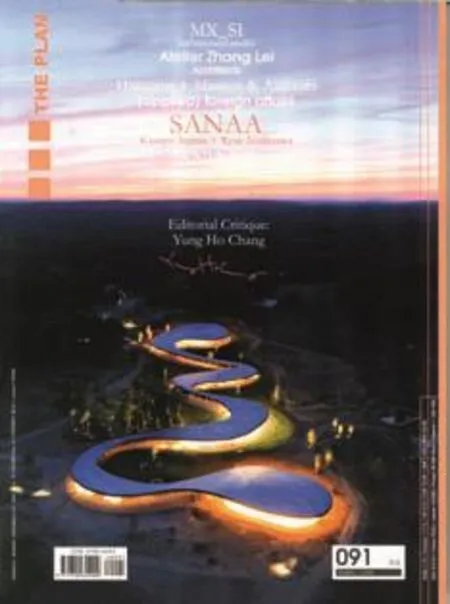
從外部看,論及全球和地緣政治軌跡,從張永和的自傳性散文《AA與我》(2016,圖7)可見一斑[9]。隨著鄧小平改革開放,中國人開始到世界各地游學。張永和在美國學習及任教的1981-1996年,學到的應是1970年代歐美的解放性智識文化——至少在建筑學及相關人文學科是如此。除了1960-1970年代克里斯托弗·亞歷山大和羅伯特·文丘里的批判和解放思想外,張永和也吸收了一支特別的思想潮流——“敘事建筑”,主要是1970年代在倫敦建筑聯盟學院(AA)由伯納德·屈米、羅賓·埃文斯、羅德尼·普萊斯等人所發展。羅德尼·普萊斯對于張永和是個關鍵人物,他在1982年來到波爾州立大學任教,并直接教授張永和一門設計課,名為“不確定性實驗室:使用、誤用和濫用”。這門課上,張永和探討了自行車的“不確定性”,自此他始終對這些概念和裝置很感興趣,并體現在他的論文和設計中。整體上說,如欲進一步探討,他的思想中存在一條視覺及文化線索,和一條智識或反思線索。其中一條線索是來自視覺藝術和文化的線索,其主要人物可追溯至羅賓·埃文斯、約翰·貝格和大衛·霍克尼,以及學術意義上的埃爾文·潘諾夫斯基,還有包括馬塞爾·杜尚和阿爾弗雷德·希區柯克在內的導演和藝術家。另一條反思和批判的思維線索,從羅德尼·普萊斯和伯納德·屈米,直接或通過他人間接地延伸至米歇爾·福柯和羅蘭·巴特等人。
至于20世紀美國和歐洲的批判及智識傳統——聚焦于微觀、個體及日常,并以此為基礎進行人文主義批評,其中一個重要的源頭人物不可避免:瓦爾特·本雅明(1892-1940),尤其是他關于街道、拱廊街、人群、面孔、姿態、攝影、電影、戲劇、悲苦劇和各類視覺藝術的評論(寫于1920-1930年代)。我認為,張永和思想的終極源泉是本雅明。從這個意義上說,張永和傳達出的信息是人文主義的、反思性的,由此必然會關注1970年代的敘事作品和20世紀早期的建構現代主義;而這種信息的核心,則是對日常生活的微觀批評。在中國,鄧小平在1970年代末至1980年代大刀闊斧的改革開放帶來了全球文化及西方思想浪潮——同時也將張永和等多人的反思性文化實踐帶入逐步走向開放及現代化的中國。張永和是最早的人物之一,至今仍是建筑領域的核心人物。他不僅是中國面向西方的聲音,也是世界走進中國的聲音,把在我看來十分必要的進步性思想和價值觀,帶到這個掙扎著轉變、走向某種程度的普世現代性的中國。
綜上,張永和的“基本建筑”導向是人文的、反思的、批判的,應視為一種對真誠、勇敢、正直的靈魂的呼喚——在建筑和社會生活領域皆是如此。□
7
/References:
[1] Zhang Yonghe (Yung Ho Chang), Feichang Jianzhu(Un/conventional Architecture), Harbin: Heilongjiang Chubanshe, 1997.
[2] Zhang Yonghe, Wenxue yu jianzhu (Literature and Architecture), Dushu, No. 9, 1997, pp. 68-71, reprinted in Zhang Yonghe, Zuo Wen Ben: Yung Ho Chang Writes, Beijing: SDX publishing house, 2005, pp. 95-104.
[3] Zhang Yonghe, Pingchang jianzhu (basic architecture), Jianzhushi: The Architect, No. 84, Oct 1998, pp. 27-37.
[4] Zhang Yonghe and Zhang Lufeng, Xiang gongye jianzhu xuexi (Learning from Industrial Architecture),Shijie Jianzhu: World Architecture, No. 7, 2000, pp.22-23.
[5] Zhang Yonghe, Zuo Wen Ben: Yung Ho Chang Writes, Beijing: SDX publishing house, 2005, pp. 95-104.
[6] Zhang Yonghe and Zhou Jianjia, "Kan" de jianzao:construct looking, Shidai Jianzhu: Time + Architecture,No. 3, 2016, pp. 28-33.
[7] Zhang Yonghe, Duidai gongyi de sizhong taidu:Bienefeld, Shinohara, Bawa and Lewerentz - four positions on craft, trans. Jiang Jiawei, Chen Dijia,Shidai Jianzhu: Time + Architecture, No. 3, 2016, pp.154-161.
[8]
[9] Chang, Yung Ho, The AA and I, The Plan, No. 6-7,2016, pp. 1-4.
[10] Zhu, Jianfei and Hing-wah Chau, Yung Ho Chang:Thirty Years of Exploring a "Design Discourse", Abitare:Zhu (Asian & Chinese edition), No. 32, Oct-Dec 2012,pp. 30-39.
[11] Zhu, Jianfei, Criticality in between China and the West, The Journal of Architecture, Vol. 10, No. 5, Nov 2005, pp. 479-498.
If we review Chang's designs, and especially the recent projects, we witness a "new vernacular"emerging. The two basic typologies, the garden(courts, clusters, fields) and the residence (interiors,houses, clubs, offices, housing and dormitories)are found in many projects. The issues of framing,viewing, and perspectives are addressed in many cases, especially Villa Shizilin, Pingod Sales Center,Chang-An Canal Club, and the psD (power station Design) center, in 2004, 2003, 2015 and 2016 respectively. The suspension of a conventional use of daily objects can be found in the use of wheels, camera boxes, window frames, transparent floors, foldingsliding-doors, in projects ranging from the book-bikestore of 1996 to the vertical glass house and the psD center of 2013 and 2016. While residence, gardening,framing of visions, the "misuse" of daily objects,and internalizing as a Chinese tradition remain as a constant focus, one key concern is arguably the most important - the material employed and expressed in building construction, and the craft of doing so in architecture. In this, we are witnessing an increasing confidence and emphasis: the black stone used in many cases as for example in Chang-An Canal Club of Beijing (2015), and the gray tiles and bricks in the recent projects, for walls and grilles, as in many cultural centers and museum-colleges, and especially in the Maison de la Chine in Paris for CIUP (Cité Internationale Universitaire de Paris), a wining scheme in early 2017[8]. I am suggesting that a "new vernacular" is on the rise; it is a "basic architecture"that cares about materials and the tectonic logic in practice and is Reflexive and critical in outlook; it has a twin focus on visual framing and rational materiality;and it is enriched with intellectual traditions from China, Renaissance Europe and the contemporary world, with a particular interest in internalization in space as a Chinese approach.
3 Critical and Geo-Political
If my reading is correct, then the writings of the late 1990s remain central in the whole architectural universe of Yung Ho Chang in thinking and for practice. Here we need to understand this core writings of 1996-2000 from an internal and semantic as well as an external, geo-political and global point of view. Internally, the specif i c contents and entities are already described above: personal life, representations, means of representation,tectonic materiality as an architectural language,the basic or "degree zero" as a critical point of departure in literature as in architecture. The aim is to rediscover the everyday; and the concern is micro,personal, individual and human-centric, while its criticality here aims at challenging or reversing a truth statement (a grand narrative or a systematic ideology for example).
Externally, in terms of a global and geo-political trajectory, Chang's personal biography and his essay"The AA and I" (2016, Fig.7) reveal a lot[9]. With Deng Xiaoping's opening-up, the Chinese began to travel and study abroad. When Chang studied and taught in the United States from 1981 to 1996, what he learned, I think, was a liberating intellectual culture of the 1970s of American and Europe, at least in the discipline of architecture and the associated humanities. Besides the critical and liberating ideas of Christopher Alexander and Robert Venturi of the 1960s and 1970s, a specific stream absorbed in Chang was the ideas of "narrative architecture"explored mainly at the Architectural Association (AA)of London by figures such as Bernard Tschumi, Robin Evans, and Rodney Place in the 1970s. Rodney Place was a central figure for Chang; he came to Ball State University in 1982 to teach and taught Chang directly,in a studio titled "Lab of Uncertainty: Use, Misuse and Abuse" where Chang explored the "uncertainty"of the bicycle; Chang remained interested in the ideas and the devices ever since, as evidenced in the essays and designs. On the whole, there is a visual and cultural line and an intellectual or ref l ective line, if we like to discover further. One line of inf l uence in visual art and culture can be extended to figures such as Robin Evans, John Berger, and David Hockney and, in terms of intellectual lineage, Erwin Panofsky, as well as directors and artists including Marcel Duchamp and Alfred Hitchcock. Another line of influence in reflective and critical thinking can be extended from Rodney Place and Bernard Tschumi, directly or through others, to Michel Foucault and Roland Barthes.
Of the critical and intellectual tradition in America and Europe of the twentieth century that have focused on the micro, the individual and the everyday, as a base from which to launch a humanistic critique, one absolute source figure stands out: Walter Benjamin (1892-1940), in his writings on streets, arcades, crowds, the face, the gesture, photography, cinema, theater, tragic drama,and the various visual works of art (in the 1920s-30s). I would argue that, intellectually, Chang's ultimate source is Benjamin. In this sense, Chang's message is humanistic and Reflexive, with a certain focus on the narrative of the 1970s and a tectonic modernism from the early twentieth century; while his core message is a micro critique of the everyday.In China, it is Deng Xiaoping's daring project of opening-up in the late 1970s and the 1980s that had brought a global culture and a wave of western ideas, including the reflexive cultural practice of Chang (and many others) into a China gradually opening up and modernizing. Chang was one of the first such figures and remains a key player in the field of architecture. Acting as a Chinese voice in the west, he also acted and still acts as an international voice in China, bringing ideas and values - progressive and much needed in my view -into a China struggling and transforming, towards a certain universal modernity.
In summary, Yung Ho Chang's "basic architecture" is humanistic, Reflexive and critical in orientation, and should be viewed as a call for an honest, brave and upright spirit to come, for both architecture and social life.□
注釋/Notes:
1)對張永和整體方法的20周年研究,見參考文獻[10]/For a study of Chang's overall approach for a twentieth anniversary review, see Reference [10]; 對在全球背景下受到張永和影響的中國當代建筑的研究,見參考文獻[11]/for a study on contemporary Chinese architecture in a global context where Chang played a role, see Reference [11].
2)《院》和《宅》見參考文獻[1],《十二月令》(月歷繪畫)作為扉頁出版無頁碼。/See Reference[1], for "Yuan" (the garden) and "Zhai" (the residence);"Shier yueling" (calendar paintings) was published as preface with no page number.
3)見參考文獻[2],再版后為參考文獻[5]/See Reference [2], it is reprinted in Reference [5].
Building for the Everyday, a Reflexive Project: Reading Yung Ho Chang
ZHU Jianfei Translated by HUANG Huaqing
Reviewing essays written by Chang from the early 1980s to 2016, this paper argues that there was a breakthrough and a formulation of key ideas on design practice in Chang in the late 1990s. This paper further argues that the intellectual framework Chang adopts is humanistic,Reflexive and critical, something much needed in China, for architecture and beyond.
Yung Ho Chang, basic architecture, material,building and construction, the late 1990s, a new vernacular
墨爾本大學/University of Melbourne
2017-09-12
猜你喜歡
金橋(2022年7期)2022-07-22 08:33:14
北方建筑(2021年6期)2021-12-31 03:03:54
文苑(2020年10期)2020-11-07 03:15:36
現代裝飾(2020年6期)2020-06-22 08:43:12
現代裝飾(2020年4期)2020-05-20 08:55:08
中國三峽(2016年6期)2017-01-15 13:59:16
福建農業科技(2016年10期)2016-03-07 09:46:49
少兒科學周刊·兒童版(2015年6期)2015-11-24 03:49:38
浙江人大(2014年5期)2014-03-20 16:20:31
絲綢之路(2004年8期)2004-04-29 00:00:00