
十和田市民會館,青森,日本Towada Civic Center Plaza, Aomori, Japan, 2014
2018-01-04 08:51:08建筑設計隈研吾建筑都市設計事務所
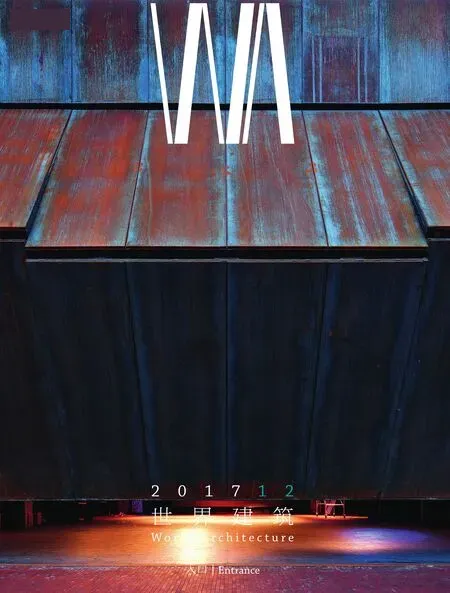
世界建筑 2017年12期
建筑設計:隈研吾建筑都市設計事務所
Architects: Kengo Kuma and Associates
十和田市民會館,青森,日本
Towada Civic Center Plaza, Aomori, Japan, 2014
建筑設計:隈研吾建筑都市設計事務所
Architects: Kengo Kuma and Associates

1 外景/Exterior view
這座木建筑是為人們集會而建的城市社區中心。建筑師在立面上使用了重復的屋頂,使之與周圍小房子的城市風貌融為一體。在外墻上,護壁板之間留出了距離,向北側的街道展示出溫暖親切的一面。建筑前面的街道延伸到室內,并由此得名“街道廣場”。它的周圍布置著兒童游樂室、烹飪坊和榻榻米房間。□(尚晉 譯)
This wooden building was constructed as the city's community center for people to gather. We repeated the roofs for the fa?ade so that it could merge into the neighbouring townscape of small houses. On the exterior wall, wainscot panels are applied with spaces in between, and it expresses a warm and friendly face to the street of the land to the north. The street in front of the building actually extends into the interior, and is given the name "Michi-no-Hiroba (plaza for the street)", around which a children's playroom, cooking studio and tatami room are arranged.□

2 西立面/West Elevation

3 東立面/East Elevation

4外景/Exterior views

5 外景/Exterior views
項目信息/Credits and Data
主要功能/Principal Program: 社區中心/Community Centre客戶/Client: 十和田市/Towada City
結構設計/Structure Engineering: 佐藤淳構造設計事務所/Jun Sato Structural Engineers
織物設計/Textile Design: 隈研吾建筑都市設計事務所,安東陽子設計/Kengo Kuma and Associates, Youko Ando Design
基地面積/Site Area: 5774.16m2
占地面積/Building Area: 1875.37m2
建筑面積/Floor Area: 1846.97m2
設計時間/Design Period: 2012.01-2013.02
施工時間/Construction Period: 2013.07-2014.10
攝影/Photos: 長谷川健太/Kenta Hasegawa

6 平面/Plan

7 內景/Interior views

8 內景/Interior views

9 內景/Interior views

10 內景/Interior views

11剖面/Sections

12 剖面/Sections

13 內景/Interior views
評論
何可人:親切而樸實無華的市民場所,和周圍的環境和諧共處,甚至連項目說明都跟建筑本身一樣簡潔沒有任何修飾之處。唯一可說的便是入口將室外的場地材料引入室內,內部不規則的房間形成具有動態的入口大廳和大小不同的公共空間。隈研吾這種“消失”的建筑概念,以及“同一屋頂下”的設計策略幾乎是放之四海而皆準,似乎適用于各種情境。這也符合全球經濟迅猛發展之后,人們對于環境的關注,從而思考建筑是否應該轉向低調的“消隱”。西方人會認為這樣的策略更加“東方化”,這也正是隈研吾的成功之處。而中國當代的“東方化”策略應當如何?官方和民間是否還處在后現代的“矯情”之中?我們是否也到了該認真討論的時候?王昀:一系列擁有地域性形態特征的折板下方,覆蓋著街道空間和市民會館的室內部分。在“整體”與“部分”的相互切換中,造成一種曖昧的空間感受。室外是室內的“反轉”的同時,室內房間中的等高線地形又讓人感覺如同室外的狀態,這一切是這個設計的匠心所在。延續著“曖昧”的主題,進一步將主入口的概念模糊處理,便于市民從四面八方的聚集。
Comments
HE Keren: A very intimate and austere civic place creates great harmony with the surroundings.Even its project description is as simple as the building itself, no unnecessary renderings. The only mentioning here is that the entrance introduces the outdoor paving into the interior, and helps to shape the various-sized, irregular public rooms and the dynamic lobby space. Kengo Kuma's concept of"disappearing" architecture, and his design strategy of "under one roof" seems being able to apply to anywhere, anytime, in any circumstances. This matches the global reflection on architecture and environment after the rapid economic growth. Should architecture be disappearing? Kuma's success relies on his "oriental" approach in the eyes of the westerns.While what would be Chinese architects' approaches in terms of "orientalisation"? When in China the official and secular tastes in architecture still linger among the post-modernist "kitsch", is it time now to give it a serious consideration?
WANG Yun: Below the folded plates that have regional morphological features are street spaces and the indoor space of Towada Civic Center Plaza. The switches between the "whole" and "part" result in an ambiguous space perception. The outdoor space is the"reverse" of the indoor space, at the same time, the indoor contour terrain makes people feel like staying out of doors, all of which are the ingenuity of the design. Continuing the theme of "ambiguity", the main entrance is further obscured to facilitate the public coming from everywhere to gather together.

14 內景/Interior views

15內景/Interior views

16 內景/Interior views
猜你喜歡
北方建筑(2021年6期)2021-12-31 03:03:54
文苑(2020年10期)2020-11-07 03:15:36
現代裝飾(2020年7期)2020-07-27 01:27:42
現代裝飾(2020年6期)2020-06-22 08:43:12
現代裝飾(2020年4期)2020-05-20 08:55:08
流行色(2020年1期)2020-04-28 11:16:38
藝術啟蒙(2018年7期)2018-08-23 09:14:18
海峽姐妹(2017年7期)2017-07-31 19:08:17
Coco薇(2017年5期)2017-06-05 08:53:16
福建農業科技(2016年10期)2016-03-07 09:46:49
- 世界建筑的其它文章
- 傳統文化與地景建筑的結合
——上海顧村規劃展示館設計TheCombination of Traditional Culture and Landscape Architecture: The Design of Shanghai Gucun Planning Exhibition Hall - 改進建筑60秒Sixty Second Idea to Improve Architecture
- 古建新衣
——歐洲城市如何通過創新性建筑系統翻新實現改變New Skin – Old Building: How European Cities are Changing そrough Innovative Retro fi t Building Systems - 地下空間的開放與流動:海牙地下電車隧道案例解析Open and Flowing Underground Space: Case Study of Hague Souterrain Tram Tunnel
- 定遠營古民居建筑形制初探Discussion on the Architectural Form of Ancient Dwellings in Dingyuanying
- 成都來福士,成都,中國CapitaLand Raのes City Chengdu, Chengdu, China, 2012