西渡社區外來孕產婦孕產期保健管理現況調查
2018-01-13 10:16:16王燕南顧曉青陳海英唐秀林錢磊
上海醫藥 2018年24期
王燕南 顧曉青 陳海英 唐秀林 錢磊
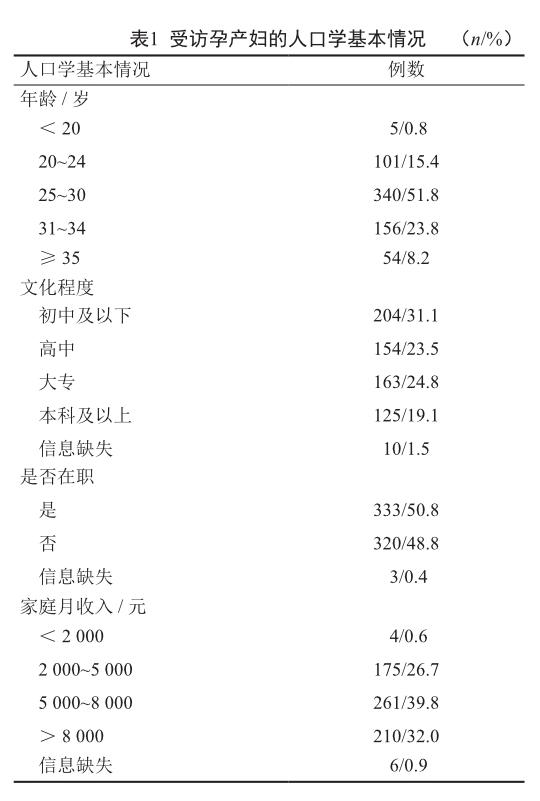
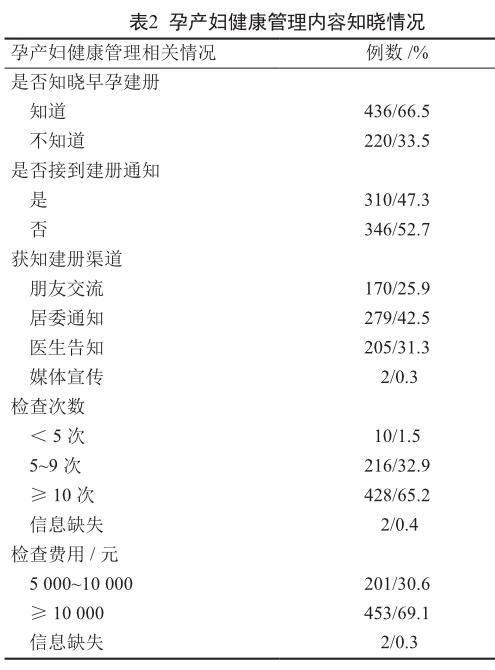
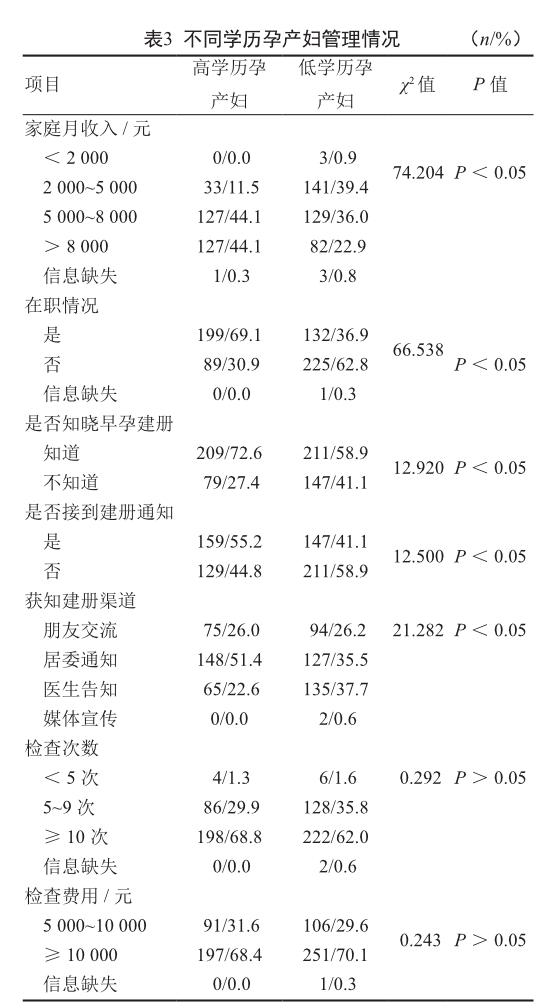
摘 要 目的:通過對西渡社區衛生服務中心建冊并在滬產檢的外來孕產婦進行調查分析,旨在提升外來孕產婦對孕產期保健服務的利用。方法:選取2016年7月—2017年6月在中心建冊及在滬進行產檢的656名外來孕產婦就其基本情況、獲知建冊渠道、是否接到建冊通知及產檢費用等問題進行調查,并對結果進行匯總、分析。結果:受訪孕產婦的平均年齡為28.59歲;文化程度以初中為主(31.1%);66.5%的孕產婦知道應進行早孕建冊,主要的獲知渠道為居委通知、醫院告知等方式;正式接到建冊通知者占47.3%;高學歷孕產婦與低學歷孕產婦在家庭月收入、在職情況、早孕建冊知曉率、是否接到建冊通知、獲知建冊渠道等方面的差異均有統計學意義(P<0.05);但不同學歷孕產婦在檢查次數及費用方面的差異無統計學意義(P>0.05)。結論:低學歷孕產婦對孕產婦保健服務利用率較低,多部門、多地區應聯合出臺相關政策,對低收入孕產婦的部分醫療費用增加報銷力度,同時實施異地信息及時共享,對外來孕產婦做到全程連續性管理。
關鍵詞 孕產婦;孕產期保健管理;外來
中圖分類號:R715.3 文獻標志碼:A 文章編號:1006-1533(2018)24-0012-03
Investigation of the current health care management during pregnancy and childbirth for floating pregnant women in Xidu Community
WANG Yannan1, GU Xiaoqing2, CHEN Haiying2, TANG Xiulin1, QIAN Lei1(1. Gynaecology and Obstetrics Department of Xidu Community Health Service Center of Fengxian District, Shanghai 201401, China; 2. Xidu Community Health Service Center of Fengxian District, Shanghai 201401, China)
ABSTRACT Objective: To investigate and analyze the floating pregnant women whose documents were registered and checked in Xidu Community Health Service Center in Shanghai to promote the utilization of health care management during pregnancy and childbirth. Methods: A total of 656 pregnant women who were registered in the Center from July 2016 to June 2017 and underwent obstetric examination in Shanghai were selected to investigate the basic situation, the channels for obtaining the information, whether to receive the notice of establishing documents and the cost of the obstetric examination, and the results were summarized and analyzed. Results: The average age of the pregnant women was 28.59 years old; the education level was mainly junior middle school(31.1%); 66.5% of the pregnant women knew that early pregnancy should be registered to establish documents, and the main channels of getting the notification were from the residents committee and the hospital; 47.3% of the pregnant women received the notification of the establishment of documents formally; and the differences in the monthly income of the family of the pregnant women with high and low education, occupational status, the awareness rate of the establishment of documents in the early pregnancy, whether receiving the notification, and the channels of obtaining the information and so on were statistically significant(P<0.05), but there was no significant difference in the number of examinations and costs among pregnant women with different education(P>0.05). Conclusion: The utilization rate of maternal health care service of loweducated pregnant women is relatively low. Relevant policies should be jointly promulgated in many departments and regions to increase reimbursement for part of the medical expenses of low-income pregnant women, at the same time, information sharing in different places should be implemented and complete continuous management should be carried out for floating pregnant women.