
A New Brooklyn Store Designed for Zero Waste減少食物浪費,從一家小店做起
2018-01-24 09:00:08ByAdamWernick翻譯Boy
瘋狂英語·新悅讀 2018年1期
⊙ By Adam Wernick ⊙ 翻譯:T Boy
我們都知道,紐約是一個高消費城市。高消費的其中一個后果常常是大量的垃圾和嚴重浪費。但在紐約,有些人并不覺得這些是理所當然的事。他們正盡一己之力,為改變這種現象而努力。盡管他們還不是紐約的主流,但他們也在悄悄地改變著紐約的形象。
1) fridge [fr?d?] n. 冰箱
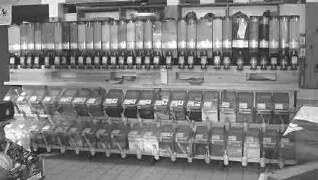
Host: If you’re like most people, you probably have a1)fridge and cupboard with a number of half-used packages. Even if you only need a cup or two of some ingredient, it comes by the2)pound or3)quart.And all too often, eventually what’s left goes4)stale and into the5)garbage. That waste was part of the reason Sarah Metz decided to6)launch a store called “The Fillery.” It’s designed to reduce waste and save money.You see, at The Fillery, shoppers will bring their own7)reusable containers and only buy what they need.
So, tell us about The Fillery. What kinds of goods are you planning to sell?
Sarah: We’ll have everything from nuts and seeds to baking ingredients, whole grains,coffee and tea, probably more than 100 different spices. And we’ll also have liquids like8)syrup and oil and vinegar, even a few household cleaning products will be9)available for10)refill.
Host: What inspired you to open this store?Sarah: I’ve been an eco-conscious person for a long time, and I moved to Brooklyn about 10 years ago, and, when I saw the amounts of waste being11)generated in New York City, I was just12)shocked. I thought back to a store I shopped at in Michigan, and it was a small bulk store, and I really loved that concept, and, still, after 10 years of living in my neighborhood, nothing like that exists.So, I just decided to do it myself.
Host: So how much waste do stores typically produce, Sarah? What are we talking about here?
Sarah: Right, that varies quite a bit depending on what type of store you’re talking about or what type of business. But a report that was in Politico13)estimates that waste collection trucks14)haul approximately 10,000 tons of business waste every single day in New York,so you can imagine there are probably a very conservative estimate would be 100,000 businesses, so, about 200 pounds per business per day on average.
Host: So, how much do you expect to reduce food waste? We see figures that about a third of all food is wasted, one way or another.
Sarah: Right! I think that teaching people to buy only what they need is gonna be a big part of that. Community education is a big part of what we hope for The Fillery to offer, and part of that will be teaching people how to plan their meals and how to buy in quantities that are useable for them before the product goes bad. So, we are hoping that that will contribute to reduction of food waste.
Host: Hey, what will you do when people come to your store without containers? I mean that’s likely to happen.
Sarah: It is very likely to happen, and I think that’s one concern that many people haveis just the15)feasibility of carrying around their own containers if they’re not necessarily planning to go grocery shopping. We will have16)compostable paper bags available for dry goods, for free, for all customers. We will also have other containers for purchase, so everything from17)jars and tins and bottles for the liquids. Nothing plastic.
2) pound [pa?nd] n. 磅(重量單位,約0.454千克)
3) quart [kw??t] n. 夸脫(液體計量單位,約1.14升)
4) stale [ste?l] adj. 不新鮮的,陳舊的
5) garbage [?ɡɑ?b?d?] n. 垃圾,垃圾箱
6) launch [l??nt?] v. 開始
7) reusable [ri??ju?z?b?l] adj. 可再用的,可重復使用的
8) syrup [?s?r?p] n. 糖漿
9) available [??ve?l?b(?)l] adj. 可得到的,可利用的
10) re fi ll [ri??f?l] n. 再裝滿
11) generate [?d?en?re?t] v. 產生
12) shocked [??kt] adj. 震驚的
13) estimate [?est?me?t] v. 估計
14) haul [h??l] v. 拖,拉
15) feasibility [fi?z??b?l?t?] n. 可行性,可能性
16) compostable [k?m?p?st?bl]adj. 可堆肥的
17) jar [d?ɑ?(r)] n. 壇子,廣口瓶

見招拆招
And all too often, eventually what’s left goes stale and into the garbage.
All、too和often三個副詞加在一起,似乎讓人很難分清楚哪個是主,哪個是次,要弄明白意思就更難了。其實,all too是一個固定搭配,作“太,實在太”解,后常跟各種形容詞和副詞,強調程度。在本文的例句中,解決了all too這個問題,我們就知道all too often就是“經常,時常,常常”的意思,指事情發生的頻率非常高,如:
● She is all too ready to accept the job.(她太想要那份工作了。)
● All too often, kids trust their teachers more than others.(大多數時候,孩子信任老師多于他人。)
參考譯文
主持人:如果你的做法和其他大部分人一樣的話,那你的冰箱和櫥柜里可能會有不少食物只裝了一半的包裝盒。即使你只需要一兩杯某種烹飪原料,但它也是以磅或夸脫為單位售賣的。更多的時候,里面的食物會慢慢變得不再新鮮,被扔進了垃圾箱。這種浪費現象正是莎拉·梅茨決定開店的部分原因,她的店名叫The Fillery。這家店旨在減少浪費,并且為你省錢。你瞧,在這家店里,購物者會自己帶來可重復使用的容器,并且只購買自己需要的數量。
那么給我們講講The Fillery這家店吧。你打算在店里賣哪些商品?
莎拉:嗯,什么都有,堅果和瓜子、烘焙原料、全谷類食物、咖啡和茶,大概會有一百多種調味品。我們也會出售液體商品,如糖漿、油和醋,甚至有好幾種家居使用的清潔用品也可續買。
主持人:是什么促使你開這樣一家店呢?
莎拉:很長時間以來,我有較強的生態意識。我大約在十年前搬到布魯克林,了解了紐約市產生的垃圾量后非常震驚。我回想起我在密歇根州住時去購物的一家商店,那是一家售賣散裝商品的小店,我非常喜歡那種做法。可是我在自己的住宅區生活了十年,還是沒有看到類似的商店。于是我就決定自己干了。
主持人:那通常來說,莎拉,一般商店會產生多少垃圾呢?我們在談論的究竟是一個什么樣的狀況呢?
莎拉:嗯,商店或企業的類型不同,情況會很不一樣。不過,《政客》雜志上的一篇文章估計,在紐約,垃圾收集車每一天運送的企業垃圾大概是一萬噸。那你就可以想一下,一個非常保守的估計是紐約有十萬家企業,也就是說每家企業平均一天會產生兩百磅垃圾。
主持人:那么你預計你的店能減少多少食物浪費呢?我們看到的一些數據表明,大約有三分之一的食物會以不同的方式被浪費。
莎拉:對!我認為,教育人們只買自己需要的量是很關鍵的。我們希望在The Fillery提供的服務中,社區教育能成為一個重要的部分。我們會教人們如何計劃自己的餐飲,如何確保購買的數量可以在食物變質前食用完。我們希望這樣做會有助于減少食物浪費。
主持人:嘿,如果來店里的顧客沒有帶容器你們會怎么做?我的意思是,這情況很可能會發生呢。
莎拉:非常可能發生。我想許多人都會有這個顧慮:如果他們事先沒有打算去買食品,那把自家的容器隨身攜帶的做法并不現實。我們店會向所有顧客免費提供裝干貨的環保紙袋,這些紙袋可通過堆肥進行處理;我們也會出售其他容器,包括盛放液體的壇子、金屬罐和瓶子等,但不會提供塑料容器。
