Mark Dickson:Project Management Is into the Mainstream
2018-04-03 07:15:46尉艷娟
項目管理評論 2018年1期
文/本刊記者 尉艷娟
編者按
2017年PMI《職業脈搏調查》顯示,與2016年相比,項目管理在全世界范圍內得到了更多的重視和應用,在中國,目前有18萬人獲得PMP資格認證,全球每五個PMP里就有一位來自中國。但是,根據2017年的調查數據,因項目績效不好,每10億元投資中有9700萬元資金被浪費。那么,項目成功的秘訣是什么?中國的項目管理有什么特色?項目經理需要具備哪些特質?項目經理如何應對挑戰?敏捷管理的趨勢是什么?跨文化團隊管理如何進行?就以上話題本刊記者在2017PMI(中國)項目管理大會后采訪了當時的PMI董事會主席Mark Dickson。
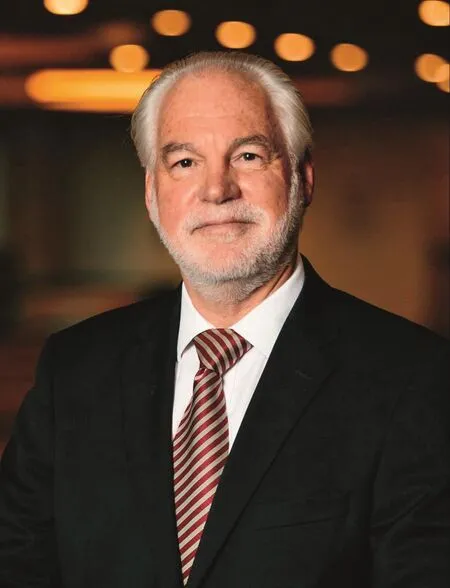
Mark Dickson,2017年擔任PMI董事會主席,MBA學位,擁有三十余年項目管理經驗,擅長項目治理、戰略實施等。
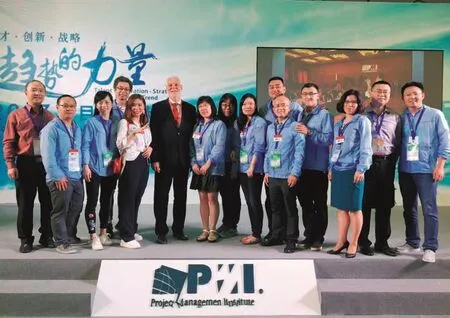
在2017 PMI(中國)項目管理大會期間,記者見到了Mark Dickson,當時他被前來合影的眾多“粉絲”包圍著,但依然保持著和善和耐心。當記者抱著試試看的態度發出采訪邀請時,他欣然答應了,在此深表感激。采訪中,他對每個問題的回答都認真、細致、條理,其專業精神和彬彬有禮令記者印象深刻。我很享受編輯他的文字,我相信他的見解一定也能激起讀者朋友們的共鳴與思考。
觀點精要
● 項目經理成功的關鍵:聚焦、造勢、溝通、氛圍營造。
● 在跨文化的團隊管理中,要尊重文化獨特性,平等對待每個個體,但“平等”不代表“相同”。項目經理要充分利用觀點和行為的多樣性,使其服務于團隊目標。
● 中國之所以能完成那么多成功的大項目,原因在于領導者有愿景,并能夠通過項目把愿景變為現實。令我印象深刻的是,中國的很多企業能夠迅速應對變化,并且把項目管理視作一項關鍵業務技能。
● 項目經理應具備的三大特質:誠實可信(說到做到,及時告知變更)、堅持不懈(面對未知和挫折,著眼于目標,有條不紊堅持交付)、靈活有度(制定計劃時要有應急儲備)。
● 敏捷并不是制度、愿景的缺失,變更必須有目的和價值。
● 人才是敏捷組織的基石,把項目經理的角色上升到戰略人才高度的組織才能更好把握機會。
● 從根本上講,項目管理是在管理變更,因而,項目經理應該把自己視作“變革推動者”。
● 是否有文化意識、能否跨文化工作可能是未來區分項目經理的關鍵因素。
采訪實錄
Q1
What are keys to success for project managers? You’ve led teams in different nations; how do you deal with cultural barriers in projects?
A:
The key to being a successful project manager is leadership; the ability to articulate a vision and align the team to the vision, guiding, influencing,communicating, motivating and inspiring. Projects are delivered by teams;successful projects are delivered by high-performing teams, so leaders should build high-performing teams and manage the team environment through:
● Focus. Identify key issues to achieve critical success factors and focus on them. Do not get distracted by project ‘noise’.
● Momentum. Build and maintain momentum. Get some early success to establish momentum — capitalize on progressive milestones to maintain momentum.
● Communication. Manage expectations of clients, sponsors, management team and stakeholders. Avoid surprises with regular communication with all stakeholders. Adjust your message to be relevant to each stakeholder and use the language of the stakeholder— be empathetic.
● Culture. Satisfy the team’s hygiene factors (establish fair conditions of employment, accommodation, travel and benefits); establish a good work environment; and establish a positive attitude and culture of success.
Projects of any size or complexity will be multi-disciplinary and multi-cultural.Regardless of position, discipline or culture, people are individuals and should be treated with respect. No culture is superior to another, and expecting people to adopt another culture is not successful in the long term because people cannot have job satisfaction and work efficiently if they are not allowed to be authentic or maintain their identity. Accommodating and accepting diversity, or giving exceptions for divergent behaviours because of cultural differences, can be patronising and often leads to inequity or dysfunction. It drives to a lowest common denominator and no one will be happy.
The most effective way to break barriers is to embrace all cultures, capitalising on the diversity of perspectives and behaviours, and engage with people equally (as distinct from the same), fairly,and if necessarily firmly, to establish credibility and respect. The key is to let people be themselves and build bridges between cultures.
Q2
What’s your impression on PM development in China?What impresses you most? In which aspect should China make more efforts?
A:
China has embraced project management and is a leader in recognizing the value of project management. China is a country renowned for large exciting and successful projects and is successful because it has leaders who have a vision— who dream! The change required to turn our leaders’vision into a reality can only be done through the execution of projects. I find it most impressive that organizations in China have rapidly made the link between change and implementing successful projects and recognize that project management is a critical business capability.
Q3
You have over 30 years of experience in managing and leading multi-disciplinary teams. Based on your experience,what are the top qualities of project managers? As a project manager, how did you deal with challenges in work?
A:
The top three qualities that project managers should have are:
● Integrity. Project managers must be able to establish their credibility, and to do that they must be the trusted source of information on the project. A project manager must be able to explain the nature and consequences of the project, both good and bad, to all stakeholders and continually manage expectations and establish a reputation for delivering what they promised. Most projects do not proceed strictly according to plans, and a good project manager will be able to communicate the good news and the bad news, so that there are no surprises and expectations are continually aligned to reality.
● Tenacity. Projects are essentially about change; change is not easy and change involves uncertainty. People are generally resistant to change, and uncertainty means that there will be setbacks. A good project manager will keep their eye on the end vision and systematically and tenaciously keep delivering, where a lesser person may despair or give up.
● Flexibility. Projects are delivered by people, for people, in an ever changing environment. Projects will seldom proceed strictly to plans. Good project managers will continually be aware of the current environment,with an eye into the future, and build flexibility into the project plan, think through contingencies and even have redundancies. Good project managers will have the structures and discipline to recognize change and to continually adapt resources, processes, systems and even the scope and deliverables to the changing circumstances.
As I said above, projects by their very nature are full of challenges. The best way to overcome challenges is to surround yourself with good capable people, and build a team with a positive ‘espirit de corps’. The best way to deal with challenges is to step back from the immediate pressure of the challenge, and take a holistic view with a clear head to separate the noise from the root causes. Then act on the root cause clinically and decisively employing the behaviours of a good project manager: integrity,tenacity and flexibility.
Q4
According to 2017 PMI’sPulse of the Profession Report,agile transformation drives positive change in business operations and project delivery. What’s your opinion on agility? What are the principles in building agile culture in a company?
A:
In practical terms Agility is the capacity to provide appropriate systems, structures and resources for projects and adapt them in response to change. Knowing when to use specific approaches avoids overly cumbersome processes when they aren’t needed and prevents chaos by providing the right level of oversight and controls.True agility is getting the right balance between control or compliance and action.
PMI research identifies that the five key elements to build an agile framework within an organization are:
● A supportive culture. The culture of an organization defines the organization. An organization can only be truly agile if the organization culture supports agile characteristics.
● Agile mindset. There are two factors that demonstrate an agile mindset: being good at change management and good at risk management.
● Collective leadership — a shared effort for the greater good. Leadership demonstrates agile behaviour and is actively engaged in ensuring that strategy is aligned to the execution of projects. It nurtures a culture of agility balanced with discipline. Agility is not an excuse for lack of discipline or lack of vision — change must have a purpose and a value.
● Adaptive process. In a volatile environment, over-reliance on a single set of processes is dangerous. Organizations should recognise change, develop new skills and competencies,move resources, and have the flexibility to select the right approach for the right project.
● Capable people. Capable people are the bedrock of Agile organizations. Organizations that elevate the roles of project managers to the level of strategic talent are better prepared to capitalize quickly on new opportunities and initiatives.
Q5
What do you think of the future of project management?
A:
In many industries project management is becoming seen as an essential business skill and being absorbed into the mainstream. Project management is no longer the domain of isolated specialists: technical and general management staff are expected to have project management competencies to be able to deliver relatively simple projects themselves, and project managers are expected to have business and leadership competencies to be up to deliver more complex projects within the organizational and strategic context.
Project management is fundamentally about managing change and project managers should see themselves as change agents. In the past project managers relied on, or were even judged by, their expertise within a particular discipline. Over time project managers were judged by their ability to master the technical aspects of the science of project management. Now and into the future project managers are expected not only to understand the principles of their discipline, and related disciplines, and to have mastery of the technical aspects of the science of project management, but to be able to function as an appropriate business professional.
Business in general is becoming more integrated and more global. Understanding the cross connectivity of business is important but more and more having a cultural intelligence and successfully working across cultures is becoming essential. This may actually be a key differentiator in the future.
Q6
As far as you’re concerned, what’s the significance of publishing a project management magazine (like ours)in China?
A:
Project Management magazines are essential for professional development, providing a means to stay abreast of changes in the profession, providing news and information about changing conditions affecting projects and awareness about new concepts, new research and new tools and techniques. Magazines can provide a network and other resources to advance your career and establish credibility in the marketplace.
猜你喜歡
今日農業(2022年15期)2022-09-20 06:56:20
建材發展導向(2022年10期)2022-07-28 03:04:30
建材發展導向(2021年14期)2021-08-23 00:57:24
現代企業(2021年2期)2021-07-20 07:56:54
中央社會主義學院學報(2019年5期)2019-11-11 12:10:42
建材發展導向(2019年11期)2019-08-24 06:36:28
藝術評論(2017年12期)2017-03-25 13:47:38
雜文月刊(2016年1期)2016-02-11 10:35:51
現代企業(2015年8期)2015-02-28 18:54:47
現代企業(2015年1期)2015-02-28 18:44:00