
Observation on clinical effects of acupuncture plus external medicine application forcervical radiculopathy
2018-06-28 09:27:56WuJixin吳繼新ZhiYong智勇
Wu Ji-xin (吳繼新), Zhi Yong (智勇)
1 The Sixth Hospital Affiliated to Xinjiang Medical University, Urumqi 830002, China
2 School of Chinese Medicine, Xinjiang Medical University, Urumqi 830011, China
Cervical radiculopathy is among the most common types of cervical spondylosis in clinical practice,accounting for about 60% and having the highest incidence[1]. In recent years, as people's dependence on mobile phones, computers, and other electronic products has increased, the incidence of cervical spondylosis has continued to increase, and the age of onset continues to become younger, which has, to a certain extent, reduced the quality of life (QOL) of the patients[2-3]. Effective and timely treatment can prevent the further development of the disease and reduce the suffering of patients. The purpose of this study was to observe clinical efficacy of acupuncture plus external medicine application in the treatment of cervical radiculopathy. The result of the study is given as follows.
1 Clinical Materials
1.1 Diagnostic criteria
Diagnostic criteria in Chinese medicine: In accordance with the diagnostic criteria in theCriteria of Diagnosis and Therapeutic Effects of Diseases and Syndromes in Traditional Chinese Medicine[4].
Diagnostic criteria in Western medicine: In accordance with theStandard Criteria for Diagnosis of Cervical Spondylosisstipulated on the Second Symposium on Cervical Spondylosis[5].
1.2 Inclusion criteria
In conformity with the above diagnostic criteria of Chinese and Western medicine; age ranged from 20 to 65 years old; disease duration ranged from 2 to 6 months; without neurological or psychiatric diseases;without diseases of organs such as heart, liver, kidney or lungs; signed the informed consent of the clinical trial.
1.3 Exclusion criteria
Those who had cognitive impairments; those with other diseases related to the nervous system; those with organ diseases involving heart, liver, kidney, and/or lungs; those who cannot tolerate Uygur medicine; and those who did not agree to participate in this study.
1.4 Statistical methods
SPSS version 19.0 statistical software was used for statistical analysis. The counting data were described by rate or composition ratio and processed by Chi-square test. The ranked data were processed by the sum test.The measurement dxata were expressed as mean ±standard deviation (±s), the pairedt-test was used for intra-group comparison. The independent samplet-test was used for comparison between two groups.P<0.05 indicated a statistically significant difference.
1.5 General data
A total of 98 patients with cervical radiculopathy admitted to the Acupuncture and Moxibustion Department of Urumqi Traditional Chinese Medicine Hospital and the Sixth Hospital Affiliated to Xinjiang Medical University between October 2013 and December 2015 were enrolled in accordance with the inclusion criteria. They were randomly divided into an observation group (50 cases) and a control group (48 cases) based on the random digital table. The differences in gender, age and duration between the two groups were not statistically significant (allP>0.05),indicating that the two groups were comparable(Table 1).
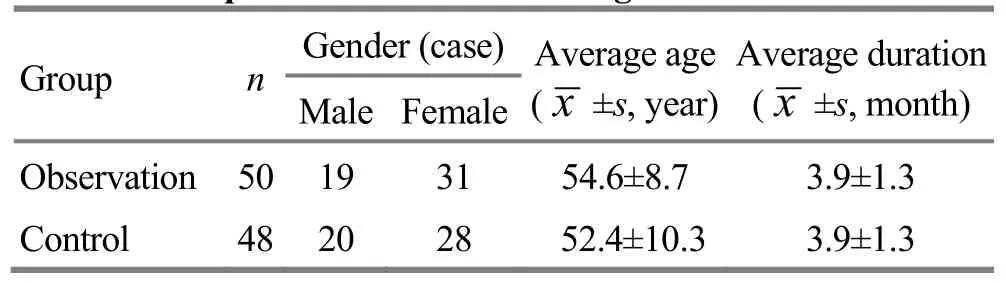
Table 1. Comparison of the two sets of general data
2 Methods
2.1 Observation group
2.1.1 Acupuncture treatment
Acupoints: Fengfu (GV 16), Fengchi (GB 20), Cervical Jiaji (Ex-B 2) points, Jianjing (GB 21), Dazhui (GV 14) and Baihui (GV 20)[6].
Methods:After routine disinfection, conventional stainless filiform needles of 0.25 mm in diameter and 40 mm in length were used to puncture the above acupoints. After the arrival of needling sensation, even reinforcing-reducing manipulation was performed[7].Cervical Jiaji (EX-B 2) points should not be punctured too deep. Each time the needles were retained for 30 min. The treatment was given once every day and 10 d made a course.
2.1.2 Medicine application
Preparation of externally applied medicine: Jilma Oak(translated according to the pronunciation, it belongs to Uyghur medicine),Wei Ling Xian(Radix Clematidis),Ge Gen(Radix Puerariae),Tou Gu Cao(Herba Speranskiae Tuberculatae) andHong Hua(Flos Carthami) were milled into powder. The five herbs were at a ratio of 4:2:2:1:1 and immersed in 75% alcohol with the liquid level appropriately above them for 24 h before use.
Acupoints: The same acupoints as those selected in acupuncture treatment. Hair covered acupoints such as Baihui (GV 20), Fengchi (GB 20) and Fengfu (GV 16)were shaved before external medicine application.
Methods:Five grams of the above mentioned medicine made into 1 cm × 1 cm herb cakes were applied to each acupoint. The herb cakes were attached to each acupoint by a tape for 12 h every day for continuous 10 d.
The patients in the observation group received acupuncture treatment at the first place, after which the patients took a five-day rest, and external medicine application was adopted afterwards.
2.2 Control group
The control group received the same acupuncture treatment exclusively as the observation group.
3 Therapeutic Effect Observation
3.1 Symptom quantitative score
Tanaka Yasuhisa's 20-point cervical spondylosis symptom scale was used for assessment[8]. The scale mainly involves 9 aspects: pain and discomfort in the neck and shoulders, pain and numbness in the upper limbs, finger pain and discomfort, work and ability of daily life, hand function, intermaxillary compression test,sensation, strength and tendon reflex. These 9 aspects include the main symptoms and signs of cervical radiculopathy. The highest score is 20 points. The lower the score, the severer the symptoms.
3.2 Efficacy criteria[4-5]
Cure: Symptoms and positive signs completely disappeared; X-ray examination results showed normal or almost normal.
Markedly effective: Symptoms and positive signs disappeared; X-ray examination showed an improvement in cervical lordosis.
Improved: Symptoms and positive signs were reduced to a great extent, neck and limb function greatly improved; X-ray examination results suggested that the cervical lordosis was improved; basic daily work can be accomplished.
Invalid: No significant improvement in symptoms and positive signs; X-ray examination showed no change in cervical lordosis.
3.3 Results
3.3.1 Comparison of clinical efficacy
The total effective rate was 98.0% in the observation group versus 87.5% in the control group. There was a significant difference between the two groups (P<0.05).The cure rate in the observation group was 52.0%,which was higher than that in the control group (18.8%),there was a significant difference between the two groups (P<0.05). There was a statistically significant difference in the distribution of efficacy between the two groups (P<0.01), (Table 2).

Table 2. Comparison of clinical efficacy between the two groups (case)
3.3.2 Symptom score comparison
Before the treatment, there was no significant difference in the score of symptoms between the two groups (P>0.05). After the treatment, the scores of both groups were significantly higher than those before the treatment (bothP<0.05). After the treatment, the score in the observation group was significantly higher than that in the control group, and the difference between the two groups was statistically significant (P<0.05),(Table 3).

Table 3. Comparison of the symptom score (x±s, point)
4 Discussion
Traditional Chinese medicine believes that cervical radiculopathy belongs to the category of Bi-impediment syndrome of the neck, This condition is caused internally by tendon/muscle injury and externally by wind, cold and dampness. As a result, the treatment strategies are to warm yang and unblock meridians[9].
In this study, according to the syndrome differentiation based on meridians, the acupoints of Shaoyang Meridians and Governor Vessel were taken,for Shaoyang Meridians are responsible for diseases of bones, and the Governor Vessel is the sea of yang meridians. Acupuncture at the relevant acupoints of the above meridians can invigorate yang qi and encourage blood flow of the whole body. If the general condition is in a smooth way, all pains will be eliminated[10].Following the principle of selecting both local and distant acupoints, local acupoints such as Fengfu(GV 16), Fengchi (GB 20), cervical Jiajia (EX-B 2) points,Jianjing (GB 21), Dazhui (GV 14) and Baihui (GV 20)were adopted. Fengchi (GB 20) is located in the upper segment of the cervical spine and is a key acupoint for treating severe neck pain[11]. Jiaji (EX-B 2) points are significant acupoints in the treatment of pain in the neck and lower back. Experimental studies have shown that electroacupuncture at Jiaji (EX-B 2) points can reduce nervous stress, inhibit the transmission of nociceptive information, improve the microcirculation around nerve roots, and promote the repair of damaged nerves[12]. Jianjing (GB 21) in located on the Gallbladder Meridian which travels along the neck and shoulders. It is the reason that acupuncture at Jianjing(GB 21) can unblock meridians and stimulate qi and blood circulation in the neck and shoulders[13]. Fengfu(GV 16) is located at the junction of the neck and brain,close to the vertebrobasilar artery, and is closely related to the neck and brain. Acupuncture plus external medicine application at Fengfu (GV 16) can remove the wind and warm to regulate blood circulation[14]. Dazhui(GV 14) is a crossing acupoint of the Governor Vessel and three yang meridians of hand and foot. To puncture Dazhui (GV 14) plus external medicine application can invigorate and warm yang qi, promote blood circulation and eliminate blood stasis[15]. Baihui (GV 20) is located at the top of the head. It is the joint of all yang meridians. It can invigorate yang qi and unblock meridians. Modern medical studies have shown that stimulation to Baihui (GV 20) can improve local blood circulation, reduce vascular resistance, significantly accelerate the posterior cerebral artery blood flow velocity, and increase cerebral arterial blood flow[16].
The medicines used in this study were formulated from Jilma Oak which belongs to Uyghur medicine,Wei Ling Xian(Radix Clematidis),Ge Gen(Radix Puerariae),Tou Gu Cao(Herba Speranskiae Tuberculatae) andHong Hua(Flos Carthami). They have the effects of warming meridians, smoothing collaterals, dispersing cold,removing wind, and eliminating blood stasis[17]. External applying herbs to acupoints can reduce the tension of muscles and contracture of ligaments and restore the static balance of muscle-ligament groups in the neck,thereby improving the patient's clinical symptoms. One of the major causes of cervical spondylosis is degeneration of cervical intervertebral discs[18-21].Related studies have confirmed that Uyghur medicine has a significant therapeutic effect on cervical radiculopathy[22]. It can inhibit pain and improve clinical symptoms by affecting serum interleukin-1β (IL-1β) and calcitonin gene-related peptides (CGRP), thereby improving the QOL of patients[23].
The results of this study showed that the total effective rate and cure rate of the observation group were higher than those of the control group, and the difference between the two groups was statistically significant (bothP<0.05), indicating that acupuncture plus external medicine application has a good clinical effect. The scoring results of cervical spondylosis symptom scale (20-point method) showed that the clinical symptoms of the two groups were improved,but the improvement of the observation group was better than that of the control group (P<0.05), which showed that external medicine application can improve the QOL of patients with cervical radiculopathy.
In summary, acupuncture plus external medicine application for cervical radiculopathy is reliable, simple to implement, and worthy of clinical promotion.
Conflict of Interest
There was no potential conflict of interest in this article.
Acknowledgments
This work was supported by Natural Science Foundation of Xinjiang Uygur Autonomous Region (新疆維吾爾自治區自然科學基金項目, No. 2013211A115).
Statement of Informed Consent
Informed consent was obtained from all individual participants included in this study.
Received: 28 October 2017/Accepted: 15 November 2017
[1] Li JN, Leng YL, Sun R. Spinal nerve localization combined with three yang meridian acupoints to treat 60 cases of radicular cervical spondylosis. Zhongguo Zhen Jiu,2014, 34 (9): 887-888.
[2] Li LJ, Xu LP, Li YY, Huang CC. Research progress in quality of life and care of patients with cervical spondylosis.Zhonghua Xiandai Huli Zazhi, 2013, 19(16): 1960-1961.
[3] Yao T. A Clinical Observation on Cervical Spondylotic Myelopathy (CSM) Treated by Tongbi Yishen Decoction.Wuhan: Master Thesis of Hubei University of Traditional Chinese Medicine, 2014.
[4] State Administration of Traditional Chinese Medicine.Criteria of Diagnosis and Therapeutic Effects of Diseases and Syndromes in Traditional Chinese Medicine. Nanjing:Nanjing University Press, 1994: 186.
[5] Sun Y, Chen QF. Summary of the Second Symposium on Cervical Spondylosis. Zhonghua Waike Zazhi, 1993, 31(8):472.
[6] Chen Y. Clinical Research of Point Injection Combined with Routine Acupuncture Therapy in Treating Cervical Spondylotic Radiculopathy. Hangzhou: Master Thesis of Zhejiang Chinese Medical University, 2016.
[7] Zhang ZM, Fan ZY, Huang W. Effect of abdominal manipulation combined with acupuncture on cervical spondylosis of vertebral artery type. Zhenjiu Linchuang Zazhi, 2013, 29(1): 15-17.
[8] Tanaka Y. Judgment criteria for treatment of cervical radiculopathy. J Orthop Sci, 1993, 67(3): 552.
[9] Wang R, Zhuang Y, Qin EQ, Luo HS. Therapeutic effect of Jingtongning mixture acupoint iontophoresis in treatment of cervical radiculopathy. Zhongchengyao, 2015, 37(1):234-236.
[10] Liu SJ, Liang J, Pan CA, Yang Y, Zhu DX. Observation on clinical effects of acupuncture plus cupping therapy for cervical radiculopathy. J Acupunct Tuina Sci, 2016, 14(4):290-294.
[11] Wang HC. Clinical Research on the Effect of Acupuncture Combined with Point Sticking Therapy for Nerve Root Type Cervical Spondylosis. Guangzhou: Master Thesis of Guangzhou University of Chinese Medicine, 2011.
[12] Bai SL, Ying DJ. Systematic Anatomy. Beijing: People’s Medical Publishing House, 2002: 7.
[13] Su X, Wu ZQ. Clinical observation on 84 cases of cervicalshoulder syndrome treated by electroacupuncture at Jianjing (GB 21). Zhongguo Zhen Jiu, 2001, 21(12): 713-714.
[14] Huang HY, Wang XL. Effect of gentle moxibustion on hemorheology in cervical spondylotic vertebral arteriopathy. Shanghai Zhenjiu Zazhi, 2016, 35(8): 983-985.
[15] Jiang ZY, Li CD. Clinical observation on treatment of cervical spondylosis with poking Dazhui Bazhen points.Zhongguo Zhen Jiu, 2001, 21(2): 94-96.
[16] Li YM, Zhuang LX, Li YH. Observations on the efficacy of pressing moxibustion on point Baihui (GV 20) plus acupuncture at cervical Huatuo Jiaji (EX-B 2) points in treating cervical vertigo. Shanghai Zhenjiu Zazhi, 2012,31(2): 112-113.
[17] Huang PC. Data Mining and Clinical Drug Efficacy Analysis on Chinese Medicine Treatment of Knee Osteoarthritis. Nanjing: Doctor Thesis of Nanjing University of Chinese Medicine, 2015.
[18] Zhao DL. Modern Cervical Spondylosis. Beijing: People’s Medical Publishing House, 2001: 115-117.
[19] Shen QS, Wang HR, Jia HL, Zhang YC. Clinical efficacy on cervical spondylosis with vertebral artery type by the near and far point method. Zhenjiu Linchuang Zazhi, 2016,32(5): 33-34.
[20] Zhu WJ. Clinical effect observation on liver-regulating and blood-tonifying acupuncture for cervical spondylosis of vertebral artery type. J Acupunct Tuina Sci, 2017, 15(5):382-386.
[21] Paholpak P, Nazareth A, Barkoh K, Lee LV, Lucas J, Buser Z, Wang JC. Space Available for Cord, Motion, and disc degeneration at the adjacent segments level of degenerative cervical spondylolisthesis using kinematic MRI. J Clin Neurosci, 2017, 45: 89-99.
[22] Zhao Q, Pei CQ, Zhu F, Ai BW. Effect of electroacupuncture therapy combined with topical Uyghur medicine on the serum IL-1β and calcitonin gene-related peptide in the model rats of lumbar disc herniation. Jiangxi Zhongyiyao, 2008, 39(2): 39-40.
[23] Zhao Q. The Clinical and Laboratory Research about Curing LIDP by Combining Electroacupuncture with Wei-medicine Applied Exteriorly. Nanjing: Master Thesis of Nanjing University of Chinese Medicine, 2008.
 Journal of Acupuncture and Tuina Science2018年3期
- Journal of Acupuncture and Tuina Science的其它文章
- Influence of acupuncture on pulmonary function of patients with asthma: a review
- Observation on lower-reinforcing and upperreducing acupuncture method for hyperplasia of mammary gland and its influence on estradiol and progesterone
- Clinical observation on electroacupuncture at four sacral points for overactive bladder syndrome
- Clinical observation on electroacupuncture plus hydro-acupuncture for low back pain caused by compression fractures
- Observation on clinical efficacy of warm needling therapy for chronic lumbar strain
- Effect of acupoint sticking at Shenque (CV 8) for preventing spleen-stomach disharmony caused by venous analgesia pump