項目領導力陰陽平衡,軟硬適度
2018-09-10 00:07:06尉艷娟
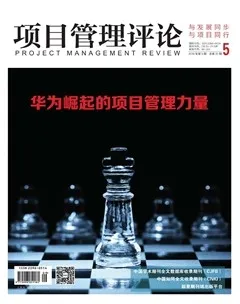
項目管理評論 2018年5期
尉艷娟
“項目管理的目標不再局限于預算、進度、質量。項目若要產生影響力和持久價值,項目經理需學會做項目領導者,包括制定戰略、創新、激勵、授權、開展合作。” 蘇珊娜·馬德森(Susanne Madsen)如是說。
蘇珊娜·馬德森,國際知名項目領導力顧問、教練、培訓師,英國項目管理協會(APM)成員。在花旗集團、摩根大通公司等有過近20年的項目管理經驗。“項目領導力學院”聯合創始人,曾出版圖書《項目管理訓練手冊》(The Project Management Coaching Workbook) 、《項目管理中的領導力》(The Power of Project Leadership,有中譯本)。
蘇珊娜·馬德森認為,項目經理和項目領導者的主要差別在于:項目經理在管理任務,而項目領導者在領導人。管理靠的是邏輯和權威,而領導靠的是影響力。蘇珊娜·馬德森發現她身邊的大多數項目經理太過于注重任務。她主張,領導力是通過提問、協同合作、傾聽、給予安全感等與成員建立關系。領導力技巧可以通過學習獲得,秘訣是提升自我意識和情商。
蘇珊娜·馬德森強調,項目領導力有陰陽兩面,“陰”是基于心的管理方式;而“陽”是基于腦的理性管理方式。項目領導力不是非此即彼,而應做到陰陽平衡、軟硬適度。
“壓力山大”是項目經理工作的常態。蘇珊娜·馬德森建議,面對壓力,項目經理應改變看待壓力事件的視角,設立工作界限,通過在業余時間投身愛好,來激發和恢復活力。
多數失敗的項目往往一開始就失敗了。采訪中,蘇珊娜·馬德森特意為項目經理支招兒。她說,項目啟動初期,三點不容忽視:了解項目的重要性和商業環境;找出重要決策者并與其建立牢固信任關系;與核心團隊共同制定基本規則。
采訪最后,蘇珊娜·馬德森特別提醒到,項目經理應避免逼著團隊成員做事情。他們需要增強影響力技能,與項目團隊成員建立更高層次的信任關系。人都喜歡被欣賞,排斥被管得太死,項目經理應避免“微觀管理”,只關注目標和產出。
Interview
Youve said that project managers must learn how to lead. Why?
Susanne Madsen: In todays “more for less” culture, the expectations of project management and delivery are no longer limited to budgets, schedules and quality. For projects to make an impact and have lasting value, project managers must be able to strategize, innovate, motivate, empower and collaborate; in other words, they must learn how to lead. My book The Power of Project Leadership helps project managers transform into an effective project leaders by shifting their managerial mindset into one of inspiration, motivation and influence. The book describes what good project leadership looks like and explains how to make the transition using tangible tools and strategies.
From your perspective, what qualities distinguish a project leader from a project manager? What are the secrets to make the transition from a project manager to project leader?
Susanne Madsen: A good project manager is someone who is rational and logical and who is good at producing a set of products and services in a predictable way, on time, on budget and to a consistent quality. A project leader is someone who is good at setting goals, making improvements to existing ways of working and motivating and leading the team to reach this new direction. To run a project successfully, we need both of these skill-sets. We have to manage tasks and lead people. If we are stuck in management side, it means that we rely on logic and authority to get work done. When we begin to act more as leaders, we begin to rely on influence.
Most project managers I work with are too task-oriented and dont understand that leading people isnt about pushing them or being overly directive. Leadership is about engaging through questions, working collaboratively, listening and making people feel safe. But its also about having tough conversations and being able to stretch and challenge others. Most project managers havent been taught how to do that, and the biggest shortcoming in my view is interpersonal skills and emotional intelligence.
Leadership skills can be learnt with conscious effort and a desire to collaborate with clients and team members in a deeper and more responsible way. The “secret” is for people to develop their level of self-awareness and emotional intelligence. This can be done by attending leadership workshops, reading leadership books, studying human psychology and working with a coach.
You mentioned Yin and Yang side of project leadership. Would you please elaborate on that point?
Susanne Madsen: Yin symbolizes such feminine elements as listening, supporting, coaching and maintaining stability. Supportive yin-leaders respect people and are eager to know what drives and motivates each member. They spend one-on-one time with team members, helping them to grow and develop and build up their confidence. They are good at praising people for a job well done and will often ask what type of help the individual needs.
Yang symbolizes the masculine element, which is challenging, demanding and factual. Yang-leaders set a high standard and expect the team to deliver to it. They have a strong sense of direction. They are action-oriented and results-driven. They ask challenging questions, hold people to account and may come across as forceful. They are assertive and push the team to deliver to the best of its ability and expect nothing but excellence.
We could say that yin is a predominant heart-based approach, whereas yang is a predominant rational or head-based approach.
Project leadership involves a high degree of yin as well as yang. Team members need both from their manager in order to perform and thrive. We have to support and enable people to lead on the one hand, whilst on the other challenge and drive results.
Imbalance in yin and yang creates a lopsided leadership style. When managers have a preference for either yin or yang, they can develop a lopsided or dysfunctional style. Leaders who have a lot of yang, and very little yin, tend to create stress around them. They demand a lot but dont give the team the security, confidence and space it needs to perform. On the other hand, when leaders only use yin, they run the risk of being too soft and nice and supporting people without looking for a return.
Project teams need the dynamic tension of both yin and yang and leaders need to reconcile the two. Leadership is not about “either/or” but about “and”. We must be enabling and forceful; forgiving and demanding; flexible and tough; supportive and challenging.
How can project leaders free themselves from too much stress?
Susanne Madsen: Its true that working on projects can be stressful with looming deadlines, demanding clients and endless to-do lists. The way project leaders can increase their ability to cope with high-pressure environments is to challenge their perceptions of the events that stress them and by setting personal boundaries.
They can do that by asking themselves what some of their beliefs are that cause them to be overworked. Do they believe that to be a good project manager they have to work as hard as possible? Do they feel that they have to be perfect and always in control? The trick is to insert some new beliefs instead of the old ones, such as “Between the hours of 9 to 6 I do my very best to lead the project. After 6pm I allow myself to switch off, to reenergise and to focus on my own needs.”
Id also like to mention the importance of spending more time doing what they love and what gives them energy during their spare time. When we work too much or worry about work, it drains us from energy, which makes us even more susceptible to stress. To be an effective project management leader, we have to feel strong in our body and in our mind. We can do that by reenergising ourselves during our spare time.
What should project managers pay special attention to during kickoff of a project?
Susanne Madsen: There is a range of things that project managers have to pay attention to when kicking off a project. Ill highlight three items here that I feel are often overlooked.
The first area that needs special attention is to find out why the project is important and to validate that it has an acceptable business case. The project manager is not responsible for the business case, but its important that they are familiar with it and that they buy into it. Too many projects get kicked off without a clear objective, rationale or benefit and when it later runs into trouble, it can easily reflect badly on the project manager. Fully understanding the business case will make the project manager better able to make decisions and steer the project in the right direction.
The next item is to understand who the decision-makers are and to build strong relationships of trust with them. Project managers need to ask themselves who the most important decision-makers are and how supportive they each are of the project. Its also important to understand who should be on the steering committee, as the most senior decision-makers need to meet on a regular basis to provide executive guidance for the project.
The third item worth mentioning is the importance of setting ground rules. Many projects dont get completed in the desired timeframe or in the way the project manager was hoping for. The fundamental problem is that the project manager has a set of expectations that have never been explicitly stated or discussed. Having a rulebook that no one has had input to is a recipe for conflict. The best way to create an effective and harmonious project team is for the team to produce a common set of ground rules that addresses how they will work together. Its not for the project manager to set these rules but for the core team to define them. It doesnt matter what the rules are as long as they have been collectively agreed and work for everyone.
As project managers, time is essential. How can they avoid chasing team members?
Susanne Madsen: You are right that many project managers find that they have to chase people to get work done, which is time consuming and frustrating. My advice is to strengthen their influencing skills and build higher levels of trust with the people on their project. They can do that through collaboration and inclusion and by accepting that their relationship with the team shouldnt be a transactional one. The key is to show empathy and to take a greater interest in the people they are asking to do work for them. They have to find out what the team member likes the most or the least about their job and use that to strengthen the bond between them. Trust is built and earned over time by listening, sharing, asking questions and by being honest and fair. Its also built by involving people in the work they do.
Another thought is that most people dont want to be tightly managed or told what to do. They want to feel appreciated and have the autonomy to decide how to do their work. Project managers wont be able to provide people with ultimate autonomy, but they can avoid micro managing team members by focusing on the objectives and outcomes of the work they delegate. They should agree with people what a good outcome looks like rather than defining how to do it – i.e. how will we measure that the task has been properly completed and how will we measure progress along the way? When the project managers agree these parameters up front with team members, they make people feel part of the process and strengthen buy-in to the project.
猜你喜歡
今日農業(2022年15期)2022-09-20 06:56:20
建材發展導向(2022年10期)2022-07-28 03:04:30
建材發展導向(2021年14期)2021-08-23 00:57:24
現代企業(2021年2期)2021-07-20 07:56:54
建材發展導向(2019年11期)2019-08-24 06:36:28
建材發展導向(2019年10期)2019-08-24 06:26:30
建材發展導向(2019年10期)2019-08-24 06:26:20
中國資源綜合利用(2017年4期)2018-01-22 02:46:47
雜文月刊(2016年1期)2016-02-11 10:35:51
現代企業(2015年8期)2015-02-28 18:54:47