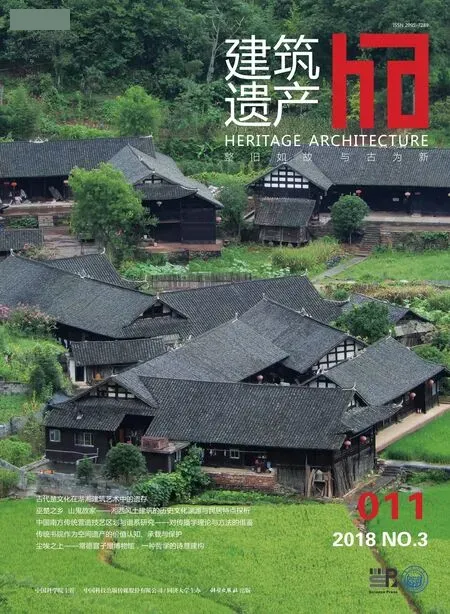
沃菲爾德風土圖記 Ⅺ 幽靈、影子與重寫本:建筑中的記憶
2018-10-18 03:58:56詹姆斯沃菲爾德顧心怡譯孫新飛譯校
建筑遺產 2018年3期
[美]詹姆斯 · 沃菲爾德顧心怡 譯孫新飛 譯校
澳大利亞內陸地區,一座普通的黃金礦工房屋里,破爛的蕾絲窗簾依然映襯著窗外的荒漠景象。在半個多世紀的歲月里,這座富饒的金礦以在世界另一端的故鄉威爾士的一座小鎮命名,有著一個浪漫的名字——“瓜利亞之子”。鉆工和礦工曾一度大量涌入這個偏遠的地方,但他們的離去也同樣迅速——1963年的新年前夜,這座金礦突然關閉。礦工們離開時只帶著手提箱,里面除了必需品,其他都被拋諸身后,留下一座鬼城。很快,內陸嚴苛的自然環境就重新占領了這片土地,但時至今日,有關瓜利亞的記憶和影子依然存在。
Tattered lace curtains still frame the desert view from a gold miner’s humble home in the Australian Outback.For over half a century, the rich Australian goldmine romantically named ‘Sons of Gwalia’ after a hometown in Wales half a world away, drillers and miners had flocked to this far-off site.They fled just as rapidly when the mine was abruptly closed on New Year’s Eve in 1963.With only suitcases in hand, the miners abandoned all but the essentials, leaving a ghost town behind.The bitter Outback elements soon reclaimed the land, but even today,memories and shadows of Gwalia endure.
人類記憶與建筑扮演了怎樣的角色?
建筑的美好之處在于,它能夠通過感官和情緒‘接入’一個人過去的重要經歷。建筑還能為創造有意義的經歷搭設舞臺,而記憶正是使這一切成為可能的關鍵。
——瑪麗亞·洛琳娜·雷曼
作為建筑師,我們掌控物質層面——材料、結構、建造與形式。作為環境設計專業人員,我們還理解非物質層面——空間、光線與運動的重要性,甚至創造一處場所的意義。然而,對許多人來說,抽象概念,如時間、記憶與意義,更加難以理解或應用到創造性工作當中,盡管我們知道這些抽象概念在建筑中相當重要——正是這些層面賦予了建筑深度和維度。
有的建筑師通過考察建筑與歷史上一手文獻之間的聯系而領悟到其新的涵義。古代文明如古埃及、古希臘和古羅馬,都使用紙莎草、羊皮紙或犢皮紙卷這樣具有相當質量和價值的“紙張”來書寫。由于這類材料造價高昂,使用后通常會將其表面刮去,重新磨平,以循環利用,因而有時紙張表面殘留著一層甚或多層的信息,這類紙卷也因此被叫作“重寫本”。如今,建筑理論家們采用同樣的術語來描述建成環境中的類似現象。
重寫本是消失的建筑遺留下來的幽靈、傷疤和影子,通常在一座建筑消失后歷經歲月卻仍然可見。它們持續以建筑的形式展現我們的集體歷史和公共記憶。作為能夠反映過去時代的建筑現象,重寫本將我們與久遠過去中的文化和事件聯系起來。對重寫本及其價值的認知可以作為一種重要的設計工具,讓設計者在建筑作品中可以使用時間和集體記憶元素。2010年,史蒂夫·米德爾赫斯特援引Atelier博客來描述最常見、最普通的建筑重寫本:
建筑師將重寫本當作幽靈,也就是過去影像的重現。在建成環境中,這比我們可能想象的要更經常出現。每當空間重新布局、重建或改建,都會留下過去的影子:即便支撐它的結構早已拆除,涂了焦油的屋頂輪廓線依然在建筑曾經的位置存在;移走的樓梯在原先墻面漆無法覆蓋的位置留下記號。家電搬移后會在原來的位置留下灰塵邊緣線。古代廢墟訴說著它們曾經的完整。重寫本以考古學的方式提醒我們過去建造的真實情形。
建筑師應當如何將對往昔事物的理解運用在當代設計中?可以說,建筑意象是將集體歷史與公共記憶聯系起來的關鍵。建筑重寫本,隨時間積累起來的重述,來自過去的多重層面,這些內容會告訴我們建成環境的真實情形。這些例子既可以激發有識之士產生新思想,也可以挑戰當下設計行業的創作過程與作品。重寫本可為過去與現在提供關聯,這些關聯直指人類如何隨時間變化去處理設計結合自然、可持續性、建筑整體性,以及物質性與精神性等基本問題。
建筑與記憶的共生關系通過每個人與他人建立時空聯系的過程而產生,一個場所通過意象與另一個場所的結合使過去與現在之間的裂隙從此消失。記憶與建筑的關聯在于,它們共同利用人們對意象的感知和共鳴來喚回場所的特殊性,場所與場所之間的聯系,以及這些聯系可能用來詮釋時間的有形方式。對記憶來說,一座建筑標志了時間流中的一個節點——一座能夠喚回過去經歷的舞臺;對建筑而言,記憶揭示了形式的本質,使建成環境能夠應和人們對空間的理解。
——斯泰西·霍普金斯
《記憶與建筑》,1996
What is the role of human memory and architecture?
The beautiful thing about architecture is that it can ‘tap into’ one’s past meaningful experiences through one’s senses and emotions.Architecture also has the power to set the stage to create meaningful experiences—and memory plays a key role in helping to make all this possible.
(Maria Lorena Lehman)
As architects, we master the physical—materials, structure, construction and form.As environmental design professionals, we also understand the importance of the intangibles—space, light and movement and even the significance of creating a place.For many of us, however, we often find abstract concepts which we know to be of consequence in architecture such as time, memory and meaning to be more difficult to comprehend or to apply in our creative work.These are aspects which give depth and dimension to architecture.
Some architects discover insight by comparing connections between architecture and the original palimpsests of historic times.In the ancient civilisations of Egypt,Greece and Rome, manuscripts were written on scrolls of papyrus, parchment or vellum,‘papers’ of considerable quality and worth.Because of their material value, after use,their surfaces were often scraped clean and rubbed smooth.Reclaimed for further messages, these surfaces sometimes retained one or more layers of remnants of earlier messages, ‘palimpsests’.In our times,architectural theorists have adopted this same term to describe a similar phenomenon in the built environment.
Palimpsests are the ghosts, the scars and the shadows which often remain visible long after a structure disappears.They continue to reflect in the built form our collective history and public memory.As phenomena in architecture which can enlighten us about eras that came before, they link us to past cultures and events long ago.Recognising palimpsests and their significance can be a valuable design tool in allowing us to employ issues of time and public memory to new works of architecture.In 2010, Steve Middlehurst quoted the Atelier Blog to describe the simplest, most frequently recognised architectural palimpsests:Architects imply palimpsest as a ghost—an image of what once was.In the built environment, this occurs more than we might think.Whenever spaces are shuffled,rebuilt, or remodelled, shadows remain:tarred rooflines remain on the sides of building long after the neighbouring structure has been demolished; removed stairs leave a mark where the painted wall surface has stopped.The dust lines remain from a relocated appliance.Ancient ruins speak volumes of their former wholeness.Palimpsest can inform us, archaeologically, of the realities of the built past.
How can the architect employ this understanding of what existed in the past to contemporary design? It can be argued that architectural imagery is the key to one’s ability to link collective history and public memory.Architectural palimpsests, accumulated iterations, diverse layers from the past, can serve to inform us of the realities of the built environment.One may employ such examples to stimulate thought among the educated public as well as to challenge process and product among today’s design professionals.Palimpsests can provide links between past and present, of how man has addressed over time the fundamental issues of design with nature,of sustainability, of integrity in architecture,and of materiality and meaning.The symbiotic relationship between architecture and memory is formed in each one’s appropriation of the other to make connections in space and time;the fragmentation between present and past disappears as one place, through imagery, unites with another.Memory and architecture relate to one another in that they use man’s perception of and empathy with imagery to recall particulars of place, the connection of one place to others, and the way these connections might explain time in tangible terms.For memory, architecture symbolises a point of reference in time—a proscenium against which experience can be recalled; in architecture, memory reveals the essence of form which allows the built environment to lend itself to human spatial comprehension.
(Stacey Hopkins, ‘On Memory and Architecture’, 1996)

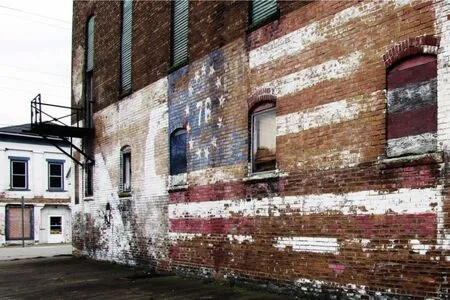
也許沒有什么建筑重寫本比磚墻立面上那些幽靈般的油漆商業廣告更能清晰地展現往事了。密蘇里州圣路易斯市的一處倉庫外墻面上,層層覆蓋著一個世紀以來的各種廣告圖片,內容從兜售輕便馬車到機床、活塞環和啤酒。這些墻面展現出特殊的用途,有著形形色色的所有者,還反映出過去不同時代獨有的經濟市場。在印第安納州的鄉間小鎮佩里斯維爾的另一面墻上,一幅褪色的建筑壁畫重寫本有著更為清晰的年代感。剝落的漆皮使人憶起歷史上美國國旗的紅白條紋,左上角藍底上的數字“76”表明它是42年前為慶祝美國獨立二百周年而繪。
Perhaps no architectural palimpsests display more explicit recollections than the spectral commercial advertisements on painted brick building fa?ades.The wall surfaces of an urban warehouse in St.Louis, Missouri, reveal a century of layered graphics selling horse buggies,machine tools, piston rings and beer.The walls attest to special uses, to varied ownership and to the unique economic markets of eras past.On another wall in the country town of rural Perrysville, Indiana, the fading palimpsest of a building mural can be dated more specifically.The peeling paint recalls the red and white stripes of a historic American flag with the numerals ‘76’ in a field of blue, a mural painted 42 years ago in celebration of the American bicentennial.

鬼城總是被浪漫化,因為它們讓人回憶起自己能夠掌控建成環境的光輝歲月。然而,鬼城也讓人心生謙卑,因為它們提醒著人類對開墾土地、掌控自然的持續需求。即便成為廢墟,這些過去的影子也仍然保留著活態建筑的某些特征:比例、物質性、秩序、文脈,及其與大地的關系。作為建筑重寫本,廢棄的城鎮提供著清晰的回憶,因為其三維立體的特質保留了許多建筑語匯,這些信息提示著關于某個場所、歷史事件,以及人類活動與社會交換賴以發生的重要環境的記憶。
Ghost towns are often romanticised, for they allow us to recall memories of richer times when man was in charge of his built environment.Ghost towns are also humbling, for they reinforce the continual need for man to reclaim the land and to control nature.Even in ruins, these shadows from the past retain features of living architecture: scale, materiality, order, context and their relationship to the land.As architectural palimpsests, abandoned towns offer distinct remembrances, for their three-dimensional qualities retain many architectural codes that prompt memories of ‘place’, historical events, and meaningful environments of human activity and social exchange.
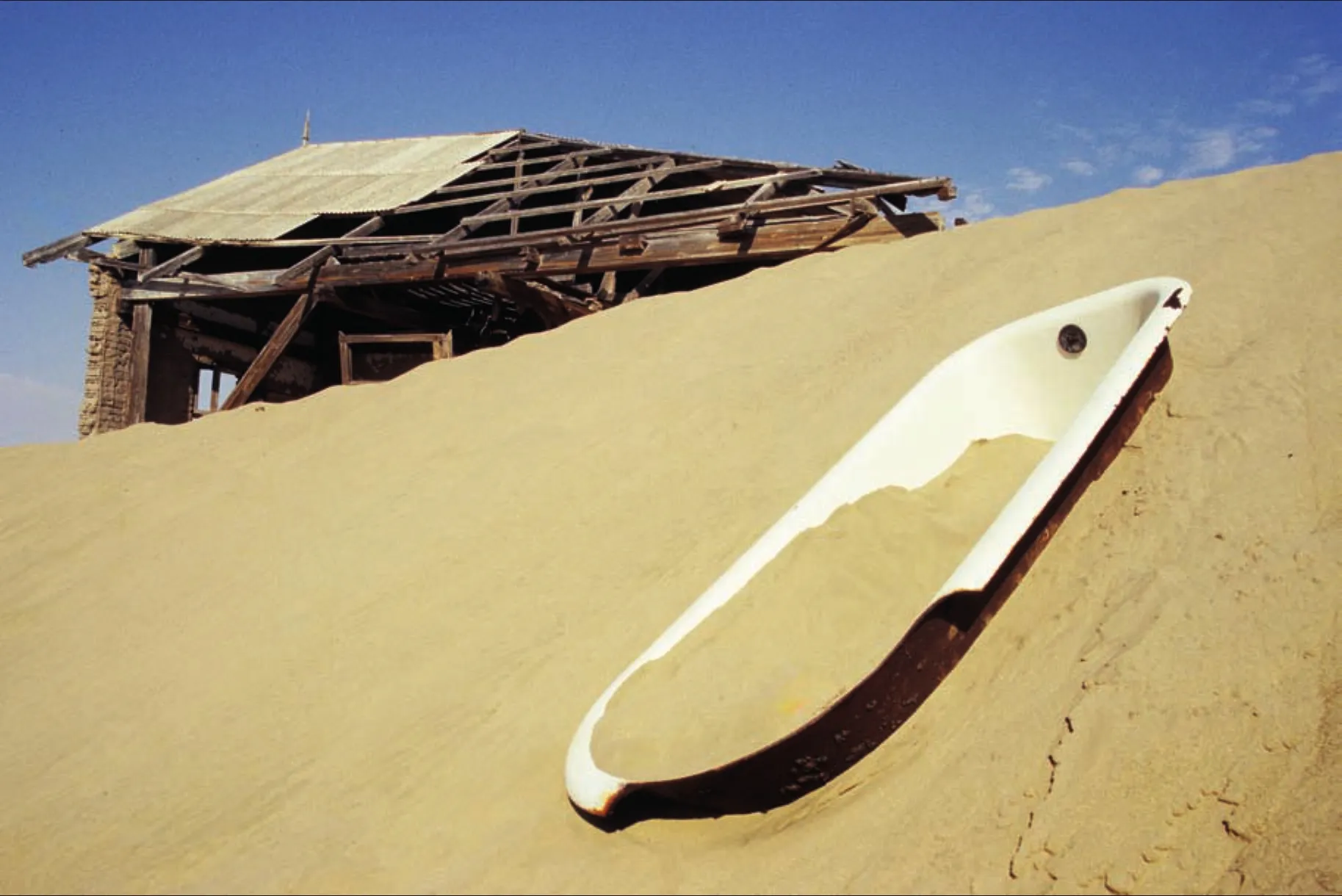

建于20世紀00年代早期的科爾芒斯科普,是一座由于在納米比亞沙漠中發現鉆石礦而誕生的沙漠綠洲小鎮。曾經有數百戶德國家庭為尋求財富聚居于此。小鎮迅速發展起來,在其鼎盛時期有一家醫院、一座劇院、一座體育場、一家舞廳,以及一座發電站。到20世紀20年代,科爾芒斯科普有300名德國人和800名奧萬博當地工人。第一次世界大戰后,這座曾經繁盛的小鎮,因其南側發現了更為富饒的鉆石礦而被黃沙掩埋。如今,這處名噪一時的聚居地不過是荒漠中的一個傷疤,非洲歷史里的一處腳注,失落年代里的一段荒誕回憶。
Kolmanskop is a mining town founded in the early 1900s when diamonds were discovered in the Namibian desert.It was once the home of hundreds of German families who flocked to the oasis seeking fortune.The town grew quickly and at its peak included a hospital, a theatre, a sports facility, a ballroom, and a power station.By the 1920s, Kolmanskop had a population of 300 Germans and 800 native Owambo workers.After World War I, richer diamond fields were found further south and the desert sands reclaimed the vibrant community.Today, the once impressive settlement is but a scar on the desert landscape, a footnote in African history, a quixotic recall from a lost era.
有沒有可能創造出一座建筑重寫本?就像回收利用古舊羊皮紙那樣,我們能否根據歷史遺跡進行重建,抑或紀念一個事件或一處有特別意義的場所?埃及法老為得到永世銘記而建造了金字塔;古羅馬人建造凱旋門,以記錄他們的戰斗與戰利品;美國人為了永不忘記那些在戰爭中失去的生命而建造了越戰紀念碑。阿拉斯加小鎮尼爾奇克的居民們則以更為謙卑的尺度,在遠眺阿拉斯加灣的俄羅斯東正教教堂后建起白色籬笆的墓地,以紀念他們逝去的親朋。
Is it possible to create an architectural palimpsest? Not unlike the reclaimed parchments of old, can we rebuild upon a historical site or memorialise an event or place of meaning? The pharaohs of Egypt constructed pyramids in order that they might be remembered throughout eternity.The Romans built triumphal arches to record their battles and conquests.Americans created the Vietnam Memorial in order that the lives lost in war might never be forgotten.On a much more humble scale, the Alaskan residents of small-town Ninilchik honoured their dead in the simple white fence cemetery behind the Russian Orthodox Church overlooking the Alaskan Gulf waters.


尼爾奇克是一座不起眼的漁村,它迷人的文化歷史依然活在人口不多的村民之中。小村建立于19世紀中葉,最早的居民是俄羅斯人、阿留申人和克里奧爾人。在經濟最發達的巔峰時期,人們在這里建造了一座工廠。那是水岸邊一座叫作“Icicle”的罐頭食品廠,用來加工作為生存必需品的魚。山丘頂上的復活教堂后面,一座墓園鋪展開去,遠眺著山下的“Icicle”工廠,村民的先祖們在這里得到紀念。三重十字架喚起的是他們俄羅斯文化的歷史,而美國國旗則代表了他們當下的公民身份。白色的尖樁籬柵圍合出由后人照料的家族墓地,同時也保留和喚起往事與回憶。
Ninilchik is an unassuming fishing village with a fascinating cultural history that lives on in its small population.Founded in the mid-19th century, its early settlers were Russians, Aleuts and Creoles.At the peak of its commercial success, its people built a factory, a cannery called the‘Icicle’, at the water’s edge, to process the fish that provided their living.On the top of the hill, behind the Church Resurrection and overlooking‘Icicle’ below, a cemetery spreads across the land where ancestors are remembered.Their Russian cultural history is recalled with three-part crosses and their citizenship by American flags.And tended family graves are housed within white picket fences—memories retained and past recalled.

也許沒有什么建筑比谷物升降機更能代表美國中西部大地了。19世紀,當美國人向西遷移的時候,早期開拓者們看到的是一望無際的草原,這些高而平坦的草地一旦清空,便為種植農作物和蓄養牲畜提供了肥沃的土地。兩種偉大的工業建筑很快占據了田野,并在物質與經濟上塑造了中西部的形象:鐵路系統穿過大地,為新來人口提供交通便利,使其沿線得以建立新的城鎮;沿著鐵路線建造的谷物升降機,則成為了農場小鎮的建筑焦點和草原上的地標。
Perhaps no work of architecture on the Midwest American landscape provides a stronger iconic image than the grain elevator.As the American population moved west in the 19th century, early pioneers encountered the prairies, tall, flat grasslands that, once cleared, provided fertile fields to grow crops and raise livestock.Two great industrial works soon marked the landscape and shaped the Midwest both physically and economically.The railroad system slashed across the land providing transportation for the new population and allowing the establishment of new towns along its routes.Grain elevators, sited along the rail lines, became architectural foci in the farm towns and landmarks on the prairie.

升降機一般每隔6—15英里一架分布在鐵路線兩側。這個距離是一駕馬車可以在一天之內運送谷物的距離。這些高大的倉庫高達60—80英尺,豎向分隔的貯藏箱內存放著玉米、小麥、燕麥和其他糧食。這些谷物由蒸汽動力運送至頂部,這樣就可以依靠重力注入到下面的火車車廂。早期谷物升降機設計有厚重木板拼起的墻面,以承受內部谷物橫向的推力,符合工程設計邏輯。最初是用重疊的木壁板或木瓦板遮蓋表面,后來它們被工業材料如金屬波紋板取代。如今,許多升降機已經廢棄,剝落的金屬板和暴露在外的木結構成了真正的重寫本。
Elevators were commonly spotted along the rail lines 6 to 15 miles apart, the distance that a horse–drawn wagon could travel to deliver grain in one day.60 to 80 feet in height, these towering warehouses stored corn, wheat, oats and other grains in partitioned vertical bins.The grains were loaded to the top by steam power and then allowed to flow into the train cars below by gravity.The construction of early grain elevators featured walls of heavy wooden planks stacked flat, logically engineered to withstand the horizontal thrust of grain within.Originally covered with lapped wood siding or wood shingles, industrial materials such as corrugated metal were later utilised as exterior sheathing.Today, with many of the elevators in ruins, the peeling sheet metal and exposed wooden construction are true palimpsests.

韋拉克魯斯居民區的一面墻是一個活的重寫本,是時間、季節和一代代人的記錄。雖已近乎廢墟,但仍見證著墨西哥文化中建筑所展現出的色彩與活力。斑駁的表面展示著層疊的建造與修繕痕跡,磚石結構被一代代居民的重復涂抹,只為給自家大門或陽臺增添一點個人痕跡。明亮的藍色不僅代表了墨西哥風情,也代表著大多數加勒比地區文化,因為它正是這一地區清澈的天藍色海水的色彩。
A residential wall on a neighbourhood street in Veracruz is a living palimpsest, a record of time and seasons and generations.Even in a state of near ruin, its surface is a testament to the colour and vitality exhibited in the architecture of the Mexican culture.Its mottled surface displays layers of construction and repair, its brick and stone structure plastered over not once but many times by generations of residents wishing to add a personal touch to their entry door or modest balcony.The brilliant blue is representative not only of Mexican taste but also of most Caribbean cultures as it relates to the deep, turquoise hues of the region’s clear seawaters.


這些廢棄的墻體,層疊的磚石與灰泥,在被人忽視的地方靜靜矗立,一如世界各地被遺棄的建筑。然而,這些來自過去的幽靈有著特別的意義,因為它們在美國文學中是一個具有歷史意義的地方。這些墻體位于古巴一處名為科希馬爾的漁村街道上,正對著作家歐內斯特 ? 海明威曾經光顧過的、一家普通的名為拉斯特拉薩斯的酒吧兼咖啡廳。如今,這些廢棄的墻體成了過去一個時代的建筑提示——在古巴革命和一個富饒的文化遭遇經濟衰退之前,一位偉大的作家、諾貝爾文學獎的獲得者,寫下了經典小說《老人與海》。
These ruin walls, layers of brick, stone and plaster, stand neglected, not unlike discarded architecture throughout the world.These ghosts from the past, however, have special meaning, for they recall a historic place in American literature.Sited on a local street in a Cuban fishing village called Cojimar, they face onto Las Terrazas, a simple café/bar once patronised by author Ernest Hemingway.Today, these deteriorated walls serve as architectural reminders of an era past when, before the Cuban revolution and the economic decline of a rich culture, a great writer and Nobel laureate wrote the classic novelThe Old Man and the Sea.


伊利諾伊州的農場建筑裝點著伊利諾伊草原平坦而遼闊的大地,其中許多建筑已屹立百年。家庭農場的主要建筑都是為了保護和支撐家庭農舍而建,包括干草棚、玉米穂倉、谷筒倉、設備棚、禽舍、馬廄、畜柵以及工具棚。這些必備的農場建筑各司其職,以當地的木石磚瓦等材料簡單有效地建造。這些材料不是耐用性強、經久不壞,就是易于維護或更換。幾十年來,這些簡樸的風土建筑一直是鄉間景色的象征。
The farm structures of Illinois have nobly graced the flat, broad lands of the Illinois prairie.Many have stood for over a century, major architectural constructions in family farm complexes comprised of hay barns, corncribs, grain silos, equipment sheds, poultry houses, horse stables, livestock barns and tool sheds—all composed in support and protection of the family farmhouse.Essential built works, each with a purpose, these farm structures have been constructed simply and soundly of local materials—wood, stones, bricks, and tiles—durable materials that have served well over time or that have been easily maintained or replaced.For decades, these simple, vernacular structures have been the icons of the rural landscape.

近年來,許多家庭農場讓位于更大的商業公司。其結果是世代相傳的傳統家庭農場已成為美國腹地罕見的景象,曾經引以為榮的農場建筑漫無目的地矗立在大地上,再也無人使用與維護。盡管仍有許多紅色的干草倉、白色的玉米穗倉和高聳的筒倉裝點大地,但這些建筑也正在快速消失。這些木構建筑為嚴酷的冬季付出了代價。屋頂早先使用的木材和后來使用的瀝青瓦與金屬板,已成為時間與歷史的層積。一旦失去保護,許多建筑就會倒塌,只能不幸地存在于曾為之服務過的家庭的記憶中。
In recent years, many family farms have given way to larger, commercial companies.The result has been that the traditional family farm,passed from generation to generation, has become a rare feature in the American heartland, and the once proud farm structures stand on the land without purpose, without use, and without maintenance.While many red barns, white corncribs, and towering silos still grace the land, they are disappearing rapidly.Harsh winters have taken a toll on their wood construction.Their sheltering roofs of original wood and later asphalt shingles and sheet metal have become layers exposing time and history.Once unprotected from the elements, many collapse, and, sadly, become but memories of the family.


上海城市中心傳統里弄社區內的永久居民通過拆遷搬入了更大、更現代化的住宅,這個曾經優美的石庫門建筑群則遭到遺棄。這些攝于2008年的里弄照片,展示了原上海法租界一處有著石質大門和花園入口的社區輝煌不再的憂傷回憶。部分拆除墻體背后露出的建筑斷面展現著結構、房間和樓梯的重寫本。這是1842年至1949年間,上海人口隨國內外移民涌入而增長的時期內大量建造的里弄之一。這些藏在街面商鋪背后街區里的西式聯排住宅融合了中式建筑細部,創造出上海獨有的居住環境。
With lifelong residents relocated from these city centre traditionallilongneighbourhoods to larger, more modern housing in Shanghai, this once elegantshikumencommunity stands abandoned.These 2008 photographs of alilongblock are melancholy memories of a once flourishing stone gate, garden entry neighbourhood in Shanghai’s elegant French Concession.Cross sections through partially demolished walls reveal palimpsests of structure, rooms and stairs.Thislilongneighbourhood was one of many constructed between 1842 and 1949 when Shanghai’s population grew with migrants from other parts of China and from the West.Contained in city blocks behind shop fronts on the streets, these Western-style rowhouses blended Chinese building details to create living environments unique to Shanghai.


里弄社區被夷平后,原址上很快便蓋起了一座時髦的現代化多層購物中心。作為購物和娛樂中心,早先建造的新天地有效地吸收了其基址上原有的石庫門社區所具有的磚墻立面與石質大門,成功地結合了里弄社區的記憶,而這座新的購物中心卻很難喚起同樣的想法。上圖中的星巴克咖啡廳如今大受歡迎,而它附近不遠處卻保留了以前商戶廣告標語留下的重寫本(插圖左上角)。新天地具有豐富的顯現與隱藏的建筑寶藏,等待人們去發現和欣賞。如圖所示,上海的許多里弄居民區依然生機勃勃,其人文環境保留了真正的歷史意義。
Shortly after thelilongneighbourhood was razed, a sleek, modern, multilevel shopping centre occupied its space.This new centre recalled few of the memories blended so successfully into the shopping and entertainment development Xintiandi which had earlier effectively incorporated the brick fa?ades and stone gates of theshikumencommunity that existed on its site before.Pictured above, Starbucks café is today enjoyed by coffee drinkers while only a short distance away the palimpsest from earlier commercial graffiti (corner insert) has been preserved.Xintiandi is abundant in both apparent and hidden architectural treasures to be enjoyed and discovered.As pictured shows, manylilongneighbourhoods of Shanghai remain vital and continue to be humane environments that retain true historic meaning.

這座小小的礦工住宅如今已成為廢墟,小院里堆著各種廢棄物。其立面上風化的銹跡成為鬼城瓜利亞鄉村建筑特征的一部分,它曾是澳大利亞歷史上最成功的經濟冒險事業之一。由于當時是未來的美國總統赫伯特·胡佛擔任礦業經理,這座澳洲西部礦業小鎮的人口爆炸性地增長至1700人。到1919年,瓜利亞之子礦場的斜井已深達4000英尺,礦石產量超過300萬噸。
An architectural relic from the past, a small miner’s residence features a yard filled with abandoned possessions.Its fa?ade’s weathered patina helps to establish the rustic architectural character of the ghost town Gwalia, one of the most productive economic ventures in Australian history.With future United States president Herbert Hoover as the mine manager, the population of this Western Australian mining town exploded to 1700, and by 1919, the Sons of Gwalia mine had a deep incline shaft that reached 4000 feet into the earth and raised a yield of over three million tons of ore.


1963年12月,當礦場將在新年前夜關閉的消息被宣布出來時,礦工及其家屬立刻離開了瓜利亞。多數人突然離開以尋找新的工作,將他們簡樸的住宅、家具、廚具甚至衣服都拋諸身后,只帶上了能拿得走的東西。短短三周之內,居民從1200名銳減至40名。幾十年來,那些住宅任由澳大利亞內陸自然環境無情地蠶食,瓜利亞終于成為一座鬼城。如今,附近利奧諾拉的居民以個人名義購買了那里剩余的20余棟建筑。他們的目的不是修復,而是為了照看這些對他們的歷史而言依然具有豐富意義的重寫本,那些來自一個多彩年代的記憶。
In 1963, when it was announced in December that the mine would shut down on New Year’s Eve, the exodus of miners and their families from Gwalia was immediate.Most left abruptly in search of new work, taking only what they could carry, leaving their humble homes, furnishings, utensils and even clothing behind.In just three weeks, only 40 of the 1200 residents remained.For decades, the houses were left to the elements of Australia’s unforgiving Outback, and Gwalia became a ghost town.Today, residents of nearby Leonora have individually purchased each of the 20 more buildings.Their objective is not restoration, but simply to attend the palimpsests still meaningful to their history, memories from a once rich era.
猜你喜歡
北方建筑(2021年6期)2021-12-31 03:03:54
文苑(2020年10期)2020-11-07 03:15:36
學苑創造·A版(2020年10期)2020-11-06 05:21:26
現代裝飾(2020年6期)2020-06-22 08:43:12
現代裝飾(2020年4期)2020-05-20 08:55:08
作文周刊·小學一年級版(2016年27期)2017-06-03 23:21:17
絲綢之路(2016年9期)2016-05-14 14:36:33
新湘評論·下半月(2016年4期)2016-05-05 22:12:41
新湘評論·下半月(2016年4期)2016-05-05 22:12:41
海外文摘(2016年4期)2016-04-15 22:28:55