When Did Humans First Learn to Count?
2018-11-28 06:02:36孫加
英語世界 2018年11期

The history of math is murky1murky模糊不清。,predating2predate早于。any written records.When did humans first grasp the basic concept of a number? What about size and magnitude3magnitude巨大 。,or form and shape?
數學的開端早于所有現存的書面記錄,因而其歷史模糊不清。人類何時開始掌握基本的數字概念?何時開始掌握大小和度量概念,或外形和形狀概念?
[2]In my math history courses and my research travels in Guatemala,Egypt and Japan,I’ve been especially interested in the commonality4commonality共同點。and differences of mathematics from various cultures.
[2]我教授數學歷史課程,為了做研究,去過危地馬拉、埃及和日本。在授課和研究過程中,我對各個文化間數學的異同尤其感興趣。
[3]Although no one knows math’s exact origins,modern mathematicians like myself know that spoken language precedes written language by scores of5scores of許多。millennia.Linguistic clues show how people around the world must have first developed mathematical thought.
[3]數學的確切起源無人知曉。但是,現代數學家(比如我自己)都清楚,口頭語言的發端比書面語言要早幾千年。從語言學中能找到線索,說明世界各地的人們最初是如何發展出數學思維的。
Early clues
早期線索
[4]Differences are easier to comprehend than similarities.The ability to distinguish more versus6versus(比較兩種不同想法、選擇等)與……相對,與……相比。less,male versus female or short versus tall must be very ancient concepts.But the con-cept of different objects sharing a common attribute7attribute特征。—such as being green or round or the idea that a single rabbit,a solitary8solitary孤零零的,離群的。bird and one moon all share the attribute of uniqueness—is far subtler.
[4]數學中的“不同”概念,比“相似”概念容易掌握。“多”和“少”,“男”和“女”,“矮”和“高”,人類很早就能區別這些概念。而“不同的物體擁有共同特征”這一概念則復雜得多——比如,都是綠色、都是圓形,或單只兔子、一只孤鳥和一輪明月都擁有“獨一無二”這一特征。
[5]In English,there are many different words for two,like “duo,” “pair”and “couple,” as well as very particular phrases such as “team of horses”or “brace of partridge.” This suggests that the mathematical concept of twoness developed well after humans had a highly developed and rich language.
[5]英語中有很多詞表示“雙”的概念,例如duo、pair和couple,還有些很特別的短語,如team of horses(一同拉車的兩匹馬)、brace of partridge(打獵時射下的一對鷓鴣)。這表明,在人類語言高度發展和極大豐富很久以后,才有了“二”這個數學概念。
[6]By the way,the word “two” probably was once pronounced closer to the way it’s spelled,based on the modern pronunciation of twin,between,twain(two fathoms9fathom英尋(測量水深用的長度單位,合6英尺或1.829米)。fathom來自古英語f?thm,表示“伸展開的雙臂”,因而1英尋也就是兩臂之長。),twilight (where day meets night),twine (the twisting of two strands)and twig (where a tree branch splits in two).
[6]順帶一提,two一詞原先的發音,很可能跟拼寫方式相近。這一猜測,乃是基于現代英語中以下這些詞的發音:twin(雙胞胎)、between(在……之 間 )、twain( 水 深 兩 尋 ),twilight(日夜之交)、twine(合股絞線)、twig(樹枝分岔處)。
[7]Written language developed much later than spoken language.Unfortunately,much was recorded on perishable10perishable易損的,易腐的。media,which have long since decayed.But some ancient artifacts that have survived do exhibit some mathematical sophistication.
[7]書面語言比口頭語言出現晚得多。不幸的是,很多書面記錄都寫在易損的介質上,腐爛已久。不過,也有些古代人工制品得以留存至今,可以看出數學的成熟發展。
[8]For example,prehistoric tally11tally(符契上的)刻記;計數的簽籌。sticks—notches12notch(刻在棍子等上的)計數刻痕。incised13incise(在表面)雕;切入。on animal bones—are found in many locations around the world.Though these might not be proof of actual counting,they do suggest some sense of numerical record keeping.Certainly people were making one-to-one comparisons between the notches and external collections of objects—perhaps stones,fruits or animals.
[8]比如,全球很多地方都出土了史前文物“記數棒”——刻有計數痕跡的動物骨頭。這些或許算不上真正計數的證據,但確實表明,史前人類有了保存數字記錄的意識。當時的人類,肯定是拿著記數棒,與某種外部收集的物體(也許是石頭、水果或動物)一對一比照計數。
Counting objects
計算物體數量
[9]The study of modern “primitive”cultures offers another window into human mathematical development.By“primitive,” I mean cultures that lack a written language or the use of modern tools and technology.Many “primitive”societies have well-developed arts and a deep sense of ethics and morals,and they live within sophisticated societies with complex rules and expectations.
[9]對現代“原始”文化的研究,也提供了一扇了解人類數學發展的窗口。我說的“原始”文化,是指沒有書面語言或沒有現代工具和技術的文化。很多“原始”社會有發達的藝術,深刻的倫理道德觀,社會發展成熟,具備復雜的規范和要求。
[10]In these cultures,counting is often done silently by bending down fingers or pointing to specific parts of the body.A Papuan14巴布亞族,新幾內亞的原住民。tribe of New Guinea15新幾內亞,太平洋西南島嶼,澳大利亞以北。can count from 1 to 22 by pointing to various fingers as well as to their elbows,shoulders,mouth and nose.
[10]在這些文化中,人們計數時通常默不作聲,只彎曲手指,或者指向身體的某個部位。新幾內亞的某個巴布亞部落,計數時指向各個手指、手肘、肩膀、嘴巴和鼻子,用這種辦法,能從1數到22。
[11]Most primitive cultures use object-specific counting,depending on what’s prevalent in their environment.For example,the Aztecs16Aztec阿茲特克人。阿茲特克是14—16世紀的墨西哥古文明。would count one stone,two stone,three stone and so on.Five fish would be “five stone fish.”Counting by a native tribe in Java begins with one grain.The Nicie tribe of the South Pacific counts by fruit.
[11]很多原始文化使用“物體計數法”。其中的“物體”各有不同,取決于在當地環境中,什么東西最為普遍。例如,阿茲特克人計數時,會數“1石頭、2石頭、3石頭”,等等。“5條魚”在阿茲特克人說來,就是“5石頭魚”。另外,爪哇的某個原住民部落,從“1谷”開始計數;南太平洋的尼西部落用水果計數。
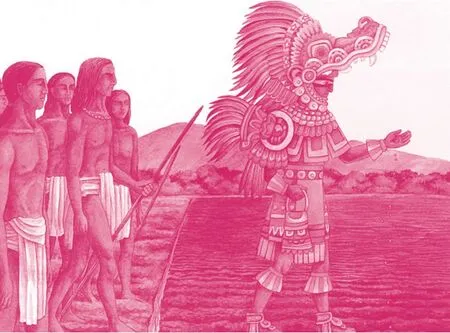
[12]English number words were probably object-specific as well,but their meanings have long been lost.The word “five” probably has something to do with “hand.” Eleven and 12 meant something akin to “one over” and “two over”—over a full count of 10 fingers.
[12]英語中的數詞很可能也曾特指物體。不過,如今數詞中的物體含義早已喪失。比如,five(5)一詞很可能跟hand(手)有關。eleven(11)和twelve(12)則接近于“多1”和“多2”——十個手指都數完后,還多了“1”和“2”。
[13]The math Americans use today is a decimal,or base 10,system.We inherited it from the ancient Greeks.However,other cultures show a great deal of variety.Some ancient Chinese,as well as a tribe in South Africa,used a base 2 system.Base 3 is rare,but not unheard of among Native American tribes.
[13]美國人的數學系統使用十進制,也就是以10為基礎的系統,這是從古希臘人那兒繼承下來的。不過,以哪個數字為基數,在各個文化間差異很大。有些古代中國人,還有南非的某個部落,使用以數字2為基數的二進制。三進制很少見,但偶爾也會有人使用,例如某些美洲土著部落。
[14]The ancient Babylonians used a sexagesimal17sexagesimal六十的;六十進位的。,or base 60,system.Many vestiges18vestige遺跡,遺痕。of that system remain today.That’s why we have 60 minutes in an hour and 360 degrees in a circle.
[14]古巴比倫人用的則是六十進制,也就是以60為基數的系統。這種計數系統的影響一直遺留至今,所以60分鐘才會等于1個小時、圓周才會有360度。
Written numbers
數字的書寫
[15]What about written numbers?
[15]那么,數字如何書寫呢?
[16]Ancient Mesopotamia19古美索不達米亞,西南亞古文明,位于底格里斯河和幼發拉底河之間,現伊拉克境內。had a very simple numerical system.It used just two symbols: a vertical wedge (v)to represent 1 and a horizontal wedge (<)to represent 10.So <<vvv could represent 23.
[16]古美索不達米亞人的書面數字系統很簡單,只有兩個符號:豎的楔形(v)代表1,橫的楔形(<)代表10。所以<<vvv就代表 23。
[17]But the Mesopotamians had no concept of zero either as a number or as a place holder.By way of analogy,it would be as if a modern person were unable to distinguish between 5.03,53 and 503.Context was essential.
[17]但是,美索不達米亞人沒有“0”的概念。“0”既沒有被列為數字,也不占位。打個比方,這就好像現代人沒法區分5.03、53和503一樣。沒有“0”,數字前后的上下文就成了區分的關鍵。
[18]The ancient Egyptians used different hieroglyphs20hieroglyph象形文字。for each power21power乘方,冪。of 10.The number one was a vertical stroke,just as we currently use.But 10 was a heel bone,100 a scroll or coiled rope,1000 a lotus flower,10,000 a pointed finger,100,000 a tadpole and 1,000,000 the god Heh22赫神,古埃及神靈,是“無限”或“永恒”的人格化。holding up the universe.
[18]古埃及人用不同的象形文字表示10的冪。數字1就是直直的一豎,跟我們目前使用的數字差不多;不過,古埃及人的10卻用踵骨來表示。100用一個卷軸或一盤繩子,1000用蓮花,10000用伸出的手指,100000用蝌蚪,1000000則是赫神托起整個宇宙。
[19]The numerals most of us know today developed over time in India,where computation and algebra were of utmost importance.It was also here that many modern rules for multiplication,division,square roots and the like were first born.These ideas were further developed and gradually transmitted to the Western world via Islamic scholars.That’s why we now refer to our numerals as the Hindu-Arabic numeral system.
[19]大多數現代人熟知的數字系統起源并發展于古印度。在古印度,計算和代數這兩門學問,占據最重要的地位。現代數學的很多規則,如乘、除、平方根之類,也誕生于古印度。后來,伊斯蘭學者們進一步發展了古印度的數字系統和數學規則,并漸漸傳播到西方世界。由此,我們的數字系統才得名“印度-阿拉伯數字系統”。
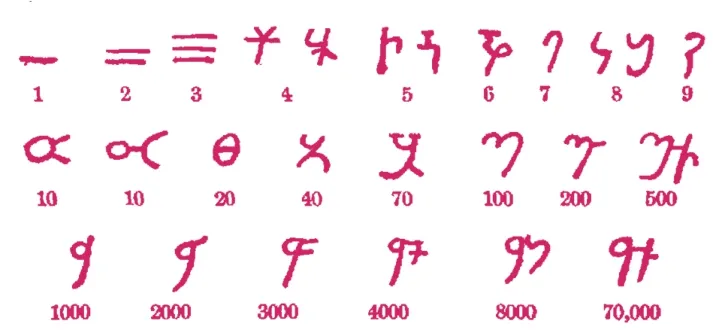
[20]It’s good for a young struggling math student to realize that it took thousands of years to progress from counting“one,two,many” to our modern mathematical world.■
[20]從1、2數到許多,再到我們今日的數學世界,其間經歷了幾千年的艱辛發展歷程。知曉這段歷史后,同樣艱辛掙扎的數學專業年輕學子,一定會覺得安慰吧。□
(譯者曾獲第三屆“《英語世界》杯”翻譯大賽優秀獎)
猜你喜歡
現代裝飾(2022年1期)2022-04-19 13:47:32
現代裝飾(2020年2期)2020-03-03 13:37:44
中學生數理化·高一版(2018年9期)2018-10-09 06:46:48
中學生數理化·高一版(2017年9期)2017-12-19 12:15:14
新民周刊(2016年15期)2016-04-19 18:12:04
新民周刊(2016年15期)2016-04-19 15:47:52
小學生導刊(低年級)(2016年2期)2016-02-24 23:02:11
小天使·五年級語數英綜合(2014年5期)2014-06-25 05:22:42
漫畫月刊·炫版(2014年3期)2014-05-27 04:17:21
中學生數理化·高二版(2008年7期)2008-06-15 01:31:20