
基于 3,3′,4,4′-四羧基偶氮苯構筑的三個金屬配合物的合成、晶體結構及性質
2018-12-10 06:49:20陳小莉崔華莉任宜霞王記江
無機化學學報 2018年12期
關鍵詞:實驗室
陳小莉 崔華莉 楊 華 任宜霞 王記江 王 瀟
(延安大學化學與化工學院,陜西省反應工程重點實驗室,新能源新功能材料實驗室,延安 716000)
0 Introduction
The crystal engineering of metal-organic frameworks (MOFs)have been attracted extensive attention,not only because of their fantastic topological structures but also promising properties in luminescence,magnetism,catalysis,gas absorption and separation and so on[1-7].Although a variety of metal MOFs with desired structures and functions have been synthesized to date,rational control in the construction of polymers remains a great challenge in crystal engineering.In order to prepared MOFs with diverse structures and desired functionalities,judicious selection of appropriate polydentate organic ligands and metal ions is one of the most efficient strategies[8-11].So many polycarboxylate ligands are often employed as bridging ligands to construct MOFs,due to their extension ability both in covalent bonding and in supramolecular interactions (H-bonding and aromatic stacking)[12-15].
As a member of polycarboxylate ligands,3,3′,4,4′-tetracarboxyazobenzene (H4ddb)has four carboxyl groups that may be completely or partially deprotonated,and can provide hydrogen bond donors and acceptors,which makes it a wonderful candidate for the construction of supramolecular networks depending upon the number of deprotonated carboxylate groups.Therefore,H4ddb may be an excellent candidate for the construction of multidimensional coordination polymers.
However,to the best of our knowledge,ddb-metal complex have rarely been reported[16-21],and much work is still necessary to understand the coordination chemistry of ddb4-ligand.We also notice that the introduction of N-containing auxiliary ligands such as 1,10-phenanthroline (phen),4,4′-bipyridine (bpy),1,2-bis(4-pyridyl)ethane (bpe)or 1,2-di(4-pyridyl)ethylene(dpe)via adjustment of the carboxylate bridging mode into the system may lead to new structural evolution and fine-tuningthestructural motif of thecomplexes[22-25].With the aim of understanding the coordination chemistry of them and studying the influence on the framework structure of the complexes,we have recently engaged in the research of this kind of complex.Luckily,we have now obtained three complexes,[Co2(ddb)(phen)2(H2O)6]·3H2O (1),[Co(ddb)0.5(bpy)0.5(H2O)3]n(2)and{[Ag(dpe)]·0.5(H2ddb)·H2O}n(3).Herein we reported their syntheses,structures,thermal stabilities and luminescent properties.
1 Experimental
1.1 Reagents and physical measurements
All chemicals and reagents were used as received from commercial sources without further purification.All reactions were carried out under hydrothermal conditions.Elemental analyses (C,H,N)were determined with a Elementar Vario ELⅢelemental analyzer.IR spectra were recorded as KBr pellets on a Bruker EQUINOX55 spectrophotometer in the 4 000~400 cm-1region.Fluorescence spectra were performed on a Hitachi F-4500 fluorescence spectro-photometer at room temperature.Thermogravimetric analyses(TGA)were performed in a nitrogen atmo-sphere with a heating rate of 10℃·min-1with a NETZSCHSTA 449C thermogravimetric analyzer.The X-ray powder diffraction pattern (XRD)was recorded with a Rigaku D/MaxⅢdiffractometer operating at 40 kV and 30 mA using Mo Kα radiation (λ=0.154 18 nm)in the range of 5°~50°.
1.2 Synthesis of[Co2(ddb)(phen)2(H 2O)6]·3H 2O(1)
A mixture of Co(Ac)2·4H2O (24.9 mg,0.1 mmol),H4ddb (35.8 mg,0.1 mmol),phen (19.8 mg,0.1 mmol)and water (10 mL)was stirred and adjusted to pH 6.5 with 0.5 mol·L-1NaOH solution,then sealed in a 25 mL Telfon-lined stainless steel container,which was heated to 160℃for 96 h.Then cooling to room temperature at a rate of 5℃·h-1.Brown crystals were obtained in ca.53%yield based on Co.Anal.Calcd.for C40H40Co2N6O17(%):C,48.30;H,4.05;N,8.45.Found(%):C,48.49;H,3.72;N,8.45.FI-IR (KBr,cm-1):3 394(s),3 072(s),1 628(m),1 553(s),1 486(m),1 422(s),1 209(w),1 140(w),1 070(w),922(w),845(m),801(m),726(m),671(w).
1.3 Synthesis of[Co(ddb)0.5(bpy)0.5(H 2O)3]n(2)
The brown crystals of 2 were prepared by a similar method used in the synthesis of 1 except that
phen was replaced by bpy (Yield:45%based on Co).Anal.Calcd.for C13H13CoN2O7(%):C,42.41;H,3.56;N,7.61.Found(%):C,42.43;H,3.52;N,7.63.FI-IR(KBr,cm-1):3 387 (s),3 090 (s),1 610 (m),1 564(s),1 473(m),1 409(s),1 202(w),1 056(w),1 102(w),906(w),845(m),804(m),720(m),678(w).
1.4 Synthesis of{[Ag(dpe)]·0.5(H 2ddb)·H 2O}n(3)
The colorless crystals of 3 were prepared by a similar method used in the synthesis of 1 except that phen was replaced by dpe and Co(Ac)2·4H2O (24.9 mg,0.1 mmol)was replaced by AgNO3(16.9 mg,0.1 mmol) (Yield:39%based on Ag).Anal.Calcd.for C20H16AgN3O5(%):C,49.61;H,2.91;N,8.68.Found(%):C,49.67;H,2.85;N,8.65.FI-IR (KBr,cm-1):3 429(s),3 037(w),1 701(s),1 607(s),1 495(s),1 357(s),1 240 (w),1 202 (m),1 068 (w),969 (m),831 (m),771(w),617(w),547(m).
1.5 X-ray crystallography
Intensity data were collected on a Bruker Smart APEXⅡCCD diffractometer with graphite-monochromated Mo Kα radiation (λ=0.071 073 nm)at room temperature.Empirical absorption corrections were applied using the SADABSprogram[26a].The structures were solved by direct methods and refined by the fullmatrix least-squares based on F2using SHELXTL-97 program[26b].In 3,one dpe molecule and two oxygen atoms were split into two site with an occupancy ratio 0.5∶0.5 for C6/C6A,C7/C7A,O3/O3A and O6/O6A.All non-hydrogen atoms were refined anisotropically and hydrogen atoms of organic ligands were generated geometrically.Crystal data and structural refinement parameters for 1~3 are summarized in Table1,selected bond distances and bond angles are listed in Table 2.
CCDC:1861508,1;1861509,2;1861510,3.

Table 1 Crystal data and structural refinement parameters for the title complexes 1~3
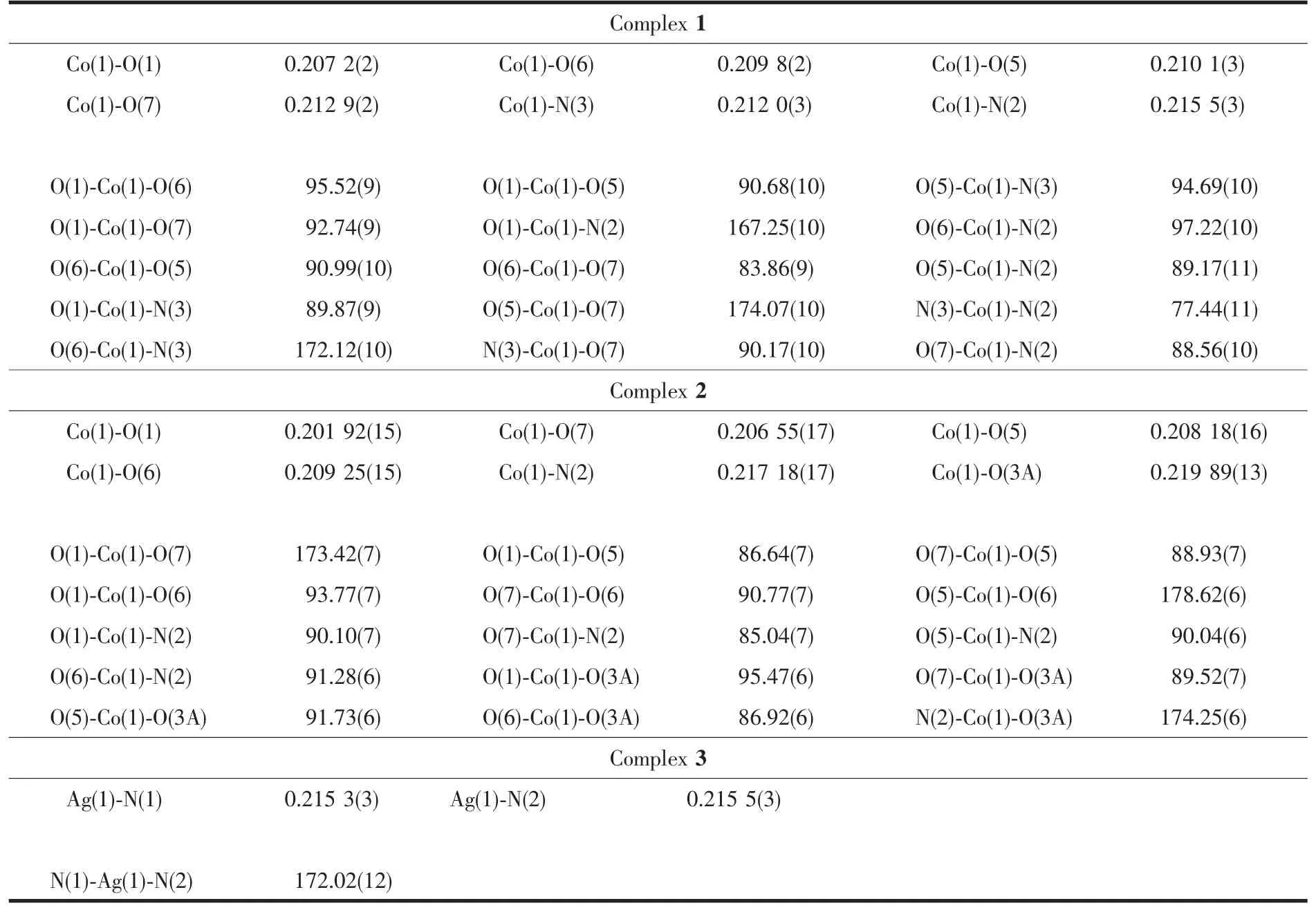
Table 2 Selected bond distances(nm)and bond angles(°)for complexes 1~3
2 Results and discussion
2.1 Structure description of complex 1
Single-crystal X-ray diffraction analysis reveals that complex 1 is a binuclear structure crystallizing in monoclinic system with C2/c space group.The asymmetric unit of 1 contains one independent Coギion,half ddb4-ligand,one coordinated phen ligand,three coordinated water molecules and one and a half lattice water molecules.As shown in Fig.1,Co1 is surrounded by two nitrogen atoms (N2,N3)from one chelating phen ligand,one oxygen atom (O1)from one bridging carboxylate groups of ddb4-ligand,three oxygen atoms from three coordinated water molecule.The Co1-O distances fall in the range of 0.207 2(2)~0.212 9(2)nm and are similar to those found in other cobalt carboxylate complexes[27]. The coordination geometry of the Co1 center can be described as a distorted octahedral geometry.
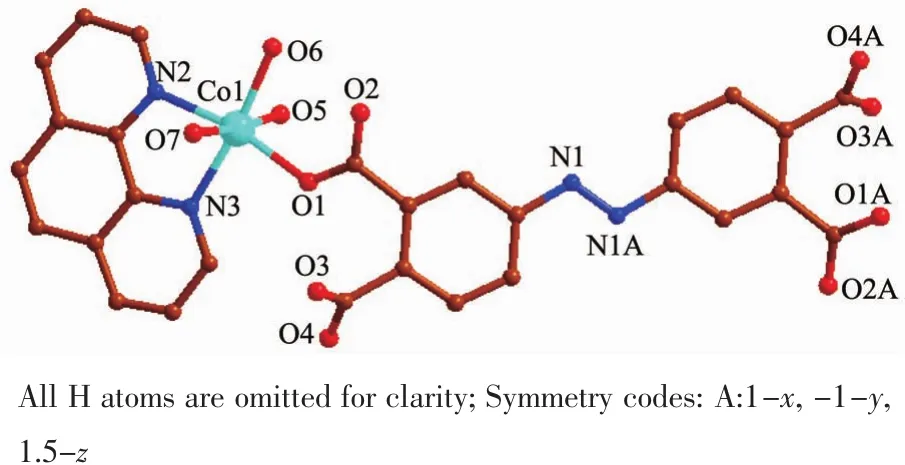
Fig.1 Coordination environment of Coギion in 1
Scheme 1 Coordination modes of ddb4-in 1~2
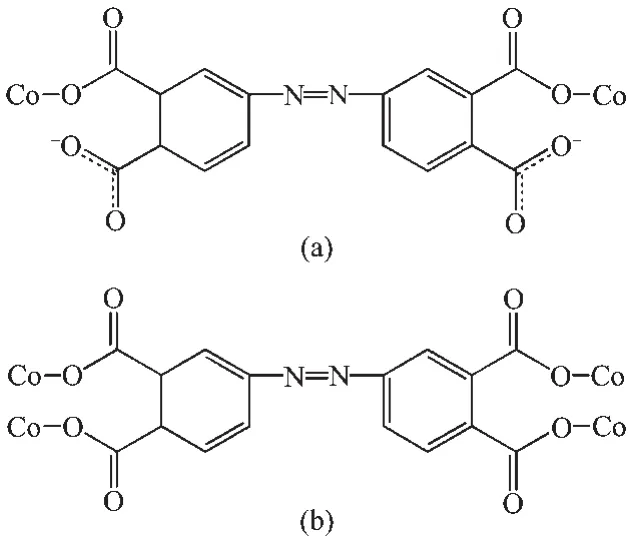
In 1,H4ddb is completely deprotonated and adopts a μ2∶η1,η0,η1,η0coordination mode (Scheme 1a).Two carboxylate groups coordinate with two Coギions monodentately.Although ddb4-ion participate in the coordination,two benzene rings of ddb4-ion have not been distorted,and the dihedral angle between the two phenyl rings is 0°for 1.On the basis of the connection mode,each pair of Coギions are bridged by two carboxylate groups from one ddb4-ligand to form a binuclear structure with the Co1…Co1 distances of 1.626 8 nm.The binuclear structure are linked by the hydrogen bonding interactions (O5…O4B,0.284 8(3)nm;O6…O3B,0.269 6 nm)generating a 1D double-chain (Fig.2).The adjacent double-chain recognizes each other to generate a 2D bilayer supramolecular network via hydrogen bonding interactions(O5…O4,0.284 8(3)nm;O5…O4C,0.277 5 nm),which is further developed into 3D supramolecular structure by hydrogen bonding interactions (O7…O2 0.275 5 nm,O6…O2 0.264 3(3)nm,O7…O8 0.279 1(6)nm,O7…O8A 0.258 7(8)nm,O8…O3 0.272 9 nm,O9…O3 0.283 0 nm,Fig.3).
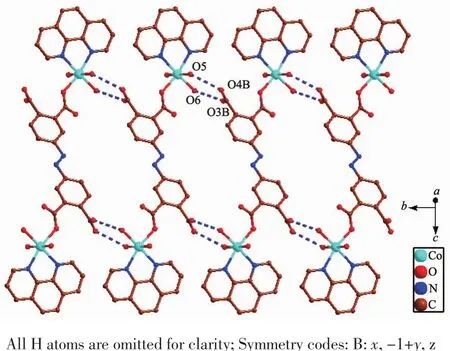
Fig.2 View of 1D double-chain of 1 formed by hydrogen bonding interactions
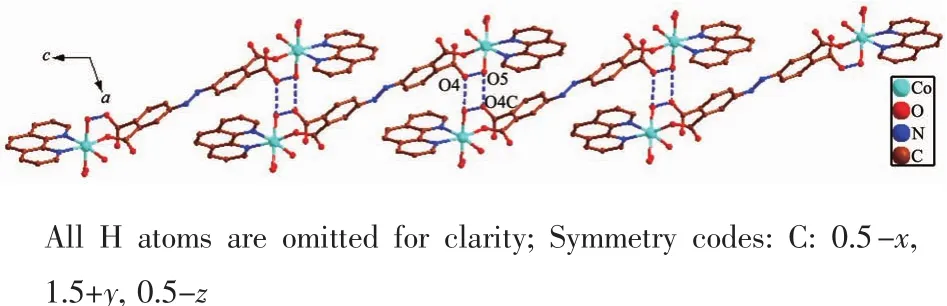
Fig.3 View of 2D bilayer supramolecular network of 1 via hydrogen bonding interactions along b-axis
2.2 Structure description of complex 2
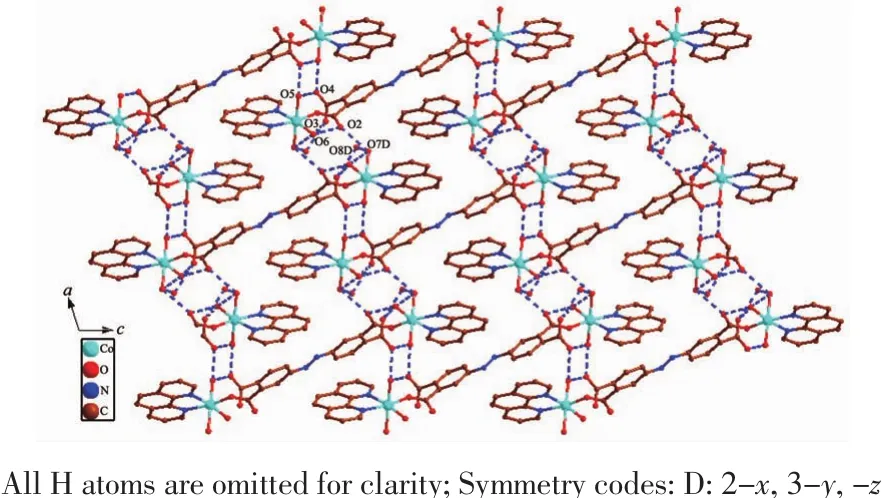
Fig.4 View of 3D supramolecular architecture of 1 basedon hydrogen bonding interaction along b-axis
To further examine the influence of the auxiliary ligands on the structure of 1,a longer bridge ligand bpy is used instead of phen.Consequently,a novel 2D polymeric network was obtained.The asymmetric unit of 2 contains one Coギatom,a half ddb4-ligand,a half bpy ligand and three coordinated water molecules(Fig.5).Each Co1 atom is six coordinated by one nitrogen atom (Co1-N2 0.217 82(17)nm)from one bpy ligand,two carboxylate group oxygen atoms from two ddb4-ligands and three water molecules.The bond lengthsof Co-Oare comparable tothepublished ones[28],varying between 0.201 92(15)and 0.219 89(13)nm.The coordination geometry of Co1 center can be described as a distorted octahedral geometry.
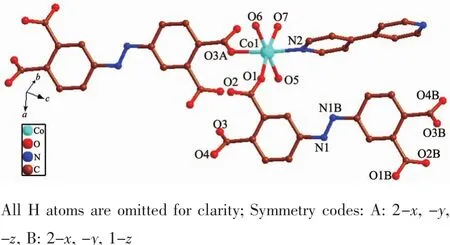
Fig.5 Coordination environment of Coギion in 2
In 2,H4ddb are completely deprotonated and adopts a μ4∶η1,η1,η1,η1coordination mode (Scheme 1b).Four carboxylate groups adopt a bridging monodentate coordination mode connecting four Coギ ions (Scheme 1b).Based on the connection mode,a pair of Coギions are bridged by four carboxylate oxygen atoms from two ddb4-ions to form a 14-membered ring{Co2O4C8} (ring a)with the Co1… Co1 distance of 0.646 1 nm.Meanwhile,four Coギionsare also bridged by two ddb4-ions and two bpy ligands to form a 46-membered ring{Co4O4N8C30} (ring b)containing a type of pore with size of ca.2.481 8 nm×2.520 8 nm based on the distances of Co1…Co1 and C1…C1.Interestingly,these 14-member and 46-membered rings were arranged alternately to form a 2D network (Fig.6).Two adjacent 2D networks are packed into 3D supramolecular structure by the hydrogen bonding interactions(O5D…O4C 0.266 3 nm,O7D…O2C 0.289 4 nm,O6E…O3C 0.274 3 nm,O6E…O2 0.259 3 nm,O5D…O6E 0.284 6 nm,Fig.7).
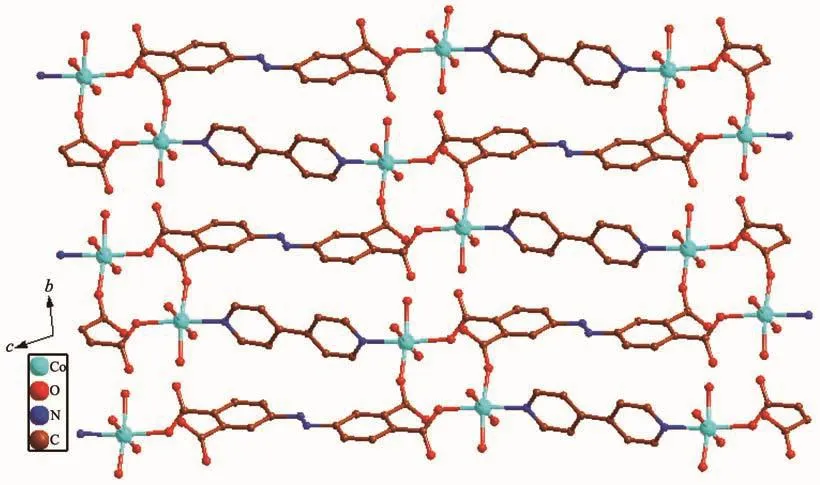
Fig.6 View of 2D network of 2 along a-axis
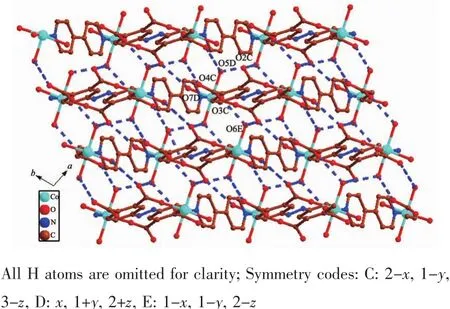
Fig.7 View of 3D supramolecular architecture based on hydrogen bonding interaction along c-axis
2.3 Structure description of complex 3
The asymmetric unit of 3 has one independent Agガion,one dpe ligand,a half free H2ddb2-ion and one lattice water molecule (Fig.8).Ag1 center coordinated with two nitrogen atoms (N1,N2)from two different dpe ligands (Ag1-N2 0.215 5(3)nm,Ag1-N1 0.215 3(3)nm) to form a slightly distorted linear geometry.However,the distance of 0.283 9 nmbetween Ag1-O2 suggests a non-negligible interaction between them.Thus,the coordination polyhedron of Agガion can also be described as a T-shaped coordination geometry.The N1-Ag1-N2 bond angle is 172.02°,and the three atoms almost in a line.The pyridyl rings of dpe ligand are non-coplanar with a dihedral angle of 7.18°and the Ag1…Ag1 separation based on dpe ligand is 1.364 5 nm.Hence,the dpe ligands bridge Ag1 centers to form 1D linear chain.The Ag1…Ag1distance between two parallel linear chains is 0.321 0 nm,which is less than the van der Waals contact whose distance is 0.340 nm,illustrating the existence of argentophilic interactions between Agガions.Based on the argentophilic interactions between Agガions,the adjacent linear chains form a 1D double chain structure.Interestingly,the adjacent double chains interact with each other to generate a 2Dsupramolecular network through theπ…πstacking interactions with an edge-to-edge distance of 0.338 7 nm between two pyridine rings of dpe ligands and 0.337 0,0.338 8 nm between the pyridine ring of dpe ligand and the double bonds of dpe ligand,respectively(Fig.9).These kinds ofπ…π stacking interactions are in an alternate fashion and consolidate the stacked arrangement.The adjacent 2D structures further form a 3D supramolecular structure through O-H…O hydrogen bonds (O6A…O4 0.289 9 nm,O5…O3 0.288 4 nm,O6B…O6A 0.254 7 nm,O5…O6 0.285 0 nm,O6A…O6B 0.270 9 nm)and Ag…O week interactions(Ag1A…O1 0.276 0 nm,Ag1…O2 0.283 9 nm,Fig.10).
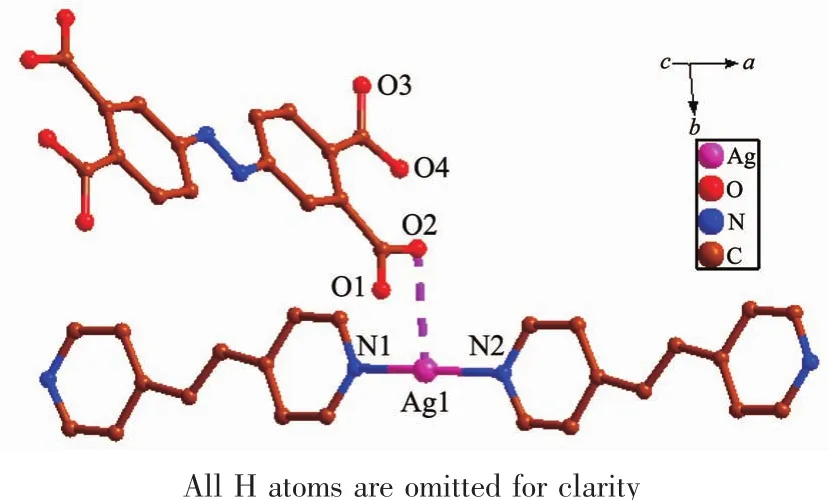
Fig.8 Coordination environment of Agガion in 3
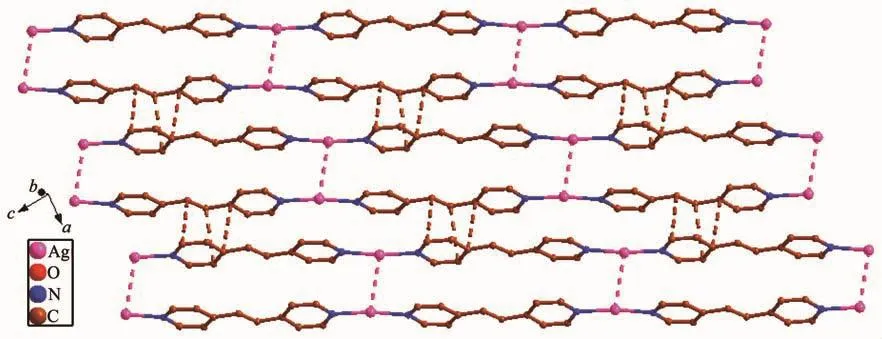
Fig.9 View of 2D supramolecular network of 3 via Ag…Ag interactions andπ…πstacking interactions
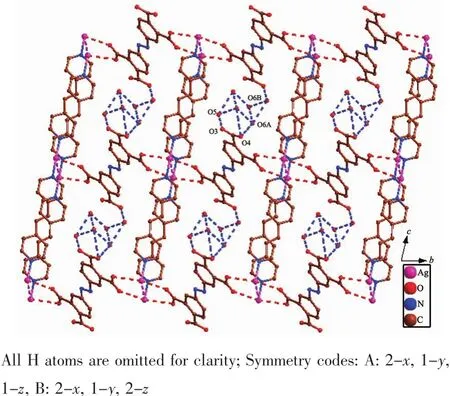
Fig.10 View of 3D supramolecular structure of 3 based on hydrogen bonding interaction and Ag…O week interactions
2.2 IR Spectra of 1 and 2
In the FT-IR spectra,the absorption bands in the region of 3 387~3 429 cm-1may attribute to the stretching vibrations of O-H and N-H.The bands in the region 3 037~3 090 cm-1can be ascribed to C-H stretching vibrations of the benzene ring[29].The absence of the absorption bands at 1 730~1 690 cm-1in 1 and 2 indicates the H4ddb ligand adopts the complete deprotonated ddb4-form,which is consistent with the X-ray structural analysis.The bands in the region of 1 578~1 628 cm-1for 1~3 can be assigned to the N=N stretching vibrations.The asymmetric stretching vibrations of the carboxylate groups (νas)were observed at 1 553,1 564 and 1 495 cm-1,and the symmetric stretching vibration (νs) of the carboxylate groups were observed at 1 422,1 409 and 1 357 cm-1,respectively[30].The separation Δν(COO)between the νas(COO)and νs(COO)band for 1~3 are 131,155 and 138 cm-1,which is smaller than 200 cm-1,indicating that the carboxyl groups are coordinated in bridging mode[31].
2.3 Luminescent properties
The photoluminescence properties of complexes 1~3 were examined at room temperature,and the emission spectra are shown in Fig.11.The H4ddb ligand exhibited one very week emission band at 470 nm upon excitation at 294 nm.Upon excitation of solid samples of 1~3 at 284 nm,these complexes showed one emission peak at 421 nm for 1,438 nm for 2,410 nm for 3.In comparison with H4ddb ligand,the emission peaks of complexes 1~3 were blueshifted,which may be due to theπ*→π intraligand fluorescence because of close resemblance to the emission band of H4ddb ligand[32].By comparing the emission spectra of 1~3 and the free ligand,we can conclude that the enhancement of luminescence in 1~3 may be attributed to the ligation of ligand to the metal center,which effectively increases the rigidity and reduces the loss of energy by radiationless decay[33-34].
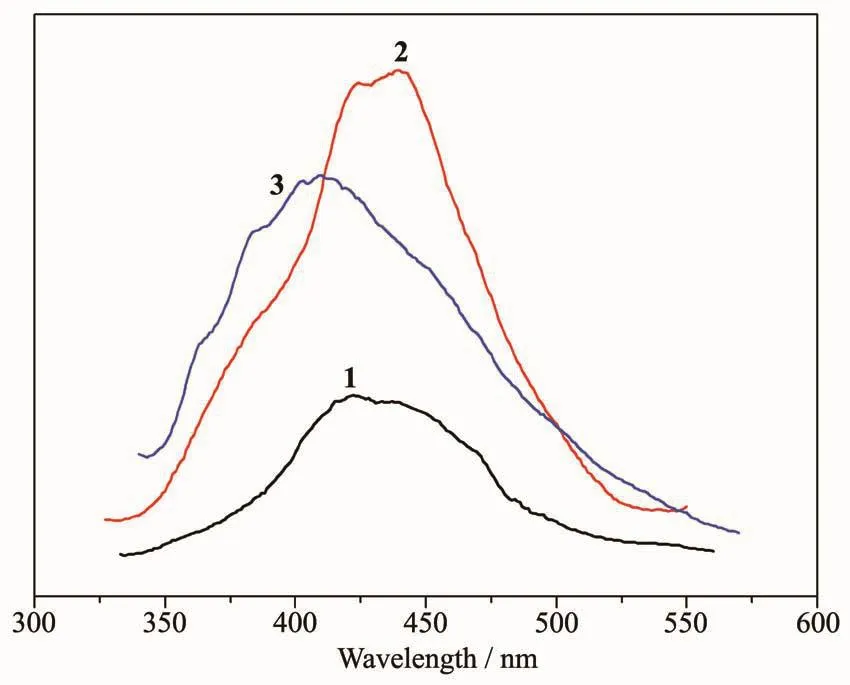
Fig.11 Emission spectra of 1~3 in the solid state at room temperature
2.4 Thermal properties and PXRD measurement of complexes 1~3
To study the thermal stabilities of these complexes,thermal gravimetric analysis (TGA)were performed.The TG curve of 1~3 are shown in Fig.12.Complex 1 first lost its coordinated and lattice water molecule below 210 ℃ (Obsd.14.68%,Calcd.14.52%).Then 1 was relatively stable up to 210~345 ℃.The second weight loss is 74.49%in the temperature range of 345~400 ℃ corresponding to the decomposition ddb4-and phen ligands (Calcd.75.23%).Complex 2 first lost its coordinated water molecules below 225℃(Obsd.14.88%,Calcd.14.67%).Then 2 was relatively stable up to 225~320 ℃,followed by a continuously two-step weight loss of 73.41%from 320 to 515℃(Calcd.72.42% ),corresponding to the loss of ddb4-and phen ligands.The remaining weight of 12.69%is the final product CoO (Calcd.12.91%).The TG curve of 3 showed an initial weight loss of 3.69%below 130℃ corresponding to the removal of lattice water molecules (Calcd.3.72% ).Then 3 was stable up to 260℃and followed by the weight loss in the range of 260~490 ℃,assigned to the decomposition of ddb4-and dpe ligands (Calcd.73.18%,Obsd.72.57%).The remaining weight of 23.68% is Ag2O that is in agreement with the calculated value of 23.76%.
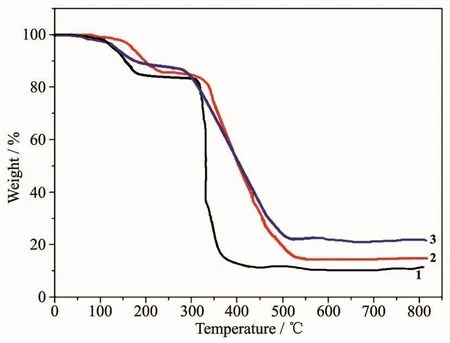
Fig.12 TGA curves of complexes 1~3
In order to confirm the phase purity of the bulk materials,powder X-ray diffraction (PXRD)patterns were measured at room temperature.The PXRD experimental and computer-simulated patterns of all of them are shown in Fig.13.The peaks of the simulated and experimental PXRD patterns are in good agreement with each other,confirming the phase purities of 1~3.

Fig.13 PXRD patterns of complexes 1 (a),2 (b)and 3 (c)
3 Conclusions
In summary,we succeeded in getting access to three transition metal complexes based on 3,3′,4,4′-tetracarboxyazobenzene and different auxiliary ligands through hydrothermal method.Complex 1 is binuclear structure.Complex 2 shows 2D network constructed from Co2+ion cross-linked by ddb4-and bpy ligand.Complex 3 is linear chain structure.Interestingly,the guest molecule ddb4-exists in the structure and extends a 3D supramolecular structure through hydrogen bonding,Ag…Ag and Ag…O interactions.Different structures of complexes 1~3 indicate that the ddb4-ligand has the ability of adjusting its coordination modes and configurations in different reaction systems.Furthermore,theπ…πstacking interactions probably play a crucial role to the arrangement and stability of the chain structure, which influence the final supramolecular structures together with abundant hydrogen-bond interactions.
猜你喜歡
電子競技(2020年8期)2020-12-23 04:09:40
電子競技(2020年7期)2020-10-12 10:45:48
電子競技(2020年5期)2020-08-10 08:43:10
電子競技(2020年4期)2020-07-13 09:18:06
電子競技(2020年2期)2020-04-14 04:40:38
電子競技(2020年11期)2020-02-07 02:49:36
電子競技(2020年9期)2020-01-11 01:06:21
電子競技(2020年10期)2020-01-11 01:06:06
電子競技(2019年22期)2019-03-07 05:17:26
電子競技(2019年21期)2019-02-24 06:55:52
