
百年視野中的PTW與澳洲現代建筑
2018-12-20 07:36:40艾俠AIXia
世界建筑 2018年12期
艾俠/AI Xia
在研究和敘述PTW這家建筑事務所時,“時間”幾乎成為一個無法回避的關鍵詞。時間和事件累積成了歷史,而歷史的延展蛻變,又帶來了新的機遇。PTW的歷史幾乎與現代建筑史等長,在這一百多年中,事務所歷經了分裂與擴張,但作為一家建筑設計機構的核心本質一直延續至今,目前已經是第七代領導者在維系這個設計品牌,并將其全球化。
多年的教育使得我們接受了這樣一種觀點:現代主義建筑之樹的“根基”和“主干”在歐洲和美國,世界其他地方則發揮了“分支”的作用。在這些分支之中,澳大利亞可能是最接近主干的一支,它的文化直接來源于歐洲,與美國的都市主義也幾乎同步,唯一的區別可能在于地理和文化基因上的差異。
在關于現代建筑的理論著作中不太容易找到澳洲建筑的痕跡。有兩個時期人們似乎想起它的存在,一個是悉尼歌劇院從國際競賽到修改方案并付諸實施的1970年代;一個是澳洲建筑師格倫·馬庫特獲得普利茲克獎的2002年,很多人都把短暫的目光投向了澳洲。此后的十多年里,沒有太多人提及澳大利亞。客觀地說,我們依然在不經意地忽視澳洲建筑。令人好奇的是,今日我們可以感知的PTW設計,在多大程度上有著歷史的印記,又在多大程度上有著與時俱進的元素?這是一個復雜的矛盾,讓我們從頭來揭示。
1 實踐從住區開始(1889-1929)
1889年,英國的家具和室內設計師詹姆斯·佩德爾遠渡重洋來到悉尼,開設了當地為數不多的建筑事務所,這就是PTW早期的雛形。那個時期的英國正處于建筑文化的轉型時期,工藝美術運動正如火如荼地進行,距離現代建筑的正式萌芽還有待時日[1]。相對于歐洲優越的城市空間,澳大利亞的建筑發展卻很難呈現出連貫的景象,不同城市的進展顯得自由而不被拘束,不同的建筑師按各自的理解復刻著歐洲的建筑風貌。地理和文化上的邊緣化使得澳洲建筑在一個世紀之前就陷入難以定義的困境[2]。
出于自身的工作經驗,詹姆斯·佩德爾的建筑實踐從住宅設計起步是最合理的選擇。當時的客戶大多來自私人委托而不是開發機構的整體需求,這使得建筑師可以接觸到最終端的使用者。面向裝飾主義占據主導需求的市場,佩德爾先生可能是澳洲最早提出“健康棲居”(Healthy Living)概念的建筑師,盡管建筑形式不可避免地帶有古典符號特征,但他的思考已經站在時代前沿:面對澳洲廣袤大陸的奇花異草、各種獨特的動物和極端的自然條件,西方文明的建筑傳統如何與澳大利亞原始開放的自然格局相協調,這個問題從事務所的成立之初延伸至今,并依然在不斷探索。
大約在1902年,公司的第二位重要合伙人塞繆爾·索普以學徒身份加入公司。公司的業績和經濟狀況開始逐漸起色,員工數量開始增多。1912年,佩德爾和索普帶領團隊在美國加州進行了專門的學習和考察,我們猜測這次旅行不僅出于加州和澳洲有類似的“氣候導向”的設計特征,也顯然出于對美國更為領先的商業意識和管理理念的學習。回到澳洲之后,佩德爾邀請精于商務管理的合伙人弗蘭克·沃克加入公司,并在1929年將事務所正式更名為“佩德爾-索普-沃克”,并沿用至今。
2 對現代主義的適應性成長(1929-1959)
20世紀30年代開始,澳洲社會受到國際工業化浪潮的影響,形成了大眾消費和中產階級為基礎的社會結構。新的移民潮導致大批人口引入,商人階級的興起,住房需求量的激增使澳洲各大城市不約而同地經歷了一段相對失控的社會局面。澳洲城市建筑的現代主義起步比歐洲和美國略晚,新舊建筑風格的斗爭也持續了數十年歷程,建筑的世俗化現象嚴重。在這樣的社會和文化環境里,PTW并
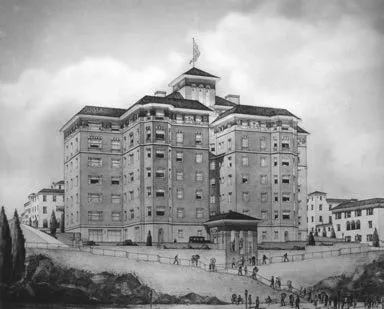
1 PTW 設計的 Borambil 公寓手繪透視圖(1929)
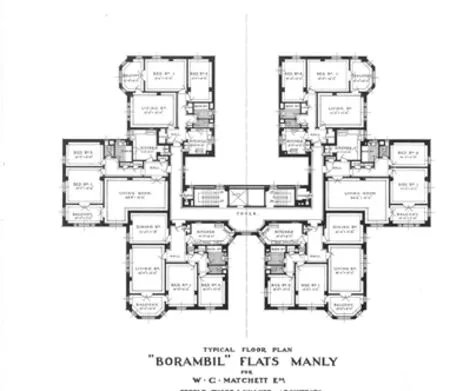
2 PTW 設計的 Borambil 公寓平面圖(1929)
To study and describe PTW Architects, "time" is almost an unavoidable keyword. Events occurring over time become history, while the passage of time brings about new opportunities. The history of PTW Architects is almost as long as that of modernist architecture. Within the scope of more than one hundred years, the architecture firm has experienced division and expansion, but it still manages to maintain its core value. Now, the leaders of the seventh generation are consolidating and globalizing the design brand.
After years of education, we have come to accept the view that the "root" and "trunk" of the tree of modernist architecture are found in Europe and America, with branches in other regions of the world. Of all the branches, Australia resembles the trunk most. Its culture originated from Europe, and started almost simultaneously as urbanism in America. The only distinction probably lies in geographical and cultural differences.
It is not easy to trace Australian architecture in the literature on modern architecture. It seems that people's memories about its existence are only found in two periods, namely, the 1970s when the Sydney Opera House was completed and realised as a result of an international competition and meticulous revisions of the design plan, and in 2002 when Glenn Murcutt won the Pritzker Architecture Prize and turned the attention of the world to Australia for a brief moment. In the following decade, very few people mentioned Australia. Objectively speaking, we are still inadvertently ignoring Australian architecture. I wonder to what extent PTW Architects as we see today retains the marks of history and to what extent it innovates to keep up with the times? This is a complicated mixture. Let's look back to its beginning.
1 Early Practice by Residential Ideas (1889-1929)
In 1889, James Peddle, a British furniture and interior designer, travelled across the ocean to Sydney and founded an architecture firm there. It was one of the few architecture firms in Australia at that time, which later became known as PTW Architects. During that period, Britain was in the transition of its architectural culture, with the Arts & Crafts Movement flourishing throughout the country and the emergence of modernist architecture still far away. Compared with Europe's advantageous urban spaces, it's quite difficult to develop consistent architectural spaces in Australia. Architectural styles in different cities appear free-spirited, maverick and unrestrained, and different architects reproduce European architecture according to their own understandings. Geographical and cultural marginalisation forced Australian architecture into an elusive predicament a century ago.
For his own work experience, James Peddle made the most reasonable decision to start his architectural practice with the design of residential buildings. At that time, most of the clients were individual owners instead of development companies. As a result, the architect was able to communicate and interact with end users. In the decorative-style-dominated market, Mr. Peddle was probably the first architect in Australia to propose the concept of healthy living. Despite signs and characteristics of classicalism in his architectural style, his thinking on how to harmonise the architectural traditions of the western civilisation with the primitive and expansive natural landscape of Australia characterised by exotic flowers and plants, unique animals, and extreme natural conditions was already avant-garde. Up to now, the architectural firm is still exploring different possibilities.
Around 1902, the second important partner, Samuel Thorp, joined the firm as an apprentice, and the firm's business performance and economic conditions began to improve with an increasing number of employees. In 1912, James Peddle travelled to the USA to qualify as an architect in California. A bold guess is that this trip was made not only because California and Australia share the same "climate-oriented" design features but also because America boasted more advanced business and management concepts. After his return to Australia, Peddle invited Frank Walker, versed in business management, to join the firm as a partner, and changed the name of the firm to Peddle Thorp Walker in 1929, which is still in use now.
2 Evolution Adaptive to Modernism (1929-1959)
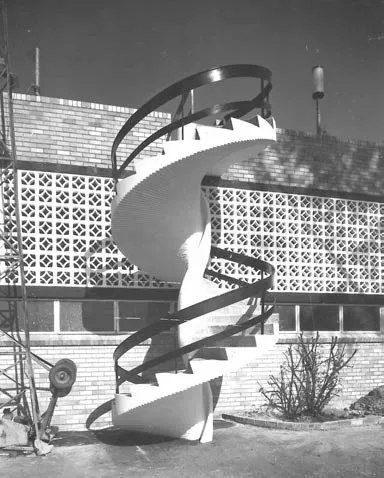
3 1960年代PTW設計的室外旋轉樓梯
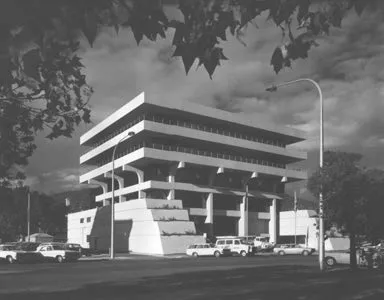
4 1960年代的Peel Cunningham 具有典型的現代主義特征
From the twentieth century, a social structure based on mass consumption and the middle class emerged as a result of the impact of international industrialisation on Australian society. Following new waves of immigration, people flocked into Australia, and the merchant class rose. The explosion of needs for housing gave rise to runaway urban sprawls. Modernist architecture started in Australian cities slightly later than Europe and America, and the battle between old and new architectural styles continued for decades, resulting in visible architectural secularisation. In such a social and cultural context, PTW Architects acted concurrently with Europe and America instead of radically advancing modernism. It won a series of design competitions about suburban garden communities, and made positive responses to Sydney's geographical and climatic conditions, consciously or subconsciously paving the ground for the later development of modernism in Australia.沒有激進地高舉現代主義旗幟,但在行動上卻積極地與歐美同步。PTW在一系列城郊花園社區的設計競賽中獲勝,通過設計表達出對悉尼城市地理和氣候環境進行積極回應,有意識或無意識地為后來澳洲現代風格的奠定了基礎。
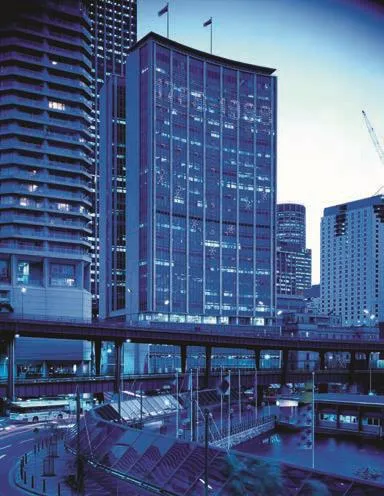
5 1962年竣工的AMP大廈占據著悉尼CBD的核心位置

6 AMP總部大廈的門廳(攝影/Photo: Sharrin Rees)
隨著公司規模的擴大、員工數量的增多、社會聲譽的積累,三位合伙人將設計思考從單純的居住功能向藝術、教育、城市公共設施方向拓展,成功地設計了一些法院、教堂和工廠建筑,還在堪培拉等新興城市設計了大量的城市規劃,使得事務所成為澳洲第一家具備綜合類型能力的建筑設計機構,這在當時的世界范圍來看也不多見。
1932年,憑借“悉尼科學之家”的設計,PTW第一次獲得澳洲皇家建筑師學會獎章(John Sulman Medal);1952年,憑借設計堪培拉的瑞典皇家公使館再次獲此殊榮。
3 對城市中心和商業復興的積極回應(1960-1992)
1960年代是世界都市復興的繁榮時期,人們從汽車上的郊區生活重新回歸都市的活力,悉尼也不例外。建筑的材料、結構, 設備技術不斷進步,滿足著人類對城市高度和復雜程度的想象。這個時期的悉尼CBD建設為PTW帶來了大量的機遇。1962年,PTW設計的悉尼環形碼頭AMP大廈順利建成,瞬間將這座城市的高度由過去的46m升高到116m[3]。在后來的歲月里,PTW為全球貢獻了超過100座高層建筑。
如果說現代主義已經不再是革命,而是必須遵循的趨勢和原則,那么,PTW和整個澳洲建筑師其實都面臨一個問題:如何理解和定義澳洲建筑的現代性?
從城市化和社會進步的程度來看,澳洲是不折不扣的“西方社會”,但它并非處于西方中心,與歐洲的距離甚至比亞洲和非洲還要遠,從而保持著一種獨立的自由。澳洲建筑師喜歡把自己的實踐認同為“亞熱帶的現代主義”(Subtropical Modernism),強調空間的開放性和滲透性,以及與自然的聯系,成為設計之中非常本質的元素。以悉尼、墨爾本、布里斯班為代表的三座澳洲城市的當代建筑,大多展現出流動、滲透的平面布局,多樣化的遮陽形式,樸素適用的形式語言。
一種“靈活適應性的現代主義”,是澳洲建筑從現代主義走向今日的最佳詮釋[4]。
與此同時,土著文化的回潮(現在澳大利亞大約有7萬土著人, 約是200年前的一半)是伴隨著后現代主義影響澳洲的一個重要特征:與當地僅存的土著傳統發生形式上的聯系,這在PTW設計的澳大利亞國立美術館擴建項目(堪培拉)中可以清晰地感知到。那些原始的、開放的、異己的空間也逐漸使PTW開始審視自身所屬的地域文化,設計思考方式出現了微妙的轉變,同時迎來了下一個屬于全球化的時代。[5]
4 以動態的全球視角重塑專業意識(1992-2018)
盡管早在1980年代PTW就開始承接海外項目。但1992年PTW與中國華藝設計合作完成了位于深圳的高層建筑“深圳發展銀行大廈”(由悉尼的托尼·羅西擔任設計總監)無疑是PTW在亞洲擴展的關鍵節點。而與此同時,悉尼辦公室與墨爾本辦公室的設計董事在對建筑的思考上有了不同的見解后最終決定分家。考慮到悉尼是PTW的起源地,悉尼辦公室及其在國外的團隊得以沿用PTW品牌。重組后的PTW除了繼續從事擅長的住區設計,還將項目重點放在了港口城市規劃、城市更新與交通綜合開發以及后來大放異彩的體育建筑設施上。
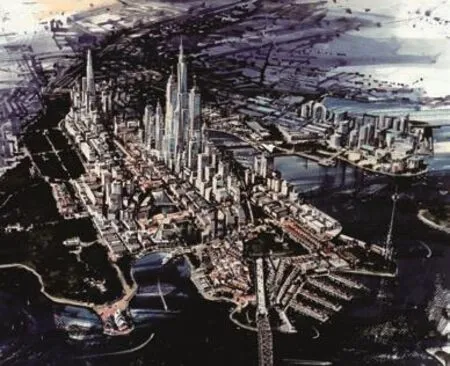
7 PTW為悉尼2088年做的概念規劃
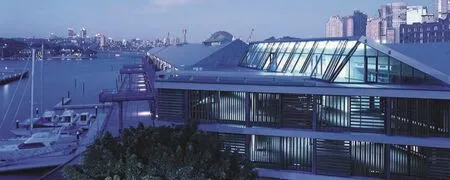
8 瓊斯灣碼頭改建工程夜景(2003, 攝影/Photo: Sharrin Rees)
With an expanding business size, an increasing workforce, and a rising reputation, the three partners shifted their focus from merely designing residential spaces to artistic, educational, and urban public spaces. They designed courts, churches and factories, and even delivered urban planning schemes for new cities such as Canberra, altogether contributing to establishing PTW Architects as the first architectural firm in Australia with comprehensive design capabilities, which was rarely seen even in the world at the time.
In 1932, PTW Architects was awarded the Sir John Sulman Medal from the Royal Australian Institute of Architects for Science House in Sydney. It won this award again in 1952 for the Royal Swedish Legation, Canberra.
3 Active Response to Urban Centre and Commercial Revitalisation (1960-1992)
The 1960s witnessed the thriving of urban renaissance around the globe. People returned from the suburban life with heavy reliance on cars to the urban life, and Sydney was no exception to the rule. New grounds were constantly broken in terms of construction materials, structures, equipment and technologies, which helped to realise people's dreams about sophisticated high-rise buildings. The development of CBDs in Sydney during the period brought tremendous opportunities for PTW Architects. In 1962, the AMP building at Sydney's Circular Quay heralded a new era, as it broke the 46-metre height limit and raised it to 116 metres. In the years that followed, PTW Architects designed more than 100 skyscrapers worldwide.
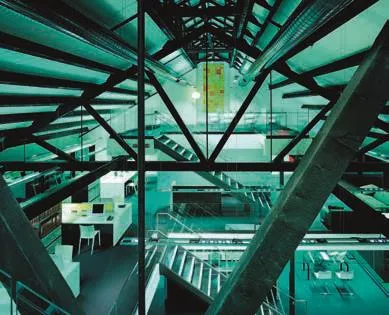
9 瓊斯灣碼頭改建工程,老式橫梁與現代辦公內飾(攝影/Photo: Gregory Haremza)
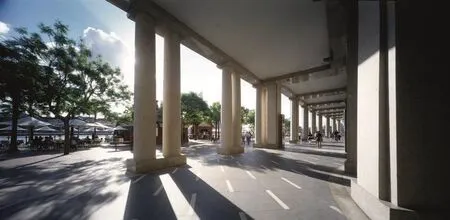
10 PTW在東部環形碼頭項目中利用住宅低層的沿街柱廊塑造出寬敞的游覽空間(2004, 攝影/Photo: John Gollings)
If modernism is no longer a revolution and is a trend or principle that must be followed instead, PTW Architects and all the other architectural firms in Australia face the same problem - how should we understand and define the modernity of Australian architecture?
In terms of urbanisation and social progress, Australia is veritably a western society, but it is able to maintain independent freedom as it is not a centre of western civilisation and it's more detached from Europe than Asia and Africa. Australian architects tend to define their practices as subtropical modernism, and advocate spatial openness and filtration, and communion with nature as the fundamental elements of design. Most of the contemporary buildings in three typical Australian cities, including Sydney, Melbourne and Brisbane, present a flowing and penetrative layout, diverse sunshade forms, and a plain and pragmatic architecture language.
A flexible and adaptable modernism is the best definition of Australian architecture from modernism to the present situation.
This can be clearly perceived from PTW Architects' design of the expansion project of National Gallery of Australia in Canberra. Interested in those primitive, open, and alien spaces, PTW Architects began to examine the regional culture to which it belongs, resulting in subtle changes and thinking approaches in its design and ushering in the next era of globalisation.
4 Professional Renew in Dynamic Globalisation(1992 - 2018)
Although PTW Architects started to undertake overseas projects as early as the 1980s, its design of Shenzhen Development Bank in partnership with Hua Yi Designing Consultants in 1992, in which Tony Rossi based in Sydney was appointed to be the design director, turned out to be a turning point for its expansion in Asia. During the same period, the design directors of the offices in Sydney and Melbourne decided to part ways. Considering that Sydney is the origin of PTW Architects, the Sydney office and its overseas teams were able to continue to use the brand name of PTW. The restructured PTW Architects placed its focus on harbour and city planning, urban renewal, transport complex development, and sports facilities that became splendid later on, in addition to its continued practice of residential design.
澳大利亞謙遜而豪華的濱水居住觀念持續受到歡迎。這一強烈的觀念致使居住單元多以開敞的方式規劃,建成后的入口反而隱匿在與河畔相鄰的步道立面中,人群經過都不容易被發現。對材料的細心把握以及巧妙地平面布局都展現出建筑師對場地的敏感。如果您去悉尼的布朗格魯、瓊斯灣或沃爾什灣散散步(這里分布著大量的PTW設計的濱水居住區實例),這種感覺會特別強烈[6]。
這個時期,澳洲重要城市(尤其是悉尼)開始了新一輪的城市化,它得益于城市更新,往更高密度、更復雜連接的方向上發展。PTW的實踐告訴我們:只要設計得當,最高的密度與最細膩的人文尺度可以同時存在。不僅如此,他們還在探索建筑內部與自然構架的呼應關系,這從邦德街30號辦公樓和悉尼文法學校會堂兩座建筑不約而同的裸露巖壁之中,可以看出端倪。
PTW在體育建筑領域的成就起源于對城市和人的運動性的思考。在參與了2000年悉尼奧運會多個場館的設計之后,真正讓全世界記住PTW名字的是2003年它與中國設計機構悉地國際(CCDI)聯合設計中標的北京奧運會國家游泳中心“水立方”。這座建筑至今依然是世界最受歡迎的水上運動中心,它有著中國文化的隱喻,也通過復雜的柔性多面體鋼架和聚四氟乙烯薄膜(ETFE),展示著最先進的結構工程和材料工藝[7]。
也正是出于國家游泳中心的成功合作,PTW迅速在北京和上海開設了新的分公司,并開始用一種新的視角去理解全球化與地域性的關系:全球化與地域特征可以在某些時刻成為相互的觸媒,而不僅僅是把西方社會的先進設計帶給發展中國家。這種開放的哲學最終促成了2013年CCDI對PTW的收購,共同面對世界的舞臺。在保持澳洲品牌獨立性的同時,讓它在新的時代、新的市場機遇中繼續前行。除了中國市場,PTW先后贏得了非洲剛果體育中心、加蓬足球場、康斯坦丁大劇院等多個具有地標意義的國際項目[8]。
對于設計,PTW的建筑師們保持著溫和而富有趣味的態度,一如澳洲陽光的明媚和休閑處世的生活哲學。在即將步入21世紀的第3個10年,PTW的實踐集中著眼于三類具有代表性的城市空間類型,分別是:公共意義的濱水空間、以激活人居活力為目的的城市更新、以體育設施為代表的具有運動意義的空間。這三類空間交織更替,構成了PTW事務所在當下最有說服力的實踐優勢。
我們已經并且會繼續發現,PTW的建筑實踐是一場復雜而深遠的話題,它不依賴于明星建筑師的個體行為,但對城市主流建筑品質的提升有著至關重要的貢獻,這種貢獻持續而穩定,鑄就了一個又一個時代的佳作。人的個體生命有限,而企業則可在更長的時間維度中發展,“百年老店”這個中國傳統美譽,在PTW事務所得到堅實的驗證,比起世界各地隨處可見的速生設計,它顯得真實而富有觸感。□(感謝PTW全球總經理李巖、PTW悉尼辦公室負責人西蒙·帕森斯、PTW執行總監謝曉龍,PTW建筑研究員安·昆蘭,以及PTW前任總建筑師安德魯·安德森、前任總經理約翰·貝爾蒙對本文的幫助,感謝CCDI施婍婷對歷史資料的初步梳理)
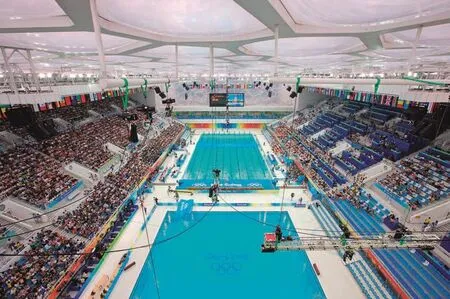
11 北京奧運會的國家游泳中心開幕進一步打開了PTW的國際聲譽(2008, 攝影/Photo: Ben McMillan)
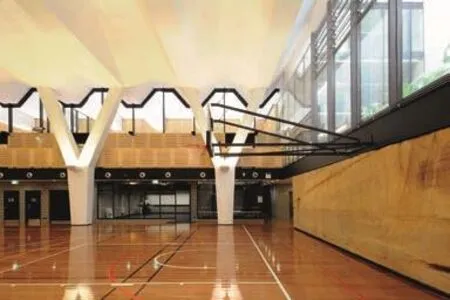
12 悉尼科技大學多功能體育廳是一處將半地下空間改建為體育設施的經典案例(2011, 攝影/Photo: Brian Steele - PTW Architects)
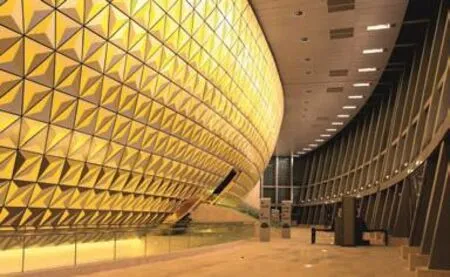
13 PTW和CCDI聯合設計的康斯坦丁大劇院已經建成(2015, 攝影/Photo: PTW Architects )
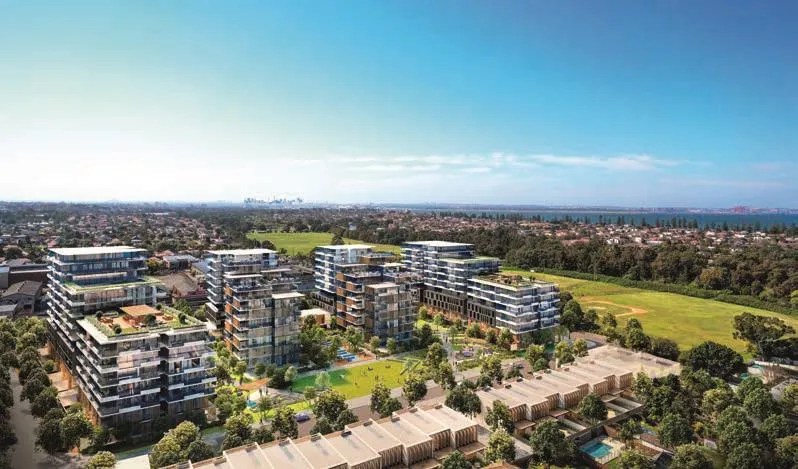
14 悉尼Ramsgate Park社區設計
Australia's modest yet deluxe waterfront living concept continues to catch on, strongly contributing to the residential design featuring open residential spaces with the entrance tucked into the facade of the walkway adjacent to the river and not easily noticeable by passers-by. Both meticulous use of materials and ingenuous plane layout point to the architects' sensitivity to spaces. If you have been to Sydney's Barangaroo, Jones Bay Wharf or Walsh Bay for a walk, where there are many examples of waterfront residential areas designed by PTW Architects, you will have a strong feeling of this.
Within the period, important cities in Australia, especially Sydney, started a new round of urbanisation attributable to urban renewal and featuring development of greater density and more complicated links. The practice of PTW Architects teaches us that an appropriate design can enable the co-existence of the highest density and the most profound humanistic dimension. In addition to that, they also explore the interrelation between architecture and natural structures, as can be seen from the exposed rock walls of 30 The Bond and the Sydney Grammar School Concert Hall.
PTW Architects' accomplishments in the field of sports architecture all derived from its thoughts on cities and human sports. Following its participation in the design of multiple venue projects for the 2000 Sydney Olympic Games, it became a household name after its partnership with CDDI, a Chinese design agency, to win (with Arup) the international design competition enabling the design and construction of the "Watercube", or the National Aquatics Centre for the 2008 Beijing Olympic Games. This construction is still the most popular aquatics centre in the world, which embodies Chinese culture elements and showcases the state-of-the-art structure engineering techniques and materials through its use of a complicated flexible polyhedral steel frame clad with ETFE films.
Based on its successful collaboration to build the National Aquatics Centre, PTW Architects rapidly opened new offices in Beijing and Shanghai, and started to approach the relationship between globalisation and localisation from a fresh angle. To them, instead of mere introduction of advanced design concepts from western societies to developed countries, globalisation and local attributes can interact and interrelate at particular points. Such open-mindedness eventually facilitated CCDI's acquisition of PTW Architects in 2013, enabling the two firms to join forces to compete in the world arena and allowing PTW Architects to make strides with new opportunities in the new era while maintaining its brand independence. Apart from the China market, PTW Architects also won the bids for several international landmark projects, such as the Stade Municipal de Kintélé in Brazzaville, Congo, a PTW's architects maintain a modest and interesting approach to design, which is reminiscent of Australia's bright sunshine and leisurely lifestyle. In the third decade of the 21st century, PTW Architects' practices are concentrating on three representative urban space types, including public waterfront spaces, urban renewal rekindling the vitality of human habitation, and sports spaces represented by sports facilities. These three categories of spaces are intertwined, forming the most convincing advantage of PTW Architects' design practices.
We have discovered and will continue to discover that PTW Architects' architectural practice is a complex and far-reaching topic. Rather than the personal behavior of star architects, it plays a critical role in enhancing the quality of the mainstream architecture in cities, and continuously and reliably delivers one after another epochal masterpieces. The life of an individual is limited, while an enterprise can survive and evolve for a longer period of time. The very existence of PTW Architects is an eloquent testimony to its reputation as a century-old enterprise, a traditional term that Chinese people use to show admiration for longexisting organisations. Compared with short-lived businesses eagerly after profits, it is more real and meaningful.□
猜你喜歡
北方建筑(2021年6期)2021-12-31 03:03:54
文苑(2020年10期)2020-11-07 03:15:36
現代裝飾(2020年7期)2020-07-27 01:27:42
現代裝飾(2020年6期)2020-06-22 08:43:12
現代裝飾(2020年4期)2020-05-20 08:55:08
流行色(2020年1期)2020-04-28 11:16:38
藝術啟蒙(2018年7期)2018-08-23 09:14:18
海峽姐妹(2017年7期)2017-07-31 19:08:17
Coco薇(2017年5期)2017-06-05 08:53:16
福建農業科技(2016年10期)2016-03-07 09:46:49
