Flying Art in the Blue Sky
2019-06-11 11:32:50MoTingitng
中國-東盟博覽(旅游版) 2019年4期
Mo Tingitng

It is often said that art comes from life, but dramatizes life. For ancient Chinese, their definitions of “folk culture” are not only rooted in what can be seen and felt in their personal lives, but also transcend the life itself. When we talk about the sky above China, we are often referring to topics like pollution or busy airlines. But beneath the clouds there is a Chinese art form that has glided through history. This ancient relic brings the colors and patterns of the ancient dynasties to the city sky of modern China and the world. That is the Chinese kite. When you flying kite, it can distract you from troubles, help you forget the stressful environments and reconnect you to nature.
Cultural symbol of the past
China proudly takes credit for the invention of the kite, a symbol of the Chinese handicraft. When the kite is flying, if bamboo strips are attached to the kite and flown in the wind it makes whistle sounded like Kucheng (a stringed instrument) playing in the wind, hence its name. Chinese kites have been made and flown for many centuries. The earliest mention of a kite in ancient China dates back to 2,300 years ago. An early legend about the origin of the kite is that the philosopher Mozi built a kite made of wood in the form of an eagle near Lushan Mountain in Shandong. And the deft craftsman Lu Ban was said to be the inventor of the kite “Yuan”.
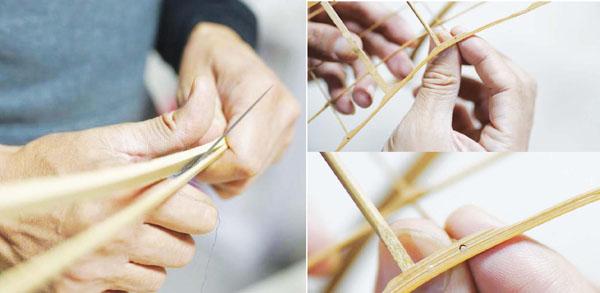
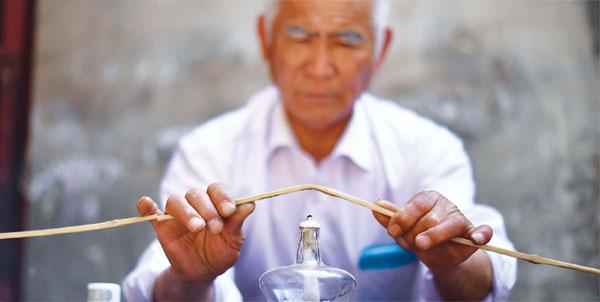
The kite making is exquisite in style, beautiful in painting and good in quality. Ancient Chinese kites were stamped with wood cuts or were hand painted. Animals and views from nature were most often depicted on the kites. What's more, some of them have abstracted the strongpoint of wooden New Year's Painting, making its appearance more colorful, vivid, and elegant. The original kites were made from wood frames covered with cloth. After the Han Dynasty (206 BC-220 AD), paper was introduced into the kite-making and replaced the wood and bamboo. And during the Five Dynasties Period (907 AD-960 AD), people tied the bamboo whistle to the kite. Additionally, kite makers switched from linen and cotton to silk and paper for covering the frame. Later, silk-covered kites that flaunted beautiful hand-painted designs and those carrying ornate accessories soon became a common sight in China. The construction of kites has changed over the years. New materials and better understanding of flight have given modern kites a serious advantage in flight. However the ancient methods are still interesting and worthy of note.
According to record, there are no less than 300 varieties of kites in China, such as human figures, fish, insects, birds, animals, written characters and so on. In China, Chinese dragon kites are very popular. As a result, everyone from children to experienced kite-makers are flying very modern dragon kites.
One of the earliest uses of kites was in fishing, the kite would trail a line with hooks and bait allowing the kite flier to fish in areas some way out over rivers or the sea. Also, there is evidence of kites being used to send messages during wars in many dynasties. Early armies used whistles attached to kites to frighten an army at dead of night. Much like ancient peoples use of signal fires on top of mountains, another reason to build and fly kites may have been as a signal to warn of an approaching enemy or caravan. General Han Xin (231 BC-196 BC) also used kites to measure the distance to enemy walls so that guns could be targeted and tunnels could be excavated to the correct distance.
A popular pastime today
Kite flying at ancient times has been an imperial pastime. Emperor Xuanzong (685-762) of the Tang Dynasty (618-907) is known to have loved to fly them. History aside, people in China fly kites these days for very similar reasons to anyone else in the world. Flying a kite is a very funny activity in all generations in China, and it can be recreation for the whole family. Also, for some there is the satisfaction of actually building the kite. Making and flying various kites reflect the pleasing mood of the spring. It is easy to find the scene that when in the holidays, there are large numbers of people gathering to the squares and holding lines to control beautiful kites in the blue sky. Moreover, Chinese culture is rife with beliefs and superstitions that relate to kites and the act of kite-flying. Traditionally, kite flying is believed to be good for people's health, and this view is still held by some. If the kite string is cut then bad luck is considered to fly away with the kite. The traditional kite flying season starts on the Chongyang Festival held in October. At the Qingming Festival (Tomb-Sweeping Day) kites were flown to send messages to departed loved ones.
The passion for kite flying has spread from China to all parts of Asia. As kites become more elaborate with multiple parts, long tails, and a lot of colors, kites become an art form and flying them become a pleasure. For a long time, most Chinese kites have been flying works of art. Real art, as proven by the fact they could be found in many art collections around China. There is a large range of different designs of kites, some are three dimensional rather than flat and often are made in the form of creatures such as birds, bats and dragons. The size of kites varies enormously, the tail can be several hundred yards long. Most designs use a basic frame made from bent bamboo. In the parks you will often see people flying kites.
Tianjin and Weifang are places particularly associated with kites, they hold annual competitions that attract enthusiasts from many countries. Weifangs kite has reached its heyday during the Tang (618-907) and Song (960-1279) Dynasties. Every year in spring almost every household went out to fly the kite and have a picnic in sunny and windy days. Flying kite requires modest wind, and warm day, thats why its better to fly kite in spring days. It was an exuberant folk activity and a good time to display the kites as well as enjoy the warm weather and the fresh air. The tradition has been well kept until today and becomes the world-famous Weifang International Kite Festival, which is held on the third Saturday in April. Kite enthusiasts in the thousands, and from all corners of the globe, descend upon the city of Weifang at this time each year. Tourists flock just to watch this majestic and colorful spectacle.