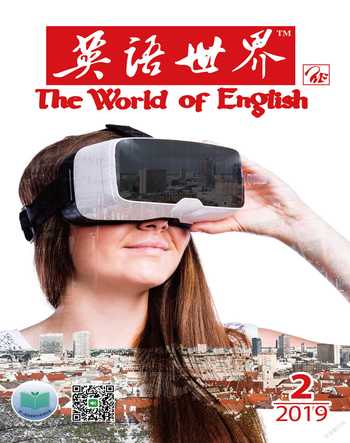
用虛擬現實技術挽救連體女嬰
2019-09-10 07:22:44彼得·霍利
英語世界 2019年2期
關鍵詞:手術
彼得·霍利
During an 18-year career in medicine, Daniel Saltzman—the chief of pediatric surgery at University of Minnesota Masonic Children’s Hospital—has grown accustomed to looking at X-rays as if they were imperfect road maps of the human body.
He compares this exercise to looking at a two-dimensional traffic map on your smartphone and thinking about that image in three-dimensional terms in your mind.
Like any other road map, an X-ray image is an incomplete reduction of reality that can misrepresent challenges or include distortions, which explains why, even in 2017, high-stake surgeries can involve a shocking degree of guesswork1 and improvisation2.
“That’s why medicine is still an art as much as a science,” Saltzman told The Washington Post.
For decades, increasingly sophisticated imaging techniques have allowed doctors to peer into the human body before they cut it open, reducing uncertainty and helping them prepare for complicated procedures. Now, advances in virtual reality may flip that dynamic on its head, allowing doctors to confront the unknown before they even enter the body.
The latest evidence of this revolutionary shift in health care is the successful separation of two conjoined newborn sisters in Minnesota. Until their separation in May, Paisleigh and Paislyn Martinez were attached from their lower chest to their bellybuttons—a condition known as thoraco-omphalopagus. Both babies survived the dangerous, nine-hour procedure, a development that Saltzman and other surgeons involved link directly to their use of virtual reality before surgery.
Separating conjoined twins is a risky procedure, though survival rates differ depending on how the siblings are connected and which organs they share, according to the University of Maryland Medical Center. The Medical Center notes that twins “joined at the sacrum at the base of the spine have a 68 percent chance of successful separation, whereas, in cases of twins with conjoined hearts at the ventricular3 (pumping chamber) level, there are no known survivors.” In the latter case, the hearts are completely joined.
Experts said they were unaware of any other example of virtual reality being used to prepare for the separation of twins partially conjoined at the heart. Virtual reality has been used to assist in the separation of twins conjoined at the head on three occasions, two of which were carried out by Housing and Urban Development Secretary Ben Carson4, experts said.
Anthony Azakie—chief of pediatric cardiac surgery and co-director of the Heart Center at the University of Minnesota Masonic Children’s Hospital—called the university’s procedure a “once-in-a-lifetime event.”
Using goggle-like virtual reality glasses a month before surgery, Saltzman, Azakie and their team were able to explore a 3-D model of the twins’ hearts, virtually embedding themselves inside the walnut-sized organs as if the infant’s anatomy had been blown up5 to the size of a living room.
“It’s completely surreal and the resolution is unbelievable,” Azakie said. “The details are absolutely superb.”
The experience was not only riveting6, but revelatory7, doctors said, so much so that the stunned surgeons decided to alter their entire operative strategy. Within minutes after putting on the glasses, Saltzman and Azakie discovered something unexpected: new connective tissue—a “bridge”—linking the girls’ intertwined hearts, one of which had become heavily reliant upon the other to filter impurities and remain beating because of a severe congenital heart defect.
That defect meant that the lives of both babies were in jeopardy and doctors would have to conduct the surgery several months early, before the twins were as robust and healthy as doctors had hoped they’d be.
Standing inside the 3-D rendering of the infants’ hearts, the challenge before the physicians was daunting. They realized that improperly severing that connection could lead to the twins bleeding to death. Placing pressure on the hearts could cause blood loss or arrhythmia so severe the organs stopped beating entirely. They needed to find a way to navigate around the connection that didn’t damage each delicate organ.
The team members interacted with the 3-D model using a “track system” that allowed them to turn their heads without distortion. Doctors said the ease of the virtual interaction helped the team arrive at a simple, yet elegant solution, which they drew up on a whiteboard moments later. The surgeons decided to flip the babies around on the operating table so that the procedure occurred from the opposite angle. In the end, doctors said, the straightforward solution to a complicated quandary may have saved the twins’ lives.
“In our line of work—especially in pediatric cardiac surgery—it’s important that one is able to think on their feet and plan for the unexpected,” Azakie said. “The imaging helped us prepare by developing an approach in the event that we came across something we didn’t expect.”
To create the virtual model of the infants’ hearts, Saltzman and Azakie and other team members partnered with the University of Minnesota’s Earl E. Bakken Medical Devices Center, where experts used software to turn MRI’s and CT scans from both infants into a detailed virtual model. The university’s Visible Heart Lab also created a 3-D printed model of the hearts using a printer purchased online for $300.
Two months after their separation, the twins are still recovering, but doctors say that they’ll lead healthy, independent lives, with a scar on their chests the only evidence that they were ever conjoined in the future.
“Separating these infants was no small feat,” Saltzman said. “The fact that we got to do it using virtual reality for direct patient care makes that feat8 truly incredible.”
丹尼爾·薩爾茨曼,現任明尼蘇達大學共濟會兒童醫院小兒外科主任。在長達18年的從醫生涯中,他早已習慣將X光片視為不完美的人體路線圖。
他將這種診斷過程比作看智能手機上二維的交通地圖時在腦海中構思出相應的三維立體結構。
如同其他地圖一樣,X光影像是對人體真實結構的不完整壓縮,會歪曲難點或導致失真。這就解釋了為什么即使在2017年,高風險手術仍然需要程度驚人的猜測及應變能力。
薩爾茨曼接受《華盛頓郵報》采訪時稱:“這就是醫學既是科學又是藝術的原因所在。”
數十年來,日趨精細的成像技術使醫生在開刀手術前便能窺探人體,以降低不確定性并幫助他們為復雜的術程做準備。而今,虛擬現實技術的進步有望徹底顛覆這種狀態,讓醫生在給病人手術之前就能直面未知。
醫療衛生領域這一革命性轉變的最新例證,便是明尼蘇達州新生連體女嬰的成功分離。佩斯莉·馬丁內斯和佩斯琳·馬丁內斯在5月被分離之前,從下胸腔到肚臍部位都連在一起,這種疾病被稱為胸臍聯胎。經過9個小時驚險的手術,這兩個嬰兒存活了下來。薩爾茨曼和其他參與手術的外科醫生認為這一進展的取得與術前運用虛擬現實技術息息相關。
馬里蘭大學醫學中心的研究顯示,盡管連體雙胞胎的存活率取決于連體的方式及共享的器官,但分離連體雙胞胎是一項高風險的手術。該醫學中心指出:“成功分離脊柱底部骶骨處相連的雙胞胎的機率為68%,但在心室(泵室)層面上心臟相連的雙胞胎還沒有被成功分離的存活者。”后一種情況中,兩顆心臟是完全連在一起的。
專家表示,他們不知道還有其他關于虛擬現實技術用于分離心臟連體雙胞胎術前準備的案例。專家稱,虛擬現實技術已三次協助分離頭部連體雙胞胎,其中兩次是由住房和城市發展部部長本·卡森完成的。
明尼蘇達大學共濟會兒童醫院小兒心臟外科主任、心臟中心聯席主任安東尼·阿扎基說,大學開展的這次手術可謂是“千載難逢”。
術前一個月,薩爾茨曼、阿扎基及他們的團隊便戴上外觀類似護目鏡的虛擬現實眼鏡,查看這對連體雙胞胎心臟的三維模型,將他們自己虛擬地置入嬰兒核桃般大小的器官中,嬰兒身體結構仿佛擴大到一間客廳那么大。
阿扎基說:“這完全超現實,分辨率也令人難以置信,細節展現絕對一流。”
醫生們表示,這種體驗不僅吸引人,也頗具啟發性,以至于他們驚得目瞪口呆,決定完全推翻之前設想的手術方案。因為就在戴上眼鏡的幾分鐘之內,薩爾茨曼和阿扎基便發現了意想不到的情況:新的結締組織,像一座“橋梁”連接著兩個女嬰交織相連的心臟,其中一顆心臟有嚴重的先天性缺陷,很大程度上依賴于另外一顆來過濾雜質和維持心跳。
這個缺陷意味著兩個嬰兒的生命已陷入危險的境地,醫生們原先設想雙胞胎幾個月后變得強健再手術,現在不得不提前手術。
置身于嬰兒心臟的3D透視圖中,醫生所面臨的挑戰讓人望而生畏。他們意識到,切斷兩顆心臟間的聯系,如操作不當可能會導致雙胞胎大出血死亡,而給心臟加壓則可能引發嚴重的失血或心律失常,以致心跳完全停止。他們需要找到一種可以小心繞過兩顆心臟的相連部位而又不傷害任何一個脆弱器官的方法。
利用“跟蹤系統”,團隊成員即使轉動頭部,眼前的景象也不會扭曲變形。醫生說,虛擬交互的便利就在于幫助團隊稍后在白板上草擬出了一種簡單卻巧妙的解決方案。外科醫生們決定將嬰兒在手術臺上的位置完全翻轉過來,從反方向進行手術。最后,醫生表示,應對復雜的困境,簡單直接的方案卻能挽救這對雙胞胎的生命。
阿扎基說:“在我們這行,尤其是小兒心臟手術領域,能夠獨立思考、防患未然是非常重要的。有了成像技術,我們可以為意外情況制訂解決預案,做到有備無患。”
為了創建連體嬰兒心臟的虛擬模型,薩爾茨曼、阿扎基及其他團隊成員與明尼蘇達大學厄爾·E.巴肯醫療器械中心進行合作。在那里,專家們使用軟件將連體嬰兒的核磁共振及CT掃描的影像轉化為一個精細的虛擬模型。大學的可視化心臟實驗室則利用300美元網購的打印機打印出了這對連體嬰兒心臟的3D模型。
分離術后兩個月,兩個女嬰仍在康復中,但醫生們表示她們將過上健康、獨立的生活,只有胸前的傷疤是她們曾經連為一體的唯一證據。
薩爾茨曼說:“分離這對嬰兒本非易事,而我們使用虛擬現實技術直接參與治療患者更令這一壯舉不可思議。”
(譯者單位:山東省文登整骨醫院)
猜你喜歡
環球時報(2022-12-23)2022-12-23 09:28:37
昆明醫科大學學報(2022年1期)2022-02-28 07:45:04
中老年保健(2021年11期)2021-08-22 03:13:36
昆明醫科大學學報(2021年2期)2021-03-29 07:42:46
河北畫報(2020年10期)2020-11-26 07:20:50
小學閱讀指南·低年級版(2017年1期)2017-03-13 20:07:35
中國衛生標準管理(2015年3期)2016-01-14 03:41:47
中國醫療美容(2015年1期)2015-07-12 10:06:38
鄭州大學學報(醫學版)(2015年2期)2015-02-27 14:50:54
西南軍醫(2014年5期)2014-04-25 07:42:48