庫阿特羅卡米諾斯綜合運輸中心,瑙卡爾潘,墨西哥州,墨西哥
2019-12-24 14:14:36建筑設計曼努埃爾塞萬提斯工作室JSa建筑事務所
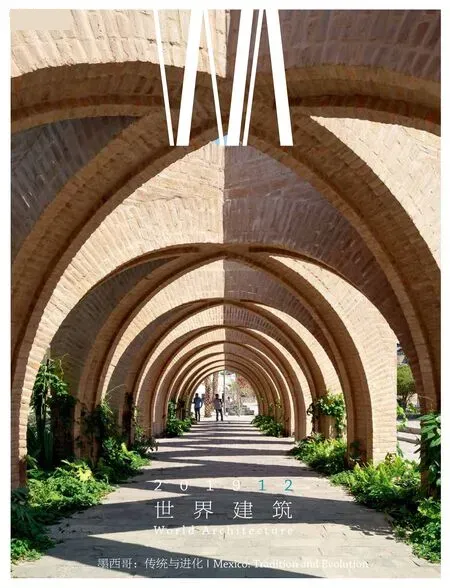
世界建筑 2019年12期
關鍵詞:建筑
建筑設計:曼努埃爾·塞萬提斯工作室 + JSa建筑事務所
庫阿特羅卡米諾斯TOD 這一綜合運輸樞紐位于墨西哥城北郊,建于地鐵二號線終點站之上。這一90,000m2的項目將包含一系列建筑體量,用來改進現有場地中的公共交通流線。方案計劃在提高民眾的通勤體驗的同時改善周邊的城市環境,并為使用者提供更高的公共空間安全性與更有組織的空間。
方案包括一個公交車站,位于地面層,從“綜合運輸中心”(CETRAM)的中部向南北分別延伸出兩翼。站臺和公交車機動區也都位于該層,而商鋪則沿著步行流線排列。
在設計中,南翼還規劃了一座18 層的塔樓,包括了底層商鋪和上層的寫字樓,總計32,000m2。而位于CETRAM 內部的一個環形流線,將會改善公交換乘的效率,并在主通道上提供兩個出入口。
上下公交車的人流被分為兩支,而公交站臺與現有的地鐵站臺共用出口。兩個入口廣場分別朝向軍事工程師大街和軍事運輸大街,可以供游客穿過,以進入CETRAM 的中心區域。
一層的入口廣場和站臺將人流分開,在保證人流能夠持續流向商業區的同時,也分離出站臺方向的通勤人群。三層則規劃了一個餐飲廣場和電影院。設計還包括3 個地下停車場,以滿足規范所要求的車位數量。
外立面飾以圖案化的沖壓鋁板,不僅減少了表皮對結構的荷載,也由于大量預制構件的使用,加快了工程進度。□(王一橋 譯)

1 總平面/Site plan

2 外景/Exterior view

3 軸測/Axonometric

4 交通樞紐首層平面/Transportation ground floor plan

5 外景/Exterior view
項目信息/Credits and Data
地點/Location: Naucalpan, State of Mexico, Mexico
建筑設計/Architects:Manuel Cervantes Estudio, JSa Arquitectura
主持建筑師/Architects: Manuel Cervantes Céspedes, Javier Sánchez Corral
設計團隊/Design Team: Carlos Rodríguez, Edgar Beltran,Israel Caballero, Frine Ortega, Jimena Antillon, Misael Romero, Ana Rita Alves, Christian Santillano, Alejandro Alfaro, Omar Rojas, Carolina ángeles; Mariana Paz, Gabriela Delgado, Hector Moreno, Ulises Solís, Yair Duarte
結構工程/Structural Engineer: Grupo Colinas de Buen
電力工程/Electrical Engineer: Hubard & Bourlon S.A de C.V
承建方/Contractor: CCICSA
城市旅行物流/Urban Travel Logistics: UTL (Urban Travel and Logistics )
運輸顧問/Transit and Transport Consultant: Dra. Florencia Serranía Soto
項目周期/Project Year: 2013-2016
攝影/Photos: Onnis Luque (fig. 2,5,11,12,15), Rafael Gamo(fig. 10,13)
The Cuatro Caminos TOD is located in northern Mexico City suburbs, and built over the final station on Line 2 of the city's Metro (subway) system.
A set of buildings is planned for this 90,000-square-metre property to help improve the flow of public transport in the existing location.This aim is to improve people's transit and the surrounding urban area, and to give users more security and a better organised space.
The project consists of a bus station on the ground floor which connects with the Cuatro Caminos metro station, located in the middle of the CETRAM. From here, two wings branch out to the north and south stations. The platforms and the bus maneuvering area is found on this level, and stores are arranged along the pedestrian routes.
An 18-storey building will be built in the southern wing, with business premises on the ground and first floors, and office space on the remaining levels, offering a total built area of 32,000 m2.
An internal circuit within the CETRAM improves the efficiency of the bus transport operations, providing just two access points on the main thoroughfares.
The passenger flow is distributed along two bays to board and alight from the buses, and is connected to the exit routes from the platforms of the existing metro platforms. Users can walk into the centre across two entrance plazas, one facing onto Av. Ingenieros Militares and the other onto Av.Transmisiones Militares.
The entrance plazas and platforms distribute the users on the first level, ensuring a continuous flow to the stores while also staggering the routes toward the platforms.
The third level completes the development with a food court and movie theatres.
The design includes three underground parking lots to meet the regulations that specify the required number of parking spaces.
The fa?ades are clad in patterned die-cut aluminium sheets, and the construction system lightens the building and speeds up the building process since most of the component parts are prefabricated in off-site workshops.□


6.7 剖面/Sections


8.9 立面/Elevations
評論
范路:對墨西哥城庫阿特羅卡米諾斯綜合運輸中心項目來說,高效率是其重要特征。不同交通方式分層設置;通勤人流和商業人流被分離;上下公交車的不同人流被分開;樞紐內部還構建了環線以增加換乘效率。沖壓鋁板等大量預制構件的使用,不僅加快了工程進度,也為建筑帶來了標準化的工業美感。然而,對高效率的過分強調,也讓項目中的公共空間有種“冷漠感”。
路璐:建筑師一如既往地從剖面開始設計,沿地塊的弧線不斷重復一個結構剖面單元。承建商出身的建筑師善于應對無論來自施工建造還是甲方需求的諸多變化,保持著“高效”的一貫作風。在1960年代末“斷裂”之后出生的“70后”墨西哥建筑師們,有著更廣闊的視野(旅行和留學),他們的建筑資源來自扁平化的世界。于是,墨西哥現代建筑從20世紀初奧戈爾曼極端的理性主義出發,走過一個世紀,來到了塞萬提斯溫和的實用主義。

10 外景/Exterior view


11-13 外景/Exterior views
Comments
FAN Lu: High efficiency is the main feature in the project of the Cuatro Caminos TOD in Mexico City. Different modes of transportation are arranged in different levels; commuters are separated from commercial consumers; the passenger flow is distributed along two bays to board and alight from the buses; an internal circuit is also established within the CETRAM to improve the efficiency of the transport operations. In addition, a large number of prefabricated component parts are used in the project,which not only speeds up the building process but also brings about a kind of industrial aesthetics for the building complex.However as a negative effect of much emphasis on high efficiency,a sense of "indifference" could be felt in public space of the project.
LU Lu: As usual, the architect started from the section design, and the arcs along the plot constantly repeat a structural section unit.The architect, a former contractor, is quite good at dealing with the changing requests, no matter they are from the implementation and construction, or from the client, thus is capable of keeping"high-efficiency". After a "break" since the end of 1960s, the new generation of Mexican architects who are born in late 1970s have wider visions (gained from traveling and overseas study), and their architectural resource is from a flatten world. Therefore, after one century, modern Mexican architecture started from the extreme Rationalism represented by Juan O'Gorman in the early 20th century and arrives at the mild Pragmatism represented by Manuel Cervantes. (Translated by QIAN Fang)

14 細部/Detail


15 內景/Interior view
猜你喜歡
北方建筑(2021年6期)2021-12-31 03:03:54
文苑(2020年10期)2020-11-07 03:15:36
現代裝飾(2020年6期)2020-06-22 08:43:12
現代裝飾(2020年4期)2020-05-20 08:55:08
攝影之友(影像視覺)(2019年2期)2019-03-05 08:27:16
藝術家(2017年3期)2018-01-26 08:54:49
文學自由談(2016年3期)2016-06-15 13:01:16
福建農業科技(2016年10期)2016-03-07 09:46:49
少兒科學周刊·兒童版(2015年6期)2015-11-24 03:49:38
中國工程咨詢(2015年4期)2015-02-14 03:49:56