LouYang:One of the Four Great Ancient Capitals of China
2020-01-11 08:28:58ByHuoLi
中國-東盟博覽(旅游版) 2020年10期
By Huo Li


Luoyang is a city located in the confluence area of Luo River and Yellow River in the west of Henan Province. Situated in the central plain of China, Luoyang is one of the cradles of Chinese civilization, and one of the Four Great Ancient Capitals of China. The name “Luoyang” originates from the city's location on the north or sunny (“yang”) side of the Luo River. Since the river flows from west to east and the sun is to the south of the river, the sun always shines on the north side of the river. It was the capital city of the longest period, the most dynasties, and the earliest time compared with the other ancient capital cities.
An ancient city of historic importance
Luoyang is lying in the central plain surrounded by mountains, which are natural barriers against invasion. Apart from its favorable geographical location, the city also has an agricultural advantage as several rivers flow through it. Therefore, 105 emperors of 13 dynasties set their capitals in Luoyang in history.
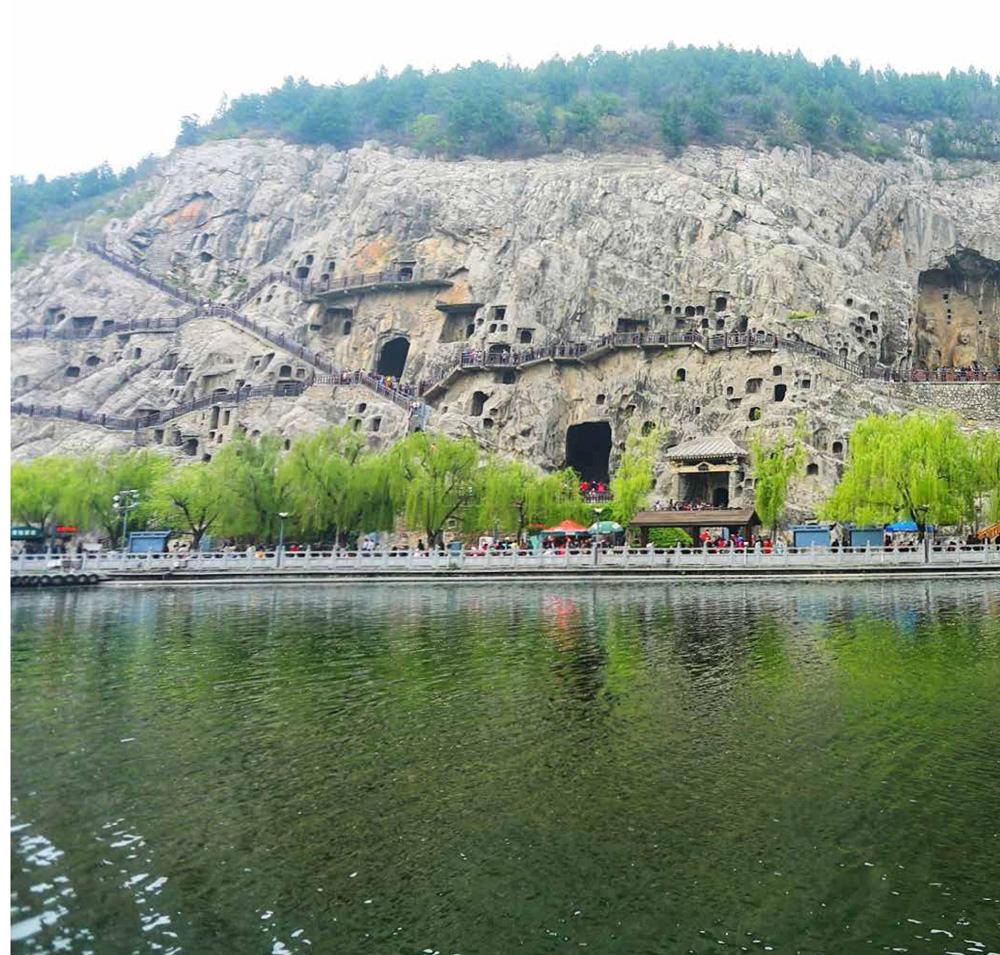
During the rule of Wu Zetian, the only female emperor in Chinese history, Luoyang was known as Shen Du and Eastern Capital, and at it had a population of around one million at its height, second only to Changan, which was the largest city in the world. At the interval of the Tang Dynasty, the first and the only empress in Chinese history — Empress Wu, moved the capital of her Zhou Dynasty to Luoyang and named it Shen Du (Capital of the God). She constructed the tallest palace in Chinese history, which is now in the site of Sui Tang Luoyang city. For several centuries, Luoyang was the focal point of China. During the North Song Dynasty, Luoyang was the Western Capital, serving as a prominent cultural center and housing some of the most important philosophers. This prosperity was mainly due to Luoyang's undergoing new development and reconstruction during this period. During the Jurchen Jin Dynasty, Luoyang was the Middle Capital. In 493 AD, Emperor Xiaowen of the Northern Wei Dynasty moved the capital to Luoyang and started the construction of the rock-cut Longmen Grottoes. In 2000, the site was inscribed upon the UNESCO World Heritage List as “an outstanding manifestation of human artistic creativity” for its perfection of an art form and encapsulation of the cultural sophistication of Tang Dynasty in Chinese history.
A cluster of scenic spots and food
Luoyang is also famous for the Grand Canal, known to the Chinese as the Jing-Hang Grand Canal, literally Beijing-Hangzhou Grand Canal, a UNESCO World Heritage Site, is the longest as well as the oldest canal or artificial river in the world. The oldest parts of the canal dated back to the 5th century BC, but the various sections were first connected during the Sui Dynasty (581-618 AD). White Horse Temple in Luoyang, China that, according to tradition, is the first Buddhist temple in China, having been first established in 68 AD under the patronage of Emperor Ming, in the Eastern Han Dynasty. The site is just outside the walls of the ancient Eastern Han capital, some 12 or 13 kilometers east of Luoyang in Henan Province. The temple, although small in comparison to many others in China, is considered by most believers as “the cradle of Chinese Buddhism”. The geographical landmarks to the south are Manghan Mountain and Lucoche River. The famous Baiyun Mountain is located in the south of Song County. It is honored one of the “Top Ten Spots in Luoyang” and one of the 4A spots. Every fall, especially in October, the Baiyun Mountain will turn into a fairyland with the most beautiful sky and colorful scene.
Luoyangs food is related to its geographical location. The city is located in a basin, surrounded by mountains. It is dry and frigid. Therefore, people like drinking soup to keep their stomachs warm. Soup is the biggest characteristic of Luoyangs dining traditions. Water Banquet, which is one of the famous banquets passed on for generations in the history of Chinese cuisine, consists of 8 cold and 16 warm dishes cooked in various broths, gravies, or juices. The water here has two meanings: one is that all the hot dishes have soup; the other is that each dish is served after another smoothly, just like flowing water. It comprises a wide selection of ingredients and tastes, such as sour, spicy, sweet and salty, comfortable and delicious.
Spring in Luoyang, an ancient Chinese composition, became popular in Korea during the Goryeo Dynasty (918–1392) and was still performed in its Koreanized version. Luoyang is also celebrated for the cultivation of peonies, its city flower. Since 1983, each mid-April the city hosted the Peony Culture Festival of Luoyang. More than 19 million tourists visited Luoyang on the 2014 festival. Luoyang is in a temperate zone and has a continental climate. It is renowned for its historical and cultural sites, which is suitable for traveling to all year round.