Tiding Over Adversity
2020-04-21 13:34:10ByXUGANG
CHINA TODAY 2020年4期
By XU GANG
T HE year 2020 turns out to be a year full of uncertainties. While relaxation of U.S.-Iran tensions and the first-stage agreement of China-U.S. trade negotiations provided some momentarily relief to the public, the ensuing unexpected novel coronavirus outbreak swiftly enveloped the globe, plunging it into panic driven uncertainty. The public health crisis which began in Wuhan, Hubei Province, spread rapidly to all provinces and over 20 other countries due to the travel peak during the Spring Festival, and was declared a public health emergency of international concern by the WHO at the end of January. The epidemic will surely leave its imprint on the economic prospect of China as well as the whole world.
Confronting a “Midlife Crisis”
While misgivings were laden with the infectiousness and mortality rate of the novel coronavirus disease 2019(COVID-19), extended vacations, empty streets plus intensifying mobility bans have also made the impact of the epidemic on Chinas economy a new grave concern. Different from the SARS crisis in 2003, the internal and external environment China is now facing has been dramatically transformed. Since entering the new normal stage, Chinas economy has been in the transition from a high-speed to medium highspeed growth track. With the acceler- ated aging of its population, the Lewis turning point has appeared, and the countrys economic growth rate has declined from 10 percent in 2003 to 6.1 percent in 2019. China is trying to strike a balance among stable growth, deleveraging, and preventing systemic financial risks. Consumption, instead of investment, has constituted the major dynamic force powering economic growth, as consumption accounts for nearly 60 percent of its GDP now. However, those traditional service industries like catering, transportation, tourism, entertainment, and retail have been directly impacted by COVID-19. Scholars estimated that the direct loss of the above-mentioned industries amounted to more than RMB 1 trillion during the seven-day holiday of the Spring Festival alone, which is equivalent to 4.6 percent of Chinas GDP in the first quarter of last year. Internationally, the onset of an era of unprecedented changes has terminated the dividend period of expanding globalization. Geopolitical unrest and social campaigns have intensified, and realistic approaches dominate international politics, exerting intensified transmission risks to its economy; meanwhile, international trade rules have been reshaped rapidly. Trade and investment also show signs of stagnation or even shrinkage. Although the China-U.S. trade friction has been suspended, the risk of the two sides sliding into all-round confrontation is still high. Since the novel coronavirus outbreak, more than 100 countries have announced some sort of ban on travel to China or strengthened entry management, a move which is bound to restrict bilateral trade and investment and disrupt international supply chains.
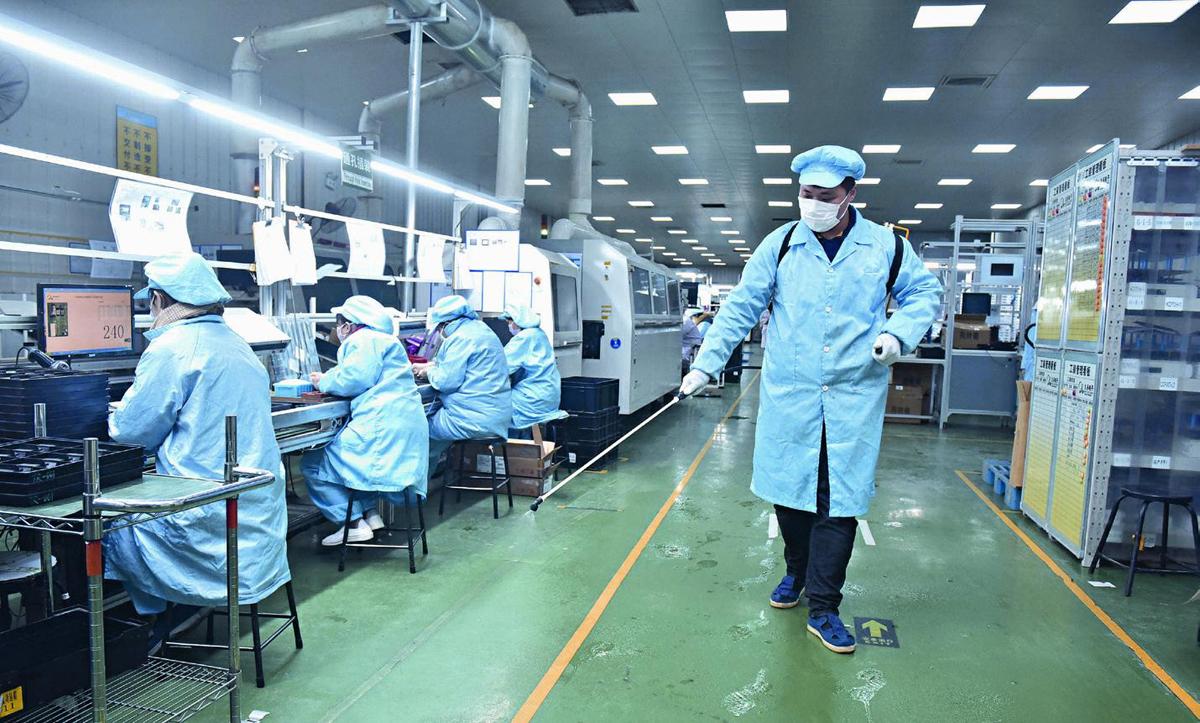
COVID-19 is definitely exerting an exceptional strain on Chinas economy in a brief space of time. Economic organs at home and abroad believe in unison that the growth rate in the first quarter may be severely reduced, and the annual growth rate may be affected by 0.5-1.5 percent, mainly depending on the duration of the epidemic. The more pressing challenge facing the country is whether the continuing epidemic will lead to a tide of unemployment in the service industry which is dominated by small and medium-sized enterprises, vulnerable to risk but absorbing multitudinous labors. On February 10, work began to resume in most areas of China. How to achieve a win-win situation between ensuring production and preventing the spread of the epidemic? Will the epidemic cause Chinese and foreign enterprises to reexamine the risks of the supply chain and industrial chain layout? Resonating with the China-U.S. trade war, will it trigger industrial migration? If China in 2003 was a young and healthy man who had stayed aloof from international affairs, then SARS was just a cold that caused a false alarm; but the China in 2020 is facing a “midlife maelstrom.” Accumulating abundance fails to ease intensifying concerns. COVID-19 is a sudden “serious illness.” As China slowly recovers from the illness, all kinds of accumulated conditions suddenly become apparent.
Panic Eventually Subsides While Confidence Is Regained
A sound mentality serves as the key to tiding over a “midlife crisis.” The sudden onslaught of the novel coronavirus outbreak may understandably trigger temporary panic and pessimism, but the self-healing ability and deep foundation of Chinas economy could deter most of the impact. The economy operates according to its own law, and Chinas economy over the past four decades of reform and opening-up has also weathered many adversities. A myriad of financial maelstroms and natural disasters were witnessed over the span, and though exerting temporary impact, they could hardly arise as a genuine turning point influencing economic trends. Consumption and investment, suffering temporary setbacks, will see stronger rebounds after the epidemic subsides. Industrial chain adjustments, under the influence of multiple factors, have indeed become the choice of many enterprises. However, with the relatively stable negotiations between China and the U.S. and gradually controlled epidemic situation outside Hubei, it is difficult to conclude whether the layout of international production network will be readjusted on a large scale due to short-term poor supply. On the contrary, the lessons of the epidemic will strengthen Chinese consumers pursuit of a high-quality life, promote investment in digital, intelligent technology, and emerging business forms, indirectly promote Chinas industrial upgrading, and further highlight Chinas charm as the worlds largest consumer market.
In terms of a policy response, 2020 is the decisive year for China to achieve its first centennial goal and complete the building of a moderately prosperous society in all respects. Economic restructuring during the past few years has also left China with moderate fiscal and monetary policy leeway to hedge against the impact of the epidemic. From Chinas battling against the epidemic, it can be seen that the Chinese government has a strong ability to allocate resources and mobilize the society, and will not let the growth rate drop precipitously.
The worldwide concern on the spillover effect of Chinas novel coronavirus outbreak on the world economy shows just how much China is integrated with the world. Chinas growth has not only created employment for its own people, but also improved the well-being of other peoples. There is no need to worry that China will be ostracized or isolated by the world because of this epidemic. On the contrary, China should tell the world how to overcome panic, strengthen communication, and work together to prevent the epidemic from affecting our common development.