Music Knows No Borders
2020-04-21 13:34:10ByWUQIZHI
CHINA TODAY 2020年4期
By WU QIZHI
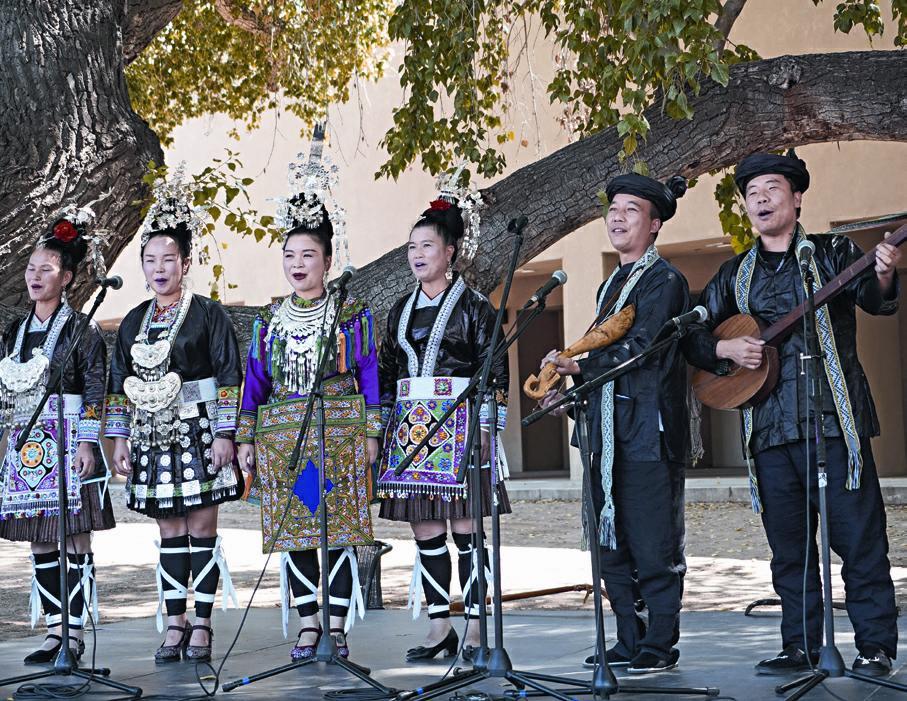
IN January, the Yandong Grand Singers debut al- bum “Everyone Listen Close — Wanp-Wanp Jangl Kap” drew international attention when it unexpectedly won the fifth place on the Transglobal World Music Chart. The 58 DJs and music critics from around the world voted for the chart rated the Grand Singers, all farmers from the remote township Yandong in Liping County of southwest Chinas Guizhou Province, above well-known artists like Tinariwen and Laurie Anderson.
“I didnt expect it to go so far,” said Mu Qian, who recorded and produced the album, which was then released by the Dutch world music label Pan Records.“It proves that traditional Chinese folk music can become a more important part of world music. Im really proud of the Yandong Grand Singers and our traditional music.”
To Enthrall the Whole World
The Yandong Grand Singers are from the Dong ethnic group who live mostly in Guizhou. The Grand Song of the Dong people is a unique polyphonic chorus that has been proclaimed by UNESCO as a masterpiece of intangible cultural heritage of humanity. However, the Grand Song is still not widely known in China, let alone the rest of the world, and that is a situation Mu was determined to change.
Mu first traveled to Yandong in 2007, when he was trying to write a feature story about the Grand Song for China Daily, where he was working as a reporter. There he stayed with locals for several days, and talked to many singers in order to understand the meaning of the Grand Song.
“Imagine a chorus singing in the mountains, accompanied by the sounds of the wind and river as well as the chirping of birds and insects. Imagine an ethnic group who has lived with such music for more than 1,000 years. Then its easy to understand why the ‘big song of the Dong people is called the‘harmonics of man and nature, and the meaning of lyrics such as ‘life is short, and it is a pity if you dont sing. For them, songs are closely associated with nature, history, love, friendship, and every phase of life,” Mu wrote in his article.
That experience led to Mus efforts in promoting Dong music. In 2013, he brought the Yandong singers to the stage of the World Music Shanghai. In 2015, he took them to perform at the International Festival for Vocal Music – a cappella in Leipzig, Germany. In June 2019, he introduced their music on a BBC radio show. In September, he led them on tour to the U.S., performing at a number of festivals including the World Music Festival Chicago, Lotus World Music and Arts Festival, and Globalquerque.
Their performance has been well received in the U.S. In front of an American audience, Mu once said,“Before we came, we were very uncertain about whether you would appreciate or even understand our music. Now I can see there is no barrier between us.” His words drew an immediate round of applause.“I think their warm response was for our singers, and for the unimpeded heart-to-heart communication via music,” Mu said, and added, “Music has the power to draw people closer.”
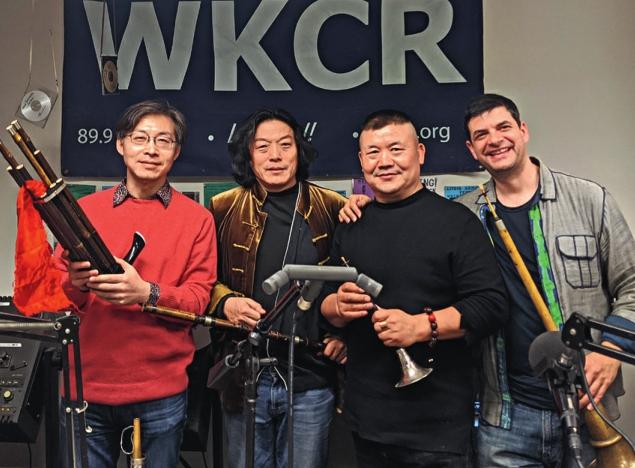
Yandong Grand Singers is just one of the traditional Chinese folk music groups that Mu has worked with. He has promoted the Zhou Family Band, a grassroots band of suona and percussion instrument players who usually play for weddings and funerals in east Chinas Anhui Province. Mu took the group on tour in Europe and the U.S., performing at such prestigious festivals as WOMAD and venues like the Kennedy Center for the Performing Arts. He has also worked with the ethnic Kazak musician Mamer and the Uyghur group Soul of Dolan from Xinjiang, as well as the Xiuyan Shadow Puppetry Theater from Liaoning.
“There is so much treasurable music from China that deserves to be heard by the world. I think Ill need more than a lifetime to promote it,” Mu says.
A True Lover of Folk Music
Mu was born in Tianjin. Like other children growing up in a big city, he rarely had the chance to hear folk music. One day he saw a horse carriage in the street. Its driver could not help singing a melodious folk song in a high-pitched voice, which immediately captivated Mu. Different from the professional musicians who perform on T.V. and radio, the carriage driver sang in an unrestrained way that he must have learned from a local tradition. As a child, Mu didnt get a chance to ask the driver about the ins and outs of that song, but that experience planted a seed in Mu, and inspired him to research and ultimately promote folk music.
To learn more about Chinas folk music and delve in the field more deeply, Mu applied for a MA pro- gram at the China Conservatory of Music and studied there from 2002 to 2005. He continued his study at the School of Oriental and African Studies of University of London from 2014 to 2019, obtaining his PhD in ethnomusicology. All this laid a solid theoretical basis for his career as an ethnomusicologist.
Meanwhile, as part of his field research, Mu also immersed himself in the daily lives and culture of folk musicians. “Only in this way can you get to the core of folk music. The meaning of the music is often hidden in the deep, and you have to find a way to dig it out. If you want to promote folk music, you have to know the cultural connotations of it first,” Mu said. To research Uygur music, he spent a year in Xinjiang.
Reestablishing the Link Between Music and People
Mus initial uncertainty about Western audiencesresponses to Chinese traditional folk music finally dissipated as the tour proceeded. One experience that took place at a concert of the Zhou Family Band in Sweden three years ago moved him very much. A female spectator came to Mu after the show, saying that her fiancée was Chinese and happened to be surnamed Zhou too, but had sadly passed away the year before. The bands interpretation of The Tune of Great Sadness (Da Bei Diao) had deeply moved her as if it was played just for her. “Wherever we go, we always come across people who are touched by our music. At that moment, you can truly feel the power of music,” Mu wrote in his diary.
At the WOMAD festival in the U.K., a German film researcher named Anna Odrich once said to Mu, “We use all kinds of ‘Made in China products everyday, but only after hearing the Zhou Family Bands music did I finally understand the spirit of Chinese people.”
Music knows no national boundary. Although a specific type of traditional folk music may be an embodiment of a group of peoples lives and emotions, it can always find resonance across the whole nation and even among the whole of humanity. A show by the Yandong Grand Singers at the University of Michigan perfectly drove home that point. While singing the song Duoye, the performers invited people from the audience onto the stage and everyone, singers and audience alike, danced hand in hand. At that moment, Mu felt his original aspiration came true.
Many years ago, in Makit County of Xinjiang, Mu was warmly received by a group of local people he had never met. At night, villagers invited Mu to attend the meshrep, (also called the harvest festival, a traditional male Uyghur gathering) for dancing and singing. As the power went off, people sang under candle light until midnight. Listening to the Muqam(the melody type used in the music of Xinjiang) melodies, he fell asleep. The next day he was also awakened by the singing. “That kind of close bond between music and life is rarely seen in our modern life, but that is exactly what many people long for, whether in China or elsewhere,” Mu observed. “My aim is to re-establish the link between people and music whether it be in my papers or my performance planning work,” he added.
Mu positions himself as a music curator, a term that he borrowed from the visual arts. In his view, what people lack today is not music, but a true understanding of music. In the Internet era, music is within easy reach of everyone. Just like an exhibition needs a curator and guide, Mu thinks that a concert also needs a curator. Particularly for traditional music, a curators value is immeasurable. He intends to create more performance opportunities for folk musicians, instead of leaving those primitive pieces of music to career musicians adaption. Mu believes that authentic grassroots folk musicians are the true masters of folk music and their voices should be heard by audiences.
“Music can boost a countrys soft power. China is bountiful in traditional folk music, which makes the whole world proud. As Chinese, we should first feel proud of it and try to learn more about it. It demands a lot of peoples concerted efforts, involving the government, academia, media, musicians, and producers. I believe Chinese music is bound to gather more clout in the world,” Mu said.