
Risk factors for adverse cardiac events in adults with fulminant myocarditis during hospitalization
2020-04-22 01:47:14TieDuoKangYanLongRenHanZhaoShangQiuNingWenXianLiu
World Journal of Clinical Cases 2020年2期
Tie-Duo Kang, Yan-Long Ren, Han Zhao, Shang-Qiu Ning, Wen-Xian Liu
Tie-Duo Kang, Yan-Long Ren, Han Zhao, Shang-Qiu Ning, Wen-Xian Liu, Department of Cardiology, Beijing Anzhen Hospital, Capital Medical University, Beijing Lab for Cardiovascular Precision Medicine, Beijing 100029, China
Abstract
Key words: Cardiovascular events; Risk factors; Fulminant myocarditis; In-hospital;Cardiac arrest; Cardiac shock
INTRODUCTION
Myocarditis is an inflammatory disease of the myocardium that may be triggered by different non-ischemic stimuli.It has a broad spectrum of clinical presentations,ranging from mild symptoms such as malaise and chest pain without (or with minimal) heart dysfunction to life-threatening arrhythmias and/or severe heart failure (HF).Fulminant myocarditis is the critical form among them and is often associated with heart failure, malignant arrhythmia, and circulatory failure.Most of the time, the inflammation and subsequent myocardial injury can resolve spontaneously without clinically relevant residual damage[1].Whereas, patients with fulminant myocarditis who end up with severe multiple organic failure and death are not rare.In this study, we sought to investigate the relationship between clinical characteristics and major adverse cardiovascular events (MACE) in patients with fulminant myocarditis.
MATERIALS AND METHODS
Objectives
This retrospective study enrolled 50 patients with fulminant myocarditis hospitalized at Beijing Anzhen hospital, Capital Medical University from January 2007 to December 2017.The patients were consecutively enrolled, and there were no prespecified exclusion criteria.The patients received therapy in accordance with contemporary practice guidelines.Baseline and procedural data for all participants were collected by independent clinical research coordinators.The diagnostic criteria for fulminant myocarditis were defined as acute illness (< 4 wk of history since symptom onset), hemodynamic instability due to cardiogenic shock or arrhythmias(including aborted sudden cardiac death), and need for hemodynamic support(inotrope/mechanical circulatory support)[2].
Data collection
Clinical data were collected, including the history of precursor infection, baseline blood pressure and heart rate at admission, laboratory test data, electrocardiogram(ECG) findings, echocardiogram results, main treatment during hospitalization(including drug treatment and mechanical adjuvant therapy), complications, and outcomes.
Definition of major adverse cardiac events and patient grouping
Death, cardiac arrest, cardiogenic shock, and ventricular fibrillation during hospitalization were defined as MACE.The patients were divided into an MACE group and event-free group.The differences between the two groups were compared and the influencing factors were analyzed.
Statistical analysis
Measurement data conforming to a normal distribution are expressed as the mean ±SD.Intergroup comparisons were performed by thet-test.Measurement data not conforming to a normal distribution are expressed as the median and interquartile spacing [M (Q1, Q3)].The rank sum test was used for inter-group comparisons.Count data are expressed as frequencies and percentages.The Chi-square test or Fisher's exact probability method was used for comparisons between groups.Logistic regression was used to analyze the influencing factors of adverse cardiac events in adult patients with fulminant myocarditis during hospitalization.The significant level was set atP< 0.05 and variables withP> 0.10 were excluded.The predictive value of baseline QRS width for MACE during hospitalization was assessed by receiver operating characteristic (ROC) curve analysis.SPSS 25.0 was used for statistical analyses, andPvalues < 0.05 were considered statistically significant.
RESULTS
General situation
Among the 50 patients enrolled, 20 were in the MACE group (7 died, 10 needed extracardiac compression for cardiac arrest, 17 had cardiogenic shock, and 7 had ventricular fibrillation) and 30 in the event-free group.The age of patients in the two groups was similar.The proportion of women in the MACE group was significantly higher than that in the event-free group.The proportion of patients with clear precursory symptoms in the two groups was similar.Compared with the event-free group, systolic blood pressure was significantly lower and heart rate was significantly faster in the MACE group at admission (Table 1).
Laboratory examinations
Compared with the group without MACE, the numbers of leukocytes and neutrophils in the MACE group were higher.Hemoglobin in the MACE group was slightly lower than that in the group without MACE, and there was no significant difference in platelet count between the two groups.The levels of urea nitrogen and creatinine in the MACE group were significantly higher than those in the group without MACE,and there was no significant difference in myocardium between the two alanine aminotransferase groups.In the detection of markers and enzymes, the baseline levels of TnI, TnI peak, baseline creatine kinase-MB (CK-MB), CK-MB peak, baseline CK,and CK peak in the MACE group were significantly higher than those in the eventfree group; the D-dimer level in the MACE group was higher than that in the eventfree group; and the baseline lactate level in the MACE group was significantly higher than that in the event-free group (Table 2).
Echocardiographic and electrocardiogram changes
Echocardiographic studies found that although left ventricular ejection fraction(LVEF) at admission in the MACE group was lower than that in the event-free group,there was no significant difference between them.The proportion of patients with LVEF < 50% was similar between the two groups, and there was no significant difference in left ventricular end diastolic diameter or interventricular septal thickness between the two groups.The analysis of abnormal ECG showed that the proportion of patients with ST segment elevation and III degree atrioventricular block (AVB) was similar in the two groups; the baseline QRS width in the MACE group was significantly higher than that in the event-free group, and the proportion of patients with QRS wave broadening (> 120 ms) in the MACE group was significantly higher(Table 3).
Treatment
The proportion of patients with positive inotropic drugs and vasoactive drugs(dopamine, norepinephrine, and adrenaline) used in the MACE group was higher than that in the event-free group, and the proportion of patients with diuretics used in the two groups was similar.The proportion of patients with glucocorticoid and immunoglobulin used in the two groups was similar; breathing machine, continuous renal replacement therapy, extracorporeal membrane oxygenation (ECMO), and intraaortic balloon pump (IABP) were used in the MACE group (five cases).There was no significant difference in the proportion of patients with temporary pacemaker used between the two groups (Table 4).

Table 1 General characteristics, n (%)
Risk factors for MACE in patients with fulminant myocarditis during hospitalization
Logistic regression analysis showed that QRS broadening in baseline electrocardiogram (QRS > 120 ms) was an independent risk factor for MACE in patients with fulminant myocarditis during hospitalization.Compared with patients with normal QRS width, the odds ratio of MACE in patients with widened QRS was 4.57 (P= 0.023, 95%CI:1.23-16.94).The predictive value of baseline QRS width for MACE during hospitalization was analyzed using ROC.The area under the curve(AUC) was 0.683 (SE = 0.077,P= 0.030, 95%CI:0.532-0.833) (Figure 1).
DISCUSSION
This study retrospectively analyzed the clinical data of 50 adult patients with fulminant myocarditis, and compared the characteristics of patients with and without MACE during hospitalization.The age of the two groups was similar, and most of them were young and middle-aged.Although the overall numbers of male and female patients with fulminant myocarditis were close, the proportion of female patients in the MACE group was significantly higher than that in the event-free group.Some studies reported that the prognosis of female patients was poor, and the condition of adult female patients with fulminant myocarditis might be more critical[3].There was no difference in the symptoms of prodromal infection between the two groups.Compared with the patients without MACE, the systolic blood pressure was lower and the heart rate was faster in the MACE group at admission,suggesting that the patients with MACE had more unstable hemodynamic performance at admission and needed active treatment as soon as possible.
In terms of laboratory tests, this study found that the blood leucocytes and neutrophils in the MACE group were higher than those in the event-free group,suggesting that the patients in the MACE group may have more severe infections.The hemoglobin in the MACE group was slightly lower than that of the event-free group.The reason is that there is a gender difference in hemoglobin concentration itself, and the higher proportion of women in the MACE group may lead to this difference.In terms of liver and kidney function, the levels of urea nitrogen and creatinine in the MACE group were significantly higher than those in the event-free group, suggesting that the patients in this group were more likely to suffer from acute renal function damage.After analyzing the myocardial markers and myocardial enzymatic characteristics of the two groups, it was found that the baseline levels of TnI, TNI peak, baseline CK-MB, CK-MB peak, baseline CK, and CK peak in the MACE group were significantly higher than those in the event-free group, suggesting that myocardial cell damage was more serious and the condition was more critical in the former group of patients.The levels of D-dimer and lactic acid in the MACE group were higher than those in event-free group.The significant increase of D-dimer suggested that hypercoagulability, thrombosis, and secondary hyper-fibrinolysis might exist in the body.In shock state, tissue perfusion insufficiency and endothelial cell injury can lead to micro-thrombosis and elevated D-dimer in blood[4], and elevated blood lactic acid is also a manifestation of tissue and organ perfusion insufficiency.In this study, the baseline D-dimer and lactic acid levels in the MACE patients increased significantly, suggesting that organ tissue perfusion is seriously insufficient.
In terms of echocardiography, the study found that the mean value of LVEF atadmission was less than 50% of the normal level in both groups.Compared with the event-free group, the LVEF at admission in the MACE group was lower, but there was no significant difference.The proportion of patients with LVEF < 50% in both groups was > 50%.There was no significant difference between the two groups.The left ventricular end-diastolic diameter values of the two groups were within the normal range, and there was no significant difference between the two groups.On the one hand, in patients with fulminant myocarditis, besides myocardial cell damage and necrosis, some myocardial cells are in a highly edematous state, which together lead to serious damage of cardiac function.When the cardiac structure has not yet changed compensatively, the pump function has been significantly reduced, the disease progresses rapidly, and it is more prone to drastic changes in hemodynamics.Although the interventricular septal thickness in the MACE group was thicker than that in the event-free group, there was no significant difference between the two groups.Some studies have found that patients with fulminant myocarditis may have ventricular septal thickening in the early days of the disease, and then gradually return to normal, while the left ventricular end-diastolic diameter is basically normal in the course of the disease[5-7].The reason for the increase of ventricular septal thickness may be due to myocardial cell edema.In this study, no difference in ventricular septal thickness was found between the two groups, presumably due to the bias of retrospective study.
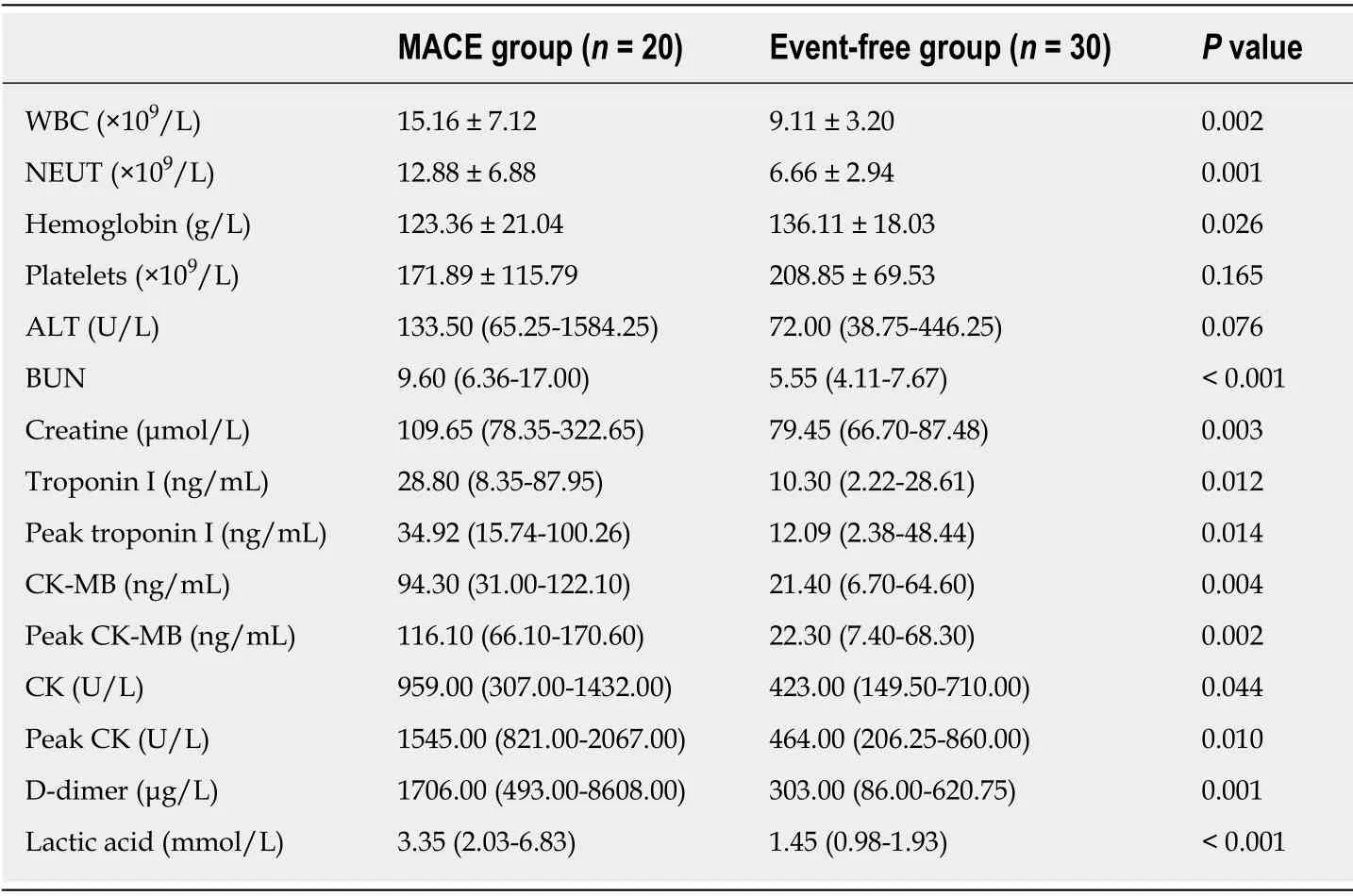
Table 2 Laboratory examinations
The analysis of abnormal ECG showed that the baseline QRS width of the MACE group was significantly higher than that of the event-free group, and the proportion of patients with QRS wave broadening (> 120 ms) in the MACE group was significantly higher than that of the event-free group.Further logistic regression analysis showed that QRS wave broadening (QRS > 120 ms) was an independent risk factor for MACE in patients with fulminant myocarditis during hospitalization.Compared with patients with normal QRS wave width, the OR of MACE in patients with QRS wave broadening in baseline electrocardiogram during hospitalization was 4.57 (P= 0.023, 95%CI:1.23-16.94).ROC was used to analyze the predictive value of baseline QRS width for MACE during hospitalization, and the result (AUC = 0.683, SE= 0.077,P= 0.030, 95%CI:0.532-0.833) suggested that baseline QRS width had predictive value for MACE during hospitalization in patients with fulminant myocarditis.Some studies have shown that QRS wave broadening suggests serious involvement of the cardiac conduction system, which may be related to diffuse infiltration of inflammation[8-10].The disease usually changes more rapidly, often predicting a poor prognosis.The results in this paper are consistent with the relevant reports, which suggest that clinical workers should closely monitor the patients with myocarditis with QRS wave broadening in the early stage.Early initiation of more aggressive treatment, including mechanical support therapy, can improve the prognosis of patients.In the aspect of severe bradyarrhythmia, there was no significant difference in the proportion of patients with high AVB between the twogroups.Some studies showed that the high degree AVB did not predict a worse prognosis in patients with myocarditis[11].
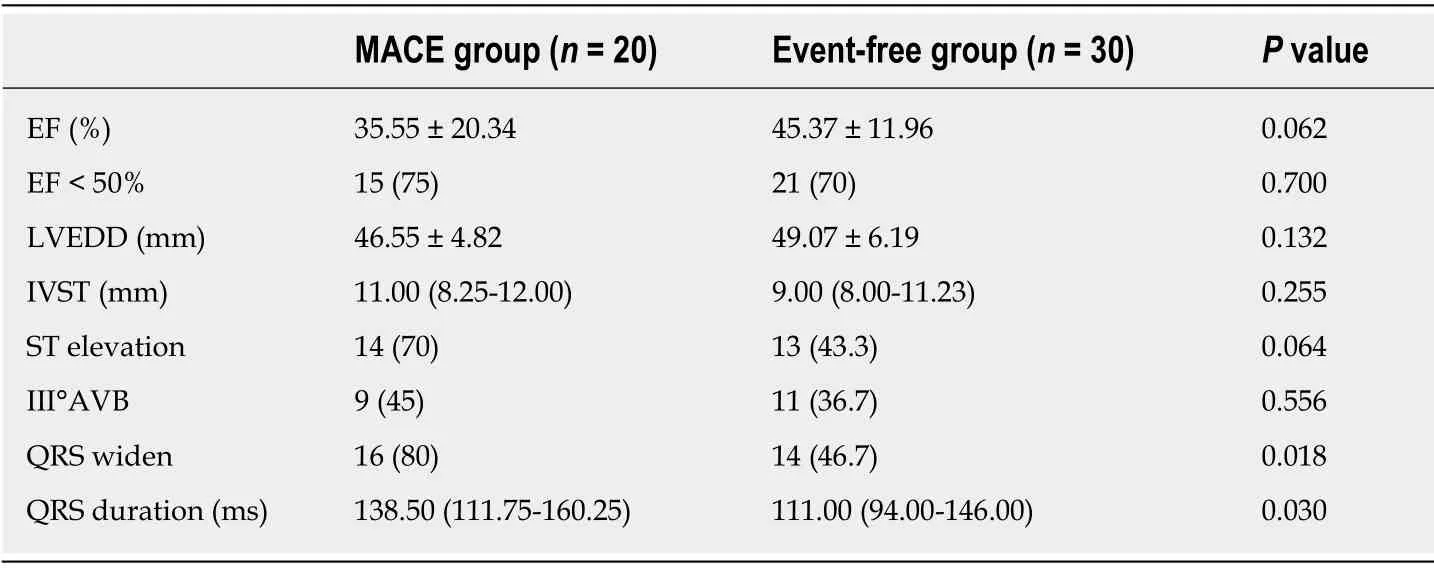
Table 3 Characteristics of ultrasonic cardiogram and electrocardiograph, n (%)
The onset of fulminant myocarditis is a rapid process, and serious hemodynamic changes often occur in no time.Therefore, more active drug treatment or even mechanical adjuvant therapy should be adopted in the treatment of fulminant myocarditis, so as to stabilize the vital signs of patients as soon as possible.In this study, the proportion of patients with vasoactive drugs (dopamine, norepinephrine,and adrenaline) and positive inotropic drugs used in the MACE group was higher than that in the event-free group, which was related to more hemodynamic instability in this group.At present, there is no specific recommendation for the use of glucocorticoids and intravenous immunoglobulin therapy.Some case reports and small-scale studies found that patients may benefit from such treatment, but largescale clinical trials are needed to verify the application timing, dosage, and course of immunosuppressive immunomodulation therapy[12-16].With regard to mechanical support therapy, fulminant myocarditis has its own limitation.Although the myocardial cells of patients have serious dysfunction in a short time, resulting in rapid deterioration of hemodynamics, if the myocardial cells recover gradually after the acute phase, they may have a better prognosis.Therefore, effective auxiliary support in the acute phase may play a role in the prognosis of patients.At present,ECMO has gradually become an effective adjuvant therapy in patients with fulminant myocarditis[17-22].However, the optimal timing of ECMO implantation and the indication of weaning are not clearly recommended, and more clinical studies are needed to explore this issue.For patients with high atrioventricular block, temporary pacemaker implantation is a simple and effective method.Patients with fulminant myocarditis involving the cardiac conduction system will gradually resume conduction function after several days.Most patients can successfully remove temporary pacemaker[23].IABP can relieve the left ventricular afterload and play an auxiliary role in patients with severe left ventricular dysfunction, but its role still depends on the residual left ventricular function, while the cardiac function of some patients with fulminant myocarditis decreases sharply in the early stage or almost has no effective contraction.At this time, the role of IABP in patients with fulminant myocarditis is extremely limited.In this study, IABP was used in combination with ECMO to reduce left ventricular afterload to a certain extent.
There are some limitations in this study.There is a lack of pathological data of myocardial biopsy and sufficient etiological data.In addition, the sample size of this study is relatively small, and it is a retrospective study performed in a single center.There may be some bias in selection.Further research is needed after further enlarging the sample size.
In summary, the onset of outbreak myocarditis is acute, and the incidence of MACE is higher in female patients during hospitalization.QRS broadening in baseline electrocardiogram (QRS > 120 ms) is an independent risk factor for the occurrence of MACE in outbreak myocarditis patients during hospitalization.The baseline QRS width has predictive value for the occurrence of MACE in outbreak myocarditis patients during hospitalization.In clinic, patients with these characteristics should be treated actively as soon as possible, and mechanical support should be given when necessary, in order to improve the prognosis of patients.
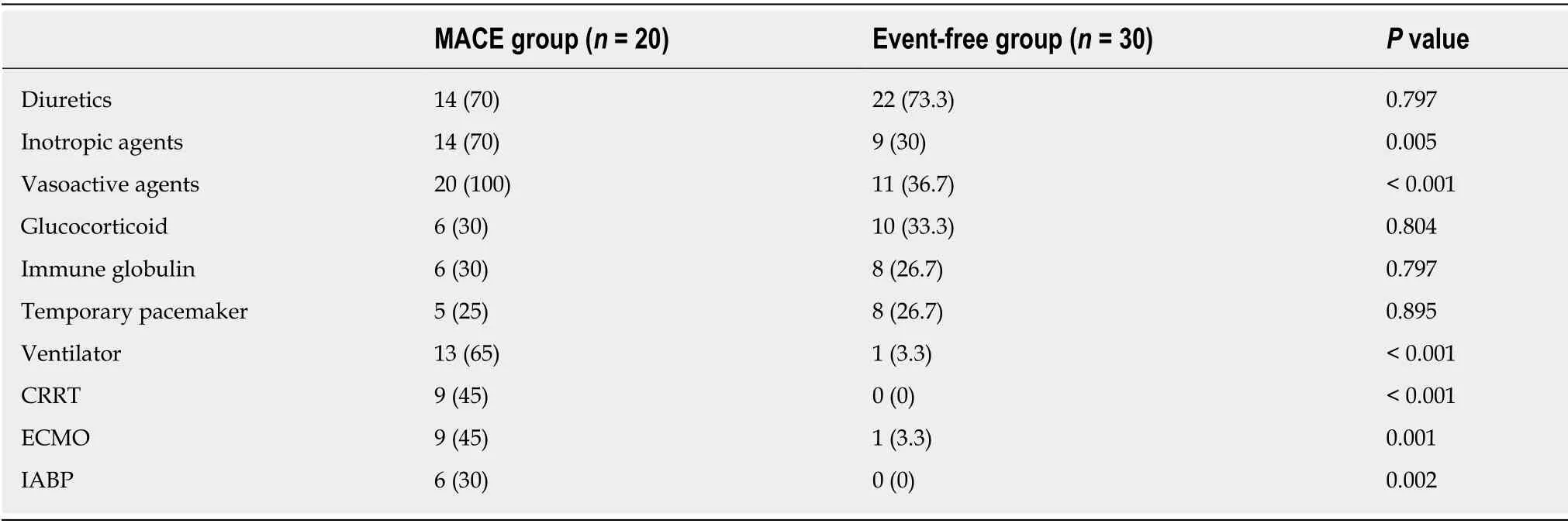
Table 4 Treatment and intervention, n (%)

Figure 1 Predictive value of baseline QRS width for major adverse cardiovascular events during hospitalization analyzed using the receive operating characteristic curve.
ARTICLE HIGHLIGHTS
Research background
Fulminant myocarditis is the critical form of myocarditis often associated with heart failure,malignant arrhythmia, and circulatory failure.Patients with fulminant myocarditis who end up with severe multiple organic failure and death are not rare.
Research objectives
In this study, the authors aimed to analyze the predictors of in-hospital major adverse cardiovascular events (MACE) in patients diagnosed with fulminant myocarditis.
Research methods
The authors built a cohort of adult patients diagnosed with fulminant myocarditis.The primary endpoint was defined as in-hospital MACE, including death, cardiac arrest, cardiac shock, and ventricular fibrillation.Baseline demographics, clinical history, characteristics of electrocardiograph and ultrasonic cardiogram, laboratory examination, and treatment were recorded.
Research results
The rate of in-hospital MACE was 40%.Multivariable logistic regression analysis demonstrated that baseline QRS duration > 120 ms was an independent risk factor for in-hospital MACE.The area under curve of QRS duration > 120 ms for predicting in-hospital MACE was 0.683.
Research conclusions
The onset of outbreak myocarditis is acute, and the incidence of MACE is higher in female patients during hospitalization.QRS broadening in baseline electrocardiogram (QRS > 120 ms) is an independent risk factor for the occurrence of MACE in outbreak myocarditis patients during hospitalization.
Research perspectives
Baseline QRS width has predictive value for the occurrence of MACE in outbreak myocarditis patients during hospitalization.Patients with these characteristics should be treated actively as soon as possible in clinic, and mechanical support should be given when necessary, in order to improve the prognosis of patients.
 World Journal of Clinical Cases2020年2期
- World Journal of Clinical Cases的其它文章
- Multiple organ dysfunction and rhabdomyolysis associated with moonwort poisoning:Report of four cases
- Transorbital nonmissile penetrating brain injury:Report of two cases
- Utility of multiple endoscopic techniques in differential diagnosis of gallbladder adenomyomatosis from gallbladder malignancy with bile duct invasion:A case report
- Analysis of pathogenetic process of fungal rhinosinusitis:Report of two cases
- Efficacy of comprehensive rehabilitation therapy for checkrein deformity:A case report
- Spontaneous regression of stage III neuroblastoma:A case report