
Argon-helium cryoablation for thoracic vertebrae with metastasis of hepatocellular carcinoma-related hepatitis B:A case report
2020-04-22 01:48:32YouWenTanYunYeLiSun
World Journal of Clinical Cases 2020年2期
You-Wen Tan, Yun Ye, Li Sun
You-Wen Tan, Yun Ye, Li Sun, Department of Hepatology, The Third Hospital of Zhenjiang Affiliated Jiangsu University, Zhenjiang 212003, Jiangsu Province, China
Abstract
Key words: Cryoablation; Metastasis; Hepatocellular carcinoma; Hepatitis B; Case report
INTRODUCTION
In China, there are still 70 million patients with chronic hepatitis B infection[1], which is the main cause of 80% of hepatocellular carcinoma (HCC) cases; furthermore, > 70%of HCC cases will lose the chance of curative treatment with physicians' diagnosis[2].HCC can metastasize to other organs or tissues through blood, lymph, and direct dissemination and local diffusion.Of these cases, 90% metastasized to the lung, and bone metastases of HCC were also common, with an incidence ranging from 3% to 16.2%[3,4].Common sites of bone metastasis are the vertebrae, ribs, and sternum.Spinal metastasis of HCC is rare, with an incidence of 0.2%-2.2%.HCC with bone metastasis has an extremely poor prognosis with a median survival of 1-2 mo, and results in severe pain[5].Argon-helium cryotherapy is a local ablation method for HCC[6].We recently used this method to treat a patient with advanced HCC metastasis to the thoracic spine and achieved good clinical efficacy.
CASE PRESENTATION
Chief complaints
A 54-year-old man was admitted to our hospital complaining of persistent back pain for 1 mo and with a 1-year history of HCC.
History of present illness
One year ago, the patient was found to have a 43 mm × 35 mm occupancy lesion in the left lateral lobe of the liver by enhanced CT.Considering the possibility of HCC which was confirmed by pathology, the patient underwent resection.After 1 mo, the patient was found to have an occupancy lesion in the right lateral lobe of the liver.Transarterial chemoembolization (TACE) was performed four times, and radiotherapy was conducted twice successively.The patient had back pain for 1 mo.CT reexamination showed that the space-occupying lesion in the soft tissue around the left 11ththoracic vertebra was involved in the bone metastases of HCC.Sorafenib was administered for 4 mo.
Medical history
The patient had a history of chronic hepatitis B for > 10 years, but did not receive antiviral treatment.One year ago, oral tenofovir was administered after the liver occupancy lesion was found.HBV DNA level was lower than the lower limit of monitoring value (< 20 IU/mL).
Personal and family history
There was no family aggregation of hepatitis B, no history of blood transfusion and blood product use, no alcohol abuse, and no recent history of hepatotoxic drug use.
Physical examination upon admission
Upon admission, temperature was 36.5°C, and blood pressure was 130/80 mmHg.The skin was dark and gloomy, there was no yellow staining of the skin and sclera,and the patient had liver palms.Several spider nevi were noted in the neck and chest,the abdomen was flat, the abdominal wall veins were exposed, and a vertical surgical scar was observed in the middle and right lower abdomen.The abdomen was soft without tenderness and rebound pain.There was no percussion pain in the liver area.Mobility dullness was negative, and bowel sounds were normal.Leg edema was not observed.
Laboratory examinations
Routine blood test results were as follows:Hemoglobin level, 145.00 g/L; red blood cell count, 4.85 × 10¹²/L; white blood cell count, 2.38 × 10⁹/L; and platelet count, 78.00× 10⁹/L.Biochemical test results were as follows:Total bilirubin, 12.4 μmol/L; direct bilirubin, 6.1 μmol/L; total protein, 76.8 g/L; prealbumin, 175.6 mg/L; alanine aminotransferase, 29 U/L; aspartate aminotransferase, 31 U/L; cholesterol, 3.10 mmol/L; glomerular filtration rate, 104.30 mL/min/L; glucose, 5.71 mmol/L; urea,4.47 mmol/L; creatinine, 66.2 μmol/L; uric acid, 377.1 μmol/L; creatine kinase isoenzyme, 31 U/L; C-reactive protein, 3.01 mg/L; and alpha fetoprotein, 32.59 ng/mL.
Imaging examinations
On contrast-enhanced CT scan, the local liver parenchyma in the right posterior lobe was displaced inward.The right posterior lobe of the liver exhibited a low-density patchy shadow with a CT value of approximately 40 HU.The density was not uniform, and the boundary was unclear.On the right posterior lobe of the liver,multiple low-density round shadows of different sizes were noted.A few spots of lipiodol were scattered in the shadow.On the left posterior rib 11, the left transverse process of the 11th thoracic vertebra, vertebral arch plate, and bone structure were damaged, and a soft tissue density shadow was noted (Figure 1A).
FINAL DIAGNOSIS
The patient was diagnosed with HCC after hepatectomy and TACE with 11th rib and 11th thoracic vertebra metastases on the left side.
TREATMENT
Preoperatively, the patient received a full explanation of the disease condition and operative plan, and provided written informed consent.Under the guidance of CT,the right liver cancer with 11 thoracic vertebrae metastasis was treated with targeted cryoablation.Two cryoablations were performed on the right hepatic lobe, and one cryoablation on the left 11thlumbar vertebra (Figures 1B and C).Frozen necrosis gas and low-density hypovascular necrotic tissue were noted in the right posterior lobe and around the 11thlumbar spine (Figure 1D).
OUTCOME AND FOLLOW-UP
Postoperatively, back pain immediately improved and was completely relieved.The patient developed fever on the second postoperative day, the highest temperature being 38.8°C.His high temperature decreased to 38.5°C on the third day, was normal on the fourth day and the patient was then discharged.
DISCUSSION
Surgical intervention, including tumor resection and liver transplantation, is currently the first-line treatment for HCC[7,8], but the indications for operation and liver donor source limit the curative effect of HCC.Local ablation is an effective method for obtaining a curative effect for HCC[9].The local ablation methods for HCC mainly include radiofrequency ablation (RFA), microwave ablation, and cryotherapy[10].RFA is the representative minimally invasive treatment for HCC[11].
The argon-helium cryopreservation system is a minimally invasive treatment method that uses the rapid freezing function of argon to inactivate necrosis of tumor tissue.It originated more than a decade ago[12], but its popularity may be a relative“silent player” due to the limited access to argon and helium.Recently, it has attracted increasing attention as some centers used this technology to treat HCC and obtained favorable results.Wanget al[13]compared this with RFA in a multicenter randomized controlled trial.They found that argon-helium cryoablation had a better effect on local tumor progression than RFA (1-, 2-, and 3-year local tumor progression rates were 3%,7% and 7%, respectively, for cryoablation and were 9%, 11%, and 11%, respectively,for RFA).The 3- and 5-year survival rates were similar (54% and 35%vs50% and 34%), and the incidence of major complications was 3.9% and 3.3%, respectively.
Postoperative recurrence of HCC is the main factor in poor prognosis.It is reported that the annual recurrence rate ranges from 51.4% to 61.5% after radical resection of HCC, 43.6% for small HCC (< 5 cm), and higher for local treatment.
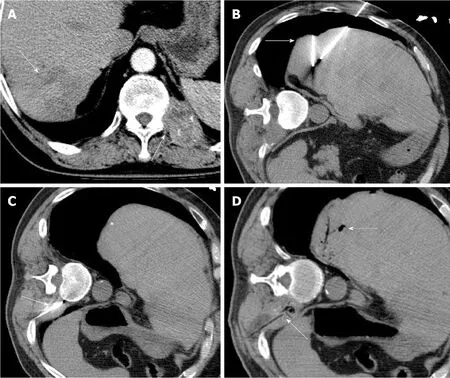
Figure 1 Computed tomography scan of the patient before and after argon-helium cryoablation.
In the advanced stage of HCC, multiple organ metastases easily develop.The metastasis pathway can be divided into hematogenous metastasis, lymphatic metastasis, and implant metastasis.Bone metastasis is the most common.Research shows that the incidence of metastasis is approximately 10%.The main sites of bone metastasis are the spine, pelvis, ribs, and long bones, and a few cases showed skull metastasis.The 1-year survival rate of liver cancer with bone metastasis is only approximately 20%.
Patients with HCC and bone metastasis often have severe bone pain and inadequate effective treatment.Our patient underwent surgical treatment, TACE, and radiotherapy, but there was no improvement in pain symptoms.The use of cryoablation achieved favorable results.
 World Journal of Clinical Cases2020年2期
- World Journal of Clinical Cases的其它文章
- Multiple organ dysfunction and rhabdomyolysis associated with moonwort poisoning:Report of four cases
- Transorbital nonmissile penetrating brain injury:Report of two cases
- Utility of multiple endoscopic techniques in differential diagnosis of gallbladder adenomyomatosis from gallbladder malignancy with bile duct invasion:A case report
- Analysis of pathogenetic process of fungal rhinosinusitis:Report of two cases
- Efficacy of comprehensive rehabilitation therapy for checkrein deformity:A case report
- Spontaneous regression of stage III neuroblastoma:A case report