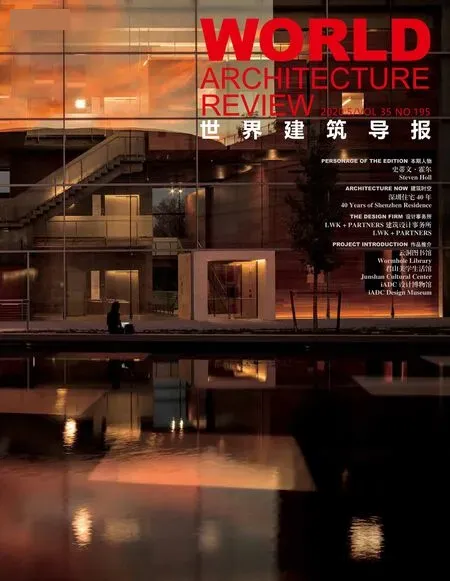
休斯頓藝術博物館美國德克薩斯州,休斯頓
2020-11-07 08:58:54StevenHoll,ChrisMcVoy,OlafSchmidt等
世界建筑導報 2020年5期
建設單位: Glassell藝術學校
設計單位:史蒂文·霍爾建筑師事務所
設計團隊:Steven Holl (主創設計) , Chris McVoy (團隊主管),Olaf Schmidt (團隊副主管), Rychiee Espinosa,Yiqing Zhao (項目設計師)
項目團隊:Filipe Taboada, Xi Chen, Suk Lee,Maki Matsubayashi, Elise Riley,Christopher Rotman, Alfonso Simeo, Yasmin Vobis
合作單位:Kendall/Heaton Associates
結構工程:Guy Nordenson & Associates,Cardno Haynes Whaley
建筑面積:93 000平方呎,地下停車(兩層)
時間:2011年至2018年
Client: Glassell School of Art
Architect: Steven Holl Architects
Design team: Steven Holl (design architect, principal) Chris McVoy (design architect, partner in charge), Olaf Schmidt (senior associate in charge), Rychiee Espinosa, Yiqing Zhao (project architect)
Project team: Filipe Taboada, Xi Chen, Suk Lee, Maki Matsubayashi, Elise Riley,Christopher Rotman, Alfonso Simeo, Yasmin Vobis
Associate architects: Kendall/Heaton Associates
Structural engineers: Guy Nordenson & Associates, Cardno Haynes Whaley
Building area (square feet): 93,000sf, Underground parking (two levels)
Year: 2011 - 2018
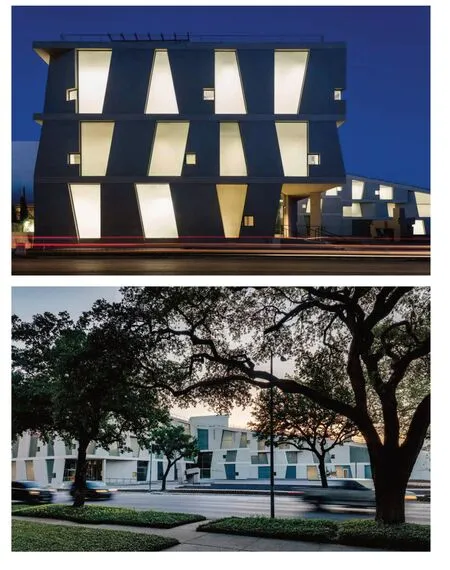
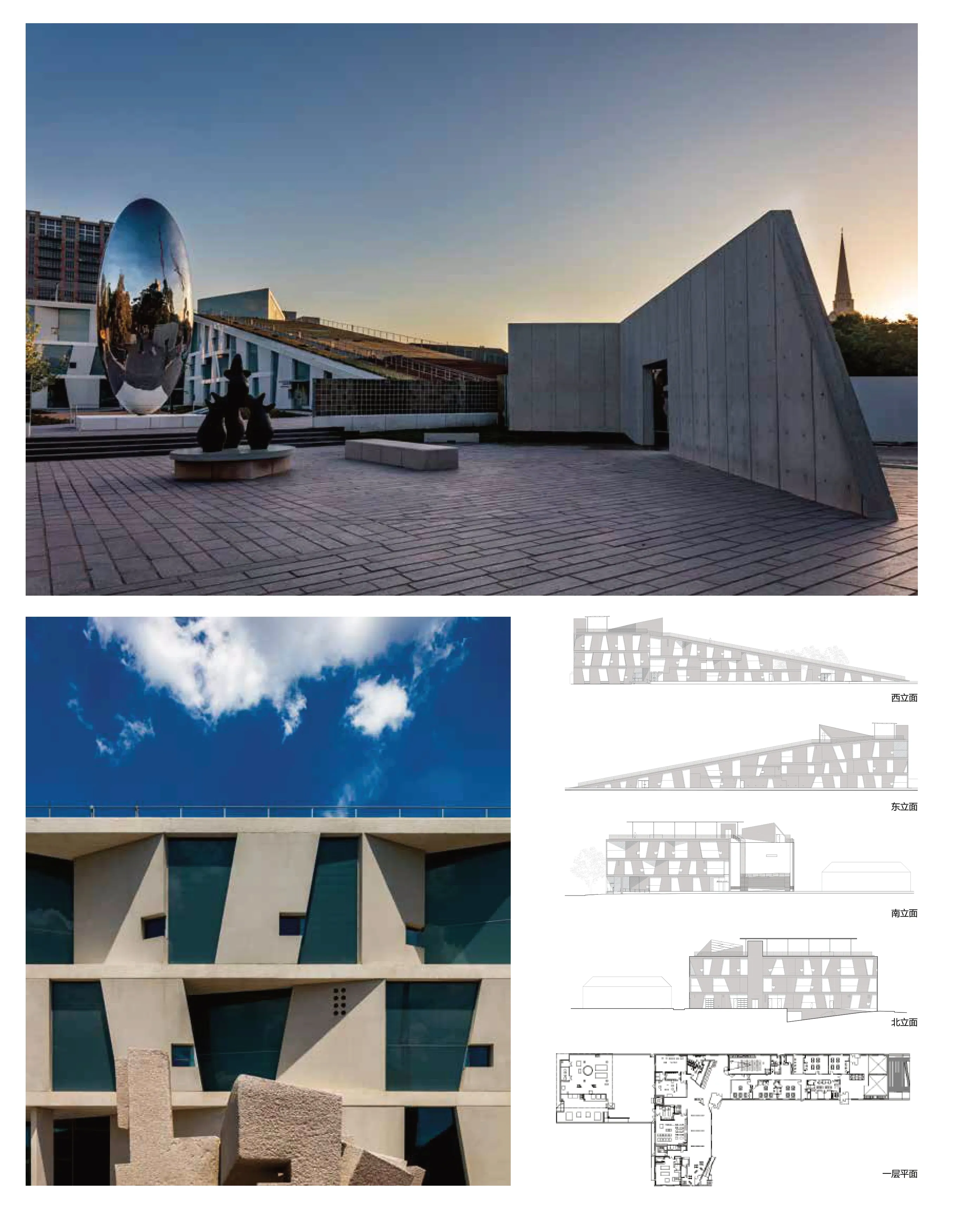
1) 建筑采用“L”形,定義了校園空間的幾何形狀。它與整個校園相連,并提供了通往校園俯瞰平臺的斜面。
2) 結構:所用的預制混凝土構件在德克薩斯州韋科制造而成,它們與主斜面的角度相結合支撐起地板并對外部進行定義。同時,還與野口勇(Isamo Noguchi)設計的雕塑花園墻壁相互呼應。
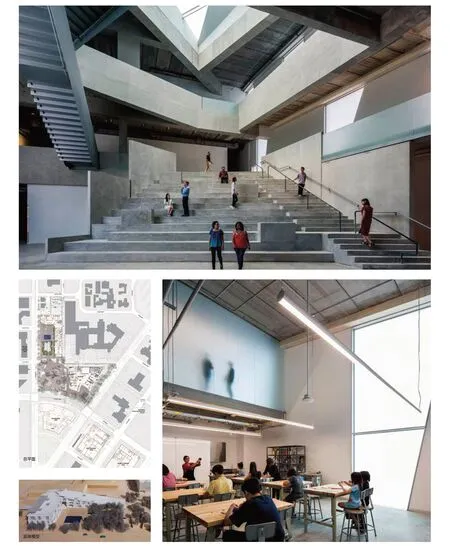
3)“L”形建筑的入口位于主要內角處,通過結構的分解可以定義為:一個開放的空間設置了內旋的公共展覽空間,可以垂直攀爬到屋頂的俯瞰平臺上。
休斯頓藝術博物館的再開發是一個獨特的機遇,可以擴大博物館園區,使其成為通向社區的整體體驗。橫向活動、透明性和多孔性將新的休斯頓藝術博物館(MFAH)聯合起來,提供了鼓舞人心和引人注目的公共空間。蔥郁的休斯敦植被、清新的聲音和水中的倒影都是新校園體驗的組成部分,提升了藝術的詩意性。
“L”形的新格拉塞爾藝術學校塑造了布朗基金會廣場,也擴充了野口勇設計的 Lillie & Hugh Roy Cullen 雕塑公園。
屋頂的傾斜面塑造了一個露天劇場和去往屋頂花園的公共通路,在那里可以俯瞰整個休斯頓藝術博物館(MFAH)。
該建筑中包含 3 個長廊:1) 在一層的咖啡館空間可以俯瞰廣場;2) 教育大廳與雕塑隧道相連,通向未建成的 Nancy and Rich Kinder 大樓;3) 二層公共平臺的頂部。
主入口通向不同高度的階梯,塑造了一個公共空間,同時也是非正式的學習場所,可以直接通往配備了 75 個座位的禮堂。
其中,核心項目、初級學校和 8 個核心研究院工作室共享 23 個工作室。所有這些空間都是基于靈活適用、良好采光以及恰當尺度比例的原則來設計的。
簡單的噴砂混凝土平面結構從屋頂傾斜面開始延伸,賦予建筑內部空間以密斯·凡·德羅(Mies Van der Rohe)原始建筑的簡單和直接的精神。混凝土平面與大型半透明面板交替布局,為工作室提供理想的漫射光。作為一座教育建筑,它告訴我們它是如何建造的。溫斯頓·丘吉爾(Winston Churchill)說過:“首先,我們塑造建筑,然后建筑塑造我們。”
1) The ‘L’ shape of the building is a campus space defining geometry, relating to the whole of the campus and providing the inclined plane access to the campus overlook terrace.
2) Structure: the precast concrete structural elements, made in Waco, Texas, hold up the floors and define the exterior, incorporating the angle of the main incline.They also allude to the adjacent sculpture garden walls angled by Isamo Noguchi.
3) The entry to the ‘L’-shaped building is placed at the main interior corner and is defined by a dissolution of the structure: an opening up which sets the exhibition forum in torsion climbing vertically to the roof terrace overlook.
The Museum of Fine Arts, Houston redevelopment has the unique chance to expand the museum’s campus as an integral experience open to the community.Horizontal activity,transparency and porosity will unify the new MFAH, and provide inspiring and inviting public spaces.The lush Houston vegetation, refreshing sound, and reflections in water are all part of a new campus experience elevating the poetry of art.
The new ‘L’ shaped Glassell school shapes the Brown Foundation Plaza which extends the space of the Lillie and Hugh Roy Cullen Sculpture Garden by Isamu Noguchi.
The inclined plane of the roof shapes an amphitheater and a public path to a rooftop garden overlooking the whole MFAH campus.
There are 3 gallery spaces in the building: 1) At the ground level café space overlooking the plaza; 2) At the Education Court connecting to a sculptural tunnel to the future Nancy and Rich KinderBuilding; 3) At the top of the forum on the second floor.
The main entry opens to a cascade of levels at the forum shaping an informal learning space directly opening to a 75 seat auditorium.
There are 23 studios shared between the Core Program and Junior School and 8 core-fellow studios.All of these have been designed with flexibility, great light, and fine proportions.
The simple planar structural pieces of sandblasted concrete begin with the angle of the inclined roof plane and give character to the inner spaces of the building in the spirit of simplicity and directness employed by Mies Van der Rohe’s original building.The concrete planes alternate with large translucent panels to provide ideal diffuse light to the studios.As an educational building it tells us how it is made.Winston Churchill said “First we shape our buildings, and then they shape us.”
猜你喜歡
北方建筑(2021年6期)2021-12-31 03:03:54
文苑(2020年10期)2020-11-07 03:15:36
現代裝飾(2020年6期)2020-06-22 08:43:12
小太陽畫報(2020年4期)2020-04-24 09:28:22
琴童(2017年3期)2017-04-05 14:49:04
小天使·二年級語數英綜合(2017年3期)2017-04-01 17:17:48
童話王國·原創版(2016年4期)2016-11-23 16:06:06
兒童故事畫報·智力大王(2015年11期)2016-01-27 00:55:01
少兒科學周刊·兒童版(2015年6期)2015-11-24 03:49:38
中學生天地(A版)(2015年5期)2015-06-01 02:46:03