愛荷華大學視覺藝術大樓美國弗吉尼亞州愛荷華市
2020-11-07 08:59:00史蒂文·霍爾,ChrisMcvoy,RychieeEspinosa等
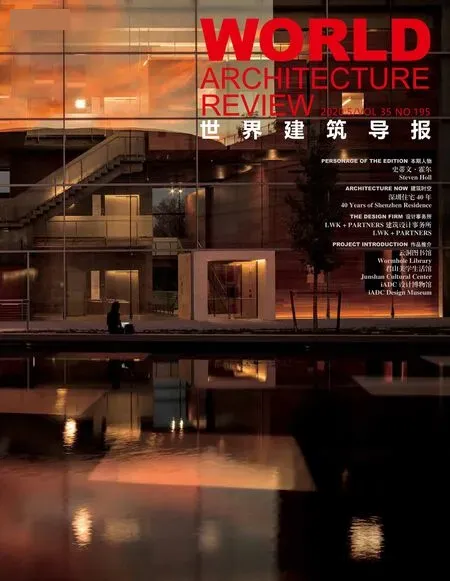
世界建筑導報 2020年5期
建設單位:愛荷華大學
設計單位:史蒂文·霍爾建筑師事務所
設計團隊:史蒂文·霍爾 (主創設計), Chris Mcvoy (高級主管), Rychiee Espinosa (項目助理), Jongseo Lee,Garrick Ambrose, Filipe Taboada, Christiane Deptolla, Garrett Ricciardi, Christopher Rotman,Christina Yessios, Johanna Muszbek, Yiqing Zhao,
Bell Ying Yi Cai
合作單位:Bnim 建筑師事務所
結構工程:Buro Happold 結構工程公司
建筑面積:126 000 平方呎
時間: 2010年 - 2016年
Client: University of Iowa
Architect: Steven Holl Architects
Design team: Steven Holl (design architect, principal), Chris Mcvoy (senior partner in charge), Rychiee Espinosa (project architect, associate), Jongseo Lee,Garrick Ambrose, Filipe Taboada, Christiane Deptolla, Garrett Ricciardi,Christopher Rotman, Christina Yessios, Johanna Muszbek, Yiqing Zhao,Bell Ying Yi Cai (project team)
Associate architects: Bnim Architects
Structural engineer: Buro Happold Structural Engineering Associates
Building area (square feet): 126,000sf
Year: 2010 - 2016
愛荷華大學藝術與藝術史類的新視覺藝術大樓提供了 126,000 平方英尺(約 1,171平方米)的閣樓式空間,可供所有的視覺藝術媒體使用,從古老的金屬鍛造技術到最先進的虛擬現實技術,包括陶藝、3D 設計、金屬藝術和珠寶、雕塑、版畫、油畫與水彩、平面設計、多媒體、視頻藝術以及攝影。此外還有畫廊、學院辦公室、室外屋頂工作室和藝術史教學空間。
視覺藝術大樓取代了 1936年建造的藝術樓,在 2008年 6 月一場洪水沖擊了愛荷華大學校園,之前的藝術樓遭到嚴重損壞。由斯蒂文·霍爾建筑師事務所設計的視覺藝術大樓與西側的藝術史學院大樓圍合成了一個藝術方院,自 2006年投入使用后吸引了整個學校的學生來到這個公共空間和圖書館。兩棟建筑構成了以藝術理論、教學及創作為主的視覺藝術校園。
2006年西側落成的藝術史學院大樓是水平多孔的平面結構,而視覺藝術大樓則為垂直多孔的立體結構。其目的是使學院各學科之間在此公共流通空間進行最大程度的互動。
1.互聯的藝術:水平功能劃分,垂直多孔空間:在當今的藝術院校,不斷發展的數字技術使藝術間的互聯和跨界擁有了更多的可能性,更能實現其根本價值。垂直切割各層平面所形成的開放空間促進了學院不同藝術學科之間的合作。學生們可以通過這些開放的區域看到進行中的活動并參與其中。緊鄰內部流線的工作室玻璃隔斷進一步促進了互聯。
2.多重光源中心:自然光線與新鮮空氣透過“光源中心”進入建筑內部。七個垂直切割體在各層面有不同程度的移轉,創造出多重露臺并為戶外會議和非正式的戶外工作提供空間,進一步促進四個樓層之間的活動交流。
3.樓梯作為垂直社交中心:走廊為水平集會空間:樓梯被塑造成可進行臨時會議、互動和討論的空間。擺放著桌椅的樓梯會階平臺處和帶沙發的開放休息區為協同工作提供空間。
4.校園空間的定義與多孔性:原始校園網格布局在愛荷華河處破碎,如同撞擊在石灰巖峭壁一樣渾然天成。西側的藝術史樓以模糊外緣呼應了這種不規則幾何。而新樓則以其簡潔的平面重新定義了校園的網格布局,使新的校園空間成為一片“藝術原野”。
5.材料共鳴,生態創新:通過窗戶和天窗實現了建筑空間的自然通風。開孔的混凝土框架結構是建筑外墻隔熱層,外觀似“氣泡”的輻射板為建筑內部提供制冷與供暖。新樓的西南面與東南面采用德國Rheinzink 公司的沖孔鋁板作遮陽罩,其表面會在自然氧化的作用下變成藍綠色。
The new Visual Arts facility for the University of Iowa's School of Art and Art History provides 126,000 sf of loft- like space for all visual arts media, from ancient metalsmithing techniques to the most advanced virtual reality technologies, including Ceramics, 3D Design, Metal Arts &Jewelry, Sculpture, Printmaking, Painting & Drawing, Graphic Design, Intermedia, Video Art, and Photography.Also housed are galleries, faculty offices, an outdoor rooftop studio, and teaching spaces for Art History.
The Visual Arts Building replaces an original arts building from 1936, which was heavily damaged during a flood of the University of Iowa campus in June 2008.The new building forms an Arts Quad with Art Building West, which was designed by Steven Holl Architects and has drawn students from all over campus to its social spaces and library since opening in 2006.Together they form a visual arts campus for theorizing, teaching and making art.
While the 2006 Arts Building West is horizontally porous and of planar composition, the new building is vertically porous and volumetrically composed.The aim of maximum interaction between all departments of the school takes shape in social circulation spaces.
1.Interconnection: Horizontal Programs, Vertical Porosity: In a school of the arts today,interconnection and crossover, made increasingly possible through digital techniques, are of fundamental importance.Interdisciplinary collaboration between the School’s various art departments is facilitated in the vertical carving out of large open floor plates.Students can see activities ongoing across these openings and be encouraged to interact and meet.Further interconnection is facilitated by glass partitions along the studio walls adjacent to internal circulation.
2.Multiple Centers of Light: Natural light and ventilation reach into the core of the building via“centers of light." The seven vertical cutouts are characterized by a language of shifted layers,where one floor plate slides past another.This geometry creates multiple balconies, providing outdoor meeting spaces and informal exterior working space, further encouraging interaction between the building’s four levels.
3.Stairs as Vertical Social Condensers: Corridors as Horizontal Meeting Spaces: Stairs are shaped to enable informal meeting, interaction and discussion.Some stairs stop at generous landings with tables and chairs, others open onto lounge spaces with sofas, for informal collaborative work.
4.Campus Space Definition/Porosity: The original grid of the campus breaks up at the Iowa River, becoming organic as it hits the limestone bluff.The Arts West building reflects this irregular geometry in fuzzy edges.The new building picks up the campus grid again in its simple plan,defining the new campus space of the "arts meadow."
5.Material Resonance, Ecological Innovation: Natural ventilation is achieved via operable windows and skylights.A punched concrete frame structure provides thermal mass at the exterior while"bubble" slabs provide radiant cooling and heating.A Rheinzink skin in weathering blue-green is perforated for sun shade on the southwest and southeast.


猜你喜歡
北方建筑(2021年6期)2021-12-31 03:03:54
文苑(2020年10期)2020-11-07 03:15:36
現代裝飾(2020年6期)2020-06-22 08:43:12
讀者·校園版(2018年13期)2018-06-19 06:20:12
琴童(2017年3期)2017-04-05 14:49:04
小天使·二年級語數英綜合(2017年3期)2017-04-01 17:17:48
Coco薇(2016年2期)2016-03-22 16:58:59
讀者(2016年7期)2016-03-11 12:14:36
少兒科學周刊·兒童版(2015年6期)2015-11-24 03:49:38
中學生天地(A版)(2015年5期)2015-06-01 02:46:03