普林斯頓大學路易斯藝術中心美國新澤西州,普林斯頓
2020-11-07 08:59:12史蒂文·霍爾,NoahYaffe,ChristinaYessios等
世界建筑導報 2020年5期
建設單位:普林斯頓大學
設計單位:史蒂文·霍爾建筑師事務所
設計團隊:史蒂文·霍爾,RA (主創設計), Noah Yaffe (設計主管), Christina Yessios, Jongseo Lee,Nathan Rich, Whitney Forward
項目團隊:Chris McVoy, Martin Kropac, Scott Fredricks,Alfonso Simelio, Arseni Timofejev, Michael Haddy,Yasmin Vobis, Zach Cohen, Jing Han,Laetitia Buchter, Ying Yi Cai, Gary He,Asami Takahashi, Ebbie Wisecarver
合作單位:BNIM建筑師事務所
結構工程、MEP工程:奧雅納
市政工程:Vanasse Hangen Brustin, Inc.
建筑面積:145 000平方呎
時間: 2007年 - 2017年
Client: Princeton University
Architect: Steven Holl Architects
Design Team: Steven Holl, RA (design architect, principal), Noah Yaffe (design architect,partner in charge), Christina Yessios (project architect), Jongseo Lee(project architect), Nathan Rich (project architect, design phase),Whitney Forward (assistant project architect)
Project Team: Chris McVoy, Martin Kropac, Scott Fredricks, Alfonso Simelio,Arseni Timofejev, Michael Haddy, Yasmin Vobis, Zach Cohen, Jing Han,Laetitia Buchter, Ying Yi Cai, Gary He, Asami Takahashi, Ebbie Wisecarver
Associate Architects: BNIM Architects
Structural Engineer/MEP Engineer: Arup
Civil Engineer: Vanasse Hangen Brustin, Inc.
Building Area (Square Feet): 145,000sf
Year: 2007 - 2017
新建的路易斯藝術中心位于校園南端,毗鄰麥卡特劇院。配備了嶄新的最先進的設施,大幅度擴展藝術表演、彩排及教學空間,將普林斯頓大學的藝術教育提升到更高的維度。這座綜合體大樓創建了一個新的校園入口,重新塑造了校園空間,同時最大限度地提升了多孔性與活躍度。
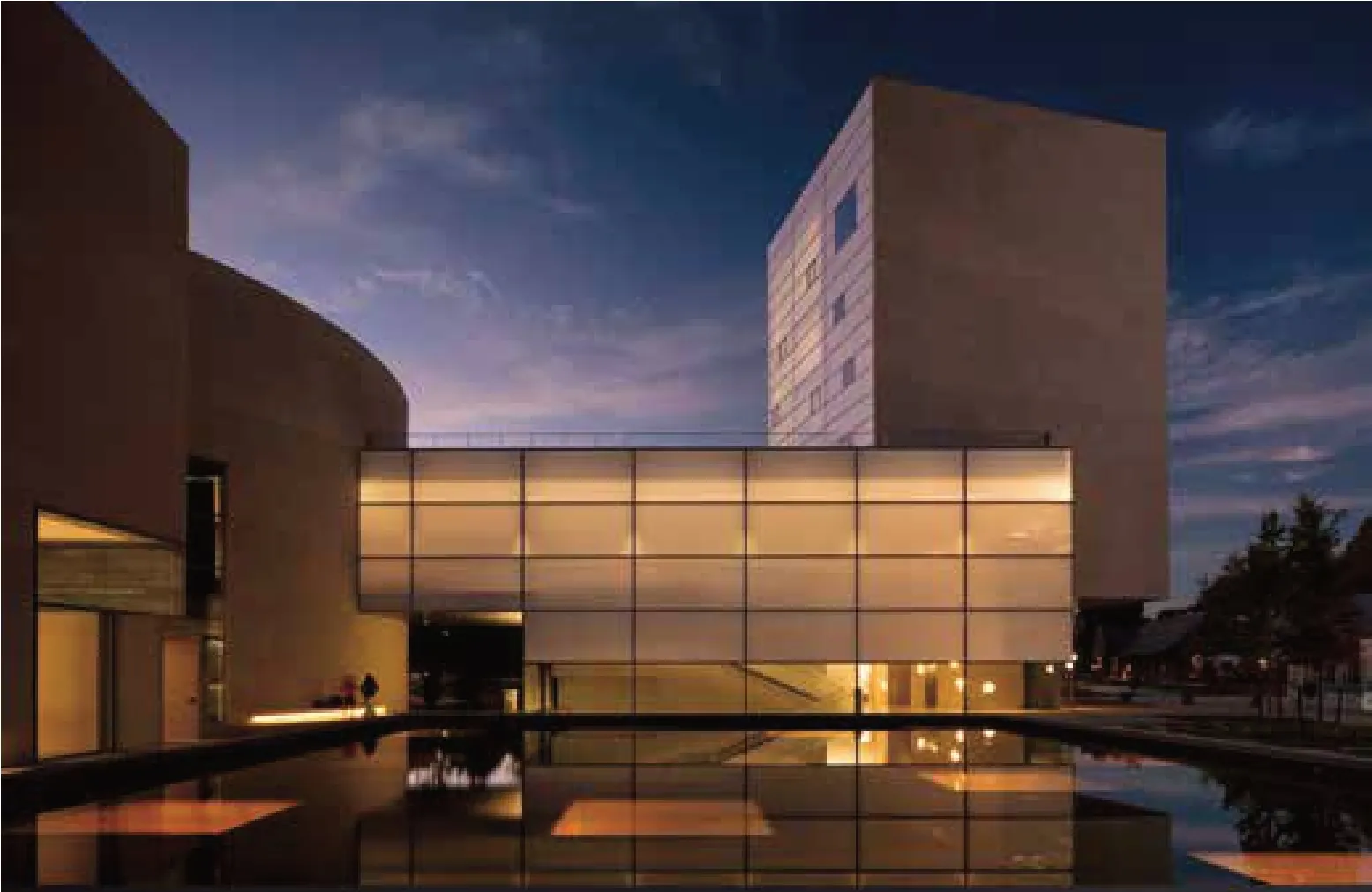
該項目由斯蒂文·霍爾建筑事務所和 BNIM 事務所合作設計,集合了舞蹈、戲劇、音樂劇和普林斯頓大學工作室,并為音樂學院擴建的新音樂大樓增設了教學和研究配置。建筑群體包含華萊士舞蹈大樓及劇院;由赫爾利畫廊、行政辦公室和其他工作室組成的藝術大樓;以及新音樂大樓。三幢大樓聚集在一個占地 8,000 平方英尺(約 743平方米)的開放性室內大廳,作為藝術活動的主要場所。大廳之上是一個有著倒影水池的室外廣場,自然光透過水池映射到底下的大廳中。
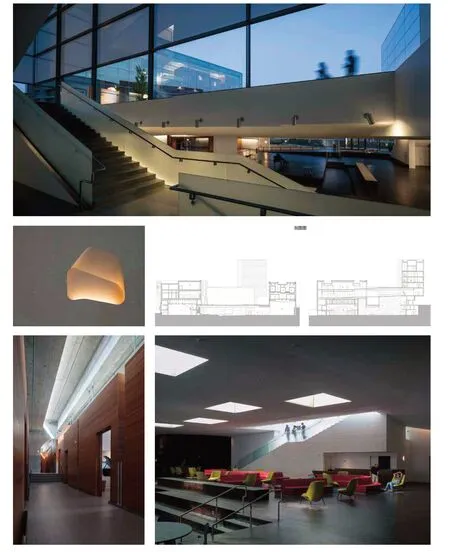
學生們可以在新的藝術廣場上觀望建筑內部舞蹈、戲劇及管弦樂隊排練的場景,這樣能夠大大激發好奇心并有助于他們的互動。作為一個開放的公共入口,這個空間旨在聯系校園與周邊社區。
華萊士舞蹈大樓及劇院是依據“物中有物”的概念來設計的。黑盒劇場為鋼結構,而舞蹈劇場則由泡沫鋁、白洗木和混凝土板構成,一架“舞動的樓梯”通向所有的樓層。
藝術大樓以“嵌入”為概念,其磚石體量與普林斯頓的歷史建筑“布萊爾拱門”比例協調。
The new Lewis Arts complex on the south edge of campus, adjacent to McCarter Theatre Center,takes the arts at Princeton University to even greater heights by significantly expanding the performance, rehearsal and teaching spaces for the arts in new, state-of-the-art facilities.The complex creates a new campus gateway, shaping campus space while maximizing porosity and movement.
The arts complex, designed by Steven Holl Architects in partnership with BNIM, brings together the Lewis Center for the Arts’ Programs in Dance, Theater, Music Theater, and the Princeton Atelier,and the Department of Music’s expansion of its instructional and research facilities in the New Music Building.The complex comprises the Wallace Dance Building and Theater; the Arts Tower,which includes the Hurley Gallery, administrative offices and additional studios; and the New Music Building.The three buildings are integrated below ground in a Forum, an 8,000 square-foot open indoor gathering space that serves the various arts venues in the complex.Above the Forum is an outdoor plaza with a reflecting pool.Skylights in the pool filter natural light into the Forum below.
Encouraging curiosity and interaction, the new arts plaza has overlook views into the dance and theater practice spaces and the orchestral rehearsal space.As an open public invitation, this gateway space aims to connect the local community to the University.
The Wallace Dance Building and Theater is developed according to the idea of a “thing within a thing.” The black-box theatre is composed of steel, while the dance theaters are foamed aluminum,white washed wood and board formed concrete.A “dancing stair” connects all levels.
The Arts Tower is developed with an “embedded” concept, its stone tower connecting to the proportions of Princeton’s historic Blair Arch.
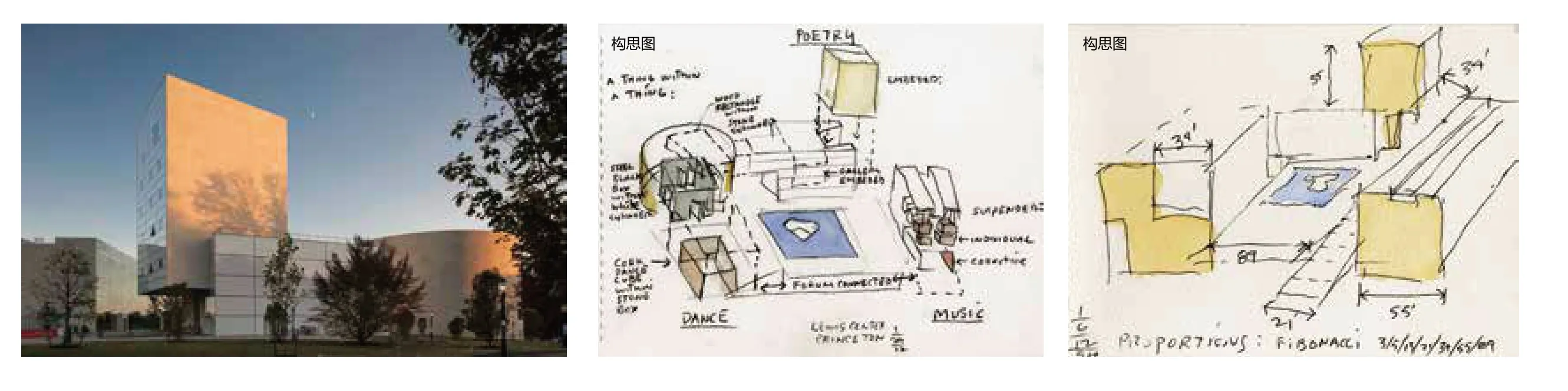


新音樂大樓的設計理念為“懸浮”。大型管弦樂排練室上是多個懸吊在鋼梁上的獨立練習室。每個獨立的木質琴房相互隔離,保證了聲學共振的品質。三棟混凝土結構的大樓均使用擁有 2,100 萬年歷史的厚萊切石作為貼面,來自于意大利品牌萊切(Lecce)。
這座新藝術中心的建成在某種程度上要歸功于已故的彼得·B·路易斯(Peter ·B·Lewis),他在 2006年組織普林斯頓 1955 屆及之前的大學董事捐贈了 1.01 億美元(約 6.7 億人民幣),作為禮物獻給普林斯頓大學,因此才有了這棟建筑,所以該建筑以他的名字命名以示感謝。
The New Music Building is developed according to an idea of “suspension.” Above the large orchestral rehearsal room individual practice rooms are suspended on steel rods.Acoustically separate, these individual wooden chambers have a resonant quality.The concrete structure of all three buildings is faced in thick 21-million-year-old Lecce Stone quarried in Lecce, Italy.
The new arts complex is named for and was made possible in part through a $101 million gift to the University made in 2006 by the late Peter B.Lewis, Princeton Class of 1955 and former University trustee.


猜你喜歡
北方建筑(2021年6期)2021-12-31 03:03:54
文苑(2020年10期)2020-11-07 03:15:36
現代裝飾(2020年6期)2020-06-22 08:43:12
讀者·校園版(2018年13期)2018-06-19 06:20:12
琴童(2017年3期)2017-04-05 14:49:04
小天使·二年級語數英綜合(2017年3期)2017-04-01 17:17:48
Coco薇(2016年2期)2016-03-22 16:58:59
讀者(2016年7期)2016-03-11 12:14:36
少兒科學周刊·兒童版(2015年6期)2015-11-24 03:49:38
中學生天地(A版)(2015年5期)2015-06-01 02:46:03