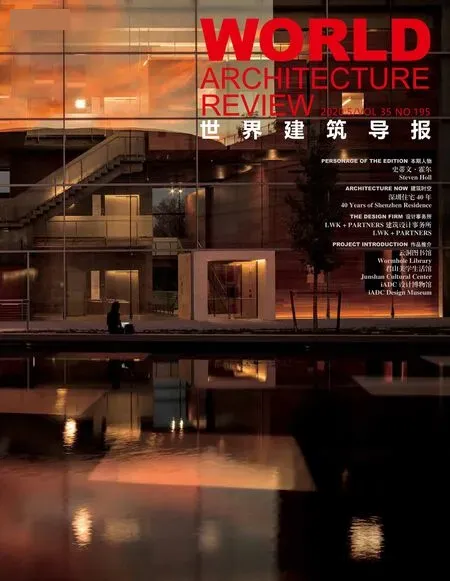
君山美學生活館
2020-11-07 09:00:12郭錫恩,胡如珊,楊延蕙等
世界建筑導報 2020年5期
地址:北京市密云區密溪路33號
項目類型:建筑改造與室內設計
建筑與室內設計師:如恩設計研究室
設計時間:2017年11月 - 2018年10月
項目用途:售樓中心&會所
設計團隊:郭錫恩&胡如珊,楊延蕙,郭鵬,Utsav Jain,Ellen Chen ,Zoe Gao,Wuyahuang Li,Josh Murphy,Alexandra Heijink,Hwajung Song, Lara Depedro,Jason Jia,魯永新,陳曉雯,Mona He,Cindy Sun,Jacqueline Yam
室內 -潔具&配件:Kohler Duravit,D-Line,Dorma
室內 -燈光裝飾:如恩定制吊燈
室內 - 家具:如恩與設計共和共同設計定制的椅子與長椅
Site Address: Jingmi Road, Miyun District, Beijing, China
Project Type: Architectural Renovation and Interior Design
氧化法除硫主要是利用氧化劑的氧化能力差異將水中還原性的硫化物氧化成單質硫沉淀和可溶性的硫代硫酸鹽、硫酸鹽等,單質硫可通過精細過濾裝置去除。油田常用的氧化劑有 O2、H 2 O2、KMn O4、Cl2、ClO2、NaClO、Ca(ClO)2 等,本 研 究 選 取 H 2 O2、NaCl O和Cl O2 3種氧化劑,通過實驗評價篩選適合該水質的除硫劑,實驗結果如圖5所示。
Architect & Interior Designer: Neri&Hu Design and Research Office
Design Period: 2017.11 - 2018.10
Gross Area: 4000m2
Program: Sales Center & Clubhouse
Design Team: Lyndon Neri & Rossana Hu, Nellie Yang, Jerry Guo, Utsav Jain,Ellen Chen, Zoe Gao, Wuyahuang Li, Josh Murphy, Alexandra Heijink, Hwajung Song, Lara Depedro, Jason Jia, Brian Lo,Xiaowen Chen, Mona He, Cindy Sun, Jacqueline Yam
Interiors - Fixtures & Fittings: Kohler Duravit, D-Line, Dorma
Interiors - Decorative Lighting: Custom Pendants by Neri&Hu
Interiors - Furniture: Custom Chairs and Benches by Neri&Hu & Design Republic
“居民們不必因為每天都走在同樣的街道而感到無聊…道路的脈絡不僅存在于單一的維度,而是沿著上下起伏的梯臺、拱橋和懸浮著的街道多維度地編織,結合各種不同的路線,或在高處、或在地面,每一個人每天都可以嘗試用新的路線到達同一個目的地的樂趣。”—— 伊塔洛·卡爾維諾,《看不見的城市》
陽光城君山美學生活館坐落于北京市郊群山起伏、河流蜿蜒的密云水庫附近。曾經的文化中心只是一棟兩層高的普通售樓處,改造后將轉變為一個具有會所和銷售功能的地標性文化中心。如恩在原有的庭院建筑類型的基礎上,設計了兩段交錯的路線,劃分出兩段不同的旅程:一段供高爾夫俱樂部的會員使用,另一段用于銷售中心的客戶。每一個空間設計都緊貼自然為本的概念,主庭院和小花園之間的層次讓建筑與自然和諧相融。
從建筑本身的歷史脈絡中汲取靈感,建筑師將北方傳統建筑與當代建筑語言相結合,從而轉化為一種新的建筑表達。雕塑式的建筑形體有如從水面升起,與內外花園相連接,模糊了建筑和周圍自然環境的邊界。建筑外圍又增加了一圈暖色木紋鋁格柵,減弱了磚墻的沉重感,視線穿過格柵,可以隱約從開窗中看到室內的空間,使外墻的每一面都有不同的視覺效果。室外和部分室內的區域采用金磚鋪地,室內墻面主要采用青磚和木飾面,雕鑿式的天花板貫穿室內各個空間,制造出幾何形態的開窗,勾勒出不同形狀的天空,在淺灰色的墻面上鋪展開層次豐富的光影。一系列定制家具和精致燈具的運用,搭配柔軟的布料,再加上黃銅和自然石材的點綴,營造出低調而奢華的空間氛圍。
功能上,生活館為客戶們提供了一系列豪華的配套服務設施,包括了一間可容納100人的多功能廳,一間寬敞的商務休息室和酒吧,一間畫廊、一間兒童閱讀室,還包含家庭娛樂室,私宴廳,紅酒雪茄吧及屋頂平臺。而生活館的另一部分則是售樓處。售樓處的入口處有一個雙層樓高的接待區域,人們可以從這里到達影音室和四季花園,然后向上穿過花園上方的一座廊橋,到達二層開闊的銷售體驗區,體驗區包含了VIP休息室、酒吧和兒童娛樂室等區域。作為整座生活館中最特別的場所,畫廊內設置了“懸浮”的展示墻,適用于不同的展覽需要。雕塑式的天花板在視覺上聯通了上下層的空間。二層的私宴廳氛圍溫馨通透,結合了酒吧和開放式廚房,能夠滿足不同的接待需求。三層的紅酒雪茄吧和屋頂平臺擁有全景的視野,人們可以在這里飽覽周圍的山水美景。


“lnhabitants are spared the boredom of following the same streets every day… the network of routes is not arranged on one level, but follows instead an up-and-down course of steps, landings, cambered bridges, hanging streets.Combining segments of the various routes, elevated or on ground level, each inhabitant can enjoy every day the pleasure of a new itinerary to reach the same places.” – ltalo Calvino, lnvisible Cities
Junshan Cultural Center is located just outside of Beijing in the midst of the undulating mountain ranges and meandering rivers near the MiyunResevoir.Originally just a typical two-story sales building on the outskirts of Beijing, Neri&Hu was asked to transform this donut-shaped building into an iconic clubhouse and sales center.Neri&Hu took advantage of the existing courtyard typology by crafting two sequences of interlocking journeys, one for clubhouse member, and one for sales center guest.All programmed spaces are designed such that they are in proximity to nature.The layering of the primary courtyard and smaller gardens allow the architecture to merge harmoniously with nature.
Drawing inspiration from its context, the architecture combines traditional northern architecture with contemporary architectural language and transforms into a new interpretation of architectural expression.The building quietly rises out of the water as a brick mass with carved out spaces for programs interlocked with gardens that blur the boundary between inside and outside.On the fa?ade, warm-toned wood pattern aluminum panels form a veil that softens the heaviness of the brick facade.Moments of the screen connects with each interior space, creating a fa?ade that is spontaneous and different on every face.In terms of materiality,traditional gold brick tiles form the foundation of the building mass,extending from exterior landscape into the interior “in-between”spaces.With brick and wood panels as the primary backdrop for the interior, a common theme throughout the interior is the sculpted ceiling.Each space comes alive with the many different geometric cuts carved out to interact with the sky and daylight such that each space is ever-changing when light is reflected off of the rich texture of Venetian plaster.The layering of customized furniture, refined brass metal detail, natural veins of stone accents,softness of fabric, and delicate lighting elements work together to compose a sense of understated luxury.
Programmatically, the cultural center provides a number of luxurious and spacious amenities for its members.It includes a 100-person multi-purpose hall for events, a spacious business lounge and bar, a feature library, children’s reading room, private function room, family media room, a red-wine and cigar lounge bar and a rooftop deck.Part of the cultural center is functioning as a sales center.A double-height reception welcomes potential buyers to embark on a journey through the media room, winter garden, then upstairs across a bridge over the courtyard to a generous sales presentation lounge complete with VIP rooms, bar and children’s play room.One of the most prominent spaces in the clubhouse is an art gallery, equipped with a series of hanging
moveable walls for a flexible display system.The sculpted ceiling
above gives some visual connection to the upper level, while a large glass picture windows allows the space to extend into the courtyard.On the second floor, a generous yet inviting private dining room complete with a bar and show-kitchen allows members to rent out the space for special functions.The red-wine and cigar lounge bar and rooftop deck on the third floor has uninterrupted view of the surrounding mountainous landscape to west.


猜你喜歡
北方建筑(2021年6期)2021-12-31 03:03:54
文苑(2020年10期)2020-11-07 03:15:36
現代裝飾(2020年7期)2020-07-27 01:27:42
現代裝飾(2020年6期)2020-06-22 08:43:12
現代裝飾(2020年4期)2020-05-20 08:55:08
流行色(2020年1期)2020-04-28 11:16:38
藝術啟蒙(2018年7期)2018-08-23 09:14:18
海峽姐妹(2017年7期)2017-07-31 19:08:17
Coco薇(2017年5期)2017-06-05 08:53:16
福建農業科技(2016年10期)2016-03-07 09:46:49