Estimation of exposure dose for decontamination workers from contaminated soil at a nuclear decommissioning site in Korea
2021-01-28 08:30:34SohyeonLeeDongKwonKeumHyoJoonJeongInJunKwangMukLimandYongHoChoi
輻射防護 2020年6期
Sohyeon Lee,Dong-Kwon Keum,Hyo-Joon Jeong,In Jun,Kwang-Muk Lim,and Yong-Ho Choi
(Korea Atomic Energy Research Institute,989-111 Daedeok-daero,Yuseong-gu,Daejeon,Republic of Korea)
Abstract:Assessment of the exposure dose for workers is crucial to protecting workers from the radiological risk.This preliminary study estimates the potential radiological exposure for a soil remediation worker at a nuclear decommissioning site contaminated with Cs-137 in Korea,and then calculates the maximum workable soil concentration to comply with the occupational dose constraint of 20 mSv per year.The Korean characteristic data,detailed exposure scenarios for workers by the type of work,and relevant exposure pathways were used in the dose estimation.As a result,the most severe exposure-induced work type was identified as the excavator operation with an annual individual dose of 5.92×10⁻⁵ mSv for a unit concentration of soil,from which the derived maximum workable soil concentration was 3.38×10⁵ Bq/kg.Furthermore,dose contribution by each exposure pathway was found to be decreased in the following order:external radiation exposure,soil ingestion,dust inhalation,and skin contamination.The results of this study are expected to be used effectively to optimize radiation protection for workers and establish appropriate work procedures for future site remediation.
Key words:nuclear decommissioning;decontamination;site remediation;dose assessment;radiological risk;radiological environmental impact assessment;radiation protection
1 Introduction
Korea’s first commercial nuclear power plant (NPP),Kori #1,was permanently shut down in June 2017.As the immediate decommissioning option (DECON) for the Kori #1 NPP was adopted,the Korea Hydro &Nuclear Power Co.,Ltd has to submit the final decommissioning plan after five years of preparation for planning of decommissioning.Consequently,decommissioning and dismantling (D&D) of the plant is expected to start in the mid of 2022.
One significant purpose of D&D is to lift the regulatory controls that apply to a nuclear site whilst securing the long-term safety of the public and the environment[1].Nuclear site remediation and soil decontamination-as the last step in decommissioning a NPP-can reduce the residual radioactivity on the site below the release criteria,so as to reduce the radiological impact on the public from contaminated soil.On the other hand,workers can be exposed to radiation hazard in the course of soil decontamination.Therefore,the optimization of radiation protection and appropriate work procedures need to be established based on the dose estimation.
This paper assessed the potential exposure dose for workers who will be engaged in soil decontamination work at the decommissioning site of a NPP in Korea.
2 Method and results
2.1 Approaches on dose modelling for workers
2.1.1Work procedures for soil decontamination
International Commission on Radiological Protection (ICRP) has recommended general principles for the radiological protection of radiation workers[2].The ICRP continues to recommend that occupational exposure be controlled by the procedures of optimization below a source-related constraint and the use of dose limits[3].On the basis of the recommendation,we established a flow chart of soil decontamination work as shown in Figure 1 to predict the extent of exposure and the workable soil concentration for the workers involved in each procedure.
It was assumed that the residual radioactivity of soil is measured using the GPS radiation monitoring vehicles,and the contaminated soil is purified in the automated remediation facility.Since there is no need for manpower allocation,those types of work were excluded in this dose assessment.In addition,workers at low- and intermediate-level radioactive waste facilities were excluded from evaluation subjects,as they belong to Korea Radioactive Waste Agency (KORAD) and their individual radiation exposures are managed separately.
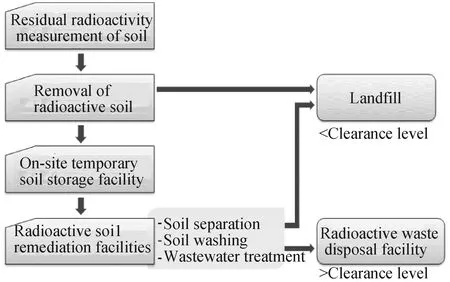
Fig.1 Schematic diagram of work procedures for soil decontamination
2.1.2Exposure scenario for worker
Exposure scenarios for workers were developed taking into account the type of work involved in radioactive soil decontamination work.Each scenario was classified into two categories,light and heavy,according to the strength of the physical activities as listed in Table 1.
2.1.3Exposure pathways for workers
Residual radioactive soil at the decommissioning site causes radiation exposure through various pathways.The exposure pathways considered in the dose estimation model are as follows:direct external exposure,dust inhalation,soil ingestion,and skin contamination.In scenario W3 only the direct external exposure pathway was considered,because the exposure from other pathways for a driver could be negligible during the transportation.
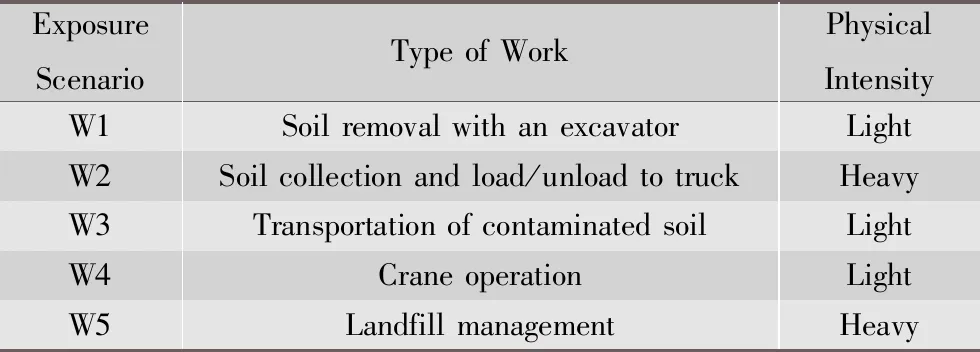
Tab.1 Exposure scenarios for workers by work type
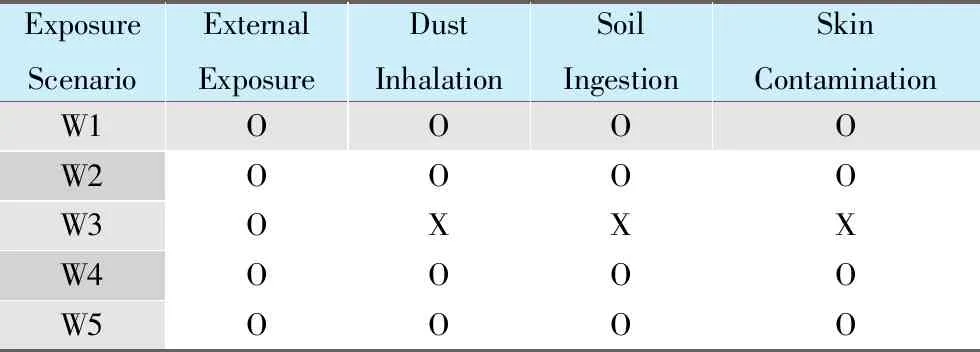
Tab.2 Exposure pathways for workers by work type
2.2 Dose assessment model
The exposure dose for a decontamination worker from contaminated soil can be estimated by Eqs.(1)~(5)[4-5].
(1)
(2)
(3)
(4)
Etot=Eext+Einh+Eing+Eskin
(5)
where
—Eext,Einh,Eing,Eskinare the annual individual effective dose resulting from direct external radiation,dust inhalation,soil ingestion and skin contamination respectively (Sv/a);
—Etotis the individual total effective dose in a year (Sv/a);
—DCext,DCinh,DCing,DCskinare the dose conversion factors for the direct external radiation,dust inhalation,soil ingestion and skin contamination,respectively (Sv/hr)/(Bq/kg) for exposure and (Sv/Bq) for internal exposure;
—teis the annual working time (h/a);
—t1is the decay time before the start of the scenario (a);its value is set to 0 assuming decontamination work is carried out right after the measurement of residual radioactivity of soil on site;
—t2is the decay time during scenario (a);its value is considered to be the same as the working time in a realistic approach;
—fdis the dilution factor (-);its value is set to 1 assuming that the dilution effect does not exist;
—fcis the concentration factor of the specific activity in a fine fraction (-);
—Csoilis the concentration of the contaminated soil (Bq/kg);
—Cdustis the dust concentration in air (Bq/kg);
—Mdustis the dust load in air or the mass loading factor (kg/m3);
—V’ is the breathing rate (m3/h);
—Iis the ingestion quantity per year (kg/a);
—wsis the skin weighting factor according to ICRP 60 (-);
—fsis the fraction of the contaminated body surface (-);its value is set to 0.1 assuming skin contamination in arms and hands;
—Ldustis the dust layer thickness loading on the skin (m);its value is set to 0.0001 assuming skin contamination in arms and hands;
—ρis the dust density on the skin (kg/m3);its value is set to 1500;
—λis the radioactive decay constant (1/a).
In the above equations,the breathing rate (V’) and the working time (te) are characteristic data of each country due to the differences in physical conditions,lifestyle and work characteristics.Thus,it is necessary to use the Korea data for such input parameters for a realistic assessment.
2.3 Korean characteristic data
2.3.1Breathing rates for Korean workers
The representative breathing rates for Korean workers were estimated by combining the measured respiration rates of Korean adults[6]with the daily consumption time of a worker according to the activities in the human respiratory track model proposed by the ICRP 66[7].
The estimated breathing rates for Korean workers and the ICRP breathing rates for light and heavy work are listed in Table 3.It can be seen that even the 95th percentile of Korean breathing rates are less than those of the ICRP for both light and heavy work.The 95th percentile of Korean breathing rates is used for the input value in the dose assessment with consideration of the uncertainty of the personal physical differences.

Tab.3 Comparison of the breathing rates of Korean workers with ICRP recommendation (m3/h)
2.3.2Annual working time for Korean workers
Annual working time for work was defined to reflect the diverse work characteristics as listed in Table 4.Three months of annual working time was assumed in accordance with a realistic assumption of workplace scenarios in the IAEA/SRS 44[4].In addition,monthly working hours according to the types of work were extracted from the data of the Korean Statistical Office (KSO) (2017)[8].It was assumed that W1,W2,W3 and W4 correspond to industry classification of environmental restoration,construction,transportation and construction of the KSO data,respectively.Meanwhile,the annual working time of W5 was taken from the landfill scenario in the IAEA/SRS 44 due to the absence of KSO data.
2.4 Result of exposure dose assessment for workers
Exposure dose for a worker was calculated using Eqs.(1)~(5).It was assumed that the decommissioning site of the NPP would be contaminated with137Cs in soil with the unit concentration (Bq/kg).Information on the nuclides,such as the half-life,decay constant and dose conversion factor,were extracted from ICRP 68 and ICRP 74[9-10].As an exception,the external dose conversion factors were calculated for each exposure geometry[5].The dose conversion factors and the other input parameter values used in dose assessment are summarized in Table 4.
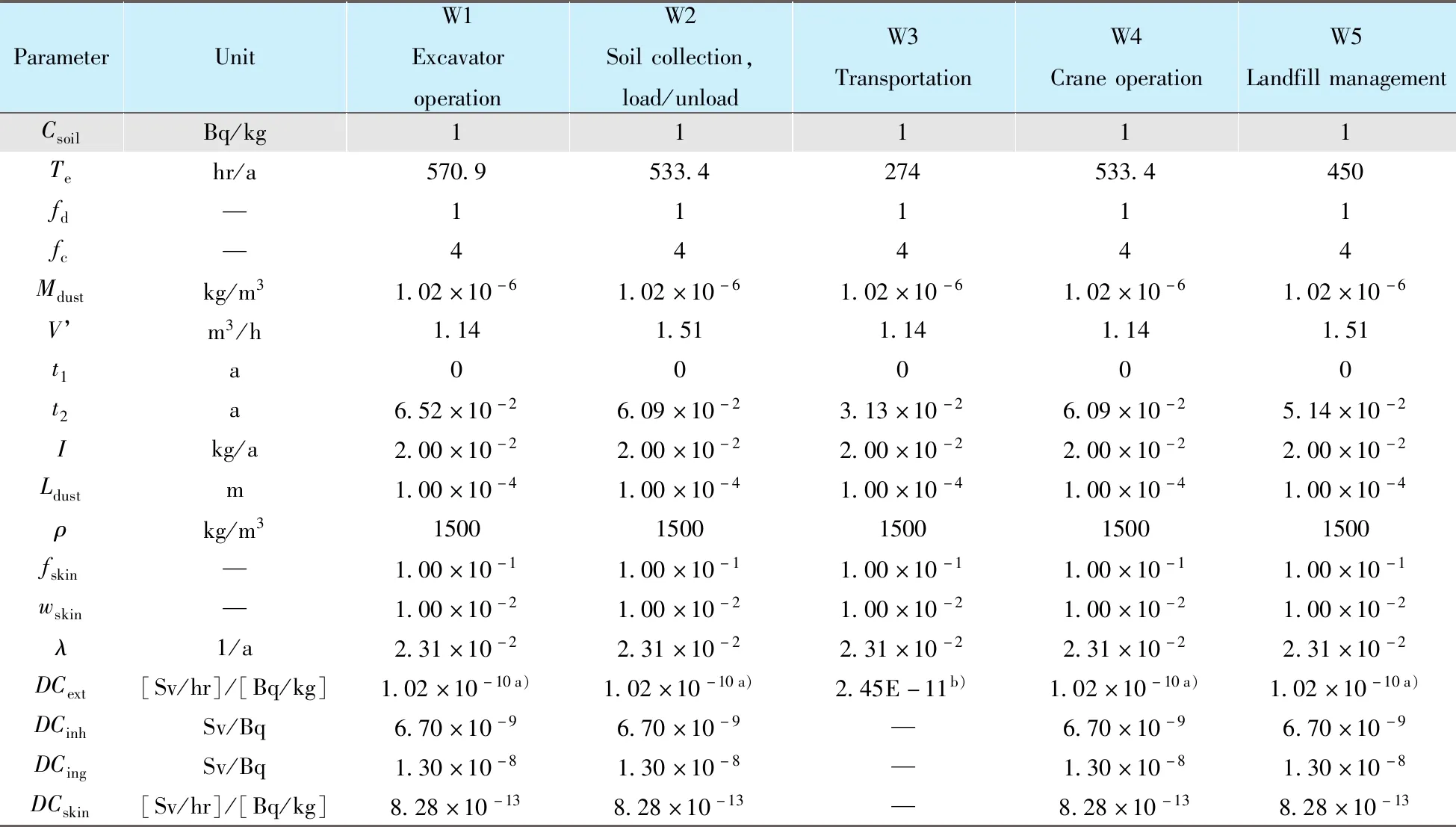
Tab.4 Input parameter values used in dose estimation
Table 5 represents the calculated exposure dose for workers according to exposure pathways,and the derived workable soil concentrations depending on the work types.As seen in Figure 2,the dose contribution by each exposure pathway was found to be decreased in the following order:external radiation exposure,soil ingestion,dust inhalation,and skin contamination.In all scenarios,the major exposure pathway was direct external dose which accounted for more than 98% of the total effective dose.This result indicates that the management of external exposure is critical to protect worker from radiological risk.Thus,not only the training and education before actual work for securing the skilled workers,but also a proper work procedure such as the shortening working hours or wearing protection clothes are of paramount importance for radiation protection of workers.
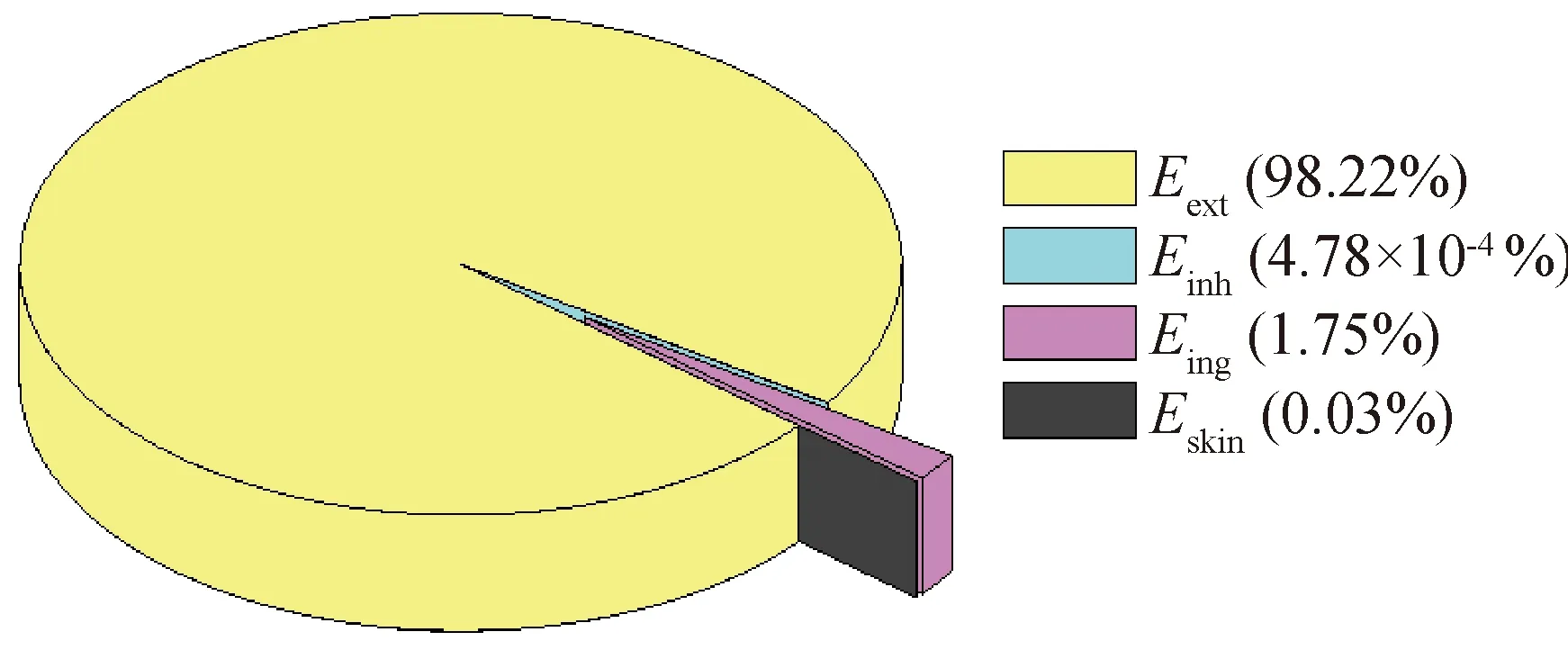
Fig.2 Dose contribution to total effective dose by exposure pathway in all scenarios except for transportation (%)
The impact from other pathways turned out to be insignificant,given that even the soil ingestion,second-highest contributing pathway,accounted for less than 2% of the total effective dose.In particular,the external exposure due to skin contamination and the internal exposure due to inhalation had little effect on the total exposure dose.
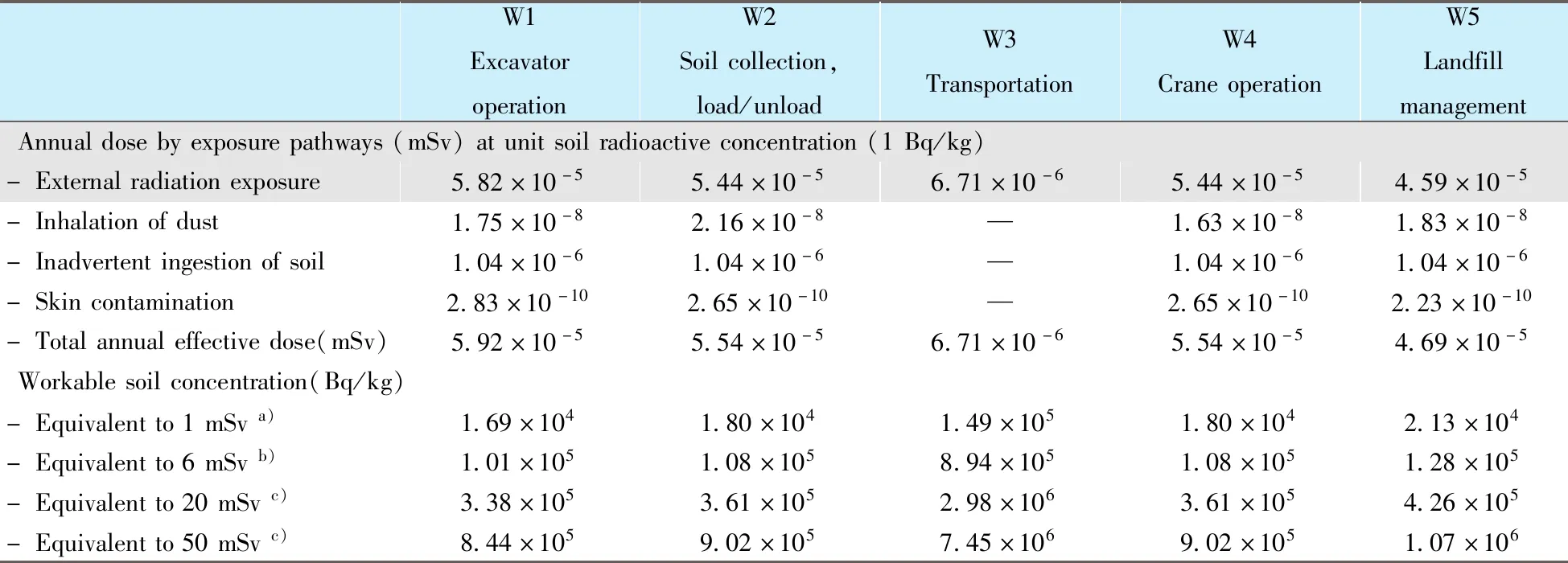
Tab.5 Calculated exposure dose and workable soil concentration for each type of work
The maximum exposed worker was identified as the excavator operator with an annual dose of 5.92×10⁻⁵mSv for a unit concentration of soil.As given in Table 5,when the 20 mSv is applied to the annual dose constraints for radiation workers,the derived maximum workable soil concentration for the excavator operator was 3.38×10⁵Bq/kg.
3 Conclusion
This study evaluated the potential exposure doses for workers performing decontamination of soil contaminated with137Cs in Korea.The Korean specific data were used for realistic dose assessment.In addition,the exposure scenarios for workers according to the types of work and relevant exposure pathways were considered in dose estimation.The most severe exposure-induced work type and pathway were found to be the excavator operation and the direct external exposure from soil,respectively.In conclusion,the present results can be used effectively to optimize radiation protection for workers and establish appropriate work procedures for future site remediation.
Acknowledgements:This study was supported by the National Research Foundation of Korea (NRF) grant funded by the Korean government (No.NRF-2017-M2A8A4015252) and it has been conducted as a part of the project of emergency preparedness for nuclear research facilities in Korea Atomic Energy Research Institute (KAERI).