與中國結緣的12年
2021-07-29 20:03:28唐銳杰
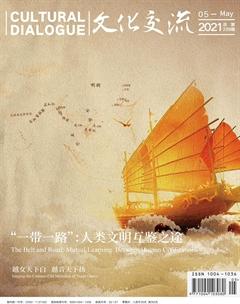
文化交流 2021年5期
唐銳杰
我對中國的興趣始于2008年初,我在高中完成了漢語入門課程。當時,去學習一門既難懂又難學的語言,我的同學認為這很不可思議,甚至用他們的話來說很愚蠢。記得我坐在高中的圖書館里,看著電腦上滿是奇怪的字符和注音,我才意識到那是拼音。我立刻被迷住了,那天的晚些時候,回家我告訴父親自己對普通話的迷戀。“總有一天中國會統治世界”,父親簡單地說。起初,我懷疑自己學習中文的能力,但現在回頭看我一點也不后悔。
在2008年底高中畢業之前,我申請了英國幾所頂尖大學的中國學研究項目,包括愛丁堡大學、曼徹斯特大學和諾丁漢大學。盡管收到了這三個學校的邀請,我還是選擇了諾丁漢大學,以及去浙江寧波的中國校區進行為期一年的交換項目,這是最吸引我的地方。初到寧波,一開始我大部分時間都待在校園里,不敢冒險進入一個全新的文化空間。之后在學校組織的活動中,我去了上海和北京這兩個中國主要城市進行實地考察,讓我看到了中國的經濟現代化、快速城市化、可持續發展,以及在現代發展中這個國家又是如何保持其傳統文化和價值觀的。
2011年,我以優異的成績畢業,并獲得全額獎學金到浙江大學繼續深造,我很榮幸在中國最著名的學術機構之一,獲得中國學碩士學位。2013年,寧波諾丁漢大學文化研究專業向我拋來橄欖枝并提供全額獎學金。相對錢來說,讀博的機會顯得更是一種稀缺資源,完成博士課程、獲得博士學位是一種精神追求和財富,于我而言更像是奢侈的生活方式,不是每個人都可以享受。
雖然我的研究重點一直是中國的明清和當代,但過去十到二十年時間里,中國發生了翻天覆地的變化,特別是中國的軟實力,越來越多的西方學生通過孔子學院的學習,對中國和漢語感興趣。讀碩士期間我的研究方向是網絡同性文學,讀博士期間我的研究方向是同性戀文學與晚清時期中國動物和人類之間的關系,志怪小說和西方酷兒理論(二十世紀九十年代在西方火起來的一種關于性和性別的理論)之間的關系,特別是紀曉嵐和蒲松齡的小說。我還記得2013年圣誕節,在西塘古鎮的一家書店,我第一次閱讀古文版本的蒲松齡《聊齋志異》。這一類的志怪故事真的非常吸引我,它們是中國傳統文化的精華,反映了佛教、道教和儒家的信仰,對任何西方學者來說,它們都是令人興奮的讀物。
我在中國的學術生活圍繞著浙江展開。我現在的家在寧波,一座美麗的港口城市,海風傳遞著江南的靈秀,她書藏古今、港通天下,是七千年河姆渡文化發祥地,是唐代“海上絲路”的起點。讀碩士期間的學習生涯讓我有幸在杭州生活了三年,鄧小平說,像杭州這樣美麗的城市,世界上也不多了。白居易說;江南憶,最憶是杭州。要我說;此生不枉到此一游。我想那些熱愛中國文化的西方青年,如果有幸來到我們浙江,一定會和我一樣愛上這里。
我很榮幸在2020年下半年來浙江大學國際商學院做訪問學者。國際商學院提供的項目立刻吸引了我。我曾參加過浙江大學的中國學項目,而且這個項目旨在為年輕學者提供廣泛的培訓,為他們的職業生涯做準備。
因為COVID-19新冠疫情大流行,我和妻子、兒子在英國滯留了9個月。這是我10年來離開中國最長時間的一次,可能也是我一生中最長的9個月。在這段時間里,我意識到沒有中國我無法生活。一句話來說,手機在手,天下我有。中國便捷的生活、四通八達的公共交通、街頭小吃、就餐選擇、旅游目的地、自然美景,但最重要的是在中國生活的那種安全感令都人懷念。在英國,晚上自己或帶家人外出時,我從未感到足夠安全。正如我經常告訴我的英國朋友們的那樣,我在中國待了這么長時間,從來沒有、甚至一次也沒有遇到過危險,沒有搶劫,沒有偷竊。我遇到的所有中國人都很友好。對我來說,中國是世界上最安全的國家,我的第一手經驗說明了一切。經過70多年的奮斗,今天,在中國遼闊的土地上,我們看到的是一片生機勃勃、充滿活力、充滿希望的景象。
如果沒有我生命中最重要的人——我的妻子和兩歲的兒子,那么我的生活也是無法想象的。我在2015年遇到了我的妻子,當時我還在攻讀博士學位。空余時間,我在一家顧問公司兼職,命中注定,在同個辦公樓我遇到了我現在的妻子,感謝這份工作讓我結束了單身汪的生活——兩年后我們結婚了。不僅在生活上,我的妻子在工作上也給了我很大的支持。我是工作與生活需要平衡的堅定信徒。誠然,工作可以帶來許多個人快樂,但沒有人分享這些成就,生活將是毫無意義的。如果沒有家人的支持和愛,我不會有今天的成就。
我對中國的愛始于研究,現在這種愛將伴隨著我的一切繼續在浙江大學的學術生涯。
(作者系中國學研究學者,目前是浙江大學國際商學院的客座教授。)
My interest in China began in early 2008 after completing an introductory Chinese language course during high school. At the time, my classmates thought I was foolish to learn a language that was unintelligible and difficult. I remember sitting in the library of my high school and looking at a computer full of strange characters and pronunciations, which I came to realize was called pinyin. I was instantly fascinated with them and returned home later that day to tell my father of my captivation with Mandarin Chinese. “One day China will rule the world,” my father simply said. At first, I doubted my ability to learn Chinese but looking back I do not have a single regret.
Before graduating high school in late 2008, I had already applied to some of Englands top universities for China Studies programs, including the University of Edinburgh, the University of Manchester, and the University of Nottingham. Despite receiving offers from all three, I chose the University of Nottingham, for a one-year exchange program to the universitys China campus in Ningbo, Zhejiang was offered. But after arriving there, I had mostly stayed on the campus, daring not to venture out into a whole new culture. Later, a field trip took me to Shanghai and Beijing, Chinas two major cities, opening my eyes to its economic modernization, rapid urbanization, sustainable development as well as how amongst all the growth the country maintained its traditional culture and values.
In 2011, I graduated with distinction and was offered a full scholarship for a Master of Arts China Studies program taught entirely in Chinese at Zhejiang University, one of Chinas most prestigious academic institutions, which, unbeknownst to me, would become the place where my academic career would flourish some years later. After graduating from Zhejiang University with merit and fluent in Mandarin in 2013, I went on to be offered a full scholarship for my PhD in Culture Studies at the University of Nottingham, Ningbo.
While my research focus has been on China, both late-imperial and contemporary, for the past decade, there have been changes over time: first on Chinas soft power, and the perception of Confucius Institutes among Western students interested in China and the Chinese language, then on online queer literature in contemporary China and now on the relationship between humans, animals and queer in late-imperial Chinese fiction, with a particular focus on Qing dynasty tales by well-known writers such as Pu Songling and Ji Yun (or Ji Xiaolan). I still remember picking up an old Classical Chinese version of Pu Songlings Strange Tales from a Chinese Studio as I sat in a Cat Café in the historical town Xitang in Jiashan county during Christmas in 2013. Admittedly my Classical Chinese was not as strong as I would like it to be, but from the little I understood I was immediately drawn by the supernatural and strange creatures and happenings in this work, but perhaps more so by the fact that these figures and events are instructional and moral against the authors own worldly society. Indeed, they are the essence of traditional Chinese culture, reflecting on Buddhist, Daoist and Confucian beliefs, and are a thrilling read for any Western scholar.
What may have become strikingly obvious by now is that my academic life in China revolves around Zhejiang. My home is in Ningbo, a major port and industrial hub in the province. While Hangzhou, the provincial capital city, boasts the West Lake, a personal love of mine due to its historical and cultural significance, Ningbo also has much history and culture: its home to the 1516 landmark Tianyi Ge, one of Chinas oldest libraries, Ningbo Museum, exhibiting regional artifacts dating to the Neolithic Hemudu Culture, and Tianyi Square, a vibrant city-center featuring a musical fountain and bounded by shopping arcades.
At present, I am a visiting scholar at Zhejiang Universitys International Business School, which is part of the universitys newly opened International Campus in Haining, a county-level city. The International Business School, which offers a Master of China Studies program, attracted me straight away. Not only was I once part of the China Studies program at Zhejiang University, the first in China, but this program aims to prepare young scholars for a career in a broad range of sectors where they can implement their knowledge on China and/or East Asia.
But I was able to join the university only in September 2020, having been stuck in the UK with my wife and son for nine months because of the COVID-19 pandemic. This was my longest time away from China in a decade, and probably the longest nine months of my life, during which time I realized just how much I cannot live without China. Chinas fast pace of life, public transportation, street food, dining out, traveling, natural beauty, but most importantly the general feeling of safety living in China were sorely missed. I have never felt safe enough to take myself or my family out at night in the UK. As I often tell my British friends back home, all this time in China I have never, not even for once, found myself in danger. No robbery. No theft. All the Chinese I have met were friendly, nice, and happy. For me, China is the safest country in the world, and my first-hand experience says it all. After over 70 years of hard work, what meets the eye across the vast expanse of the country today is vigor, dynamism, and promise.
My “survival” in China, or more specifically in Zhejiang, would not be conceivable without the most important people in my life, my wife and two-year-old son. I met my wife in 2015, when I was still completing my PhD and under immense stress, teaching English as a second language to business professionals to earn some money for rent and food.
As fate would have it, on the way out of my teaching building one day, we came across each other and it was love at first sight — we were married two years later. My wife gives me much support both in life and in academic work, presenting me with fresh ideas now and then. I am a strong believer in work-life balance. Work, admittedly, can bring many personal delights, but life would be meaningless without anyone to share these achievements with. I would not be where I am today without the support and love of my family.
My love for China started in research, and this love now goes on with my family and academic career at Zhejiang University.
Thomas William Whyke is a scholar in China Studies. He is currently a visiting professor and will be an Assistant Professor and Academic Director of China Studies at Zhejiang University International Business School later this year. Thomas has published numerous SSCI and AHCI papers in highly regarded international journals, including Journal of the History of Sexuality, Society & Animals, Journal of Homosexuality, Journal of Chinese Humanities, Fudan Journal of the Humanities and Social Sciences, and Animation: An Interdisciplinary Journal. He wholly enjoys teaching courses to talented undergraduate and graduate students who share his passion for China Studies, including Intercultural Communication, History of Chinese Civilization, Introduction to Contemporary China, and Academic Writing.
猜你喜歡
中國德育(2022年12期)2022-08-22 06:16:18
湖北教育·綜合資訊(2022年4期)2022-05-06 22:54:06
金橋(2022年2期)2022-03-02 05:42:50
金橋(2022年1期)2022-02-12 01:37:04
小天使·一年級語數英綜合(2018年9期)2018-10-16 06:30:16
少年博覽·小學高年級(2016年12期)2017-01-16 12:48:35
特別文摘(2016年19期)2016-10-24 18:38:15
37°女人(2016年5期)2016-05-06 19:44:06
爆笑show(2016年1期)2016-03-04 18:30:28
爆笑show(2015年6期)2015-08-13 01:45:40