令沈陽人沉迷的雞架,不只是東北老工業的遺產
2023-12-14 16:38:22孫佳慧
漢語世界(The World of Chinese) 2023年4期
孫佳慧

Bones of Industry
How a simple Northeast dish symbolizes the rise, fall, and reinvention of a once flourishing industrial heartland
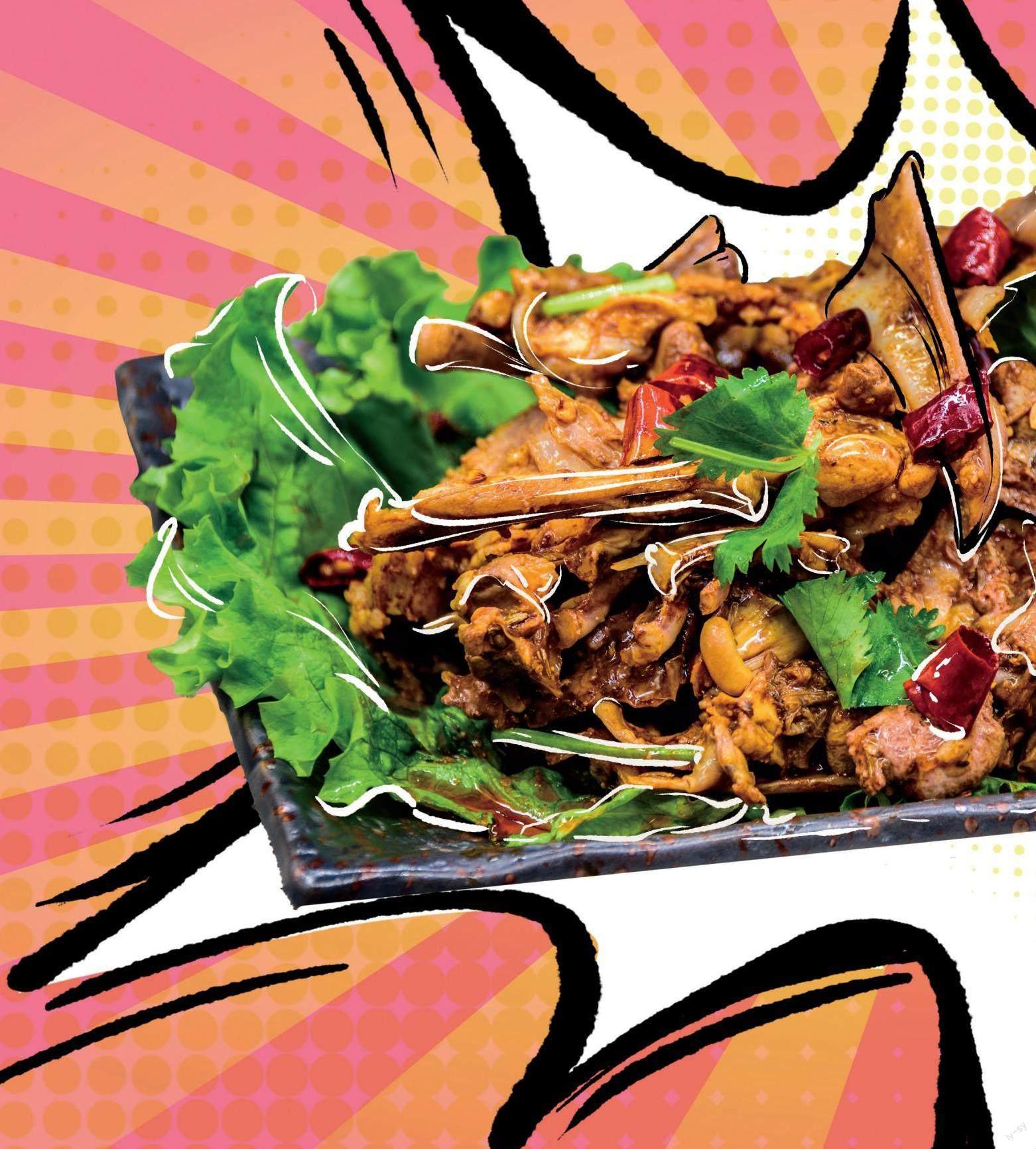
Illustration by Wang Siqi
For a city built on heavy industry, Shenyangs most famous dish is surprisingly frugal.?Jijia, little more than fried or roasted leftover bones and scraps from a chicken carcass, is the pride of the city, despite competition from other traditional dishes like barbecued meat, deep-fried pork, and various stews.
In 2021, when China was under strict Covid-19 controls,?jijia (雞架, literally “chicken frame”) even gained national attention. The humble cuisine featured prominently in the travel records of an infected man in Shenyang, the provincial capital of Liaoning—he had visited three different?jijiarestaurants in just three days.
Jijiaand the city blew up on social media. On Weibo, a flood of over 80,000 comments under the hashtag “Shenyang?jijia” discussed why this brittle, handheld snack of mostly bones was so attractive. Taiwan writer Liao Hsin-chung asked the question on behalf of many netizens: “How delicious, exactly, is?jijia? It seems every Covid patient in Shenyang has?jijiaon their travel record.”
Renowned Shenyang actor Lin Gengxin soon contributed a widely praised answer: The soul of?jijiaisnt its meat but lies in the process of “suole(嗦勒)”—a local dialect term meaning to suck on food to absorb all the flavor.
But?jijia, like any good culinary cultural icon, is about much more than the taste or even the way it is eaten. The snack is not an ancient classic—it only became popular in the 1990s, when Dongbei (a collective name for Chinas northeastern Liaoning, Jilin, and Heilongjiang provinces) experienced economic and social dislocation as state-owned enterprises closed, forcing millions of blue-collar workers out of their jobs.
Once the technological and industrial hub of New China after 1949, Dongbei was forced to reinvent itself. As unemployment rose, wages fell, and households pinched their pennies, leftover chicken bones became a popular cheap eat.
Somehow its popularity stuck, despite a return to more stable times (though Dongbei still lags behind the most developed eastern coastal provinces in China by most economic measures).
Despite the scholar Yang Xiu (楊修) of the Three Kingdoms period (220 – 280) commenting ambivalently that?jijiawas “tasteless if eaten, but a pity to throw away,” there are now over 1,000 registered catering companies in Shenyang with “jijia” in their name, as listed by Qichacha, a business inquiry platform. According toTaste Humanity at Night, a documentary aired in 2019, Shenyang residents consume nearly half of all Chinas?jijia.
In the 1980s, “people began to eat?jijiabecause its cheaper than chicken meat,” says Wang Jue, a 35-year-old Shenyang local who works for a technology company. “When people used to be rich, they didnt eat it.”
From the 1950s to the 1980s, Shenyang was the most developed city in Dongbei and the site of almost three-quarters of the countrys heavy industry. Those glory days saw most working in state-owned factories doing “iron rice bowl” jobs that promised employment for life. At a time when food could be scarce in other parts of the country, Shenyang cuisine was often described with a common Chinese saying: “Alcohol in big bowls, meat in big pieces.”
Yet according to a report by the state-media outlet Lifetimes, 71 percent of?jijiais bones, 6 percent is skin, and less than 22 percent is meat. On average, one?jijia—that is, the carcass of one chicken—comprises less than 100 grams of meat.
Eventually, big portions of meat became too expensive for many. From 1990 to 2012, the number of employees in state-owned and collective enterprises in Shenyang decreased from 2.2 million to 720,000.
In the 2002 documentaryTiexi District, which examined the impact of the restructuring in one of the hardest-hit areas of Shenyang, industrial workers claimed they were given compensation of 226 yuan per month for two years after being laid off. In most instances, that was far below what they had earned in the factories, and over 250 yuan lower than the average disposable income of urban residents in China in 1999. Chicken carcasses, which sold for as little as 2 or 3 yuan during the 1990s, were a cheap necessity.
In his novelThe City of Jijia(2022), Liaoning writer Lao Teng reflected on those years of mass lay-offs: “Life became uncertain and depressing. But people must move on. People need to have dinner together, and drink beer. Thus,?jijiabecame popular in Tiexi district, where there were the most laid-off workers. On a summer evening, people would set up a small table and a grill by the side of the street, buy a plate of?jijia, and roast them while drinking beer. The whole night wouldnt cost them more than 10 yuan.”
It was also accessible, readily available at street stalls and eaten with hands only. “If you want to eat barbecue, you need to go to a restaurant. But if you want to eat?jijia, you can just buy some casually from a market,” says Wang, who remembers regularly buying three chicken carcasses for 10 yuan on the way home from school as a child.
Nowadays, entire restaurants are devoted to?jijia, preparing the dish in a variety of styles. One retired worker opened Old Four Seasons, now a chain of restaurants, in Shenyang in 1988. The restaurant is one of the oldest?jijiaeateries in the city, and its signature dish is boiled?jijiaserved with coriander stems and pickled mustard. Customers then add chili oil and vinegar to suit their taste. “I personally like fried?jijiabetter. But you can find that in other cities. The boiled ones you can only taste in Shenyang,” says Wang.
A typical Shenyang meal for one at Old Four Seasons is one?jijia, one bowl of noodles, and one beer. The idea is that noodles fill the stomach,?jijiasatisfies the craving for meat, and alcohol drowns ones sorrows (perhaps at being laid off from the factories). “The fact that there isnt much meat makes?jijiathe best partner for beer,” says Wang. “You will never get too full by eating?jijia.”
At Zhang Baoxus restaurant, Mas Family?Jijia, an establishment he has run with his sister since 1994, there are four main varieties on offer: charcoal grilled, baked, smoked, andjijiaserved cold in a salad. They began selling?jijiabecause the ingredients were cheaper than other dishes. “We sold a?jijiafor 2.5 yuan at first,” Zhang says. Now its 9 yuan a piece, but the restaurant still sells over 1,000 portions a day.
“In recent years,?jijiaseems to have become more popular. Every day we get customers from other regions coming to have a taste, and sometimes take away some for their friends,” says Zhang. In June 2023, at the Xihongshi night market in Tiexi district, a “jijiamuseum” area featured dozens of stalls serving varieties of the once working-class snack to tourists and children on vacation from school: roasted, smoked, deep fried, braised in soy sauce…
Though Wang is pleased with the newfound fame of this local dish, he feels it may be misunderstood. To him and other locals,?jijiashould be seen as less of a symbol of industrial decline than a beloved representation of the citys industrial heritage.
“Dont associate?jijiawith poverty. Its about industrialization in the first place,” one netizen wrote on the online Q&A platform Zhihu in June this year, in answer to the question “Why do Shenyang people love eating?jijiaso much.” In fact, part of the reason for?jijias emergence may not be linked to economic stagnation at all.
When China began large-scale importation of white Plymouth rock chicken—a fast-growing breed of chicken that is cheap to farm—from abroad in the early 1980s, Shenyang was home to the countrys largest state-owned chicken farm. At that time, most of the chickens raised there were for export, but to meet inspection and quarantine requirements for external markets, the chickens were cut apart and packaged in Shenyang before being shipped. That left many leftover bones as by-products, which soon appeared in local markets for cheap.
The opening of the economy in the 1980s and 90s may, therefore, have combined with the closure of state-owned factories to bring about Shenyangs favorite dish.
Wang also believes regional prejudice fuels the idea that Shenyang residents eat?jijiabecause local living conditions havent moved on since the 1990s. “Many people think we eat?jijiabecause we are too poor to afford meat, but they dont think Wuhan people eat duck necks for the same reason. To some degree, its a misunderstanding of Dongbei,” he says. “Is it possible that we eat?jijiajust because its delicious?”
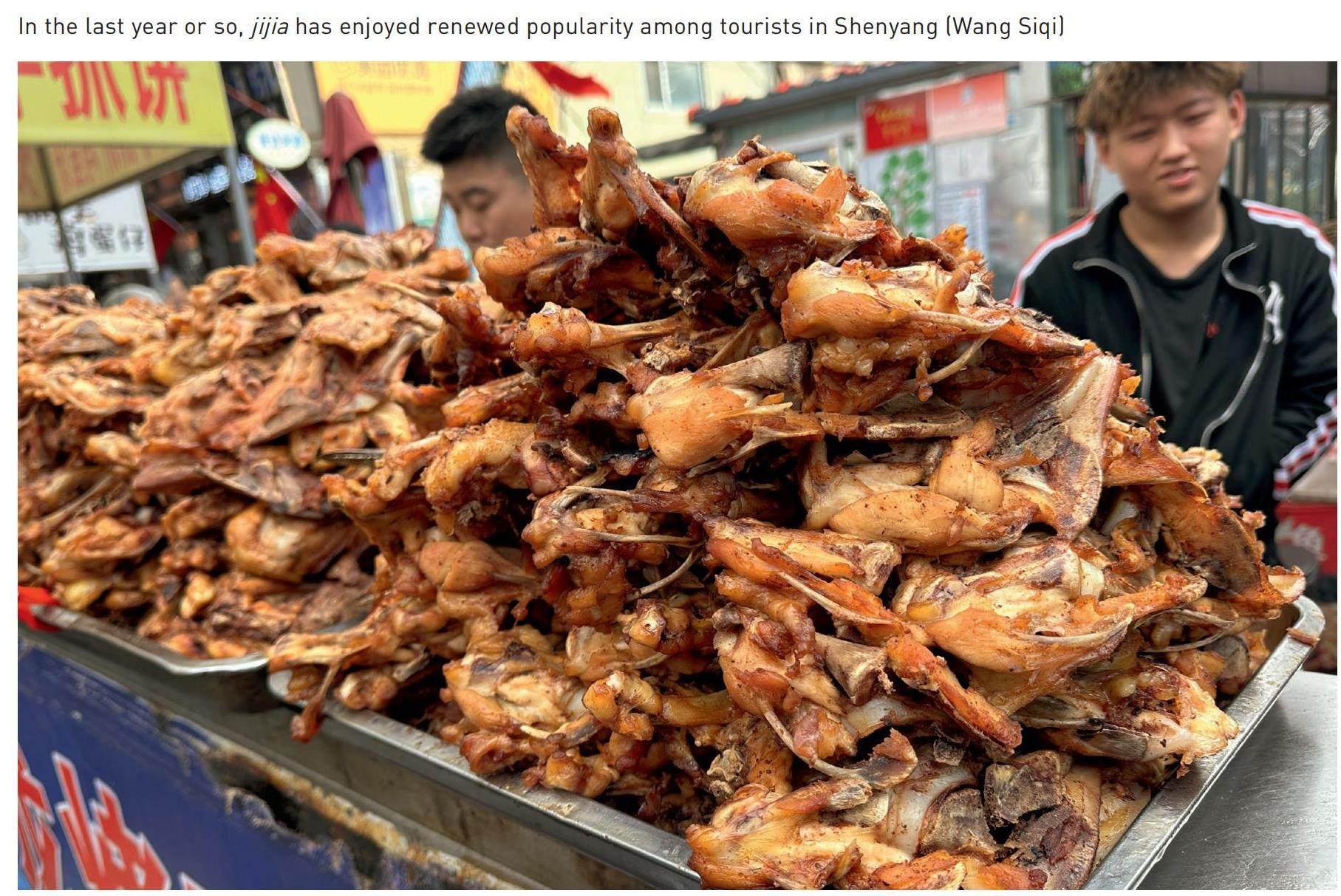
In the last year or so,?jijiahas enjoyed renewed popularity among tourists in Shenyang (Wang Siqi)
A street vendor preparing friedjijiain Shenyang (VCG)
Jijiasits alongside deep fried pork, goose stew, and barbecue as a staple Dongbei dish (Wang Siqi)
Jijia on sale at a sports event in Shenyang in 2021. The dish is becoming big business. (VCG)