Preparing to Fail
2023-12-16 09:16:52ByTanYunfei譚云飛
漢語世界 2023年4期
By Tan Yunfei (譚云飛)
Illustration by Wang Siqi (assisted by Midjourney)
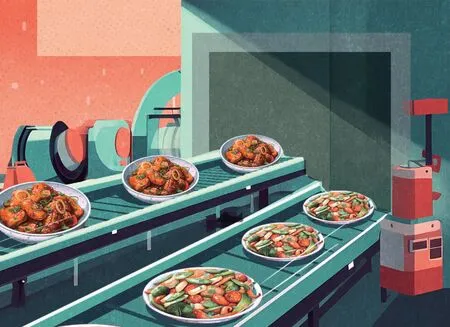
A school cafeteria scandal has consumers rethinking their growing demand for pre-prepared and ready-to-eat meals
預制菜:有人嫌棄,有人愛
Sick with Covid in early September,Zhao Dandan hoped to find comfort in takeout food.It only made her feel worse.The meat—salty, overseasoned, and excessively tender—tasted heavy and oily, Zhao says.
But to Zhao, the culprits weren’t unhygienic cooking methods or shoddy restaurants.She blames the “pre-prepared” dishes that have become ubiquitous in takeout food and fast food restaurants across China in recent years.
Angry and desperate, the 32-year-old Beijing resident posted on the Instagram-like app Xiaohongshu complaining that “pre-prepared food is flooding restaurants,” and “begging”for recommendations of restaurants that cook their food fresh to order.“No central kitchen!No just-heat-up and ready-to-eat meals!Only fresh ingredients, and freshly cooked meals!” she wrote.Despite Zhao having only a few dozen followers on the platform, her post received several hundred “likes,” and comments from users who exchanged methods for identifying pre-cooked food and discussed restaurants to avoid.
Zhao has joined a growing backlash against pre-prepared food, oryuzhicai(預制菜) in Chinese—dishes that are compiled in advance often by centralized kitchens that distribute the ready meals to restaurants that later cook, heatup, or put together the ingredients on-site for customers.The method promises convenience and value but is accused of being unhealthy,non-transparent, and even damaging to China’s traditional food culture.
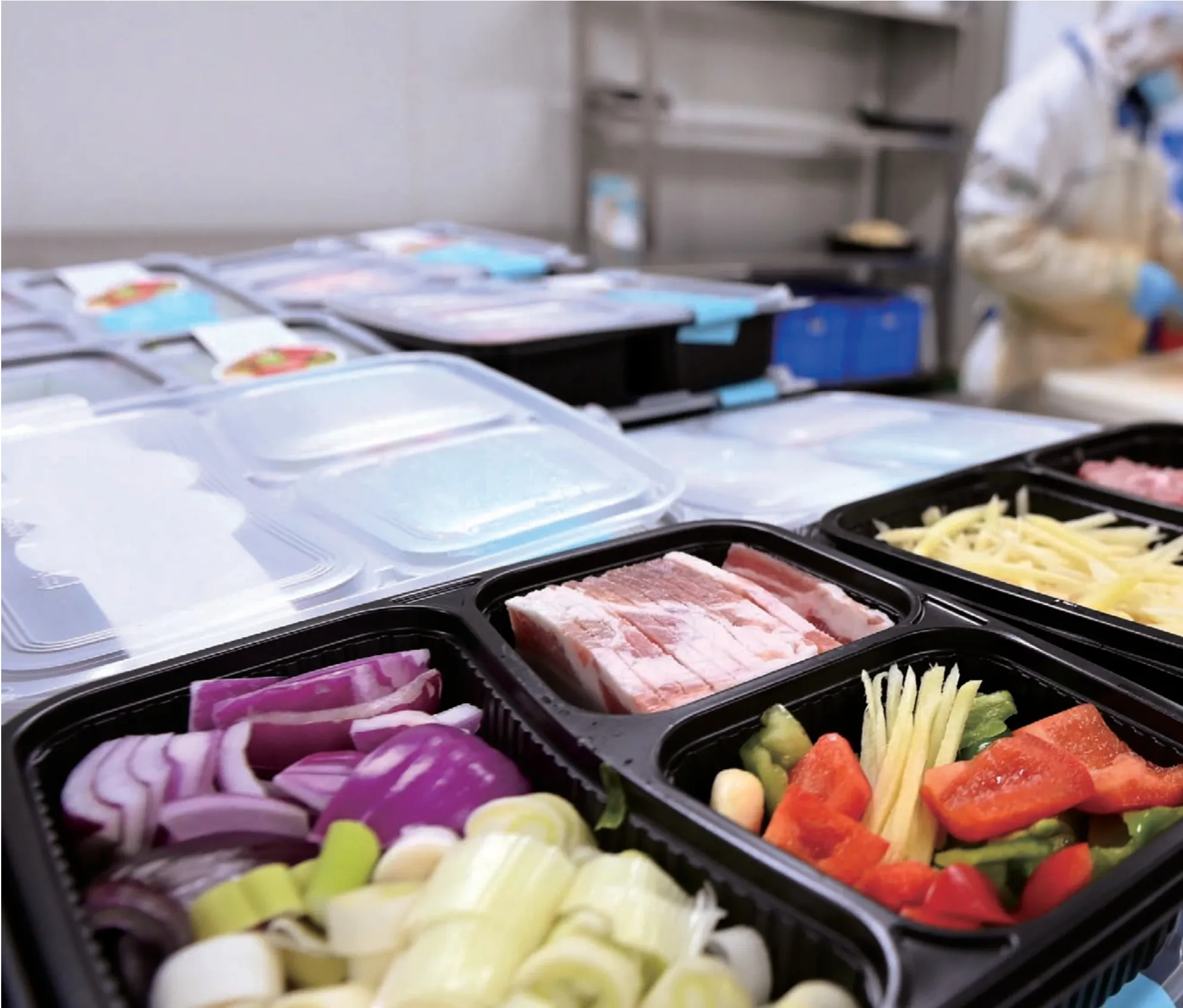
Assembly line workers in a centralized kitchen in Chongqing prepare meals for distribution to restaurants, which will then cook and serve the dishes to customers (VCG)
This September, parents of children at a primary school in Ganzhou, Jiangxi province,complained that pre-prepared meals served in the school’s cafeteria were beset by issues including late deliveries and low-quality, grimlooking food.They even accused the meals of giving students diarrhea.China Newsweek magazine reported that some parents had quit their jobs in order to make time to cook and send their children pack-lunches rather than let them eat the school meals.On the microblogging platform Weibo, a hashtag related to the incident received over 110 million views within 10 days.“The day of human feed may not be far off,” one Xiaohongshu user commented on the news.
Originating in the 1940s in the US with the application of freezing technology in food processing and preservation, pre-prepared food emerged in China in the early 1990s when fastfood chains like KFC and McDonald’s arrived in the country and created demand for such dishes from local manufacturers.
Though there is no officially recognized definition ofyuzhicai, in June 2022, the China Cuisine Association (CCA), an industry body, described it as “packaged finished dishes or semi-finished food” manufactured on standardized assembly lines.The CCA categorizesyuzhicaiinto four types: ready-to-eat food, ready-to-heat instant food that requires only hot water or re-heating, ready-to-cook food, and ready-to-use cleaned and prepared ingredients packed independently based on the quantity needed for a particular dish.
Over the last decade, pre-prepared food gained popularity in China with the development of cold chain logistics, the rise of food delivery services, and increasingly fast-paced urban life.The Covid-19 pandemic gave the industry extra impetus as strict control measures often confined people indoors and sometimes restricted the supply of fresh food and deliveries.Consultancy firm iiMedia valued the sector at around 345.9 billion yuan in 2021 and estimated that number would triple by 2026.Statistics from iiMedia also show that the number ofyuzhicai-related companies in China rose from 3,718 in 2012,to over 16,000 in 2020.By the end of 2022,there were over 62,000yuzhicaimanufacturers in the country, according to Qichacha, a Chinese business database.
Liu Hui from Guangzhou, Guangdong province, uses pre-prepared meals for convenience.As a full-time employee and a mother of a 7-year-old child, she often relies on meals of frozen buns and dumplings, or preprepared steak.“For time-consuming dishes we want to try, we often choose to buy premade ones from supermarkets or restaurants…This can save us time and diversify our diet,”Liu tells TWOC.
Pre-prepared meals and frozen foods for home consumption are common items on Chinese grocery lists these days.Dingdong, the country’s leading online grocer, sold 3 million preprepared meals in seven days during the Lunar New Year holiday in 2022, triple the amount sold during the same period in 2021.
However, restaurants accounted for 85 percent of the pre-prepared food industry in 2022 according to a report by the China Chain Store& Franchise Association and financial institution China Renaissance.The report also found that pre-prepared food made up 80 percent or more of the dishes of some well-known brands,including Real Kung Fu (which sells Chinese food), Yoshinoya (Japanese), and Xibei, a northwestern Chinese cuisine chain that has 344 stores nationwide.
Pre-made dishes are indispensable to many restaurants since they improve efficiency and standardization, says Duan Yongping, an executive chef at a chain restaurant branch with over 20 years of working experience in Beijing.“If we have the ingredients, such as pork ribs and chicken, cleaned, cut, and packed,the sauces mixed and handed over with some equipment and then delivered to stores for cooking, it saves a lot of space, labor, and time to process them at the store,” he tells TWOC.In contrast, “[Dishes] prepared by individuals may vary based on their own skills and even moods.”
But pre-prepared meals have gained a reputation for being unhealthy and even unsafe.“We cannot trace the date the meat and other ingredients were [produced and] bought for the pre-cooked dishes, even though there might be a date printed on the packaging…and we might not even know the expiration date of such dishes either,” Zhao argues.When Zhao interned at Yoshinoya 10 years ago, she witnessed its kitchen preparing orders simply by opening “packaged meals” before heating and plating—she has been suspicious of such methods since.
Her worries are not unfounded.An expert from the CCA told China Newsweek this September that, in theory, it’s easier to control and supervise the quality ofyuzhicaidue to its standardized and industrialized production, but in reality, there have been multiple cases of lowquality ingredients, non-standard production,unhygienic factory conditions, excessive salt and fat content in the food, and improper packaging leading to food going rotten.
As for taste, Duan thinks washing, cutting,and preparing ingredients and sauces ahead of time is fine since “The original flavor of the ingredients will be kept after the preliminary processing [in the central kitchen].But if the food is pre-cooked and consumed one or more days later, with all the additives and lowtemperature sterilization, its original flavor and taste are all destroyed and gone forever,”he explains.
Zhao now has breakfasts and lunches at her company’s canteen, whose meals are made to order, and normally cooks dinner for herself using fresh ingredients.“Yuzhicaiis fine if I’m busy with work and having fast food to save time and trouble.But it cannot satisfy me if I want more [than convenience],” she says.She asserts that the best meals haveguoqi(鍋氣)—the “smell of wok”—a term that refers to flavors supposedly only obtainable by using a wok over a fire and serving food immediately after cooking.Duan agrees, telling TWOC that many of the strong flavors most people associate with Chinese cuisine and remember from their childhood, when parents and grandparents cooked for them at home, are impossible without cooking ingredients fresh over high heat produced using firewood as fuel.
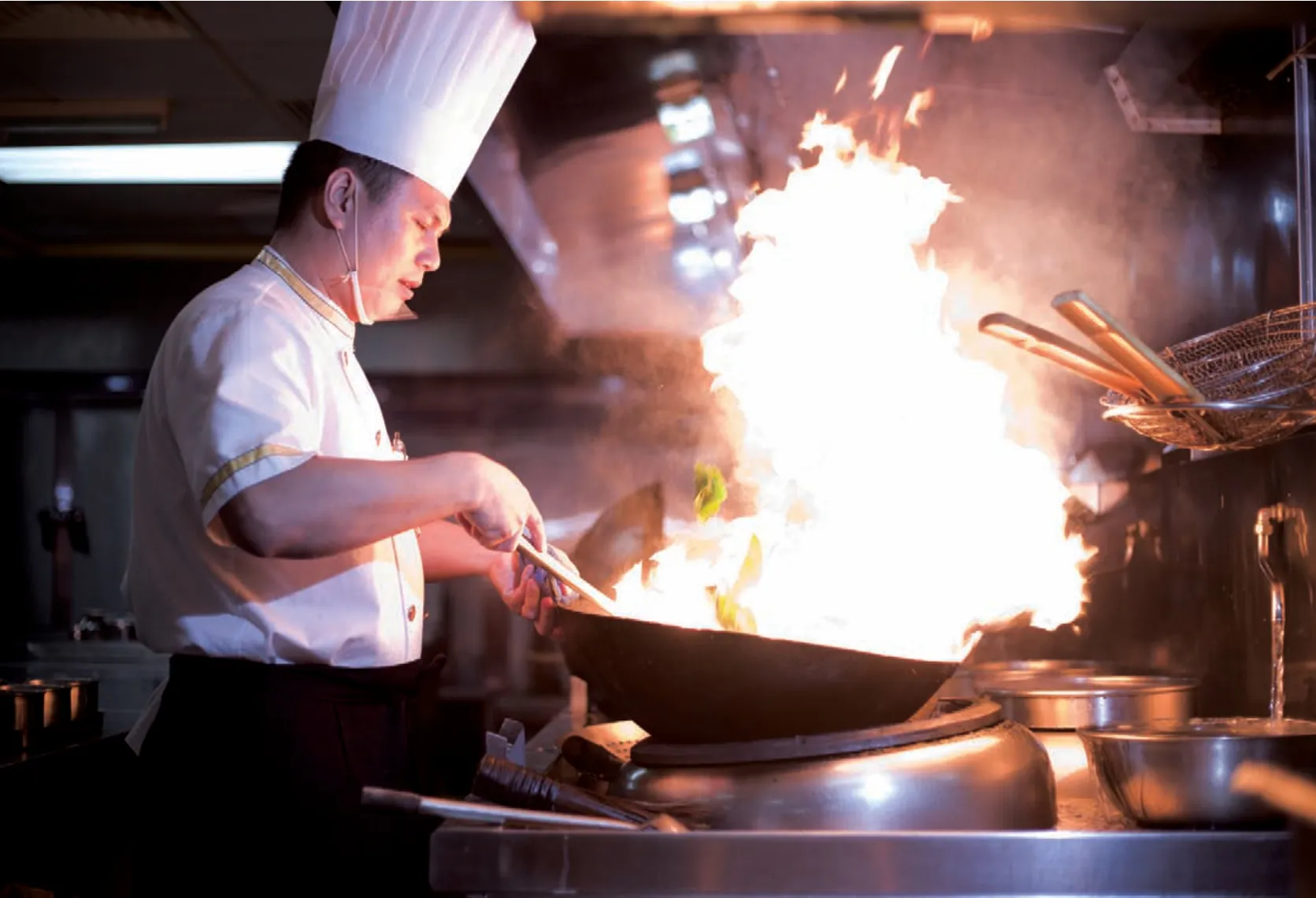
Guoqi (or “wok hei” in the Cantonese pronunciation)is considered a vital element of Chinese cuisine,particularly in southern parts of the country (VCG)
Butguoqiwas already on the wane before the recent controversy over pre-prepared dishes.Liu, unlike previous generations of mothers,combines raising a child with full-time work and believes cooking meals withguoqiis now a luxury one can only enjoy when they have spare time.
People who eat out face trouble distinguishing between restaurants that use pre-prepared techniques and ones that cook fresh.A survey this September by Jiangsu province’s Consumer Rights and Interests Protection Committee, a non-profit organization, showed that while 65.6 percent of those surveyed believed hotels and restaurants should inform them beforehand if they useyuzhicai, less than 25 percent recalled ever being told.
In one widely reported case from this June,a man paid a well-known hotel in Hangzhou,Zhejiang province, 5,988 yuan for a meal for 10 on his wedding day.However, one of his guests,a catering professional, guessed that seven out of the 16 dishes they ate were actually precooked and served after reheating.
Meanwhile, the growing prevalence of preprepared meals has impacted businesses that have stuck to cooking to order with fresh ingredients.Zhao says several small restaurants that were popular in her neighborhood in Beijing closed after losing business to lowercost fast food businesses, many of which use pre-prepared food.
Restaurant owners face a dilemma.Dong,who asked to be identified by her surname only, owns a Cantonese restaurant in Shanghai that does not serve pre-prepared dishes.The 32-year-old has found that customers want their food served increasingly quickly, and prefer cheap fast food chains for convenience or “internet famous” restaurant brands, which can also serve food rapidly to consumers who often order while in a long queue.Not many young people are willing to wait half an hour for the kitchen to cook their meal, unlike the elderly and families that make up most of Dong’s regular customers.
The flavors most people associate with Chinese cuisine and remember from their childhood are impossible without fresh ingredients cooked over high heat using firewood as fuel.
“We’ve been running at a loss since last November, especially this May...We may close down,” Dong says.She blames the pandemic for encouraging people to cut back on their consumption and believes that bigger competitors in the industry are using preprepared food to cut costs.
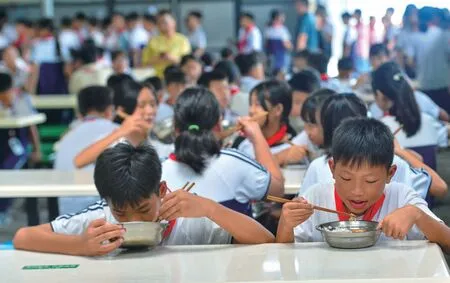
Parents across the country have expressed concern with the quality of food in school canteens (VCG)
However, the angry response to the Ganzhou primary school incident may slow the spread of pre-made meals.Local authorities in the city’s Rongjiang New district, where the school is located, vowed to stop using meals from centralized kitchens to supply kindergartens.Another incident in September saw netizens accuse a primary school in Wuxi, Jiangsu province, of serving students pre-prepared beef that had expired one year ago, based on the date on its package.Local authorities investigated and found that the employee who delivered the food uploaded images of the wrong packaging, but the incident prompted many alarmed parents and the wider public to call on authorities to formulate clear rules on the manufacturing of pre-prepared food and suspend such meals in schools.
Many schools and centralized food preparation facilities around the country have assured parents that the meals they offer students are freshly cooked each day.But an official from the central government’s Ministry of Education told Xinhua News Agency on September 22 that they don’t recommend pre-made meals in schools since there are no national standards, certification, tracking systems, and other mechanisms to supervise companies in the industry.
Nevertheless, with demand for cheap, speedy food unlikely to decline in China’s cities soon,pre-prepared meals will be on the menu for the foreseeable future.Dong believes that restaurants like hers that cook meals fresh will eventually go out of business.“Pre-prepared food is the norm for common folk…and only those who earn super high salaries can afford freshly cooked food [at restaurants]often,” she says.
That may open the door for another industry trend.Chef Duan tells TWOC that his employer is opening a new flagship store in Shenzhen, Guangdong province,which markets its meals as “cooked on-site as ordered” and where consumers can witness the kitchen preparing fresh, raw ingredients.Naturally, this restaurant charges higher prices than the ones using pre-prepared food, since it costs more to produce each meal.After all,“You have to make a profit,” Duan says.