
Physics design of 14 MeV neutron generator facility at the Institute for Plasma Research
2023-12-18 03:54:56SWAMIVALARAJPUTABHANGIRatneshKUMARSAXENAandRajeshKUMAR
Plasma Science and Technology 2023年12期
H L SWAMI ,S VALA,2 ,M RAJPUT ,M ABHANGI,2 ,Ratnesh KUMAR ,A SAXENA,2 and Rajesh KUMAR,2
1 Institute for Plasma Research,Gandhinagar 382428,India
2 Homi Bhabha National Institute,Training School Complex,Mumbai 400094,India
Abstract A high energy and high yield neutron source is a prime requirement for technological studies related to fusion reactor development.It provides a high-energy neutron environment for smallscale fusion reactor components research and testing such as tritium breeding,shielding,plasmafacing materials,reaction cross-section data study for fusion materials,etc.Along with ITER participation,the Institute of Plasma Research,India is developing an accelerator-based 14 MeV neutron source with a yield of 1012 n s-1.The design of the source is based on the deuteriumtritium fusion reaction.The deuterium beam is accelerated and delivered to the tritium target to generate 14 MeV neutrons.The deuterium beam energy and tritium availability in the tritium target are the base parameters of the accelerator-based neutron source design.The paper gives the physics design of the neutron generator facility of the Institute for Plasma Research.It covers the requirements,design basis,and physics parameters of the neutron generator.As per the analytical results generator can produce more than 1 × 10¹² n s-1 with a 110 keV D+ ion beam of 10 mA and a minimum 5 Ci tritium target.However,the detailed simulation with the more realistic conditions of deuteron ion interaction with the tritium titanium target shows that the desired results cannot be achieved with 110 keV.The safe limit of the ion energy should be 300 keV as per the simulation.At 300 keV ion energy and 20 mA current,it reaches 1.6 × 10¹² n s-1.Moreover,it was found that to ensure sufficiently long operation time a tritium target of more than 20 Ci should be used.The scope of the neutron source is not limited to the fusion reactor research studies,it is extended to other areas such as medical radioisotopes research,semiconductor devices irradiations,and many more.
Keywords: neutron generator,neutronics,accelerator,physics design,nuclear fusion
1.Introduction
Nuclear fusion-based power plants could prove to be a part of the clean energy mix of the future.In order to achieve nuclear fusion power plants,various research activities are under progress worldwide.One of them is ITER which aims to demonstrate the feasibility of magnetically confined plasma with parameters approaching those of a nuclear fusion power plant.It will be operated on a maximum fusion power of 500 MW [1,2].Further demonstration reactors for power plants are under design [3-7].Various design and material irradiation experiments are required to perform to support nuclear fusion power plants.People are developing neutron irradiation testing facilities to obtain high damage in structural materials similar to the ones in fusion reactors.The International Fusion Material Irradiation Facility (IFMIF) is among them which is under development [8,9].Various accelerator-based neutron sources are also developed or under development to support the various lab-scale experiments needed for the development of nuclear fusion power plants[10-12].
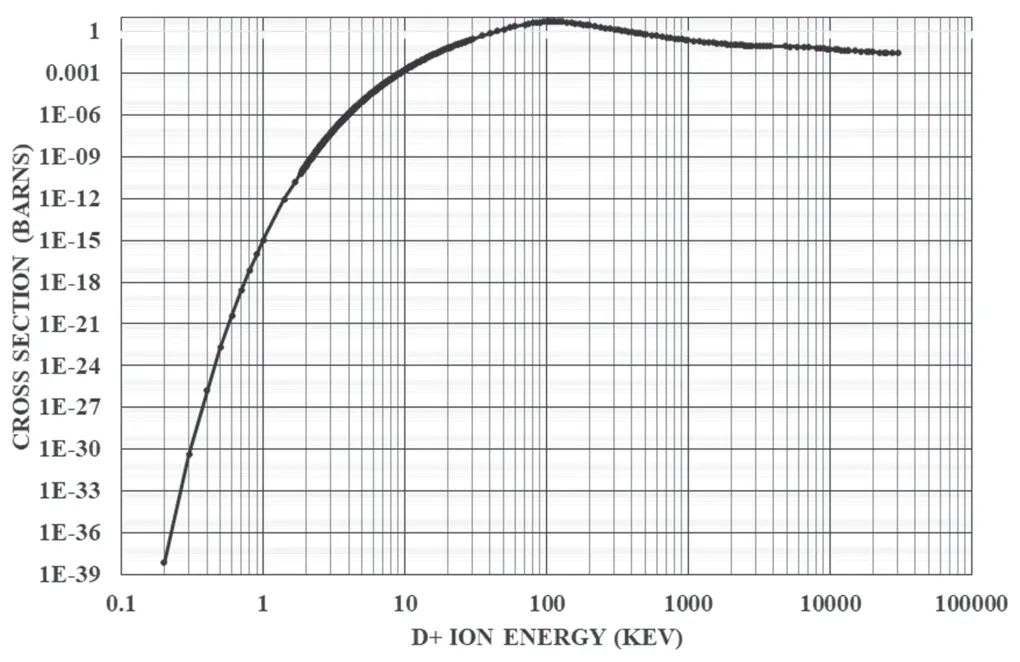
Figure1.D-T reaction cross-section (barns).
India is also developing a high-energy neutron generator based on deuterium and tritium fusion reaction at Institute for Plasma Research.It will fill the gap for testing mock-ups and open the door for small-scale experiments related to the ITER and fusion power plant [13-16].The neutron generator is an accelerator-based system where the deuterium ion is accelerated and focused on the tritium target.The use of such a source is very cost-effective,safe,and environmentally friendly.The generator is designed to produce 14 MeV neutrons with a 1012n s-1yield.It provides a maximum flux around 2×1010cm-2s-1just after the target flange (2 cm away from the tritium target) which opens the opportunity to test small-scale mock-up of the breeding blanket and other fusion components [17,18].
Moreover,it can be also utilized for other applications such as radioisotope generation for medical usage,semiconductor devices functionality checks in neutron environment,neutron diagnostic development,and various basic nuclear research experiments [17-25].
2.Design basis
In order to support the Indian fusion programme,a 14 MeV neutron generator facility with a neutron yield of 1×10¹²n s-1has been designed.The neutron source is designed using the deuterium beam interaction with a stationary tritium target.The cross-section of the deuterium-tritium (D-T) fusion reaction is shown in figure 1 [26].The cross-section is the highest at 108 keV deuteron energy as shown in figure 1.The initial simple calculation for the reaction rate occurrence has been done using the formula(Nt×σdt×φd)where Ntis the number of tritium atoms available at the target,σdtis the cross-section of D-T reaction and φdis the flux of deuterium beam.As per the calculation,a 5 Ci tritium target and 10 mA deuterium beam of 1.0 inch(2.54 cm)diameter can generate a neutron yield of around 2 × 10¹²n s-1.Therefore,the design parameter of the accelerator should be near the estimated value and the tritium target activity should be higher than the estimated value to get the effective neutron yield of 1 × 10¹²n s-1from the neutron generator for longer duration to compensate for the tritium losses.
Moreover,to get more realistic design parameters of a neutron generator,the physics simulation supports along with the component feasibility have to be accommodated in the physics model.
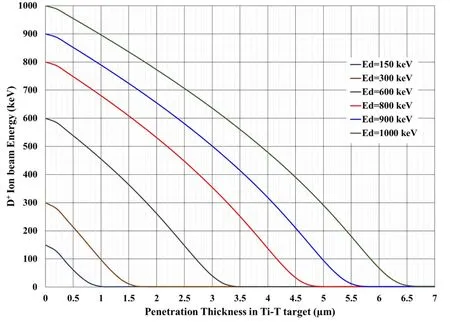
Figure2.Deuterium ion beam energy attenuation in Ti-T target.
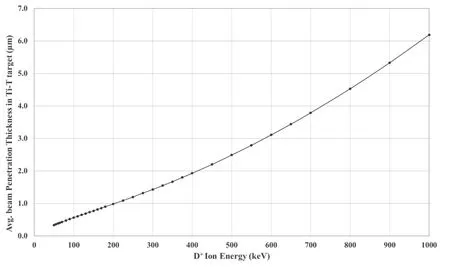
Figure3.Average penetration length in Ti-T target of D+ion beam.
Tritium is a low-mass element and is found in gas form.To make the tritium a solid target,it should be attached with an affinity of titanium metal.The vapour of tritium is deposited on the titanium coating [27].It will make the deuterium ion transport and interaction different from the simple analytical calculation due to the introduction of another element and taking into account the slowing down of ions in the target.Therefore,deuterium ion energy attenuation in the Ti-T target is simulated.Deuterium ion energy attenuation in the Ti-T target for various beam energy is shown in figure 2,it has been estimated using the code SRIM [28].
It is shown that a 300 keV deuterium ion beam energy is reduced to less than 50 keV after 1.2 μm thickness which reduces the effective utilization of the tritium target if the target has a higher thickness.As per the calculation,the target having the~24 Ci activity with 1.9 g cm-2surface density will have a thickness of around 4.2 μm.
As per the details of the Ti-T target,the effective thickness is around 4.2 μm which is about 3.5 times higher than the effectively utilized thickness for neutron generators.The average penetration length of D+ion energy in the Ti-T target is shown in figure 3 [28,29].It gives the effective utilization of the target tritium for neutron yield generation and the scope of further enhancement of the neutron yield.
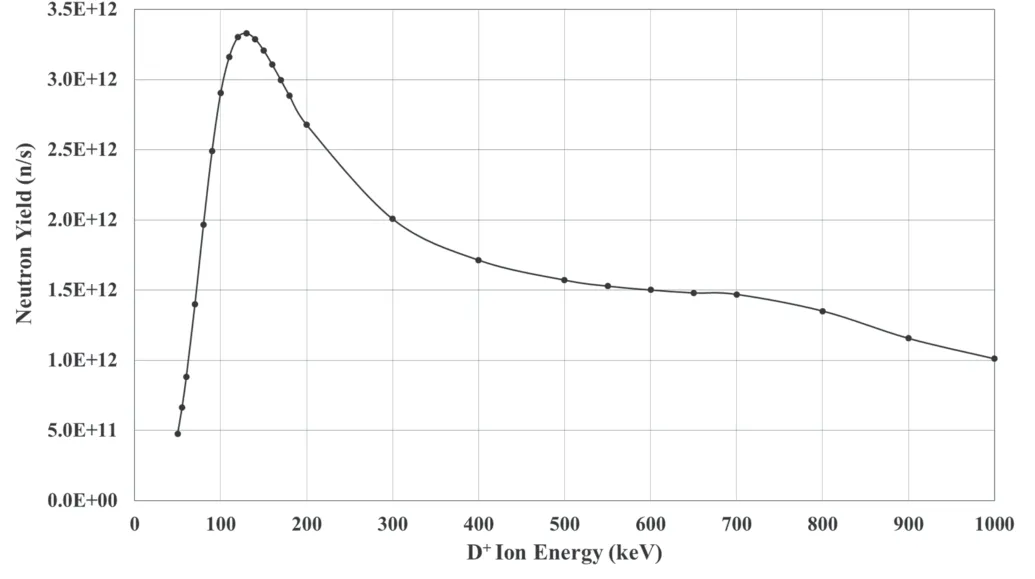
Figure4.Neutron yield estimation using analytical formula.
Following the yield estimation formula,the number of tritium atoms effectively available at the beam interaction area is~2.2×10²⁰tritium atoms.The tritium content in the target is considered constant throughout the thickness.
The flux of deuterium ions is around 2.0×1016cm-2s-1and the reaction cross-section at an energy of 108 keV is around 5 barn.The cross-section varies from 1 to 5 barns between 50 keV and 300 keV deuteron beam energy.The generated yield between 50 keV and 300 keV calculated using a simple formula (Nt× σdt× φd) is shown in figure 4.The calculation has been done for considering the mono-energetic beam inside the target,there is no beam energy attenuation considered.For the analytic calculation of yield,the average cross-section is assumed to be 2 barns considering the beam attenuation inside the target.The predicted maximum yield would be around 2.0 × 10¹²n s-1at the tritium target which gives a safe design limit of neutron generation 1×10¹²n s-1using the design parameters.
The analytical calculation has been also extended for various D+beam energies with effective availabilities of tritium target and reaction cross-section.The results are plotted in figure 4.It shows a peak around 130 keV with a yield higher than 3.3 × 10¹²n s-1.
The physics design parameter has been also simulated using the simulation tool NeuSDesc [30] to assess the analytical calculation.The same input parameters are given to the simulation tool NeuSDesc for estimating the yield.The yield calculated using the NeuSDesc is shown in figure 5.The code uses the ion energy attenuation and effective energy spectrum of the deuterium ion for calculating the neutron yield which is not considered in the analytical calculation.The simulation shows that the yield peaks at the energy of 800 keV.It can be understood from figure 3 which shows the effective utilization of the source that at energies above 800 keV the beam goes through the target resulting in lower neutron yield.The neutron yield at 110 keV D+ion energy is 4.8×10¹¹n s-1.It differs from analytical calculation due to the attenuation of ion energy in the titanium target.The maximum yield generated using the existing 300 keV and 20 mA beam is around 1.6 × 10¹²n s-1.It validates the design parameters chosen for the neutron generator.It gets a maximum at 800 keV around 2.5 × 10¹²n s-1.
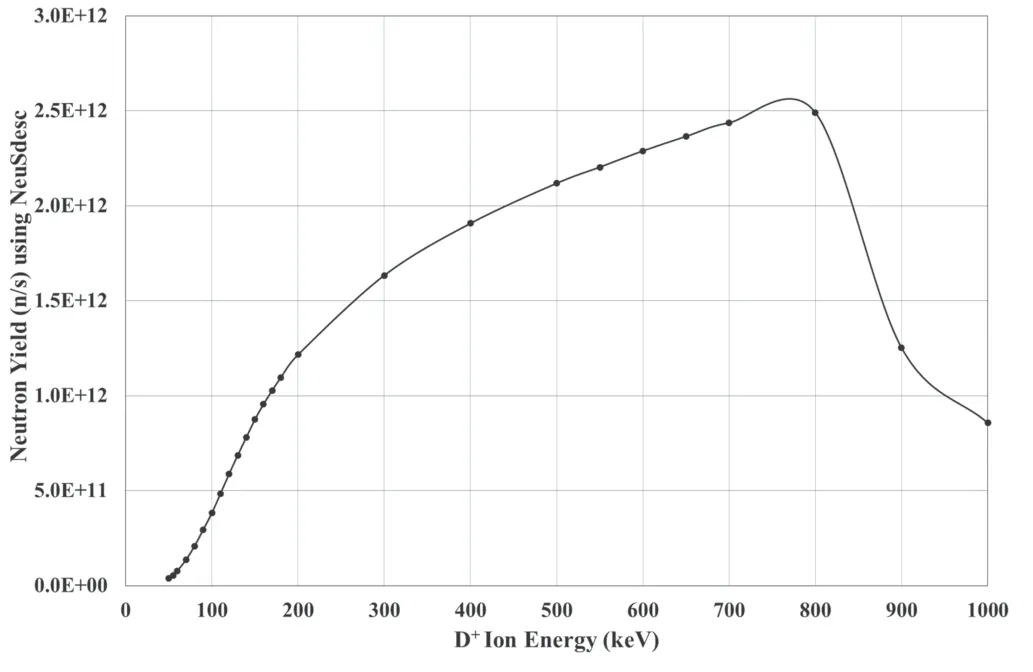
Figure5.Estimation of neutron yield using NeuSDesc software.
The neutron yield cannot be increased with fixed 300 keV ion energy in the accelerator due to a certain ion penetration limit in the solid target,and the flux of deuterium ions cannot be enhanced using a single beamline.It can be further enhanced by using multiple beamlines and multiple tritium targets.Ion energy acceleration above 300 keV can also enhance the yield as shown in figure 5 but it will increase the overall cost of the system.
The simulation of neutron yield variation with time has been also performed to assure the design parameter for the neutron generator.The results have been plotted in figure 6(a).It is shown that the D+beam of 300 keV energy can produce a stagnant yield with a longer time than 150 keV.After a period of relatively stable operation,we see a reduction in the neutron yield due to various processes such as outgassing,sputtering,diffusion,etc[31].The degradation of the target is estimated using the SDTrimSp code and the outcome is represented in figure 6(b).More details about the target degradation simulation are given in the [31].The tritium removal process is increased when we enhance the beam energy and beam current as shown in figure 6(b).The energy deposition also increases in the target with energy and current increase which leads to higher temperature.The nominal design parameters can be clearer from figures 6(a)and (b) for the solid tritium target concept-based neutron generator.The removal process is increasing drastically after 20 mA current and 400 keV ion energy.The target limitation towards the energy and current makes the design parameters for the neutron generator stronger.
3.Design parameters
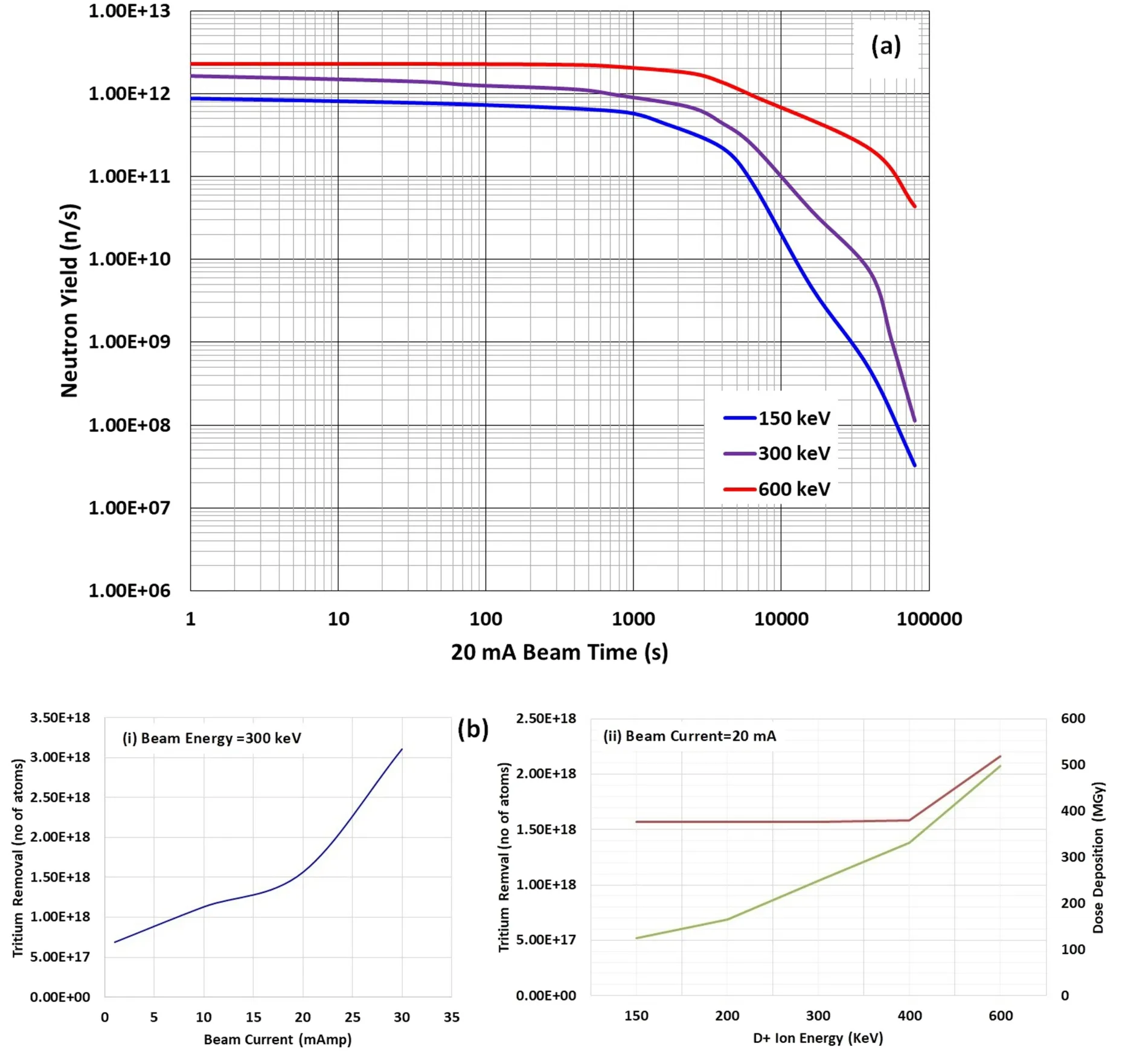
Figure6.(a) Neutron yield variation with accelerator operation time.(b) (i) Tritium removal with ion current variation and (ii) tritium removal and heat deposition with ion energy variation.
As per the analytical calculations and simulations,to generate the neutron yield of 1×10¹²n s-1,the beam energy required is around 300 keV and 20 mA,and target activity should be more than 20 Ci.It is also necessary to maintain the optimized parameter with respect to tritium losses from the target and target overheating due to D+ion bombardment.The higher energy of D+ion and current increase the tritium losses and heating of the target which requires enhancement in the safety aspect and overall cost of the system.The tritium losses and heating in the target are represented in figure 6(b).The basic components of the accelerator-based neutron source are deuterium ion source,Low Energy Beam Transport (LEBT)and Medium Energy Beam Transport (MEBT) lines,acceleration column,power supply,tritium target,and diagnostics for beam current and energy measurements.The ion beam will transport in a high vacuum system to avoid radiation losses and hazards.The basic design parameters decided for the neutron generator are given in table 1.A schematic diagram of the accelerator is shown in figure 7.
4.Neutron flux profile of neutron source
The neutron generator produces 14 MeV neutrons which will be emitted from the tritium target location all around.The distribution of neutrons around the tritium target is shown infigure 8.The neutron flux near the source is around~2 × 1010cm-2s-1which can be available for lab-scale experiments.The calculation has been done using MCNP and ENDF/B-VII cross-section library [32-34].The calculation has been also performed to analyze the tritium production using the neutron generator for fusion reactor blanket studies and achievable dpa in the structural materials.It is found that the tritium production in the 5 cm thick Li2TiO3is around 7 × 10¹¹tritons/cm3/day.The dpa in the India Specific Reduced Activation Ferritic Martensitic Steel (INRAFMS)can be expected around 0.3×10⁻³/year,it is estimated using the Norgett-Robinson-Torrens method.
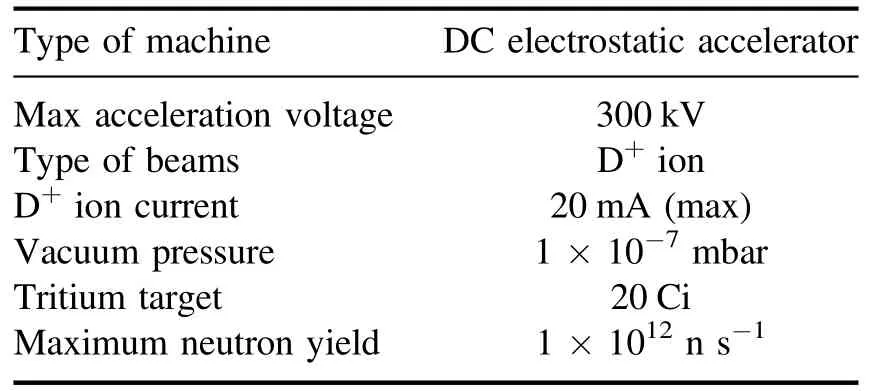
Table 1.Design parameters of accelerator-based 14 MeV neutron generator.
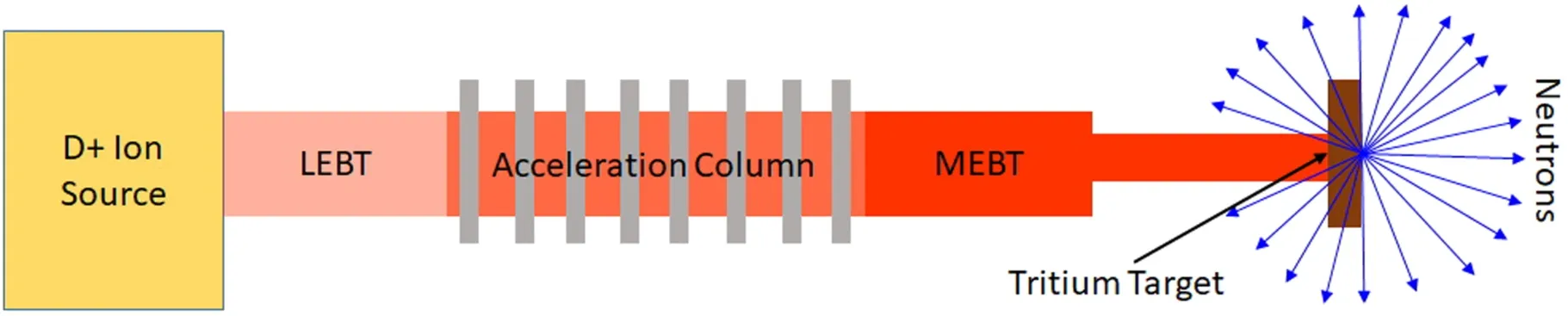
Figure7.Schematic diagram of accelerator-based 14 MeV neutron generator.

Figure8.Neutron flux near the tritium target for the nominal yield of 1 × 10¹² n s-1.
5.Radiation safety and design requirements
The neutron generator facility needs radiation safety assurance before development.The neutron generator facility should be well shielded to control the radiation exposure to the occupational workers as well as the general public.A systematic study of the shield and radiation exposure has been carried out to ensure radiation safety[32].The wall thickness of the biological shield is 1.8 m with additional local shields to limit the radiation exposures during operation.The maximum annual dose rate outside the lab in the area accessible to the general public is estimated to be around~70 μSv/year.The assessment shows that the dose rate is quite lower than the nuclear regulatory limit of 1.0 mSv/year for general public accessibility.Detailed results have been provided in the [32].
Moreover,to reduce the radiation exposure after operation a radio-activation analysis has been done for the entire laboratory [35].It is also necessary to prepare the operation and maintenance strategy for the neutron generator.The steel components of the generator are a major source of radioactive hazards and have a high contact dose rate immediately after irradiation.This means that some cooling time is required before they can be safely handled.However,no component shows significant radioactivity for a longer duration.The calculations of shielding and radio activation permit a safe and long-term operation of a neutron generator.
The deuterium ion hits the tritium target for neutron production.The ion hitting also initiates the sputtering and outgassing of tritium from the target which can come out in the laboratory environment and could pose risk to workers during the maintenance activities.In order to reduce such possibility a tritium handling and recovery system is required.The neutron generator also requires a reliable control system along with all safety interlocks to maintain the safe,and consistent operation of the neutron generator.
6.Brief engineering details of neutron generator components
The accelerator-based 14 MeV neutron source mainly consists of Electron Cyclotron Resonance Ion Source (ECRIS),Low Energy Beam Transport (LEBT) system,Electrostatic Acceleration,Medium Energy Beam Transport (MEBT)system,300 kV and 50 mA High Voltage Power Supply(HVPS),Beam diagnostic system (BDS),Switching Magnet(SM)and tritium target.The ECRIS,LEBT,and subsystem of LEBT,are kept on a high voltage deck,which is at 300 kV floating to the ground potential.The input electric power to the entire unit is provided through an isolation transformer.The MEBT,switching magnet,subsystem of MEBT,and target are at ground potential.LEBT system is to transport the 20 mA,40 keV deuterium beam from ECRIS to the entrance of the acceleration column.MEBT system is to transport the 300 keV beam from the acceleration column to the target assembly.Both LEBT and MEBT have a Beam Diagnostic System (BDS)which consists of a Faraday cup,beam profile monitor,and slit-type emittance scanner.The beam is first analyzed with the help of a 90-degree dipole magnet to exclude the unwanted particles from the beam.It avoids the extra heating of the target.The 40 keV beam is then focused on the acceleration column with the help of the Magnetic Quadruple Triplet.The beam is accelerated to 300 keV with the help of the acceleration column.The final 300 keV beam is then focused using another magnetic quadrupole triplet at the target.The target is kept at 1.8 m away from the semicircular magnet.The beam is guided using a switching magnet.Considering the ion beam heating and temperature rise in the titanium target,the target is designed with efficient cooling to avoid heating.The rotating target arrangement is mounted for more effective cooling and longer steady-state emission [13].Detailed design of the target is given by Sudhirsinh Vala et al [13].The engineering sketch of the neutron generator is shown in figure 9.The neutron generator is kept inside a shielded laboratory in order to ensure occupational radiation safety.To handle the tritium outgassing and sputtering during the accelerator operation,a tritium handling and recovery system is attached to the target assembly.This system collects tritium coming out from the target during the accelerator operation and is stored in the depleted uranium getter bed.
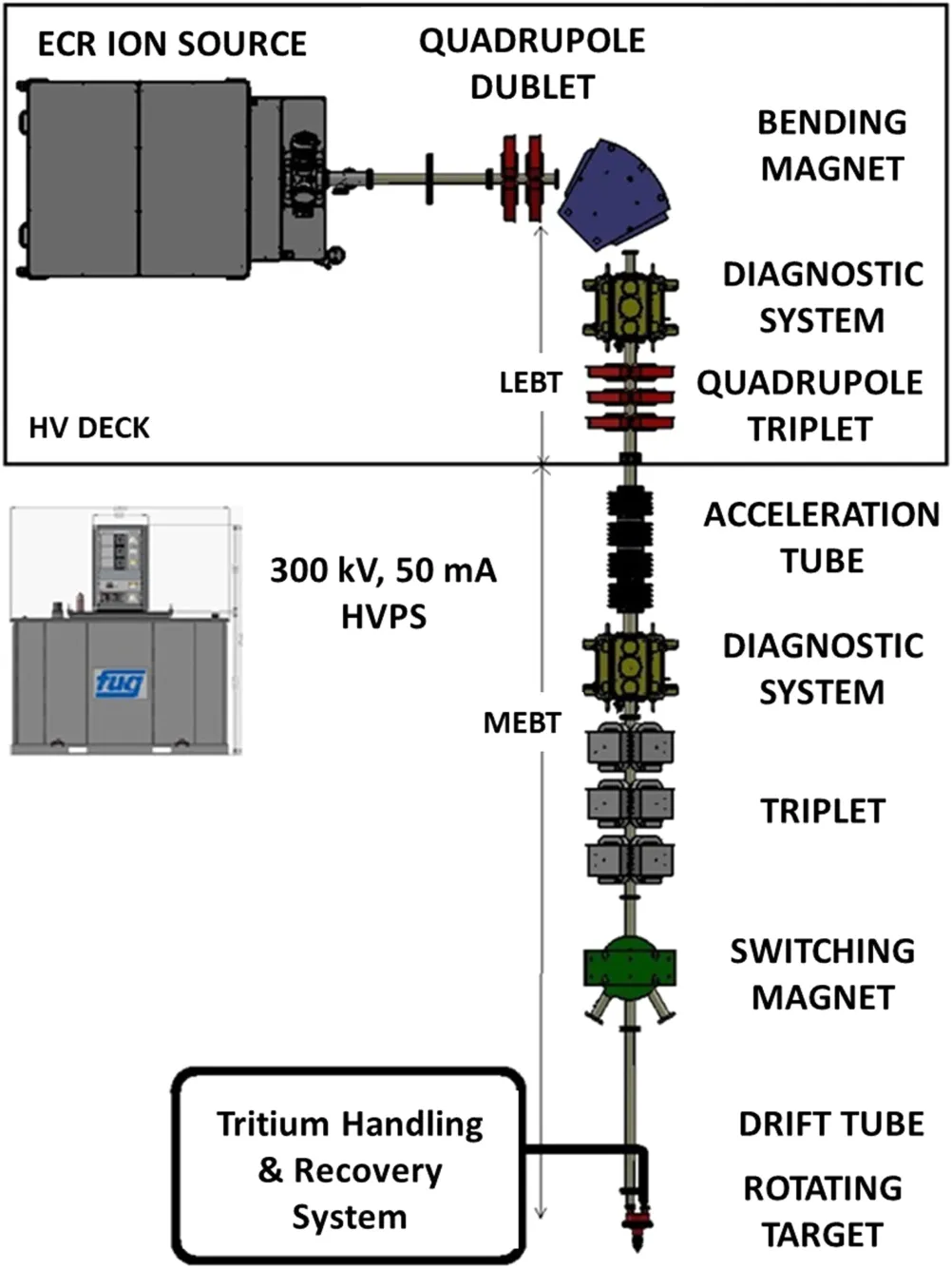
Figure9.Neutron generator and associated systems.
7.Conclusion
High energy and a high intense neutron source is a prerequisite for the fusion reactor-based power plant,and it provides the platform for qualification of the power plant components in an intense nuclear environment.The neutronic behaviour understanding of components and materials of the proposed nuclear fusion power plant is necessary for plant safety and lifetime perspective.The 14 MeV neutron generator based on an accelerator provides the intermediate answers for fusion power plant safety.An IFMIF kind of neutron irradiation facility is required to test the fusion power plant materials in the short term.
India is also developing a 14 MeV neutron generator with intensity 1012n s-1for the primary testing of fusion reactor components.It will be utilized in tritium breeding experiments,neutron shielding experiments,testing of radiation capabilities of vessel materials,neutron-induced reaction cross-section studies,diagnostic developments,etc It can be also utilized to develop neutron-induced medical radioisotopes.
The physics design and design basis of the neutron generator are assessed and reported here.The design parameters selected for the neutron generator are based on the basic calculation and it can achieve the neutron yield of 1 × 10¹²n s-1.The associated components are designed as per their technical requirements.Analytical calculations were performed to get some basic insight and were later expanded with more realistic simulations using NeuSDesc.
The simulation tool NeuSDesc is used to further assess the design calculations.The code uses the ion energy attenuation and effective energy spectrum of the deuterium ion to calculate the neutron yield.The simulation shows that the yield peaks at the energy of 800 keV which covers the effective utilization of the tritium source.The maximum yield generated using the existing 300 keV and 20 mA beam is~1.6 × 10¹²which validates the design expectations.The yield variation along with time is also assessed to get more confidence in the design parameters of the accelerator.It will also provide the stability of the yield with a Ti-T target.
It can be further enhanced by using the multiple D+ion beamlines and multiple tritium targets however,it will increase the overall cost of the system.
 Plasma Science and Technology2023年12期
- Plasma Science and Technology的其它文章
- Automatic recognition of defects in plasmafacing material using image processingtechnology
- Numerical simulation of ultrashort-pulse reflectometry (USPR) on EAST
- Matrix effect suppressing in the element analysis of soils by laser-induced breakdown spectroscopy with acoustic correction
- Minimum inhibitory but maximum nonhemolytic concentration of plasma-treated catheters coated with L.tridentata and O.vulgare extracts
- Plasma synthesis of various polymorphs of tungsten trioxide nanoparticles using gliding electric discharge in humid air:characterization and photocatalytic properties
- Effect of different process conditions on the physicochemical and antimicrobial properties of plasma-activated water