重建可持續(xù)未來(lái)
——相互理解如何強(qiáng)化建筑對(duì)2030年議程的貢獻(xiàn)
2024-01-27 19:38:18英格博格
世界建筑 2024年1期
關(guān)鍵詞:建筑
英格博格·豪
將6000 名從事可持續(xù)建筑工作的專業(yè)人士聚集到哥本哈根是一項(xiàng)不小的投入。這不僅需要大量時(shí)間來(lái)策劃,還要求每位參與者投入時(shí)間、精力和財(cái)力,更不用說(shuō)整個(gè)項(xiàng)目所帶來(lái)的巨大碳足跡。當(dāng)大會(huì)的主題是“2030 年議程”和“聯(lián)合國(guó)17 項(xiàng)可持續(xù)發(fā)展目標(biāo)”,并且題目為“可持續(xù)未來(lái)——不讓任何 一個(gè)人掉隊(duì)”時(shí),這或許顯得有些自相矛盾。在世界上最昂貴的城市之一舉辦這樣一場(chǎng)資源密集型的盛會(huì),如何促進(jìn)可持續(xù)發(fā)展呢?
這是一個(gè)公正而重要的問(wèn)題。尤其當(dāng)并非每個(gè)人都有能力參與時(shí),長(zhǎng)途飛行成為來(lái)參加大會(huì)的主要交通方式之一,而大會(huì)的參與費(fèi)用本身就大約是孟加拉國(guó)平均月薪的兩倍[1]。然而,或許可持續(xù)發(fā)展最為重要的關(guān)鍵因素是相互理解。這種理解不僅存在于來(lái)自不同地區(qū)、宗教、年齡、文化、經(jīng)濟(jì)收入群體或職業(yè)的人之間,還體現(xiàn)在人與自然之間,建筑、建成環(huán)境和自然環(huán)境之間。
這正是舉辦世界大會(huì)是有意義的原因,在實(shí)際的、面對(duì)面的會(huì)議中,相互理解才得以實(shí)現(xiàn)。當(dāng)我們與那些擁有完全不同經(jīng)歷和觀點(diǎn)的人交流和傾聽(tīng)時(shí),才能夠?qū)W到最多。大會(huì)上聚集了來(lái)自世界各地的充滿激情的人們,他們致力于聯(lián)合國(guó)的17 項(xiàng)可持續(xù)發(fā)展目標(biāo)。每位參與者都以自己多才多藝的實(shí)踐展示了建筑的潛力,并承諾會(huì)充分利用大會(huì),將新的聯(lián)系、新的知識(shí)和見(jiàn)解帶回本地社區(qū)。
1 相互理解的原型
Bringing 6000 people -all working with sustainable architecture -together in Copenhagen,Denmark,is expensive.It is time consuming to plan and it requires time,effort,and economy from everyone visiting -not to mention the massive carbon footprint of the entire project.It might seem counterproductive,when the topic of the congress is the 2030 Agenda and the UN 17 SDGs under the title "Sustainable Futures -Leave No One Behind".How can a resource consuming congress in one of the world's most expensive cities aim to strengthen sustainable development?
It is a fair and important question to ask.When far from everyone is able to attend,when long flights are amongst the primary means of transportation to the event,and when the entry fee itself is approximately twice the amount of the average monthly salary in countries like Bangladesh[1].But the key ingredient in sustainable development,perhaps the most important of all,is mutual understanding.Understanding between people from different regions,religions,ages,cultures,economic income groups or professions.Understanding between people and nature.Understanding between architecture,the built and the grown environment.
That is why it makes sense to host a World Congress.Because it is in the actual,physical meetings,that the mutual understanding grows.It is when we speak and listen to people completely different in experiences and perspectives from those we already know that we learn the most.
The congress was filled with passionate people from all over the world,dedicated to the UN 17 Sustainable Development Goals.Each demonstrating architecture's abilities to contribute through their own versatile practices,and each committed to make the most of their congress and bring home new connections,new knowledge,and insight to their local communities.
1 A Prototype for Mutual Understanding
In collaboration with the Danish philanthropic association,Realdania,we had the opportunity to add a signature project to the congress programme in the months leading up to the event.The project focused on sustainable rebuilding of communities struck by war,conflicts,natural disasters or ongoing change caused by the climate -and biodiversity crises.To do that,we invited a team of international profiles each committed to rebuilding in their own local communities,and asked them to work together(Fig.1).
Our team set out on a task to demonstrate,that rebuilding can be done in a way that is holistically sustainable,accessible,collaborative,locally anchored and,not the least,beautiful.Through online workshops we discussed and sketched,found references,inspiration,and new friendships.It all came together in the Rebuilding Pavilion at the World Congress,a structure built entirely of circular local materials,that were handed back to their owners or passed on after the threeday event.The heart of the pavilion was a courtyard -chosen by the team for its universal welcoming language and for its ability to create a calm space of conversation and contemplation in contrast to the often hectic congress atmosphere (Fig.2).
During the congress,the Rebuilding Pavilion hosted talks about difficult topics such as balancing the needs of people and respecting the planetary boundaries,how bad architecture unfortunately can be a good business or how international eco systems and resource chains affect our ability to rebuild.Every day the pavilion hosted tea ceremonies -to enhance the pavilion’s ambition of being a venue for meetings between people (Fig.3).
2 Rebuilding in Copenhagen
Copenhagen is a wonderful city and Denmark is a very privileged place to grow up,study,work and live.People bathing in the clean harbour water,taking their kids to school in cargo-bikes or hanging out with their friends in parks and urban spaces are well-known cover images from international architecture magazines and papers (Fig.4).But also here,in this celebrated liveability enclave,the global crises require that we rethink or rebuild our urban environment.Copenhagen face sea level rising,cloudbursts and temperature rise that pose new threats to the coastal city.Urbanisation and increased economic inequality result in changing demographics,meaning that the Copenhagen housing stock no longer match its residents.And the Danish people suffer increasingly from lifestyle diseases[2],while the percentage of young kids experiencing mental challenges are also on the rise[3].So,Copenhagen is in need of rebuilding too and the challenges calls for competencies beyond our own.
在與丹麥慈善協(xié)會(huì)Realdania 的合作中,我們?cè)跁?huì)前幾個(gè)月有機(jī)會(huì)為大會(huì)增加了一個(gè)標(biāo)志性的項(xiàng)目。該項(xiàng)目致力于為因戰(zhàn)爭(zhēng)、沖突、自然災(zāi)害或由氣候和生物多樣性危機(jī)引起的持續(xù)變化而受到影響的社區(qū)進(jìn)行可持續(xù)重建。為此,我們邀請(qǐng)了一些致力于在自己的本地社區(qū)進(jìn)行重建的專業(yè)人士,并將其組成國(guó)際團(tuán)隊(duì),請(qǐng)求他們進(jìn)行合作(圖1)。
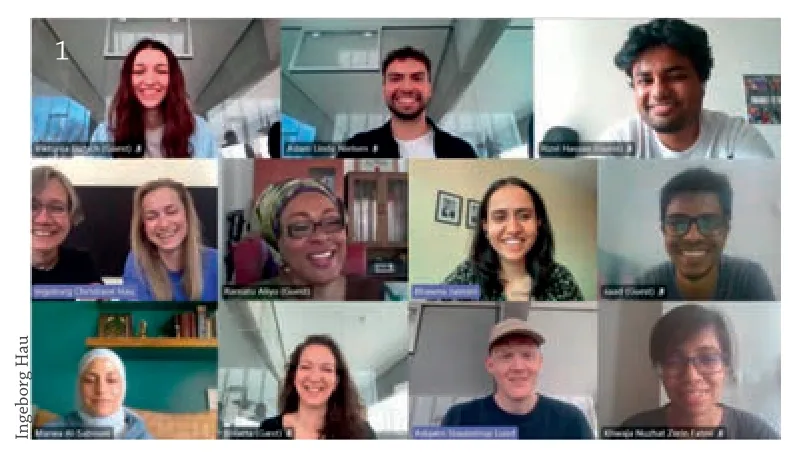
1 重建館團(tuán)隊(duì)線上設(shè)計(jì)工作坊 Picture of a online design workshop with the Rebuilding Pavilion team
我們的團(tuán)隊(duì)著手展開(kāi)一項(xiàng)任務(wù),旨在彰顯重建可以以全方位可持續(xù)、滿足無(wú)障礙需求、基于合作、立足當(dāng)?shù)厍页錆M美感的方式進(jìn)行。通過(guò)在線研討會(huì),我們進(jìn)行了深入的討論,勾畫出初步構(gòu)想,搜尋了大量參考資料、靈感,并建立了新的友誼。所有這些努力最終凝聚成世界建筑師大會(huì)上的“重建館”,該結(jié)構(gòu)完全采用了本地可循環(huán)利用的材料,3 天的活動(dòng)結(jié)束后,這些材料將被歸還給它們的所有者或傳遞給其他人。展館的核心是一個(gè)庭院,其具有通用的歡迎語(yǔ)言,而且能夠在大會(huì)通常緊張的氛圍中,創(chuàng)造出一個(gè)寧?kù)o的對(duì)話和思考空間(圖2)。
在大會(huì)期間,“重建館”組織了一系列針對(duì)復(fù)雜議題的討論,例如如何平衡人們的需求與尊重地球邊界,一些糟糕的建筑如何不幸地成為良好商業(yè)案例,以及國(guó)際生態(tài)系統(tǒng)和資源鏈如何影響我們的重建能力。展館每天還主持茶道儀式,以增強(qiáng)其作為人們相遇場(chǎng)所的愿景(圖3)。
2 重建哥本哈根
哥本哈根是一個(gè)迷人的城市,丹麥也是一個(gè)非常宜居的地方,適合成長(zhǎng)、學(xué)習(xí)、工作和生活,在清澈的港灣中游泳、與朋友在公園和城市空間閑逛,都是國(guó)際建筑媒體上常見(jiàn)的畫面(圖4)。然而,即使在這個(gè)備受贊譽(yù)的宜居勝地,全球危機(jī)也促使我們重新思考,重建我們的城市環(huán)境。哥本哈根正在面臨海平面上升、暴雨和氣溫上升等新的威脅,這對(duì)這座沿海城市構(gòu)成了挑戰(zhàn)。城市化進(jìn)程推進(jìn)和經(jīng)濟(jì)不平等的加劇導(dǎo)致人口結(jié)構(gòu)發(fā)生變化,這意味著哥本哈根的住房存量不再適應(yīng)其居民。此外,越來(lái)越多丹麥居民遭受有關(guān)于生活方式疾病的困擾[2],同時(shí),存在心理問(wèn)題的幼兒比例也在上升[3]。因此,哥本哈根也需要“重建”,而這些挑戰(zhàn)需要我們超越自身的能力。

4 人們?cè)诟蹫持羞M(jìn)行游泳等活動(dòng) From Copenhagen image - harbour bath eg.
3 共通之處與個(gè)體差異
“重建館”項(xiàng)目希望通過(guò)相互理解來(lái)促進(jìn)可持續(xù)發(fā)展,讓從未謀面、面臨完全不同挑戰(zhàn)的人找到共通之處。來(lái)自地球南端和北端,具有不同文化、宗教和年齡背景的人們平等地相聚在一起,共同為彼此的社區(qū)走向可持續(xù)的未來(lái)而努力。
從這個(gè)角度來(lái)看,“重建館”可以說(shuō)體現(xiàn)了大會(huì)的宗旨,即將擁有不同觀點(diǎn)的人聚集在一起,使他們充滿啟發(fā)和鼓舞地離開(kāi)。畢竟,如果那些直接受到災(zāi)害影響的人們?cè)敢馔度霑r(shí)間,齊心協(xié)力共同發(fā)展新的、互惠互利的事物,那么融入同情心和關(guān)懷的合作的力量必然是巨大的(圖5)。
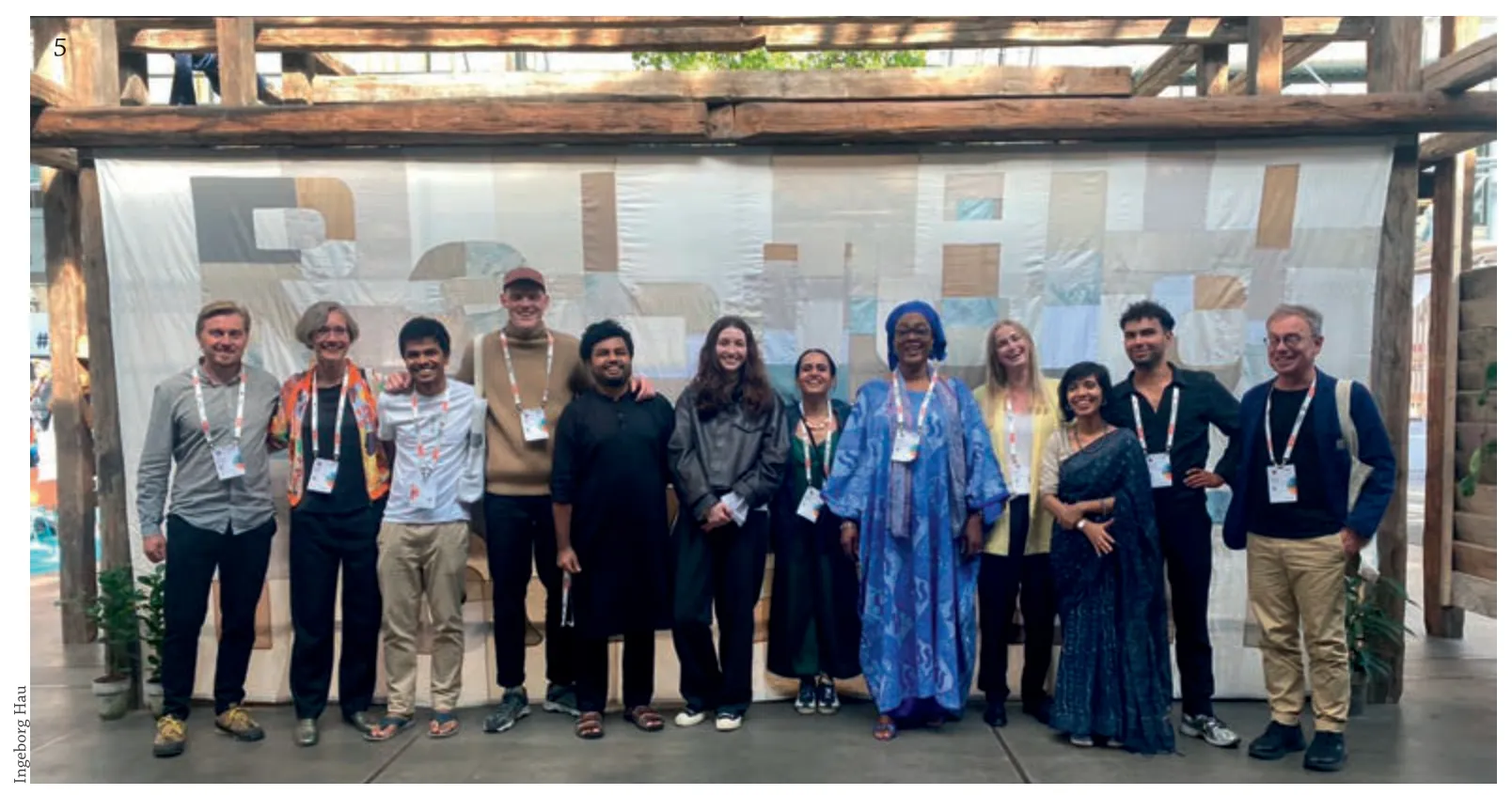
5 人們?cè)谥亟^橫幅前的合影 Group photo in front of Rebuilding banner
盡管哥本哈根的世界建筑大會(huì)已經(jīng)結(jié)束,參會(huì)者已經(jīng)回到他們的家鄉(xiāng),物理上的“重建館”也已拆除,但來(lái)自世界各地參與者之間的相互理解卻在不斷加深。這種理解演變成新的研究、項(xiàng)目和伙伴關(guān)系,并期望在國(guó)際建筑師協(xié)會(huì)2029 北京世界建筑師大會(huì)上實(shí)現(xiàn)我們共同的使命,即回歸均衡,從而建立更牢固、更廣泛的全球友誼。
3 Common Ground and Individual Differences
The Rebuilding Pavilion project investigates mutual understanding as a means to generate sustainable development.To get people who have never met and who deal with very different challenges to find common ground.People from the Global South and the Global North,of various cultures,religions,and ages,to join their forces,equally,to help each other's communities move towards sustainable futures.
In that sense,one could argue that the Rebuilding Pavilion embodies the purpose of the congress.To bring people with different perspectives together and have them leave enlightened and empowered.After all -if people directly affected by disaster themselves are willing to invest their time and come together to develop something new and mutually beneficial,there must be tremendous power in collaborating with compassion and care (Fig.5).
Even though the UIA World Congress of Architects in Copenhagen is over,the visitors went back home,and the physical Rebuilding Pavilion has been taken down -the mutual understanding between the participants from all over the world keeps growing and growing.It grows into new research,projects and partnerships and generates even stronger,wider reaching global friendships on our common mission to bring back balance at the UIA World Congress of Architects in Beijing,2029.
猜你喜歡
北方建筑(2021年6期)2021-12-31 03:03:54
文苑(2020年10期)2020-11-07 03:15:36
現(xiàn)代裝飾(2020年6期)2020-06-22 08:43:12
現(xiàn)代裝飾(2020年4期)2020-05-20 08:55:08
攝影之友(影像視覺(jué))(2019年2期)2019-03-05 08:27:16
藝術(shù)家(2017年3期)2018-01-26 08:54:49
文學(xué)自由談(2016年3期)2016-06-15 13:01:16
福建農(nóng)業(yè)科技(2016年10期)2016-03-07 09:46:49
少兒科學(xué)周刊·兒童版(2015年6期)2015-11-24 03:49:38
中國(guó)工程咨詢(2015年4期)2015-02-14 03:49:56