何謂絕對可持續性?
2024-01-27 19:38:22安妮貝姆
世界建筑 2024年1期
安妮·貝姆
“絕對可持續性”的概念最近才由丹麥的環境科學家們明確定義,因此在國際學術界、公共機構和政策層面的同行中它可能還并不被熟知1)。當人們初次接觸這一概念時,可能會覺得它對可持續性的理解帶有簡單教條或激進的傾向。恰恰相反,“絕對可持續性”是一個建立在氣候和環境科學領域的理論之上的系統性綜合概念,它涉及到“地球邊界”這個描述地球所能承受的人類活動影響之極限的理論框架2)。
“地球邊界”為地球界定了9 個生態邊界,提供了一系列方法衡量人類的生產和活動對氣候和環境的影響,以及大自然承載能力的極限是多少。換句話說,對地球上的每個人而言,都存在一個邊界,它決定了一個人在食物、住房、交通、娛樂等方面消耗地球資源的上限。從這個意義上講,用于界定地球邊界的各種因素及它們之間的聯系,與聯合國可持續發展目標的整體理念是息息相關的,二者都涉及到如何應對多種全球性挑戰(圖1)[1-3]。
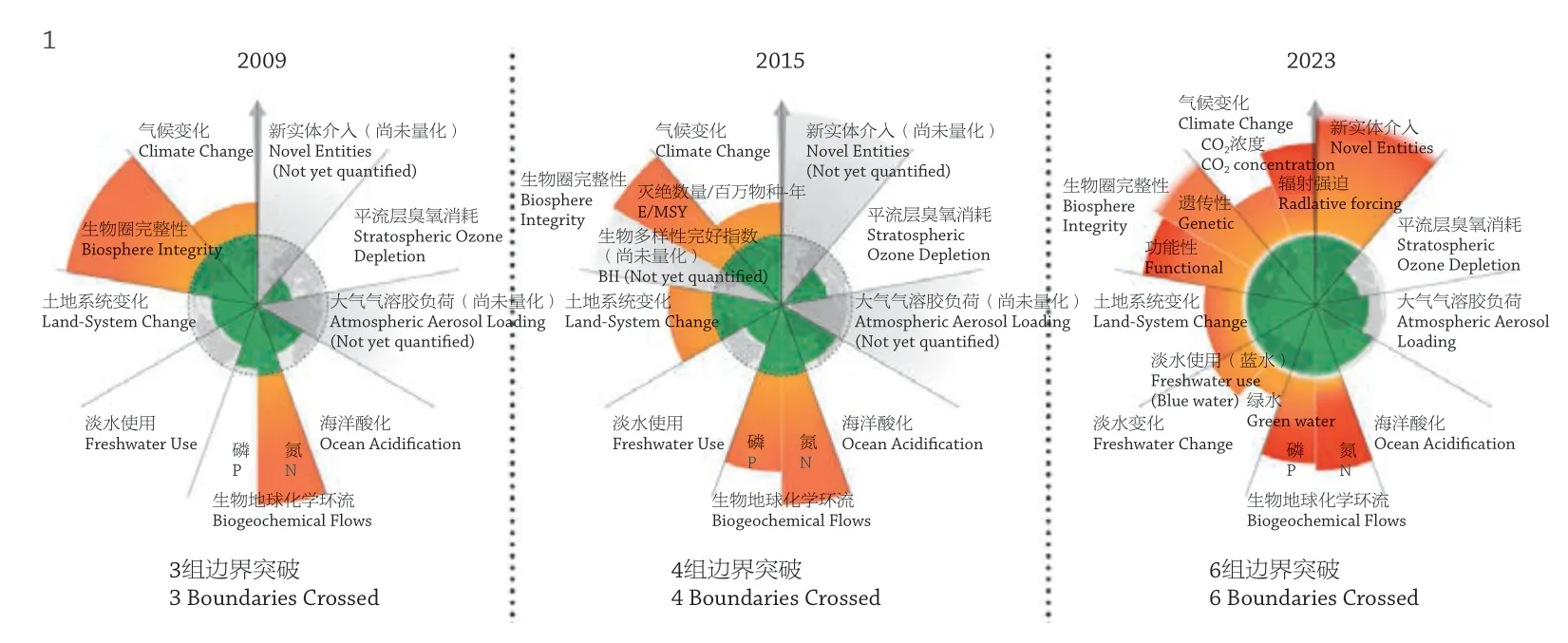
1 地球邊界框架,來源:由Azote創意機構為斯德哥爾摩大學斯德哥爾摩韌性中心繪制,基于參考文獻[1-3] Planetary boundaries,Credit: Azote for Stockholm Resilience Centre,Stockholm University.Based on References [1-3]
目前,丹麥技術大學絕對可持續性研究中心的學者正在研究如何在不對氣候和環境造成較大影響的情況下,計算人類對地球資源的消耗量[4]。但是,絕對可持續性的定義明確后,它將對建筑和施工造成哪些影響,仍是一個微妙的問題,因為根據地球邊界的理念來建造,將涉及到對建成環境的創造、維護和改進等多方面的實踐和文化需要做出改變。
丹麥皇家建筑藝術學院工業化建筑中心從2017 年起一直進行相關實驗,基于絕對可持續性原則、以真實尺度來測試建筑材料和施工過程。這些真實尺度的建造實驗,旨在以少量材料和材料碎片來實現碳中和。此外,可拆卸設計等材料也是一項主要的設計標準。
在一個研究項目中,我們開發了一套基于粘土、木材和秸稈的“絕對可持續的建造方式”。在這一目標下,減少材料消耗、增加回收和再利用是評估建筑對環境影響的核心要素。我們的建造實踐基于以下原則:
-優先使用可再生的生物基材料,而不是稀有材料、礦物材料及不可再生的材料和資源;
-使用綠色能源,減少CO2排放;
-確保資源不會被浪費,而是可以被納入新的技術和生物循環(以實現再利用和再循環);
-避免建筑材料、建筑物和施工過程產生對環境有害的物質;
-將社會、環境和文化因素與建造結合,這些因素在建筑行業的綠色轉型中無疑與經濟和技術因素同等重要。
我們在這個研究項目中學到的經驗是,按照循環原則和絕對可持續原則進行建造,意味著我們對材料、對建造方式,以及對房屋的供給、生命周期和回收再利用,都必須擁有與目前完全不同的思考方式。
The concept of absolute sustainability is recently defined amongst researchers in environmental science in Denmark and may not be widely known yet amongst international peers in academia,public authorities or at policy level1).Also,when first being presented to the concept one may think it alludes to a simple dogmatic or radical understanding of sustainability.On the contrary,it is a systemic integrating concept based on theories linked to the fields of climate and environmental science that refer to the concept of Planetary Boundaries,which is a framework to describe limits to the impacts of human activities on the Earth system2).
The concept of planetary boundaries defines a set of nine planetary boundaries.It includes a series of methodologies measuring nature's tolerance limits of how much we can allow our products and actions to impact the climate and the environment.In other words,each individual on Earth has a scope for manoeuvre that defines how much that individual can afford to consume the planet's resources on food,shelter,transport,entertainment,etc.In that sense,the spectrum of dimensions involved and their connectivity which define the planetary boundaries links well to the overall idea of the UN SDG's that also refer to diverse global challenges (Fig.1)[1-3].
At the centre of Absolute Sustainability at DTU (The Danish Technical University) researchers are presently working on how to calculate consumption without it putting a critical strain on the climate and the environment[4].But examining the implications of defining absolute sustainability in regard of construction and architecture is a delicate matter,since the idea of acting according to the planetary boundaries also interfere with the practices and cultures linked to creating,maintaining,and facilitating our built environment.
In CINARK -Centre for Industrialised Architecture at the Royal Danish Academy,we have,since 2017,experimented with testing materials and constructions in full-scale that are based absolutely sustainable principles.The full-sale construction experiments are meant to be CO2neutral,based on few materials and pure material fractions.Also,design for disassembly (DfD) have been applied as primary design criteria.
So,for one research project we developed "absolutely sustainable constructions" based on Clay,Wood and Straw.In this case reduction of material consumption,recycling,and reuse were at the centre of assessing the environmental impact up against the architectural outcome.In sum,it pointed to construction practices based on the following principles:
-prioritise renewable,bio-based materials over rare,mineral,and non-renewable materials and resources.
-use of green energy sources to reduce CO2emissions.
-ensure that resources are not wasted but can be included in new technological and biological circuits (reuse and recycling).
-avoid environmentally harmful substances in materials,constructions,and construction processes.
-incorporate the social,contextual,and cultural dimensions,which are undoubtedly of equally great importance as economic and technical aspects in the green transition of the building industry.
Lessons learned were that building with circular principles coupled with absolute sustainability implies that we must think of materials,constructions,and buildings' provision,life,and their afterlife fundamentally different than we do today.
猜你喜歡
北方建筑(2021年6期)2021-12-31 03:03:54
中老年保健(2021年12期)2021-08-24 03:30:40
中國傳媒大學學報(自然科學版)(2021年1期)2021-06-09 08:43:00
文苑(2020年10期)2020-11-07 03:15:36
現代裝飾(2020年6期)2020-06-22 08:43:12
現代裝飾(2020年4期)2020-05-20 08:55:08
中國生殖健康(2020年6期)2020-02-01 06:28:50
新世紀智能(英語備考)(2019年12期)2020-01-13 06:07:18
中國生殖健康(2019年11期)2019-01-07 01:28:02
中國生殖健康(2018年6期)2018-11-06 07:09:28