直面英國糧食危機
——自給自足城市的韌性與食品安全設計探索
2024-01-27 19:38:34金佳怡音譯朱明宇音譯
世界建筑 2024年1期
金佳怡(音譯),朱明宇(音譯)
本研究聚焦于人口的增加以及人們在人口稠密的城市地區的集聚,對復雜和不穩定的食品供應系統提出了更高的要求。研究作者認為,這些系統必須適應并展現出韌性,這不僅僅是為了應對自然現象,如氣候變化或新型冠狀病毒疫情的影響,還要迎接社會經濟和地緣政治干擾帶來的挑戰。
越來越多的國家日益依賴外部資源,這不僅會將環境影響轉嫁給其他國家,而且加劇了全球生產和分配實踐中的重大分歧。本研究主張采取更為道德、更可持續和更注重規劃的方法來應對食品危機。為實現這一目標,本研究深入探討了設計策略,致力于推動更可持續的農業城市主義,并從3 個經典城市烏托邦中汲取靈感:弗蘭克·勞埃德·賴特的“廣畝城市”,黑川紀章的“農業城市”以及MVRDV 的“豬城”。
通過對這些案例研究的審視,我們探索了一個以構建韌性、健康公平和食品安全為重點的自給自足城市的愿景。這涉及以民主方式對鄉村空間進行系統性的擴張,提供了以前在城市環境中稀缺或難以實現的眾多選擇。該項目位于英格蘭東北部的布萊斯港,其在北海的戰略性位置確保了它能夠很好地支持英國東海岸的風力發電場開發。該設計旨在應對人口增長、消費增加以及農業用地和食物來源減少所帶來的日益嚴峻的挑戰。由此產生的城市農業系統精心設計了一個模型,將廢物流和未充分利用的空間納入其中,并整合了清潔能源、海岸和當地資源管理的創新方法。該系統積極融合了自給自足的各種要素,為一個以人口密集、多層次結構為特征的農場網絡鋪平了道路。
本質上,該研究不僅指出了與食品安全相關的緊迫問題,還提出了一個前瞻性的解決方案,其變革潛力超越了表面的可能性。通過倡導城市規劃和農業實踐的范式轉變,本文深入探討了正在進行的17 項可持續發展目標(SDG)中的第2、3 和11 項。

1 廣畝城市規劃方案,弗蘭克·勞埃德·賴特,1935年 Broadacre City masterplan,Frank Lloyd Wright,1935

2 農業城市,黑川紀章,1960年 Agricultural City,Kisho Kurokawa,1960

3 豬城,MVRDV,2001年 Pig City,MVRDV,2001
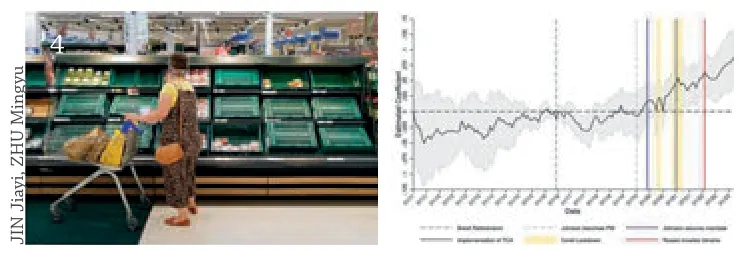
4 2011-2023年間,英國食品貨架空空如也,食品價格飛漲,這與社會、經濟和地緣政治的混亂有關 Empty food aisles in the UK and soaring food prices between 2011-2023 related to social,economic and geopolitical disruptions

5 設想中布萊斯港的自給自足城市 The envisioned Self-Sustaining City situated in Blyth Harbour
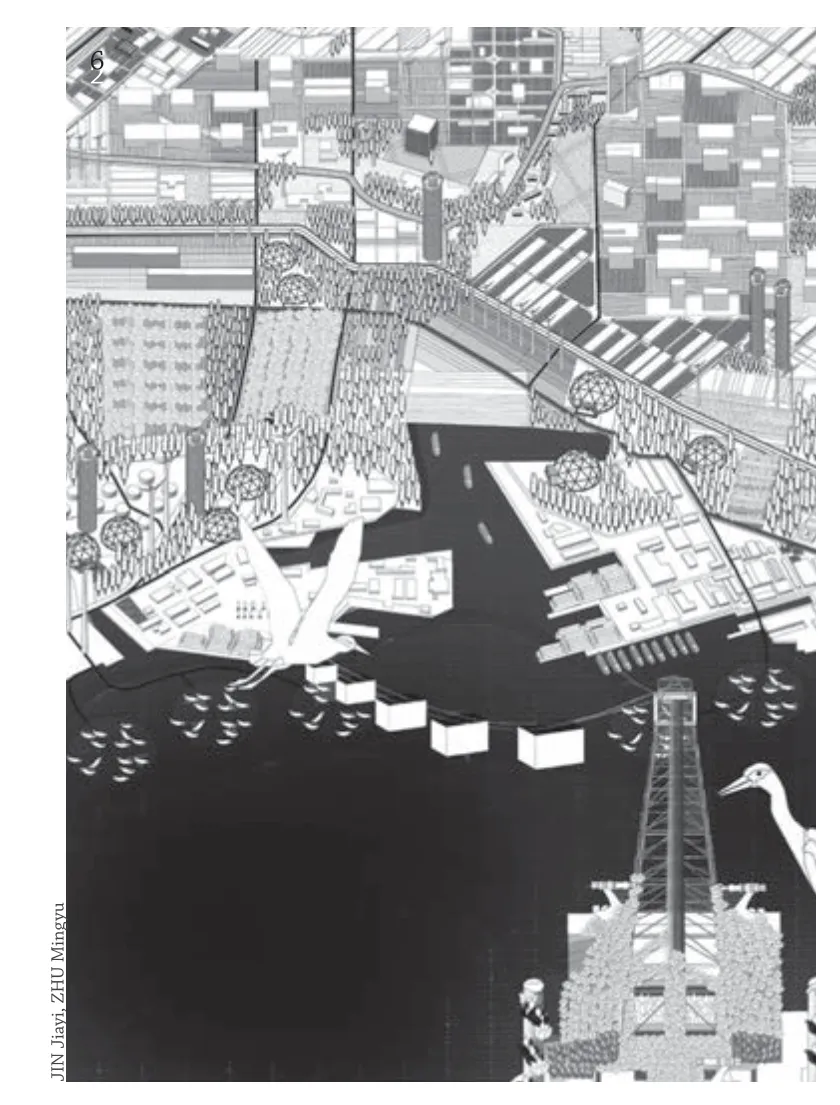
6 設想中的多層次結構,整合了能源、水和資源管理的綜合方法 The envisaged multi-level structures that integrate comprehensive approaches to energy,water,and resource management
Conducted by Jiayi Jin and Mingyu Zhu,this study focuses on the rise in population and the concentration of people in densely populated urban areas,placing heightened demands on intricate and volatile systems for food supplies.The authors contend that these systems must adapt and demonstrate resilience,addressing not only natural phenomena like climate change or the repercussions of the COVID-19 crisis but also the challenges posed by socioeconomic and geopolitical disruptions.
The increasing dependence on external resources to meet national food demand not only transfers environmental impacts to other nations but also worsens a significant divide in global production and distribution practices.The authors advocate for a more ethical,sustainable and planning-focused approach to address the food crisis.In pursuit of this goal,they explore design strategies aimed at promoting a more sustainable agrarian urbanism,drawing inspiration from three classic urban utopias: Frank Lloyd Wright's Broadacre City,Kisho Kurokawa's Agricultural City,and MVRDV's Pig City.
By examining these case studies,the authors explore visionary concepts for crafting a selfsustaining city focused on resilience,health equity and food security.This involves democratically reorganising rural spaces in a systematic sprawl,offering a plethora of options that were previously scarce or challenging to attain within urban environments.The site is located in the Port of Blyth Harbour in the Northeast of England,its strategic North Sea location ensures it is well placed for supporting wind farm developments down the UK's east coast.The design hypothesis addresses the rising challenges posed by population growth and increased consumption,coupled with diminishing agricultural land and food sources.The resultant urban farming system meticulously crafts a model incorporating waste flows and underutilised spaces,and integrates innovative approaches to clean energy,coast,and local resource management.This system actively engages diverse elements of selfsufficiency,paving the way for a network of farms characterised by densely populated,multi-level structures.
In essence,the study not only pinpoints the pressing issues related to food security but also introduces a visionary solution that holds transformative potential beyond apparent possibilities.By advocating for a paradigm shift in both urban planning and agricultural practices,the paper provides insights into the ongoing discourse related to SDG 2,3 and 11.
猜你喜歡
今日農業(2022年1期)2022-11-16 21:20:05
今日農業(2022年3期)2022-11-16 13:13:50
今日農業(2022年2期)2022-11-16 12:29:47
體育科技文獻通報(2022年3期)2022-05-23 13:46:54
今日農業(2021年14期)2021-11-25 23:57:29
今日農業(2021年13期)2021-08-14 01:38:18
天津外國語大學學報(2021年3期)2021-08-13 08:32:18
遼金歷史與考古(2021年0期)2021-07-29 01:06:54
今日農業(2020年15期)2020-12-15 10:16:11
科技傳播(2019年22期)2020-01-14 03:06:54