In It to Win It年輕的彩票店主和他們的“暴富夢”
2024-09-30 00:00:00ByZhengYiwen
漢語世界(The World of Chinese) 2024年3期


Following a renewed fervor for scratch cards among young people, a new generation of lottery shop owners have entered the market hoping to get rich and retire early
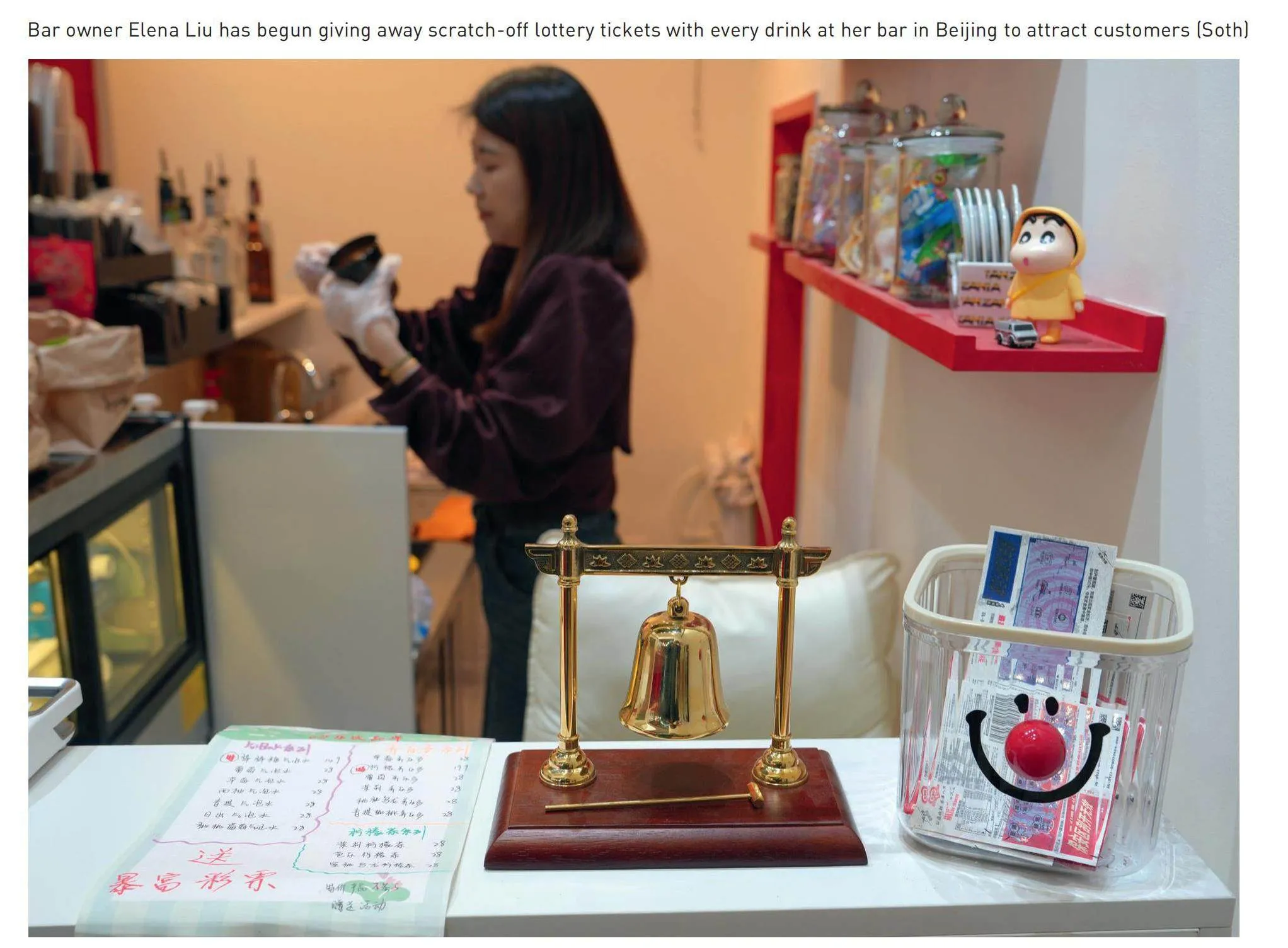
Elena Liu’s shop in Beijing’s bustling Gulou district is filled with eager fortune-seekers. The shopfront is bright red, an auspicious color in Chinese culture, while a sign at the entrance reads, “Retire early with wealth.” Upon entering, patrons are met with curtains adorned with the phrase “Wealth arrives.” The 36-year-old business owner has spared no expense in making this a space ripe for good luck.
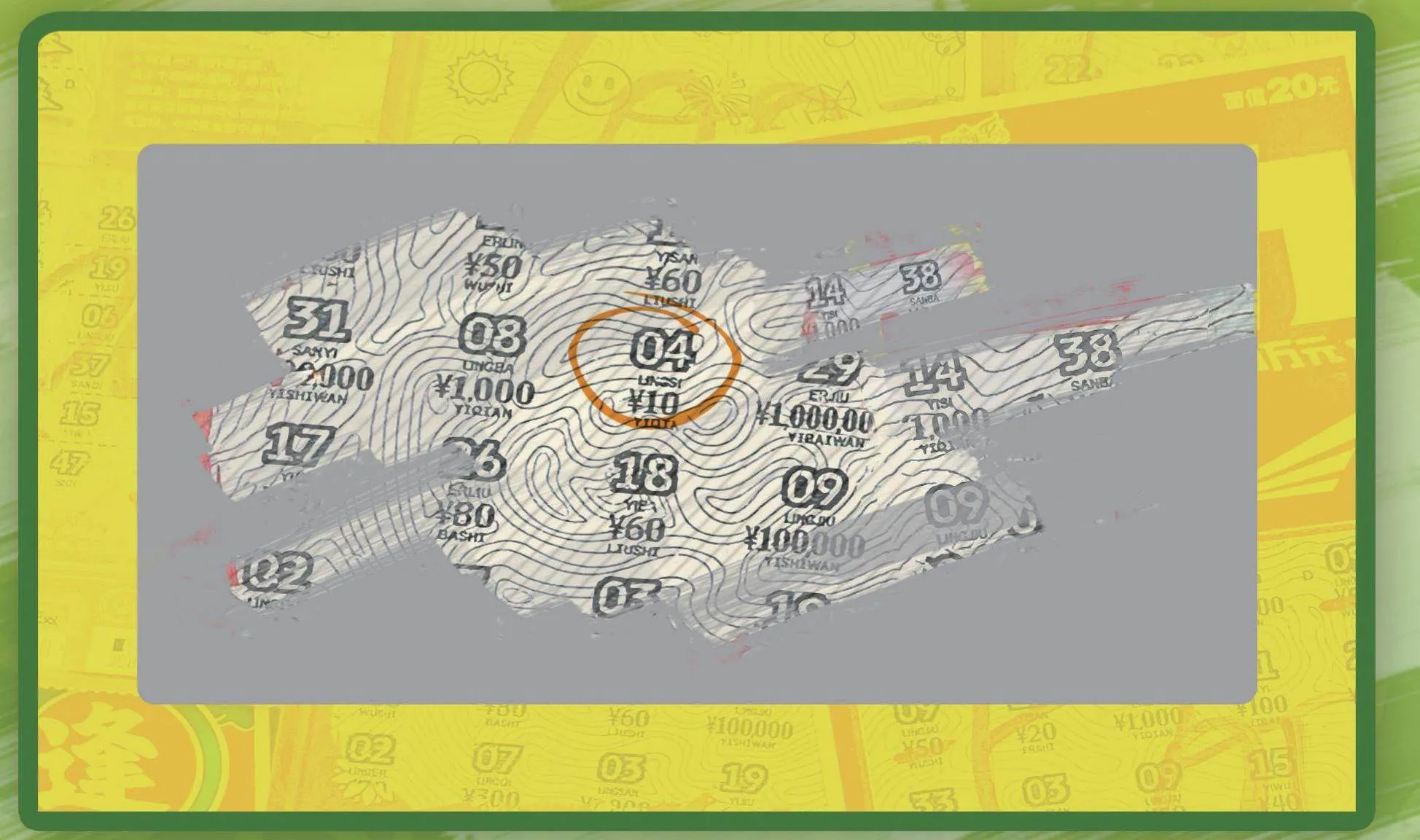
Liu’s customers, mostly in their 20s and 30s, are busy; heads down, they eagerly scratch at lottery tickets, a complimentary gift from Liu when they purchase a cocktail at her bar. Sold for between 5 and 20 yuan apiece, the tickets could be worth 5 yuan to 1 million yuan. Whenever there’s a winner, Liu rings a bell and hands over the cash. “When someone wins even a modest amount like 5 or 10 yuan, it makes their day…They believe that this stroke of luck will spill over into other aspects of their lives,” she says.
Liu opened her store in April after recently becoming a lottery fan herself. These scratch-and-win lottery tickets have boomed among China’s youth since 2023, and young entrepreneurs like Liu are trying to ride the wave. According to China’s Ministry of Finance, sales of instant-win lottery tickets reached 119 billion yuan in 2023, more than double the previous year. Livestreamers have racked up thousands of followers by scratching off tickets on camera. Authorities later cracked down on the trend after some began selling tickets to viewers and scratching them off on viewers’ behalf—all without a license.
“The economic climate is tough, and life is full of uncertainties. People seek shortcuts, hoping for a quick and relatively effortless path to success…Many still harbor hopes of overnight wealth,” explains Liu.
According to data from the business information website Qichacha, 2,105 new lottery-related enterprises were registered in the first four months of this year, a 158 percent increase compared to the same period in 2023. Many of these new businesses are run by young professionals like Liu. Having visited 10 recently opened lottery shops in Beijing, TWOC found seven of them run by people in their 20s and 30s. The owners frequently cited a desire to make quick money and to retire early as their motivations.
But Liu and her fellow entrepreneurs still find themselves scratching around to make a living. High rent, a complex registration system, strict gambling rules, and a recent nationwide shortage of scratch cards have left many new stores struggling for profit. It’s clear that making money from fortune-seekers relies on a hefty dose of luck.
Among younger generations, opening a lottery store is a way to escape the daily grind and become their own bosses. On the social media platform Xiaohongshu, numerous posts from people born in the 1990s and 2000s explain they did so in order to “lie flat (躺平)”—a term implying a desire for a relaxed, stress-free life. The posts feature guides for setting up shops with less than 100,000 yuan, and allude to potential monthly earnings of up to 50,000 yuan.
Liu’s main income comes from private equity investment, but she decided to open a lottery ticket shop after that industry took a downturn. She hoped her new business would be so successful that she could retire early, and spent around 200,000 yuan to rent and renovate her shop in a busy shopping area. But her efforts soon ran into red tape.
“When applying for lottery qualifications, I faced many obstacles,” she tells TWOC. “The shop location was a stumbling block. Properties in the Gulou area are either private residences not permitted for commercial use or, like the shop I rented, owned by a state company that requires going through a lengthy and complex approval process…to apply for lottery licenses.”
Liu eventually gave up trying to obtain an official lottery ticket-selling qualification and instead opened a bar and provided scratch-off lottery tickets to customers as gifts with their drinks.
Fu, who opened her lottery store in Liaocheng, Shandong province, in January, used 150,000 yuan from her bride price as startup capital. “I had played scratch-off tickets before and found it quite fun,” Fu, who requested to use a pseudonym, tells TWOC. “Seeing many people scratching tickets in other shops and hearing how popular and suitable it is as a ‘retirement profession’ made me decide to leave my job in a bridal shop and open my own store. I didn’t overthink it.”
The process was convoluted. First, she had to consult with the local sports lottery bureau to gain permission for a new shop before finding an approved location with no other lottery shops within 300 meters and no schools and hospitals within 200 meters. After that came renovating the shop, applying for registration, and attending mandatory training in “lottery knowledge,” followed by an exam and an interview with the local lottery bureau. Once her husband had passed the exam, the local lottery bureau issued them a ticket printing machine and a reseller certificate.
Fu spent extra to refurbish her shop, installing a sofa and screens to encourage customers to watch sports matches after buying a lottery ticket. So far, it hasn’t paid off, with most customers leaving the store immediately after buying their tickets, she says. She has made barely any profit and is already struggling to stay operational.
The biggest setback, however, came earlier this year, when a national shortage of lottery tickets hit the industry. On May 10, Fu wrote on Xiaohongshu that she had only received two books of scratch cards since opening her shop on April 18. “Running a lottery shop is tough; it’s discouraging,” her post read.
“Every day we’re losing money, not earning a single penny. It’s like we’re doing charity work,” Gu, a lottery shop owner in Shaoxing, Zhejiang province, tells TWOC. According to Gu, who opened his shop this March and requested to only use his surname for this piece, the quota system employed by the official lottery management center in Shaoxing first allocates tickets to large orders from malls and supermarkets due to their high foot traffic and strong sales performance. New lottery shops or those that purchase small quantities have recently had to survive on limited scratch-off ticket supplies.
In Beijing, meanwhile, retailers must snap up tickets online, similar to the rush for in-demand concert tickets. “It’s all about luck; tickets are often gone within minutes,” Liu tells TWOC.
Liu, whose bar is not licensed to buy tickets directly from suppliers, purchases tickets from other shops. Since March, she has mapped out and visited every lottery ticket seller in her neighborhood, and even enlisted the help of her friends and her boObDk0W3uK89IX7KNHarY/OV9vd0bUkInoAmsBnuy2Kc=yfriend’s family in the search for elusive scratch cards. But with everyone now facing a shortage, she struggles to find lottery shops with stock. She spends most of her days running around the city from shop to shop, buying up the few tickets she can find.
In May, China Welfare Lottery (CWL)—established in 1987 as China’s first legal lottery and one of the country’s two licensed lottery ticket issuers alongside China Sports Lottery (CSL)—admitted that surging demand for lottery tickets had outpaced production.
A fixed annual budget decided by the Ministry of Finance and a limited production network have contributed to the supply pinch. Data from the central government’s procurement department shows this year’s purchasing budget for scratch cards was approximately 528 million yuan, a 20 percent increase from the previous year, but already far outstripped by soaring demand. Only four printers (three in Beijing and one in Jiangsu province) are authorized to produce scratch cards, further limiting the capacity to print more tickets.
For retailers, this means they have limited suppliers to choose from and no say on the stock they may receive. Cost and retail prices are also controlled by the CWL and CSL, making it difficult to turn a profit even as demand surges and supplies fall.
Gu estimates his annual costs for rent, renovations, equipment, and running costs are around 100,000 yuan. “The daily average cost for rent and utilities is 130 yuan,” he adds. But since the profit margins on lottery tickets are as low as 7 percent, and now with limited supplies, Gu has struggled to break even.
Like Liu and Fu, Gu hoped his entrepreneurial lottery venture could bring him more freedom, excitement, and enough money to retire early. “I used to be an editor for a TV channel, but at the beginning of this year, my contract expired and I was forced to leave due to the company’s poor performance,” Gu tells TWOC. “During that time, I also went through a breakup. Everything I learned about lottery tickets was from my ex, and I couldn’t move on, so I decided to open a lottery shop to heal my heartache and relieve my stress.” A red banner across his shop reads: “I opened a lottery shop because my ex likes scratch cards.”
Gu’s parents opposed his decision. “They want me to have a stable job,” he says. His friend’s mother, who has been in the lottery business for over 20 years, advised him not to open a shop. “She told me that new shops don’t have the regular and large customer bases that long-established shops do, nor do they have the professional analysis skills to help lottery players calculate probabilities. I didn’t listen to her.”
Older shops are also better equipped to make it through the supply crunch. “For now, I can still rely on loyal customers…to sustain the business,” one Beijing lottery shop owner, who has been in the business for around two decades, tells TWOC. “In reality, the success of a lottery shop hinges on customer loyalty.” When someone wins big from a ticket, the news goes around and more people visit the same shop, they add. “Scratch cards are just a passing trend.”
Another veteran shop owner, in the business for 20 years, tells TWOC they have been able to ride out the lack of supply after having the foresight to amass an approximate 50,000-yuan inventory following the boom in scratch card sales last year.
Meanwhile, many of the newcomers to the market struggle on. Gu jokes that at least his wish for a more relaxing work environment has been fulfilled—there are so few customers that running the shop has semi-retired him. Even though it feels like a waste of time and money, he plans to keep the shop open to try to build a customer base. “It’s like buying a lottery ticket: The unknown represents infinite possibilities…And dreams are necessary. What if they come true?”
Scratch cards are sold out at many lottery shops in China (Soth)
Bar owner Elena Liu has begun giving away scratch-off lottery tickets with every drink at her bar in Beijing to attract customers (Soth)
Sales of instant-win lottery tickets reached 119 billion yuan in 2023, more than double the amount in 2022 (VCG)