Understanding Climate Economics
2024-12-09 00:00:00DENGDI
CHINA TODAY 2024年12期
While transitioning to clean energy is imperative,a British climate expert explains why it must bestaggered so that the British coal tragedy of the1980s is not repeated.
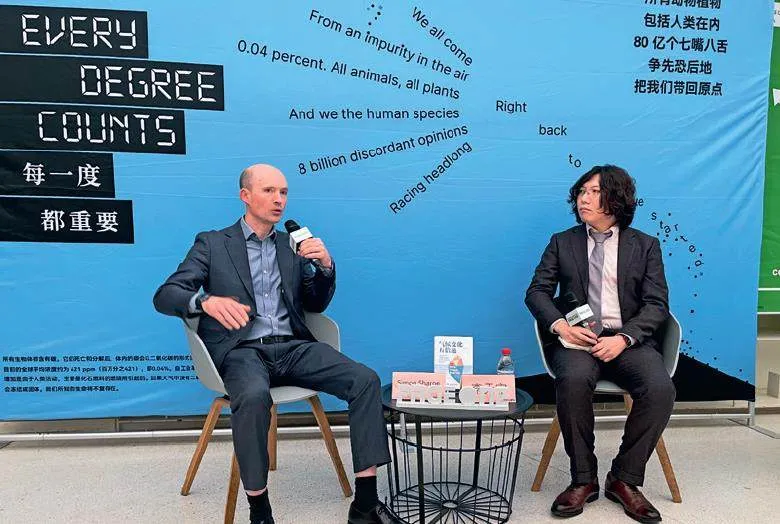
AHEAD of COP29, British climate expert SimonSharpe had an in-depth exchange withChinese readers who are concerned aboutclimate change issues at the launch of theChinese translation of his book, Five Times Faster:Rethinking the Science, Economics, and Diplomacyof Climate Change , in Beijing.
Sharpe is managing director of S-Curve Economics,a pioneering non-profit organization advancingunderstanding of the economics behind the low-car-bon transition, and director of economics for the UNHigh Level Climate Champions, a global campaign toobtain support from businesses, cities, regions andinvestors for zero carbon recovery. He was previouslydeputy director of the U.K. government’s COP26 Unit,where he led international campaigns on energy,transport, land use, science and innovation.
The event in Beijing was one of the #everydegreecountsseries of events initiated by the BritishEmbassy in China, where Sharpe discussed theimpact of global warming as well as effective specificresponse measures.
Reason for Slow Energy Transition
With the rapid development of clean energy technologyin recent years, the cost of using clean energyhas become lower. But the transition from fossilfuels to clean energy will bring huge costs to society,especially economic development, employment, andthe wellbeing of old industrial areas. This is an importantreason for the slow energy transition worldwide,Sharpe said.
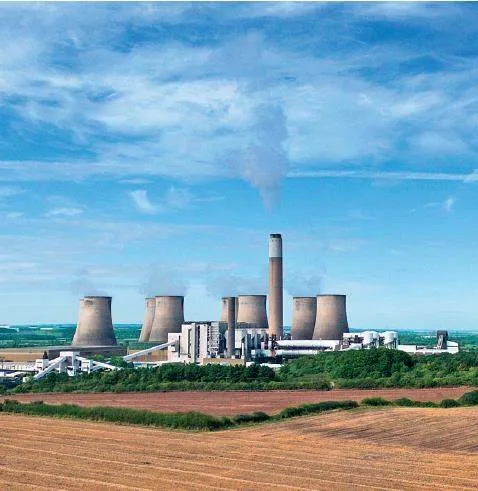
“The U.K. closed its last coal-fired power stationon September 30 this year, saying goodbye to its over140-year-long coal-fired power generation. I’m veryhappy about that, but it’s a very long process,” headded. “The period which was the most difficult wasprobably in the 1980s, when lots of coal mines wereshut down. It had nothing to do with climate changeor the clean energy transition. It was partly to do withglobal competition as the mines in the U.K. were notcompetitive any more. It was also influenced by thediscovery of gas in the North Sea. I think as a country,we managed it badly as there were communitiesentirely dependent on the coal-fired economy, whowere left with no good alternatives. There were really high levels of unemployment and I would say thoseareas are still badly affected today.”
To reduce carbon emissions and gradually achievecorresponding transformation, Sharpe said governmentsneed to subsidize the deployment of cleantechnologies, and make regulations to force industriesto invest in new technology. “China did it, (inthe U.S.) California’s done it, the U.K. is doing it, andEurope’s done it. That moved investment throughthe global industry into the new technology,” he said.
On the other hand, governments also need to begood at management. Pricing carbon and imposingtaxes on traditional fossil fuels could better controlthe economy. Since 2013, the U.K. has implementeda carbon tax, and since then, the proportion of coalfiredpower generation decreased from 40 percent toaround 3 percent in 2019, and now to 0 percent. Inthe future, other fossil fuels such as oil may also facethe same path.
“The Chinese society is also facing a similar situation.Now, for the whole world, what needs to be consideredis how to avoid affecting communities thatrely on traditional energy for survival in the processof transitioning from old to new energy,” he said.
China & Europe Can Work Together
Today, every country has its own policies andmethods to address climate change. However, whatis needed is a universal policy and action.
“Countries are now fighting alone,” he said. “We have to find ways to work together. The one str56d3fef5960982e53066a60837987ce2c65c87e94d31d224a6568f91449682d2ongestfeeling I have today is that China and Europe shouldwork together to lead the global fight against climatechange.”
At the COP26 climate summit held in Glasgow, theU.K., in 2021, China and the U.K. reached agreementson many climate issues, and both regarded eachother as important partners for cooperation. However,this year, the European Commission decidedto impose a five-year countervailing duty on electricvehicles imported from China, ranging from 17.8 to45.3 percent. Sharpe called it unfair and exacerbatingthe risk of trade conflicts – “the last weapon thatEurope and America have taken out.”
On the other hand, it was also a sign of China’ssuccess – “China has done such a good job in developingelectric vehicles that Europe and America arefrightened.” He pointed out that this situation hadcome up before. “In the 1980s, Japan quickly becamevery competitive in making cars, and Europe andAmerica were very frightened. They put tariffs, theystopped the imports of Japanese cars,” Sharpe said.The Japanese companies then invested in factories inEurope and America. In the U.K., probably the biggestcar manufacturer is Japan’s Nissan. “They share thebenefits. Some of the jobs went to Europe and America,and the profits went back to Japan. But generally,that was a win-win solution. I see no reason why wecannot do the same thing this time,” he said.
“Risk Deposit” for Developing Nations
Many developing countries and regions withfragile natural environments have been bearing thebrunt of climate change, such as climate disastersand climate migration caused by rising sea levels.
Therefore, it has become a consensus amongmany countries, including China, that developedcountries should provide global climate financing todeveloping ones to help them address climate issues.At COP29, a major agenda was the adoption of a newglobal climate financing target. However, many details,such as how much funding to provide, who willpay, and who can access these funds, are still underdiscussion.
In recent years, significant progress has beenmade in global climate governance in terms of politicalconsensus, funding commitments, and technological support. However, there arestill many problems in terms of theimplementation, and developedcountries have not fulfilled theirpromised climate funding targetsin the past.
“For the poorest countries, thebiggest difficult they have is notbeing able to have the finance toinvest in clean technologies,” Sharpe said. “Thereare simple things that make that difficult. One is theinterests they face are really high. The second is theyhave lots of debts, and the interests they pay on themare already high. The third is they keep getting hit byclimate disasters, and then they have to spend lots ofmoney in preparing for it.”
So his suggestion is to create a “risk deposit” forthese countries to use when facing natural disasters,thereby reducing their borrowing costs. Also, thereshould be debt relief or even cancellation of theirdebts.