
病灶內注射糖皮質激素和口服普萘洛爾治療眶周血管瘤的回顧性研究
2014-02-27 07:46:24徐業凱袁斯明郭遙崔磊洪志堅姜會慶
組織工程與重建外科雜志 2014年4期
徐業凱 袁斯明 郭遙 崔磊 洪志堅 姜會慶
病灶內注射糖皮質激素和口服普萘洛爾治療眶周血管瘤的回顧性研究
徐業凱 袁斯明 郭遙 崔磊 洪志堅 姜會慶
目的比較病灶內注射糖皮質激素和口服普萘洛爾治療眶周血管瘤的效果。方法從2006年1月至2013年12月,25例眶周血管瘤患者納入研究,其中16例患者接受糖皮質激素(復方倍他米松注射液)病灶內注射治療,8名患者接受口服普萘洛爾治療,1例患者先后接受上述兩種治療。結果所有患者隨訪6~60個月。在接受激素注射治療的患者中,13例患者瘤體完全或接近完全消退,3例患者瘤體部分消退。口服普萘洛爾治療的患者中,8例患者瘤體完全或接近完全消退。1例患者首先接受激素治療,瘤體無明顯變化,然后改用普萘洛爾治療,瘤體緩慢消退。激素治療組的不良反應包括局部組織萎縮、潰瘍和庫欣樣癥狀,分別發生于3例患者。普萘洛爾治療組僅有1例患者發生輕微腹瀉。結論病灶內注射糖皮質激素和口服普萘洛爾治療眶周血管瘤都能取得很好的療效。從治療的有效性和安全性來比較,口服普萘洛爾更具優勢,可以推薦為優選治療方法。但對于不適合普萘洛爾的患者,病灶內注射糖皮質激素仍不失為一個可以選擇的治療方法。
眶周血管瘤糖皮質激素普萘洛爾
嬰幼兒血管瘤(Infantile hemangioma,IH)是常見的兒童良性腫瘤,在頭面部的發生率最高[1]。眶周血管瘤,包括發生于上瞼、下瞼、內眥、外眥和眶隔的血管瘤,壓迫眼球,阻擋視野,可能影響視力發育導致弱視,所以眶周血管瘤應盡早治療[2]。
糖皮質激素用于治療血管瘤已有超過30年的歷史[3-4]。臨床研究顯示,病灶內注射糖皮質激素治療眶周血管瘤能取得較好的效果,副作用少[2,5-8]。而口服普萘洛爾在治療嚴重血管瘤中,已顯示了巨大的優勢[9-14]。
本文回顧性分析病灶內注射糖皮質激素(復方倍他米松注射液)和口服普萘洛爾治療眶周血管瘤的效果,比較了這兩種方法的安全性和有效性,為臨床選擇合適治療方法提供參考。
1 病例與方法
本研究得到本院臨床研究倫理委員會的批準,所有患者監護人簽署知情同意書。嬰幼兒血管瘤的診斷與文獻報道一致[1]。從2006年1月至2013年12月,25例患兒納入研究,其中17名為女性患兒。腫瘤位于上瞼(n=12)、內眥(n=3)、外眥(n=3)和下瞼(n=7)。初始治療年齡為1~7個月,平均3.1個月。
在這些患兒中,16例接受病灶內注射復方倍他米松注射液治療(1 mL/安瓿,含有倍他米松磷酸鈉2 mg和二丙酸倍他米松5 mg)。瘤體部位注射2%利多卡因浸潤麻醉,于瘤體邊緣和中心部位向病灶內多點注射藥液,劑量0.5~1 mL,依據瘤體面積調整。注射前回抽避免藥液進入血管。緩慢注射,避免高壓使藥液返流入動脈導致眼動脈栓塞。治療后每2個月隨訪1次。如果腫瘤再次增生,可以重復注射治療。隨訪時間6個月至6年。
我們自2010年1月開始應用口服普萘洛爾治療眶周血管瘤,共8例。口服普萘洛爾的劑量從1 mg/Kg·day開始,2周內增加至2 mg/kg·day,分早晚2次服用。患者1歲時停止治療。治療期間觀察可能發生的并發癥,如腹瀉、心動過緩、低血糖和高鉀血癥等。隨訪時間6個月至3年。
1例患者開始時接受注射治療,2次治療后腫瘤無明顯變化,后改用口服普萘洛爾治療。
療效評價分3個等級,分別是顯效、有效和無效。顯效:治療后腫瘤迅速萎縮并在隨訪期間完全或接近完全消退;有效:治療后腫瘤有所萎縮,但在隨訪期間未完全消退;無效:治療后腫瘤無明顯變化,需要改用其他治療。3歲以上能配合的患兒評估視力。
2 結果
注射治療組,注射后1周,大部分瘤體明顯萎縮,顏色變淡。1個月后瘤體消退更明顯,瘤體變柔軟、平坦,顏色變為暗紅色。2個月后大部分瘤體持續消退,少數較大瘤體邊緣處再次增生,需再次注射。11例患者接受1次治療,3例患者接受2次治療,2例患者接受3次治療。至隨訪結束時,13例患者的瘤體完全或接近完全消退,其中6例患者遺留局部毛細血管擴張;3例患者瘤體萎縮,至隨訪期結束時仍未完全消退。評估療效,顯效13例,有效3例。
口服治療組治療1~2周后瘤體變柔軟、平坦,1個月后明顯萎縮,治療期間腫瘤持續緩慢消退。治療持續4~9個月,平均6.5個月。1歲時治療停止,隨訪期未觀察到腫瘤復發。至隨訪結束時,所有8例患兒的瘤體完全或接近完全消退,療效評價均為顯效。
1例5月齡男性患兒,右側上瞼血管瘤明顯遮擋視野,接受2次注射治療,瘤體無明顯變化,故在7月齡時改用普萘洛爾治療,瘤體緩慢萎縮消退,3歲時接近完全消退。該例患者療效評價,注射治療無效,口服普萘洛爾治療顯效。
所有患者不良反應總體輕微。注射治療組中1例患者發生局部組織萎縮,6個月內恢復正常;1例發生瘤體破潰,換藥后愈合;1例患者出現庫欣樣癥狀,3個月內消失;無其他并發癥,如生長延遲、眼動脈栓塞、色素沉著、皮膚壞死等。口服治療組中僅1例患者出現輕微腹瀉,未發現其他并發癥。
本研究中,9例3~5歲患兒行視力檢查,僅1例出現患側弱視,即注射無效而改用口服治療的患者。
3 典型病例
病例1:男性患兒,4月齡,左側上瞼、內眥和下瞼IH,瘤體破潰。向瘤體內注射復方倍他米松注射液0.6 mL。2個月后,瘤體萎縮,潰瘍愈合,再次注射0.6 mL。1歲時,瘤體基本消退,局部有紅斑。3歲時,瘤體完全消退,仍有少量紅斑,雙眼對稱,視力正常。治療結果為顯效(圖1)。
病例2:男性患兒,5月齡,右側上瞼內側IH,瘤體明顯壓迫眼球,遮擋視野。向瘤體內注射復方倍他米松注射液1 mL。1個月后,瘤體無明顯萎縮,再次注射1 mL。二次注射1個月后,瘤體仍無明顯萎縮,遂給予口服普萘洛爾治療,2 mg/kg·day,分2次服用。口服治療后2個月,瘤體明顯萎縮。普萘洛爾治療后6個月,患者13月齡時,瘤體持續萎縮,停止治
療。到3歲時,瘤體基本消退,局部皮膚有淡紅色斑,雙眼對稱,右眼弱視。評估注射復方倍他米松注射液治療為無效,口服普萘洛爾治療為顯效(圖2)。
病例3:6月齡女性患兒,右下瞼血管瘤。口服普萘洛爾治療6個月。3歲時,腫瘤幾乎完全消退。評估普萘洛爾治療為顯效(圖3)。
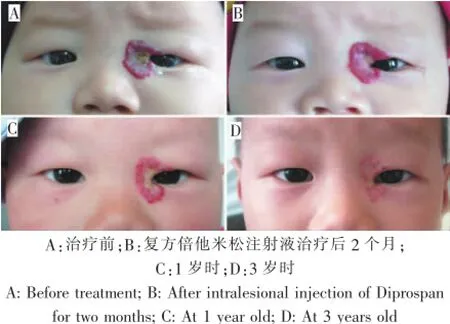
圖1 病例1Fig.1Case 1

圖2 病例2Fig.2Case 2

圖3 病例3Fig.3Case 3
4 討論
嬰幼兒血管瘤是發生于頭面部的常見良性腫瘤。由于眶周血管瘤有損害視力發育的潛在危險,應引起特別注意。腫瘤壓迫眼球導致角膜變形和散光是導致弱視的主要原因[6]。因此,盡快控制瘤體增長、促使瘤體萎縮、解除瘤體對角膜的壓迫,是避免散光和繼發性弱視的關鍵。
臨床研究證實,病灶內注射糖皮質激素治療小面積血管瘤有良好療效[5]。對于眶周血管瘤,局部注射糖皮質激素也能促使瘤體萎縮、快速改善患側眼散光[2,6-8],盡早治療眶周血管瘤能取得更好效果。本研究中的病例大部分在3月齡以下就接受治療,腫瘤快速消退。本研究中使用的復方倍他米松注射液是短效藥物倍他米松磷酸鈉和長效藥物二丙酸倍他米松的復合制劑。可溶性倍他米松磷酸鈉在注射后很快起效,而二丙酸倍他米松吸收較慢,在局部形成一個藥物儲存庫,長期發生作用。復方倍他米松注射液注射后療效可維持2~4個月。需要重視的是,類固醇激素懸浮液注射治療眼瞼血管瘤有導致眼動脈和視網膜中央動脈栓塞的報道[2,15-16]。我們在注射激素溶液前回抽,以避免溶液直接注射入血管,且慢速、低壓力注射能有效避免上述嚴重并發癥。
口服普萘洛爾治療血管瘤于2008年被首次報道[9-10]。大樣本回顧性研究表明,僅有0.9%血管瘤患者(10/1130)對普萘洛爾治療無反應[17]。研究結果顯示,口服普萘洛爾治療眶周血管瘤同樣有效[13-14]。本研究中,所有8例患者口服普萘洛爾治療后均有快速而持續的反應。另一例注射治療無效的患者,經口服普萘洛爾治療后效果明顯。分析結果提示,在治療的有效性方面,普萘洛爾相對于糖皮質激素治療有優勢。有報道認為,普萘洛爾治療停止后存在血管瘤復發現象[18-19],在我們為數不多的病例中并沒有觀察到這種情況,可能由于我們的病例直到1歲才停止普萘洛爾治療,此時大部分血管瘤已進入消退期。
本研究中所有患兒的不良反應很輕微。在激素治療組,軟組織萎縮、潰瘍和庫欣樣癥狀發生于3例患者,均在短期內恢復。口服普萘洛爾治療組中僅有1例患者出現輕微腹瀉。在9例評估視力的患者中,有1例出現患側眼弱視。該例患者對激素治療無效,雖然普萘洛爾治療最終促使瘤體消退,但瘤體對眼球的長時間壓迫最終導致患側弱視發生。
根據本研究的觀察結果,并結合以往的研究報道[2,6-8,13-14],我們認為病灶內注射糖皮質激素和口服普萘洛爾治療眶周血管瘤都有很好的療效。就治療的有效性和安全性而言,口服普萘洛爾有一定優勢,
可被推薦為優選治療方法。但對于那些不適合普萘洛爾的患者,如發生嚴重的副作用[20]、禁忌癥患者(如支氣管炎、哮喘或心臟缺陷患者),病灶內注射糖皮質激素仍不失為治療眶周血管瘤的可行選擇,但需謹慎操作,避免并發癥的發生。
[1]Chiller KG,Passaro D,Frieden IJ.Hemangiomas of infancy:clinical characteristics,morphologic subtypes,and their relationship to race,ethnicity,and sex[J].Arch Dermatol,2002,138(12):1567-1576.
[2]Ranchod TM,Frieden IJ,Fredrick DR.Corticosteroid treatment of periorbital haemangioma of infancy:a review of the evidence [J].Br J Ophthalmol,2005,89(9):1134-1138.
[3]Greene AK,Couto RA.Oral prednisolone for infantile hemangioma: efficacy and safety using a standardized treatment protocol[J]. Plast Reconstr Surg,2011,128(3):743-752.
[4]Greene AK.Systemic corticosteroid is effective and safe treatment for problematic infantile hemangioma[J].Pediatr Dermatol,2010, 27(3):322-323.
[5]Prasetyono TO,Djoenaedi I.Efficacy of intralesional steroid injection in head and neck hemangioma:a systematic review[J]. Ann Plast Surg,2011,66(1):98-106.
[6]Morrell AJ,Willshaw HE.Normalisation of refractive error after steroid injection for adnexal haemangiomas[J].Br J Ophthalmol, 1991,75(5):301-305.
[7]Weiss AH,Kelly JP.Reappraisal of astigmatism induced by periocular capillary hemangioma and treatment with intralesional corticosteroid injection[J].Ophthalmology,2008,115(2):390-397.
[8]Janmohamed SR,Madern GC,Nieuwenhuis K,et al.Evaluation of intra-lesional corticosteroids in the treatment of peri-ocular haemangioma of infancy:still an alternative besides propranolol [J].Pediatr Surg Int,2012,28(4):393-398.
[9]Leaute-Labreze C,Dumas de la,Roque E,et al.Propranolol for severe hemangiomas of infancy[J].N Engl J Med,2008,358(24): 2649-2651.
[10]Sans V,de la Roque ED,Berge J,et al.Propranolol for severe infantile hemangiomas:follow-up report[J].Pediatrics,2009,124 (3):e423-e431.
[11]Gan LQ,Ni SL,Tan Q,et al.A retrospective study of propranolol therapy in 109 infants with infantile hemangioma[J].Pediatr Dermatol,2013,30(2):270-272.
[12]Marqueling AL,Oza V,Frieden IJ,et al.Propranolol and infantile hemangiomas four years later:a systematic review[J].Pediatr Dermatol,2013,30(2):182-191.
[13]Vassallo P,Forte R,Di Mezza A,et al.Treatment of infantile capillary hemangioma of the eyelid with systemic propranolol[J]. Am J Ophthalmol,2013,155(1):165-170.
[14]Thoumazet F,Léauté-Labrèze C,Colin J,et al.Efficacy of systemic propranolol for severe infantile haemangioma of the orbit and eyelid:a case study of eight patients[J].Br J Ophthalmol,2012, 96(3):370-374.
[15]Egbert JE,Schwartz GS,Walsh AW.Diagnosis and treatment of an ophthalmic artery occlusion during an intralesional injection of corticosteroid into an eyelid capillary hemangioma[J].Am J Ophthalmol,1996,121(6):638-642.
[16]Shorr N,Seiff SR.Central retinal artery occlusion associated with periocular corticosteroid injection for juvenile hemangioma[J]. Ophthalmic Surg,1986,17(4):229-231.
[17]Caussé S,Aubert H,Saint-Jean M,et al.Propranolol-resistant infantile haemangiomas[J].Br J Dermatol,2013,169(1):125-129.
[18]Shehata N,Powell J,Dubois J,et al.Late rebound of infantile hemangioma after cessation of oral propranolol[J].Pediatr Dermatol, 2013,30(5):587-591.
[19]Bagazgoitia L,Hernández-Martín A,Torrelo A.Recurrence of infantile hemangiomas treated with propranolol[J].Pediatr Dermatol, 2011,28(6):658-662.
[20]Chen TS,Eichenfield LF,Friedlander SF.Infantile hemangiomas: an update on pathogenesis and therapy[J].Pediatrics,2013,131 (1):99-108.
Retrospective Analysis of the Management of Periorbital Hemangioma with Intralesional Glucocorticoids Injection and Systemic Propranolol
ObjectiveToanalyzeandcomparethemanagementofperiorbitalhemangiomabyintralesional glucocorticoids injection and systemic propranolol.MethodsFrom Jan.2006 to Dec.2013,twenty-five children with periorbital hemangioma were enrolled into this study.Among them,sixteen children accepted intralesional injection of compound betamethasone preparation.Eight children accepted systemic propranolol.One child accepted both of the two treatments.ResultsThe follow-up period ranged from 6 months to 60 months.In the patients treated with intralesional glucocorticoids injection,the tumors of 13 patients involuted completely,and the tumors of the other 3 patients didn't involute completely at the end of follow-up.In the patients treated with systemic propranolol,the tumors of all the patients involuted almost completely.One patient didn’t respond to intralesional glucocorticoids injection,and was switched to systemic propranolol,which lead to the involution of tumor finally.The adverse effects in the patients treated with intralesional glucocorticoids included local soft tissue atrophy,local ulcer,and Cushing-like manifestations,which occurred in three patients respectively.In the patients treated with systemic propranolol,mild diarrhoea occurred in one child. ConclusionBoth of intralesional glucocorticoids injection and systemic propranolol can achieve good results in the management of periorbital hemangioma.Systemic propranolol shows superiority in efficacy and safety.Systemic propranolol should be recommend as the first-choise therapy.However,for the children who can’t tolerate systemic propranolol, intralesional glucocorticoids injection is still a feasible choice.
Periorbital hemangioma;Glucocorticoids;Propranolol
R732.2
A
1673-0364(2014)04-0183-04
XU Yekai,YUAN Siming,GUO Yao,CUI Lei,HONG Zhijian,JIANG Huiqing.
Department of Burn and Plastic Surgery,Jinling Hospital,Nanjing University School of Medicine,Nanjing 210002,China.Corresponding author:YUAN Siming(E-mail:yuansm@163.com).
國家自然科學基金(81272989)。
210002江蘇省南京市南京大學醫學院金陵醫院(南京軍區南京總醫院)燒傷整形科。
袁斯明(E-mail:yuansm@163.com)。
2014年6月8日;
2014年7月2日)
10.3969/j.issn.1673-0364.2014.04.002
