
飛行時間質譜調查超聲膨脹條件下低碳烷烴芳構化反應
2015-07-10 13:05:57王芳李陵張仕中劉炳泗
當代化工
2015年9期
王芳 李陵 張仕中 劉炳泗
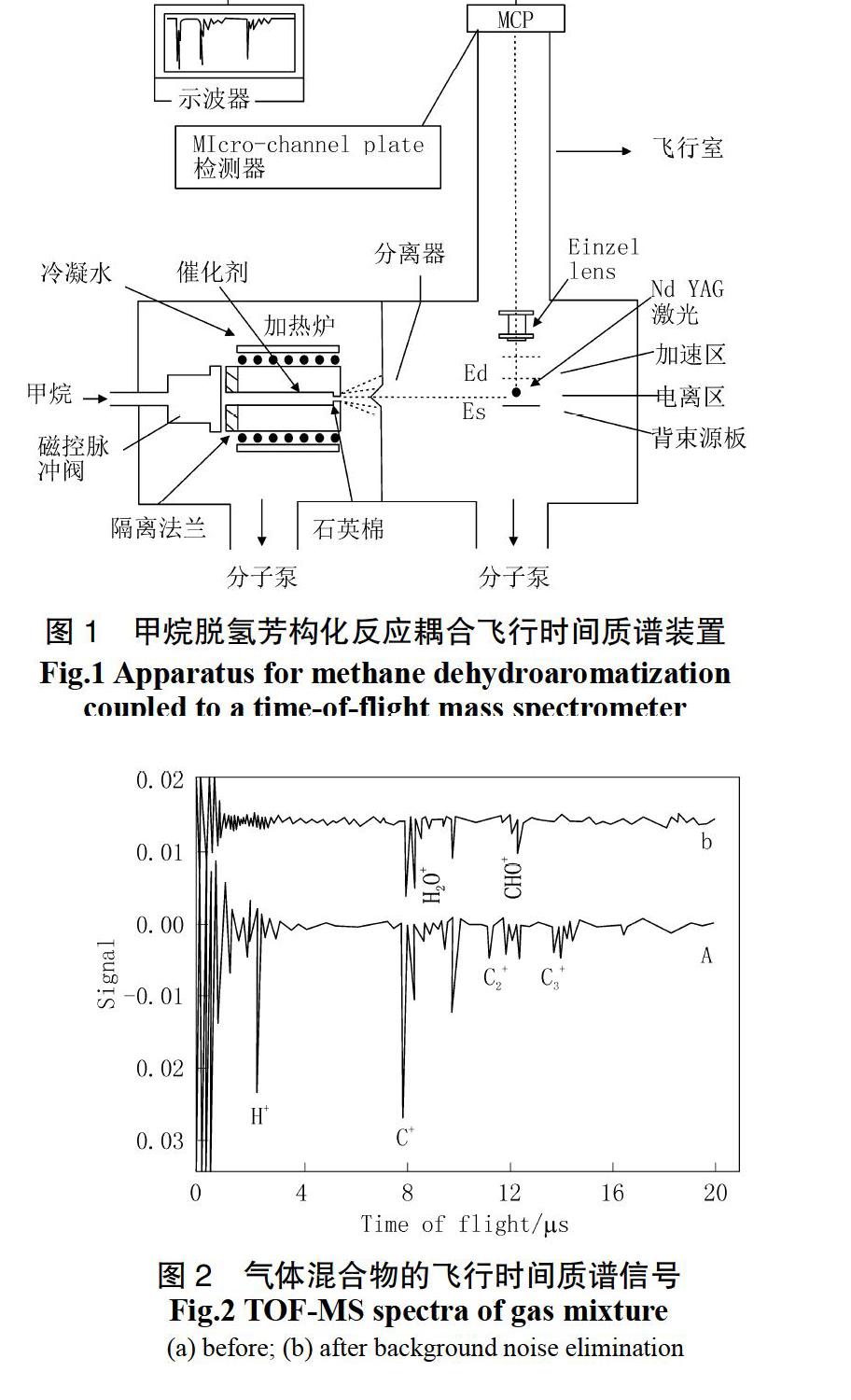
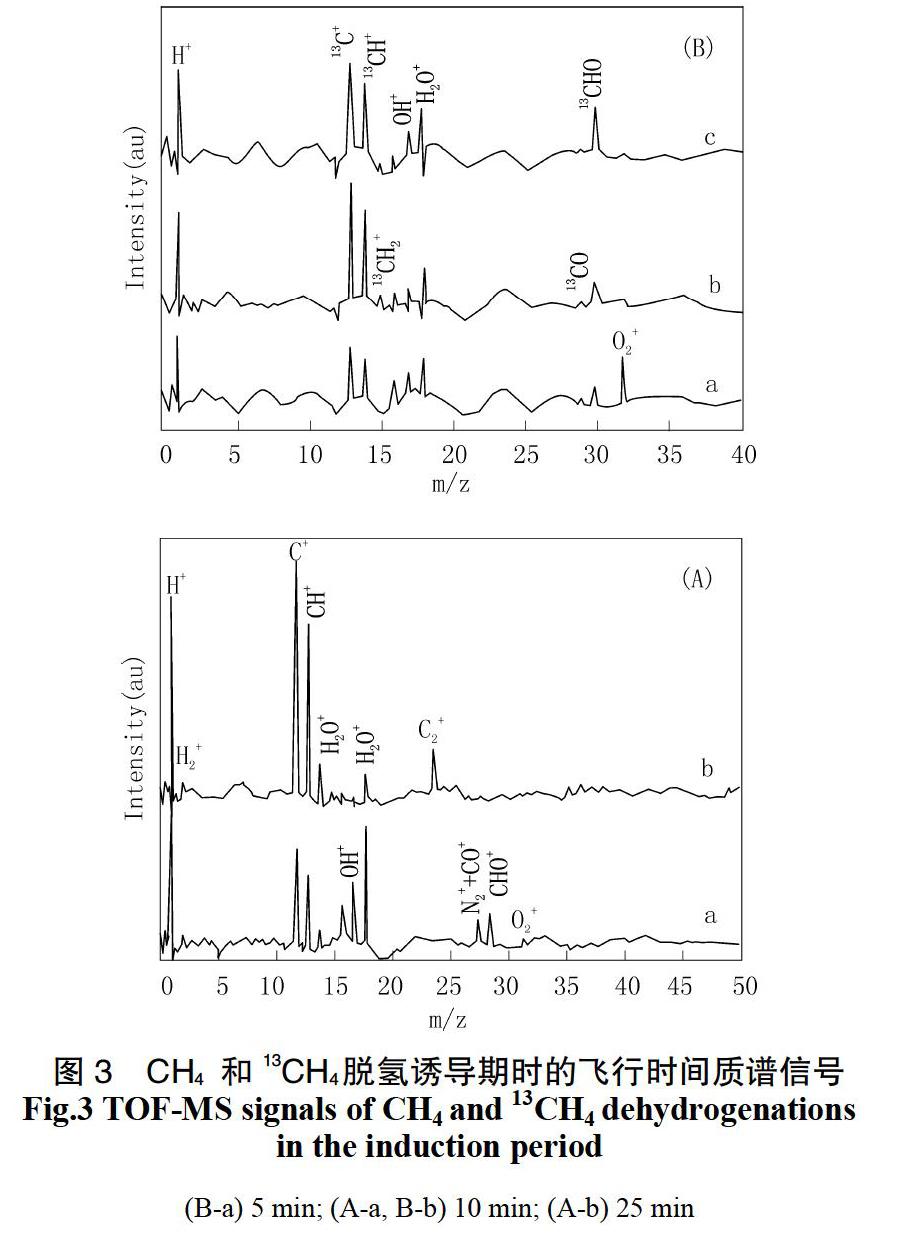

摘 要:在超聲膨脹條件下,調查了甲烷和丙烷烴在3%Mo/HZSM-5催化劑上芳構化反應,其反應物和產物直接由飛行時間質譜檢測。發現在相同的催化劑上觀察到結果與大氣壓條件下的結果完全不同,萘是主要產品。在低溫下芳烴化合物形成與丙烷C3H7自由基在布朗斯特酸性位上偶聯密切相關。在700 ℃初始的誘導期期間,13CHO中間體被形成,并且MoO3被轉化為Mo2C。即CH4在Mo2C/HSM-5脫氫是速度控制步驟,而后期烷基芳構化反應能在更低的溫度范圍內進行。
關 鍵 詞:CHO中間體;反應機理;丙烷芳構化;飛行時間質譜
中圖分類號:TQ 203 文獻標識碼: A 文章編號: 1671-0460(2015)09-2075-03
Abstract: Methane and propane dehydroaromatization over the 3% Mo/HZSM-5 catalyst under supersonic jet expansion (SJE) condition was investigated by direct monitoring of the reactant and products using time-of-flight mass spectrometry (TOF-MS). The results observed over the same catalyst were different from that at atmospheric pressure, naphthalene was the major product, and the formation of the aromatic compounds at relatively low temperature was a result of coupling of C3H7 radicals from propane on Bronsted acidic sites. During the initial induction period at 700 oC, 13CHO was formed and MoO3 was converted to Mo2C. The dehydrogenation of methane over Mo2C/ZSM-5 is the rate-determining step, and the later aromatization of alkyl group can be conducted at much lower temperature.
Key words: CHO intermmediates; Reaction mechanism; Propane aromatization; Time of flight mass spectroscopy
由于輕烴的有效利用和氫燃料電池的需求,烷烴直接催化脫氫芳構化是非常重要的。Martner等[1]報道了甲烷在Mo/HZM-5上脫氫芳烴化過程中催化劑的穩定性。楊建華等[2,3]研究了分級結構Mo/HZSM-5-HW催化劑的催化特性,并且獲得了高的甲烷轉化率和苯產率。盡管科技工作者做了大量的工作,但在理解Mo/HZSM-5催化劑的催化行為方面仍存在一些差異。Xu等[4,5] 評論了烷烴脫氫芳烴化機理,并且建議MoO3是一種催化活性中心,CH2-MoO3物種二聚形成乙烯作為反應中間體。Yang等[6]有關反應機理提出了相反的看法,并且利用13C固體核磁,在600 oC觀察到Mo/HZSM-5上有大量CO2的形成。我們發現反應產物的種類和數量隨反應時間的變化,這些組分的改變將導致對反應機理解釋的分歧。
另外,在極短時間內(10~3 s)甲烷脫氫芳構化反應完全不同于通常平衡條件下的結果,反應產物也有大的差異。……
登錄APP查看全文
猜你喜歡
課堂內外·初中版(科學少年)(2025年1期)2025-02-28 00:00:00
課堂內外·初中版(科學少年)(2025年2期)2025-02-28 00:00:00
英語世界(2023年10期)2023-11-17 09:18:18
科學大眾(中學)(2019年3期)2019-05-17 10:04:30
石油石化綠色低碳(2019年6期)2019-02-13 09:39:01
石油石化綠色低碳(2019年6期)2019-01-14 01:16:22
汽車觀察(2018年10期)2018-11-06 07:05:26
Coco薇(2016年2期)2016-03-22 02:45:06
中國資源綜合利用(2016年4期)2016-01-22 08:27:23
少兒科學周刊·少年版(2015年1期)2015-07-07 17:15:12
