
鎵鋅氧化物半導體薄膜的晶粒生長特性及其微結構研究
2016-04-21 12:37:14鐘志有
中南民族大學學報(自然科學版) 2016年1期
鐘志有, 陸 軸, 龍 路, 康 淮
(中南民族大學 電子信息工程學院, 智能無線通信湖北省重點實驗室, 武漢 430074)
?
鎵鋅氧化物半導體薄膜的晶粒生長特性及其微結構研究
鐘志有, 陸軸, 龍路, 康淮
(中南民族大學 電子信息工程學院, 智能無線通信湖北省重點實驗室, 武漢 430074)
摘要采用ZnO:Ga3O2高密度陶瓷靶作為濺射源材料,利用射頻磁控濺射技術在玻璃基片上制備了鎵鋅氧化物(GaZnO)半導體薄膜.基于X射線衍射儀的測試表征,研究了薄膜厚度對GaZnO樣品晶粒生長特性和微結構性能的影響.研究結果表明:所制備的GaZnO樣品為多晶薄膜,并且都具有六角纖鋅礦型結構和(002)晶向的擇優取向生長特性;其(002)取向程度、結晶性能和微結構參數等均與薄膜厚度密切相關.隨著薄膜厚度的增大,GaZnO樣品的(002)擇優取向程度和晶粒尺寸表現為先增大后減小,而位錯密度和晶格應變則表現為先減小后增大.當薄膜厚度為510 nm時,GaZnO樣品具有最大的(002)晶向織構系數(2.959)、最大的晶粒尺寸(97.8 nm)、最小的位錯密度(1.044×10(14) m(-2))和最小的晶格應變(5.887×10(-4)).
關鍵詞磁控濺射;氧化鋅薄膜;晶粒生長;微結構
Grain Growth and Microstructure of Gallium-Zinc Oxide Semiconductor Thin Films
ZhongZhiyou,LuZhou,LongLu,KangHuai
(Hubei Key Laboratory of Intelligent Wireless Communications, College of Electronic Information Engineering,South-Central University for Nationalities, Wuhan 430074, China)
AbstractThe gallium-zinc oxide (GaZnO) semiconductor thin films were deposited on glass substrates by radio-frequency magnetron sputtering technique using the ceramic target fabricated by sintering the mixture of ZnO and Ga2O3nanometer powder. The influence of thickness on grain growth characteristics and microstructure of the deposited films was investigated by X-ray diffractometer. The results show that the deposited thin films with the hexagonal crystal structure are polycrystalline and have a strongly preferred orientation of (002) plane. The grain growth and mirostructure properties of the thin films are closely related to the thickness. As the thickness increases, the texture coefficient of (002) plane and grain size firstly increase and then decrease, while the dislocation density and lattice strain exhibit the reverse variation trend. The GaZnO thin film with the thickness of 510 nm possesses the best crystallite quality and microstructural properties, with the highest texture coefficient of (002) plane (2.959), the largest grain size (97.8 nm), the smallest dislocation density (1.044×10¹⁴m-2) and the minimum lattice strain (5.887×10⁻⁴).
Keywordsmagnetron sputtering; zinc oxide thin films; grain growth; microstructure
由于具有獨特的光學和電學性能,氧化物透明半導體薄膜被廣泛應用于光伏太陽能電池(PSC)[1-6]、發光二極管(LED)[7-12]、液晶顯示器(LCD)[13-16]、薄膜晶體管(TFT)[17,18]、氣體傳感器[19-21]和觸控面板[22]等光電子領域,其中摻錫氧化銦(ITO)是其家族中最為重要和最具有代表性的成員之一.在PSC和LED等光電子器件中,ITO薄膜是目前普遍使用的透明電極材料,但是由于ITO的主要成份銦(In)為稀有金屬,不僅有毒、高溫下不穩定,而且其自然存儲量有限,導致ITO薄膜的價格飆升,因此極大地限制了ITO薄膜的應用范圍.氧化鋅(ZnO)薄膜是一種具有c軸擇優取向纖鋅礦結構的功能材料,已經得到廣泛應用,而鎵鋅氧化物(GaZnO)透明半導體薄膜作為一種重要的光電子信息材料,由于其原材料來源豐富、價格低廉、制備簡單、性能穩定,并具有可以與ITO薄膜相媲美的光電特性,被認為是最有可能替代ITO薄膜的候選材料,已被廣泛應用于LED、PSC、LCD、傳感器、觸摸屏等眾多領域.目前,GaZnO薄膜的制備技術主要有磁控濺射、真空反應蒸發、化學氣相沉積、脈沖激光沉積、噴射熱分解、分子束外延、溶膠-凝膠法等[23-38],而其中采用射頻磁控濺射技術制備GaZnO薄膜具有沉積速率高、均勻性好、粘附性能好、便于大批量工業生產等優勢[39,40],所以獲得了廣泛應用.本文以普通玻璃為基片材料,以ZnO:Ga3O2陶瓷靶為濺射靶材,采用射頻磁控濺射技術制備GaZnO透明半導體薄膜,通過X射線衍射儀、紫外-可見光分光光度計、四點探針儀等測試表征,研究了薄膜厚度對GaZnO薄膜晶粒生長特性及其微結構性能的影響.
1實驗
選用普通玻璃作為基片材料,樣品大小約為30 mm×30 mm.首先對玻璃基片依次進行擦拭、沖洗,然后依次在丙酮溶液、無水乙醇和去離子水中進行超聲清洗約15 min,并自然干燥.
GaZnO薄膜樣品通過射頻磁控濺射方法制備,成膜設備為沈陽科友真空設備公司生產的KDJ-567型高真空磁控與離子束復合鍍膜系統,所用射頻頻率為13.56 MHz.系統的本底真空度為5.2×10⁻⁴Pa,基片溫度為670 K,濺射功率為190 W,鍍膜時間為30 min,所用陶瓷靶材為合肥科晶材料技術有限公司生產,由純度均為99.99%的ZnO和Ga2O3(兩者的質量比為97%:3%)經過高溫燒結而成,靶材直徑為50 mm,厚度為4.0 mm,靶材與基片之間的距離為70 mm.濺射時所用工作氣體為99.999%的高純氬氣,濺射時氬氣壓強為0.5 Pa.為了研究薄膜厚度對GaZnO樣品晶粒生長特性及其微結構的影響,實驗中通過改變鍍膜時間制備了薄膜厚度分別為320 nm、510 nm、730 nm和850 nm的GaZnO樣品,本文中它們分別被標記為樣品D1、D2、D3和D4.
GaZnO薄膜樣品的晶體結構通過X射線衍射儀(D8-ADVANCE型,德國Bruker公司)表征(Cu Kα射線,波長λ=0.15406 nm),采用θ-2θ連續掃描方式,掃描速度為10 °/min,掃描步長為0.0164 °,工作電壓為40 kV,工作電流為40 mA.掃描角度為20~80°,測試在室溫和大氣條件下完成.
2結果與討論

圖1 GaZnO薄膜的XRD圖譜Fig. 1 XRD patterns of the GaZnO thin films
不同厚度時GaZnO薄膜樣品的XRD圖譜如圖1所示.
從圖中可知,在20~80°的掃描范圍內,所有的GaZnO樣品均出現有3個較強的XRD衍射峰,對于2θ為30.7°、34.2°和71.9°附近,它們分別對應于ZnO晶面(100)、(002)和(004)的特征譜線,其結果與標準ZnO晶體(JCPDS No. 36-1451)的衍射峰數據基本吻合[41,42],另外,XRD圖譜中并沒有出現金屬Ga和Zn以及Ga3O2的特征衍射峰,這一測試結果表明:在所制備的樣品中,Ga替代了Zn的位置,或者存在于六角晶格之中,或者分布在晶粒間界的區域,所有GaZnO薄膜樣品具有ZnO六角纖鋅礦型結構,并且都為多晶薄膜.

圖2 GaZnO薄膜的衍射峰強度Fig. 2 The intensity of diffraction peaks for the GaZnO thin films
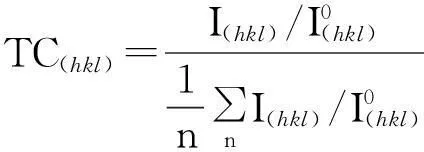
圖2為薄膜厚度對GaZnO樣品各個晶面衍射峰強度(I(100)、I(002)、I(004))的影響,可以看出,I(100)、I(002)和I(004)均顯示出相同的變化趨勢,隨著薄膜厚度的增加,它們都是先增加而后減小.通過觀察圖中的I(100)、I(002)、I(004)可見,對于同一個樣品而言,I(002)比I(100)大3個數量級、比I(004)大2個數量級,這說明所制備的GaZnO樣品均具有明顯的(002)晶面擇優取向特性.晶體的擇優取向程度可以采用晶面的織構系數(TC(hkl))進行表征.織構系數TC(hkl)定義為某個晶面的相對衍射強度與各晶面相對衍射強度總和的平均值之比[43].即有:
(1)

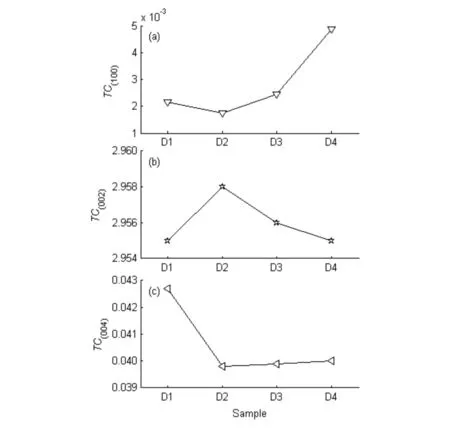
圖3 GaZnO薄膜的織構系數Fig. 3 The values of TC(hkl) of the GaZnO thin films
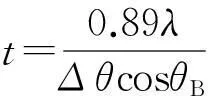
圖4(a)給出了不同薄膜厚度時GaZnO樣品(002)衍射峰的半高寬(Δθ)數據,厚度對薄膜半高寬Δθ具有較為明顯的影響,薄膜厚度增加時,Δθ逐漸減小,但當厚度大于510 nm時,Δθ則隨之增大.可見,GaZnO樣品的半高寬Δθ隨厚度增大而呈現出先減后增的變化趨勢.由于樣品(002)衍射峰位的變化很小,因此半高寬Δθ的大小反映了薄膜結晶質量的好壞.基于XRD測試數據,GaZnO樣品的晶粒尺寸t可以利用謝樂公式[44,45]進行計算:
(2)
(2)式中,λ為X射線波長(λ=0.15406 nm),θB為最大衍射峰(002)晶面的Bragg角,Δθ為(002)衍射峰的半高寬.圖4(b)為GaZnO樣品的晶粒尺寸t隨薄膜厚度變化的關系曲線,由圖可見,薄膜厚度明顯影響GaZnO樣品的晶粒尺寸t,當厚度從320 nm增大到510 nm時,GaZnO樣品的晶粒尺寸t迅速增大(97.8 nm),但當厚度進一步增大時,其晶粒尺寸t則明顯減小.GaZnO薄膜開始生長時,由于薄膜與基片之間存在晶格不匹配,所以開始生長的薄膜存在較多的位錯等晶體缺陷,導致GaZnO薄膜的結晶質量較差.隨著薄膜厚度的增加,由于先生長的薄膜可以作為后生長薄膜的緩沖層,因此后生長的薄膜的位錯等晶體缺陷大大減少,所以GaZnO薄膜的晶化程度顯著提高,晶粒尺寸明顯增大.上述結果表明:薄膜厚度對GaZnO樣品的晶體質量具有明顯的影響.
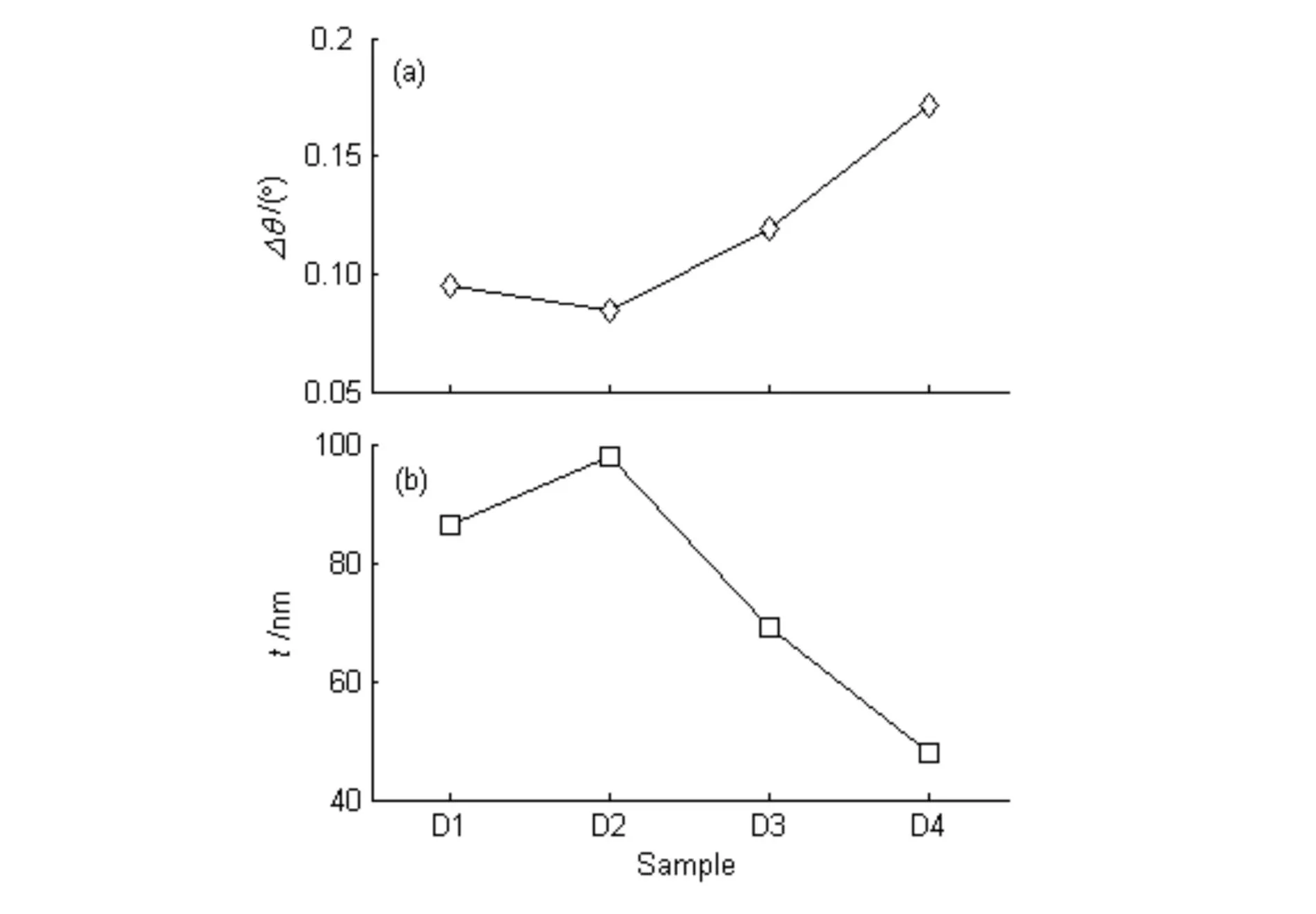
圖4 GaZnO薄膜的半高寬和晶粒尺寸Fig. 4 The values of Δθ and t for the GaZnO thin films
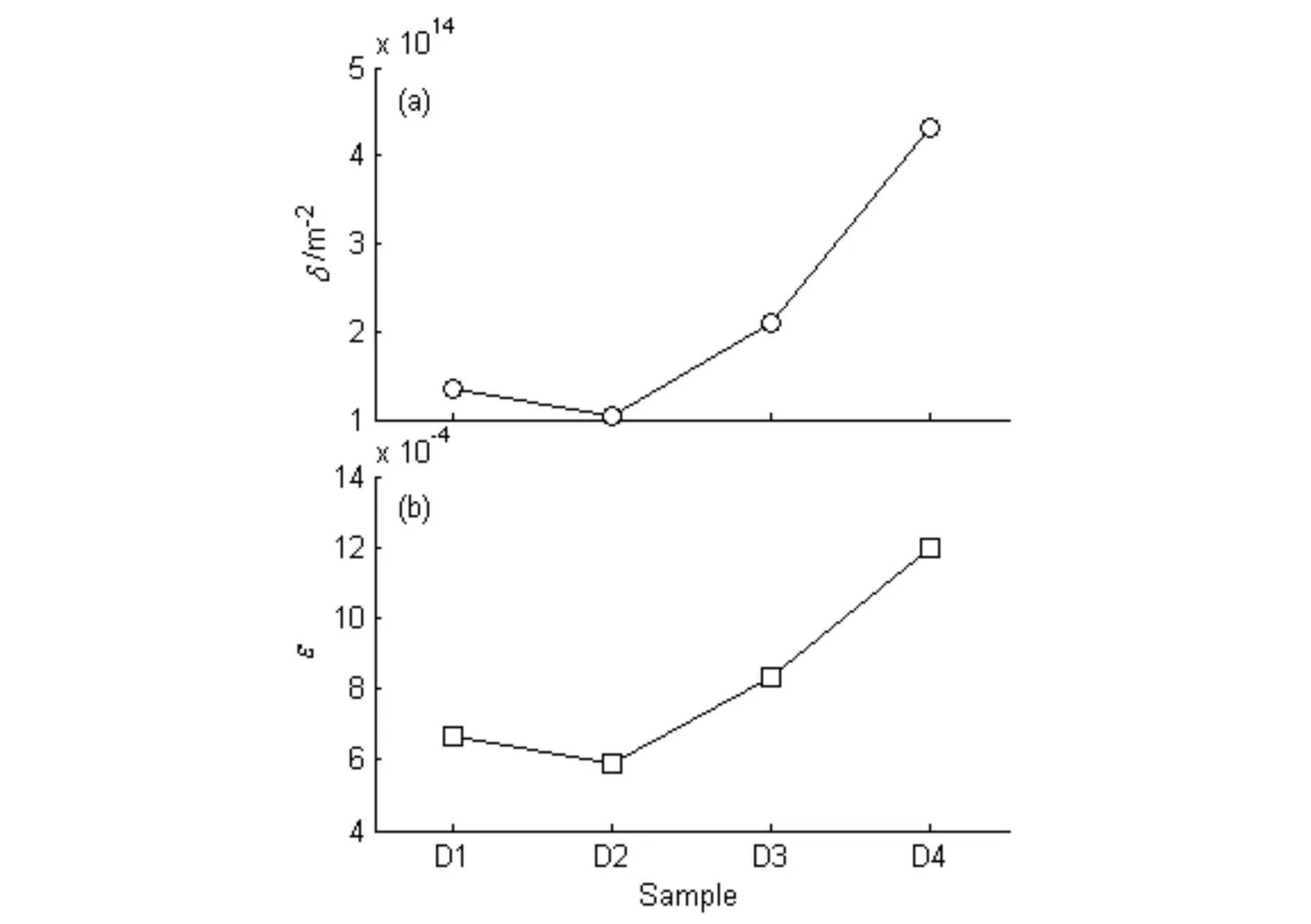
圖5 GaZnO薄膜的位錯密度和晶格應變Fig. 5 The values of δ and ε for the GaZnO thin films
GaZnO薄膜樣品的位錯密度(δ)和晶格應變(ε)可以根據下列公式[46,47]進行計算:

(3)

(4)
不同厚度時GaZnO薄膜樣品的δ和ε數值如圖5所示,可以看到,隨著薄膜厚度的增加,δ和ε先減小后增大,它們呈現出相同的變化趨勢,當薄膜厚度為510nm時,GaZnO樣品D2具有最小的位錯密度δ和晶格應變ε,分別為1.044×10¹⁴m-2和5.887×10⁻⁴.
GaZnO薄膜為六角纖鋅礦結構,其晶格常數可以根據(5)式確定[48]:

(5)
(5)式中,a和c為晶格常數.對于(002)晶面,由(5)式可得:
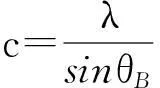
(6)
對于(100)晶面,(5)式可變為:

(7)
另外,GaZnO薄膜樣品的Zn-O鍵長(L)由公式(8)計算[49]:

(8)
(8)式中,a和c為樣品的晶格常數,u與a、c之間的關系為[49]:
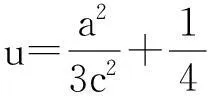
(9)
圖6為不同薄膜厚度時GaZnO樣品的晶格常數a、c和Zn-O鍵長L的數值,從圖6看出,薄膜厚度增大時,參數a、c和L表現出相同的變化趨勢,在實驗研究的薄膜厚度范圍內,a、c和L的數值范圍分別為0.33424~0.33543 nm、0.52351~0.52475 nm和0.20201~0.20266 nm,相應的c/a比范圍為1.56443~1.56629,這些結果與標準ZnO試樣(JCPDS No. 36-1451)數據(a=0.32498、c=0.52066、L=0.19778、c/a=1.60213)基本一致.Srinivasan小組[50]和Anandan等人[51]在研究鋰摻雜ZnO和釔摻雜ZnO薄膜時也有類似的報道.

圖6 GaZnO薄膜的晶格常數和Zn-O鍵長Fig. 6 The values of a, c and L for the GaZnO thin films
3結語
采用Ga2O3:ZnO高密度陶瓷靶作為濺射材料,利用射頻磁控濺射技術在玻璃基片上制備了GaZnO半導體薄膜,研究了薄膜厚度對GaZnO樣品生長特性和微結構性能的影響.研究結果表明:所制備的GaZnO樣品均為六角纖鋅礦型的多晶結構,并表現出(002)晶面的擇優取向生長特性.薄膜厚度對GaZnO樣品的(002)取向性、晶化程度和微結構參數等具有明顯的影響,隨著薄膜厚度的增加,GaZnO樣品的(002)擇優取向程度和晶粒尺寸表現為先增大后減小的變化趨勢,而半高寬、位錯密度和晶格應變則呈現出先減小后增大的變化趨勢.當薄膜厚度為510 nm時,GaZnO樣品的晶粒尺寸最大為97.8 nm、織構系數TC(002)最高為2.959、半高寬最窄為0.084°、晶格應變最小為5.887×10⁻⁴、位錯密度最低為1.044×10¹⁴m-2,同時所制備GaZnO樣品的晶格常數和Zn-O鍵長均與標準樣品相吻合.
參考文獻
[1]Kim J Y, Lee K, Coates N E, et al. Tandem polymer solar cells fabricated by all-solution processing [J]. Science, 2007, 317 (5835): 222-225.
[2]Tang C W. Two-layer organic photovoltaic cell [J]. Appl Phys Lett, 1986, 48 (2): 183-185.
[3]李襄宏, 唐定國. 基于1,10-鄰菲羅啉衍生物的兩親性釕配合物的合成及其光電轉化性質 [J]. 中南民族大學學報(自然科學版), 2009, 28 (3): 9-13.
[4]顧錦華,龍路,蘭椿,等.鋁摻雜氧化鋅薄膜的光學性能及其微結構研究[J].中南民族大學學報(自然科學版),2014,33(4):78-84.
[5]Sio A D, Chakanga K, Sergeev O, et al. ITO-free inverted polymer solar cells with ZnO:Al cathodes and stable top anodes[J]. Sol Energy Mater Sol Cells, 2012, 98 (1): 52-56.
[6]鐘志有,蘭椿,龍路,等.磁控濺射法制備ZnO:Ga薄膜的結晶質量及其應力研究[J].中南民族大學學報(自然科學版), 2015, 34 (1): 66-72.
[7]Burroughes J H, Bradley D D C, Brown A R, et al. Light-emitting diodes based on conjugated polymers [J]. Nature, 1990, 347 (6293): 539-541.
[8]Tang C W, VanSlyke S A. Organic electroluminescent diodes [J]. Appl Phys Lett, 1987, 51 (12): 913-915.
[9]Zhong Z Y, Jiang Y D. Surface treatments of indium-tin oxide substrates for polymer electroluminescent devices [J]. Phys Status Solidi A, 2006, 203 (15): 3882-3892.
[10]陳首部, 韋世良, 何翔, 等. 改性方法對氧化銦錫襯底表面形貌和化學組分的影響 [J]. 中南民族大學學報(自然科學版), 2009, 28 (4): 43-46.
[11]You Z Z, Hua G J, Lou S F. Optoelectrical characteristics of organic light-emitting devices fabricated with different cathodes [J]. Int J Electron, 2011, 98 (1): 129-135.
[12]顧錦華, 鐘志有, 何翔, 等. 真空退火處理對光敏薄膜及聚合物太陽電池性能的影響[J]. 中南民族大學學報(自然科學版), 2009, 28 (3): 30-33.
[13]Kim H, Horwitz J S, Kim W H, et al. Doped ZnO thin films as anode materials for organic light-emitting diodes[J]. Thin Solid Films, 2002, 420-421 (1): 539-543.
[14]Cao H T, Sun C, Pei Z L, et al. Properties of transparent conducting ZnO:Al oxide thin films and their application for molecular organic light-emitting diodes[J]. J Mater Sci: Mater Electron, 2004, 14 (1): 169-174.
[15]Kim H, Piqué A, Horwitz J S, et al. Effect of aluminum doping on zinc oxide thin films grown by pulsed laser deposition for organic light-emitting devices[J]. Thin Solid Films, 2000, 377-378: 798-802.
[16]孫奉婁, 惠述偉. 襯底溫度對射頻濺射沉積ZAO透明導電薄膜性能的影響 [J]. 中南民族大學學報(自然科學版), 2009, 28 (2): 10-13.
[17]Kim J J, Lee J H, Ba J Y, et al. Characteristics of low-temperature-annealed ZnO-TFTs [J]. J Korean Phys Soc, 2010, 56 (1): 404-408.
[18]Shim J H, Choi J H, Lee C M, et al. Fabrication and comparison of the properties of SnInZnO and InZnO TFTs processed by using the sol-gel method [J]. J Korean Phys Soc, 2010, 57 (6): 1847-1851.
[19]Patel N G, Patel P D, Vaishnav V S. Indium tin oxide (ITO) thin film gas sensor for detection of methanol at room temperature [J]. Sensor Actuat B-Chem, 2003, 96 (1-2): 180-189.
[20]Yi I-J, Kim J-H, Choi Y J, et al. A disposable biosensor with Prussian blue deposited electrode [J]. Microelectron Eng, 2006, 83 (4-9): 1594-1597.
[21]Mitsubayashi K, Wakabayashi Y, Tanimoto S, et al. Optical-transparent and flexible glucose sensor with ITO electrode [J]. Biosens Bioelectron, 2003, 19 (1): 67-71.
[22]Minami T. Present status of transparent conducting oxide thin-film development for indium-tin-oxide (ITO) substitutes [J]. Thin Solid Films, 2008, 516 (17): 5822-5828.
[23]Guo J, Zheng J, Song X, et al. Synthesis and conductive properties of Ga-doped ZnO nanosheets by the hydrothermal method [J]. Mater Lett, 2013, 97 (1): 34-36.
[24]Rao T P, Kumar M C S, Hussain N S. Effects of thickness and atmospheric annealing on structural, electrical and optical properties of GZO thin films by spray pyrolysis [J]. J Alloy Compd, 2012, 541 (1): 495-504.
[25]Reddy K T R, Reddy T B S, Forbes I, Miles R W. Highly oriented and conducting ZnO:Ga layers grown by chemical spray pyrolysis [J]. Surf Coat Technol, 2002, 151-152 (1): 110-113.
[26]Minami T, Miyata T, Ohtani Y, et al. Effect of thickness on the stability of transparent conducting impurity-doped ZnO thin films in a high humidity environment [J]. Phys Status Solidi R, 2007, 1(1): R31-R33.
[27]Kim H, Horwitz J S, Kim W H, et al. Doped ZnO thin films as anode materials for organic light-emitting diodes[J]. Thin Solid Films, 2002, 420-421 (1): 539-543.
[28]Wang L, Swensen J S, Polikarpov E, et al. Highly efficient blue organic light-emitting devices with indium-free transparent anode on flexible substrates [J]. Org Electron, 2010, 11 (9): 1555-1560.
[29]Gorrie C W, Sigdel A K, Berry J J, et al. Effect of deposition distance and temperature on electrical, optical and structural properties of radio-frequency magnetron-sputtered gallium-doped zinc oxide [J]. Thin Solid Films, 2010, 519 (1): 190-196.
[30]Liu H, Fang L, Tian D, et al. Different magnetothermo-
electric behavior in Al- and Ga-doped ZnO thin films [J]. J Alloy Compd, 2014, 588 (1): 370-373.
[31]Kim Y H, Jeong J, Lee K S, et al. Effect of composition and deposition temperature on the characteristics of Ga doped ZnO thin films [J]. Appl Surf Sci, 2010, 257 (1): 109-115.
[32]Bie X, Lu J, Wang Y, et al. Optimization of parameters for deposition of Ga-doped ZnO films by DC reactive magnetron sputtering using Taguchi method [J]. Appl Surf Sci, 2011, 257 (14): 6125-6128.
[33]Park H-K, Kang J-W, Na S-I, et al. Characteristics of indium-free GZO/Ag/GZO and AZO/Ag/AZO multilayer electrode grown by dual target DC sputtering at room temperature for low-cost organic photovoltaics [J]. Sol Energy Mater Sol Cells, 2009, 93 (11): 1994-2002.
[34]Lin Y C, Yen W T, Shen C H, et al. Surface texturing of Ga-doped ZnO thin films by pulsed direct-current magnetron sputtering for photovoltaic applications [J]. J Electron Mater, 2012, 41(3): 442-450.
[35]Tsay C-Y, Wu C-W, Lei C-M, et al. Microstructural and optical properties of Ga-doped ZnO semiconductor thin films prepared by sol-gel process [J]. Thin Solid Films, 2010, 519 (5): 1516-1520.
[36]Tsay C-Y, Fan K-S, Lei C-M. Synthesis and characteri-
zation of sol-gel derived gallium-doped zinc oxide thin films [J]. J Alloy Compd, 2012, 512 (1): 216-222.
[37]Nam T, Lee C W, Kim H J, et al. Growth characteristics and properties of Ga-doped ZnO (GZO) thin films grown by thermal and plasma-enhanced atomic layer deposition [J]. Appl Surf Sci, 2014, 295 (1): 260-265.
[38]Saito K, Hiratsuka Y, Omata A, et al. Atomic layer deposition and characterization of Ga-doped ZnO thin films [J]. Superlattice Microst, 2007, 42 (1-6): 172-175.
[39]You Z Z, Hua G J. Structural, optical and electrical characterization of ZnO:Ga thin films for organic photovoltaic applications[J]. Mater Lett, 2011, 65 (21-22): 3234-3236.
[40]陳首部.摻錫氧化銦導電玻璃的表面改性及其性能研究[J].中南民族大學學報(自然科學版), 2014, 33 (2): 57-62.
[41]Raoufi D, Raoufi T. The effect of heat treatment on the physical properties of sol-gel derived ZnO thin films [J]. Appl Surf Sci, 2009, 255 (11): 5812-5817.
[42]Zhong Z Y, Zhang T. Microstructure and optoelectronic properties of titanium-doped ZnO thin films prepared by magnetron sputtering [J]. Mater Lett, 2013, 96 (1): 237-239.
[43]Valle G G, Hammer P, Pulcinelli S H, et al. Transparent and conductive ZnO:Al thin films prepared by sol-gel dip-coating [J]. J Eur Ceram Soc, 2004, 24 (4): 1009-1013.
[44]Hong R, Shao J, He H, et al. ZnO:Zn phosphor thin films prepared by face-to-face annealing [J]. J Cryst Growth, 2005, 284 (3-4): 347-352.
[45]黃濤, 李燦, 吳靜, 等. 四方形鈀納米片的控制合成 [J]. 中南民族大學學報(自然科學版), 2013, 32 (3): 5-7.
[46]Matheswaran P, Gokul B, Abhirami KM, et al. Thickness dependent structural and optical properties of In/Te bilayer thin films [J]. Mater Sci Semicond Process, 2012, 15 (5): 486-491.
[47]Arivazhagan V, Parvathi M M, Rajesh S. Impact of thickness on vacuum deposited PbSe thin films [J], Vacuum, 2012, 86 (8): 1092-1096.
[48]Zhang T, Zhong Z. Effect of working pressure on the structural, optical and electrical properties of titanium-gallium co-doped zinc oxide thin films[J]. Mater Sci-Poland, 2013, 31 (3): 454-461.
[49]Murtaza G, Ahmad R, Rashid M S, et al. Structural and magnetic studies on Zr doped ZnO diluted magnetic semiconductor [J]. Curr Appl Phys, 2014, 14 (2): 176-181.
[50]Srinivasan G, Kumar R T R, Kumar J. Li doped and undoped ZnO nanocrystalline thin films: a comparative study of structural and optical properties [J]. J Sol-Gel Sci Technol, 2007, 43 (2): 171-177.
[51]Anandan S, Muthukumaran S. Influence of Yttrium on optical, structural and photoluminescence properties of ZnO nanopowders by sol-gel method [J]. Opt Mater, 2013, 35 (12): 2241-2249.
中圖分類號TM914
文獻標識碼A
文章編號1672-4321(2016)01-0075-06
基金項目湖北省自然科學基金資助項目(2011CDB418); 中央高校基本科研業務費專項資金資助項目(CZW14019)
作者簡介鐘志有(1965-), 男, 教授, 博士, 研究方向: 光電信息功能材料與器件, E-mail: zhongzhiyou@163.com
收稿日期2015-11-18
