醫療旅游:國內外文獻的回顧與研究展望
2016-05-14 17:10:44劉建國張永敬
旅游學刊 2016年6期
關鍵詞:研究進展
劉建國 張永敬
[摘要]隨著社會經濟的全面發展,旅游業已經遠遠超越了傳統服務業的范疇,正在向戰略性支柱產業和現代服務業轉型升級。以追求健康為目的的醫療旅游正成為旅游業發展的新業態、新趨勢。文章通過對國內外醫療旅游研究文獻進行梳理,發現學者們的貢獻主要集中在:醫療旅游的概念界定、醫療旅游的影響因素分析、發展醫療旅游帶來的效應評價等方面,而且部分內容相對較為成熟。但從現有研究來看,普遍缺少對醫療旅游演變的影響要素、規律和機制的深入研究;從研究數據上看,現有數據較為單一,缺乏連續性的數據資料。從醫療旅游研究的不足出發,需要以學科交叉為途徑,推動跨學科的集成研究。未來研究包括:研究醫療旅游的相關理論問題;解析醫療旅游的影響因素及其機理;探討醫療旅游的靜態現狀和動態演變規律;剖析醫療旅游發展的動力機制及其效應;構建醫療旅游發展的政策體系等。
[關鍵詞]醫療旅游;文獻綜述;研究進展
[中圖分類號]F59
[文獻標識碼]A
[文章編號]1002-5006(2016)06-0113-10
Doi: 10.3969/j.issn.1002-5006.2016.06.017
引言
隨著我國經濟社會的全面發展,旅游業已經遠遠超越了傳統服務業的范疇,正在向戰略性支柱產業和現代服務業升級。為適應人民群眾消費水平的提升和產業結構的調整,2014年8月22日,《國務院關于促進旅游業改革發展的若干意見》(國發〔2014〕31號)再一次把旅游業的發展提到更加重要的地位,強調要增強旅游發展動力、拓展旅游發展空間,明確提出“推進整形整容、內外科等優勢醫療資源面向國內外提供醫療旅游服務。”
醫療旅游,作為旅游的高端業態,其發展引起政府和學術界的關注。2013年全球水療與健康峰會(GSWS)與斯坦福研究機構(SRI)聯合發布的全球醫療健康旅游產業經濟研究報告顯示,2012年全球醫療健康旅游產業規模為4386億美元[1]。據不完全統計,2012年全球“醫療游客”人數為4000萬人次,醫療旅游的人均消費達到1萬美元[2]。隨著人民群眾對旅游多樣化、多層次的消費需求不斷增強,傳統的觀光旅游已轉型升級為觀光、休閑度假,乃至療養并重的形式,醫療旅游由此將迎來新的快速發展機遇。
醫療旅游,是旅游業發展的新趨勢,是以追尋健康與享受旅游服務于一體的旅游形式,它實現了醫療業和旅游業的跨界融合。該旅游形式在國際上通常被稱為醫療旅游(medical tourism)、健康旅游(health tourism)、外科手術(surgery)旅游、醫療外包(medical outsourcing)等。從發展實踐上來看,泰國、馬來西亞和印度等國家率先對這個旅游新分支進行積極的投資并支持其發展[3-4];從研究層面來看,醫療旅游涉及的領域廣泛,包括地理、生態環境、市場營銷等多個層面,如基于游客需求和市場開發視角的醫療旅游劃分研究[5];通過設定一個支持或者反對從事醫療旅游決策程序,以及需要注意的治療事項,如質量、安全問題等探究醫療旅游的動機研究[6]。總之,不同領域的學者已經關注了醫療旅游的諸多議題、研究內容與方法。然而,面對醫療旅游業的蓬勃發展,以及全球醫療旅游格局的不斷形成,亟需系統地梳理國內外有關醫療旅游研究的演進歷程和現狀,揭示其研究動態和前沿領域,這對完善醫療旅游的研究具有重要意義。
1研究方法
對醫療旅游進行研究前,首先對文獻進行了檢索和識別。國外的文獻是通過對EBSCO、Springer Link、Sage Publications、Emerald、ScienceDirect、Web of Sciences等數據庫以及Google學術搜索、百度學術檢索,以“medical/tourism”“health/tourism”等為題名、主題、關鍵詞進行檢索,并對獲取的學術文獻逐篇甄選,最后甄選出160余篇英文文獻(截至2015年3月20日)。文獻類型包括期刊論文、論文集、會議論文、研究報告、學位論文以及著作章節。國內文獻則是通過對中國知網(CNKI)進行檢索,以“醫療旅游”“健康旅游”“保健旅游”;“醫療”并含“旅游”;“健康”并含“旅游”等為題名、主題、關鍵詞,獲得包括期刊、會議、學位論文等相關學術論文100余篇(截至2015年3月20日)。但是通過文獻篩選,發現大部分該領域的國內文獻可利用價值不高。故此,本綜述主要基于對國外文獻的梳理。本文的結構安排如下:第二部分梳理和總結了醫療旅游的定義;第三部分描述了醫療旅游的影響因素;第四部分討論了醫療旅游的評價方法、研究范式、評價領域及其效應等;第五部分總結了醫療旅游研究的相關理論視角;最后一部分總結全文并提出了醫療旅游未來研究的可能方向。
2醫療旅游的定義研究
已有的文獻表明,早期的醫療旅游(medical tourism)是從健康旅游(health tourism)中派生出來的一個新分支,它結合了旅游業和醫療業的特點。世界旅游組織將醫療旅游定義為以醫療護理、疾病與健康、康復與修養為主題的旅游服務。早在18世紀,醫療旅游興起于歐洲上層社會,醫療旅游活動僅局限于溫泉療養。到了19世紀,以保健為目的的旅游人數不斷上升,醫療旅游服務階層也從上層精英社會向工薪階層轉移。至此,醫療旅游得到飛速發展。所謂的醫療旅游,是個人有目的地離開本地區或本國去目的地接受美容整形、外科手術(surgery)、器官移植(organ transplantation)等醫療服務并享受旅游的過程。由此可見,健康旅游比醫療旅游更加寬泛。只要與健康相關的項目都包含在內,而醫療旅游一般是指與專業治療或體檢相關的項目。
總之,國內外學者主要從游客動機、游客需求、地域跨度、醫療服務產品[17-18]等多個角度對醫療旅游的概念進行界定(表1)。而且由于醫療旅游的研究尚處于初級階段,并沒有統一、標準、科學的定義,其概念界定缺乏理論的支撐,學者們對醫療旅游概念的研究呈現多元化。醫療旅游特征主要包括幾個關鍵因素:跨境、進行旅游的同時并含醫療[30-33]。學術界的普遍共識是不同于傳統的國際觀光旅游,醫療旅游呈現高品位、低價位,客流反向流動的特征,即其旅游客流主要從發達國家向發展中國家流動,并且這種現象正日益加劇。由于醫療旅游項目行程包括治病、休療養及觀光游覽,所以相比觀光旅游,醫療旅游在旅游地停留時間較長。此外,還有學者基于人類學和醫學的視角[34-35],從醫療旅游的特殊問題和現象入手[36],來探討醫療旅游發展趨勢。醫療服務與不斷上升的全球健康的不平等問題逐漸成為學者定義醫療旅游所考慮的內容之一[34,37-39]。
3醫療旅游的影響因素
3.1經濟因素
從醫療旅游的興起原因來看,主要在于人們無法負擔得起在本國接受治療的費用[7-10],而且醫療旅游的特征之一是高品質低價位。因此,醫療旅游費用是影響醫療旅游發展的主要因素之一。醫療旅游不僅包括出國就醫,還包括尋求醫療旅游目的地最先進的醫療技術和最有競爭力的醫療價格[40-44],所以醫療旅游的費用便越發得到人們的關注。醫療旅游的費用研究,主要是基于游客在醫療項目上的花費這一視角,探討目的地國家醫療旅游費用成本及其影響因素。這一領域的研究包括:一方面,醫療費用是影響游客前往國外接受治療的重要原因[45]。如心臟瓣膜手術(heart valve surgery)、髖關節置換(hip replacement)等手術,各國的費用成本差異較大。Caroline等的研究表明,游客在加拿大進行的減肥醫療和康復項目成本受到多方面的影響[46],人均花費為16 000美元[47],合理的價格對醫療旅游的發展具有顯著的促進作用[48]。Caroline等甚至認為,探究在國外與當地進行醫療服務的成本與效益將會是未來的研究方向[46]。除此之外,醫療產品的成本也是影響醫療旅游發展的重要因素之一。如泰國、馬來西亞、印度、新加坡等國醫療旅游發展的實踐表明,目的地國家可以在低成本的條件下,生產和客源國同樣質量的醫療產品,而且目的地國家具有高技能的勞動力、較低的資本成本,以及相較于客源國而言更低的旅游花費等優勢[3, 49]。另一方面,基于財政激勵和制度支持的綜合評判醫療旅游費用研究。由于醫療旅游費用不僅受生產條件與成本的制約,還受財政政策與制度等多重因素的影響。故此,國內外日益關注政府醫療機構,或者部門財團等官方旅游機構對健康旅游的影響與促進作用[3, 49]。一些學者關注財政、稅收制度對醫療旅游的影響。如對菲律賓、馬來西亞、泰國的研究表明,除了勞動力的低成本、醫療旅游基礎設施建設的完善外,優惠的稅收制度、從業者的保險、以及旅游景點保健中心等成為促進降低醫療費用、節約游客花費、支撐醫療旅游發展的重要因素[3, 13, 28, 50]。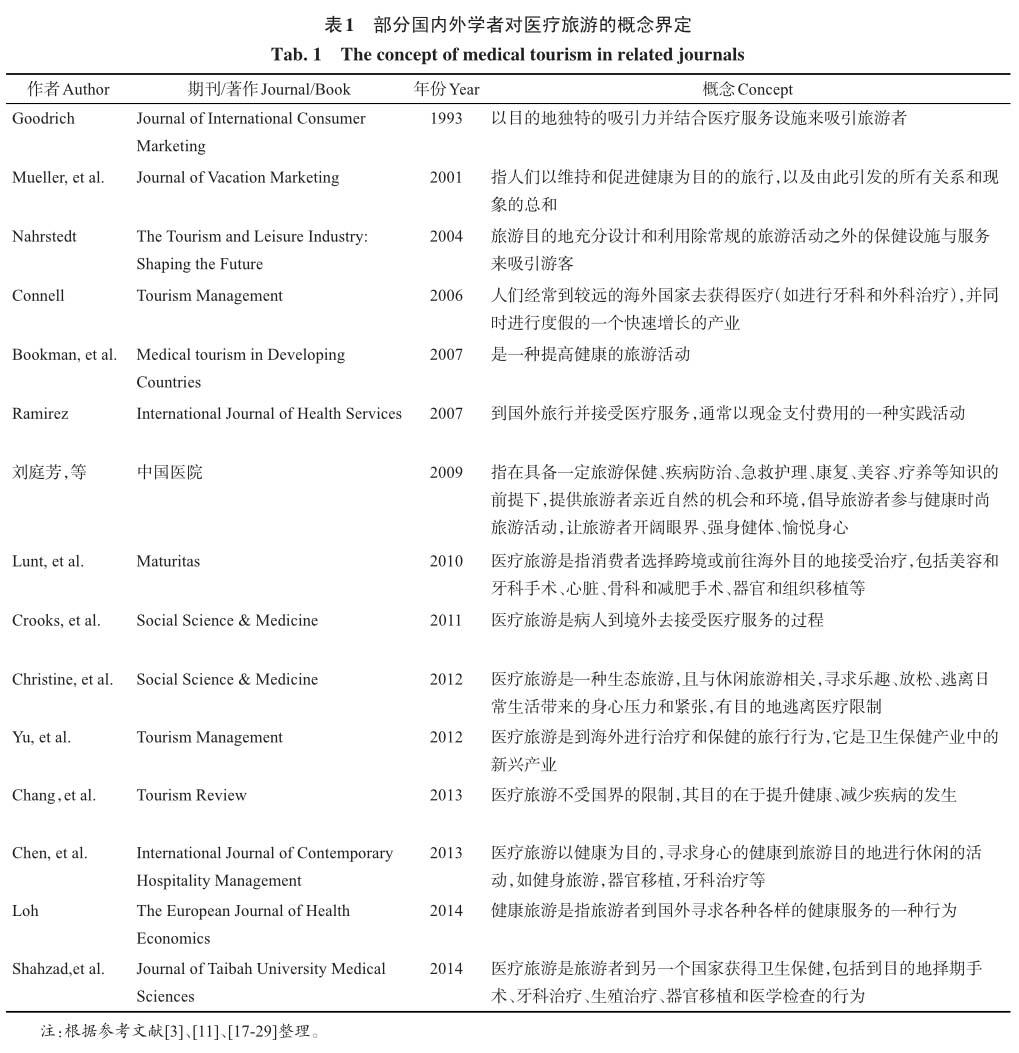
3.2醫療旅游資源
醫療旅游的產生部分是由于在本國接受治療所要等待的時間較長[11-12],或本國無法提供相關治療[13-15],以及移民人群更愿意回祖國接受治療[16],所以資源稟賦是影響醫療旅游發展的另一重要因素。關于醫療旅游資源的研究,學者們重點關注某一國家(某一城市)的特色醫療資源,或者某一區域醫院的特色醫療項目。張廣海和王佳[51]把中國的醫療旅游資源分為4類,包括:特殊氣候條件、特色中藥、傳統中醫醫術及中醫名家、現代高科技醫療技術的醫療旅游資源;并進一步地將我國醫療旅游分為4大功能區。在關注某一國家的旅游資源方面,主要集中在亞洲、美洲、東歐,如加拿大、菲律賓、馬來西亞等在減肥(bariatric surgery)、溫泉療養(SPA)、美體(body health)等特定類型的醫療手術與服務項目的優勢上[3, 13, 46, 50];關于某一區域特色醫療項目上,主要體現在對東南亞和南美地區依托現有醫療資源,提供特定類型的手術及游客旅游經歷的研究[52-53]。如阿根廷的tango產品系列的整容研究所表征的:游客通過觀看tango表演使其產生塑型美體的愿望,最終實現在阿根廷進行醫療服務[54]。此外,國家間的醫療合作協議、政府的醫療設備等的優惠稅收政策支持,也為這些醫療機構的醫療設備達到世界先進水平提供了支持。這些舉措不僅提高了本國的醫療服務標準,增加了外匯創收,而且為患者提供了可以得到及時救治的醫療資源[3, 12, 22, 55-56],從而塑造了良好的醫療服務環境與服務水平。
3.3醫療旅游需求
醫療旅游的發展盡管處于起步階段,但卻呈現出游客對醫療旅游有著更為多樣性與多元化需求的態勢。學界日益重視醫療游客的產品選擇、產品的滿意度,以及醫療旅游發展模式等對醫療旅游的影響[57]。可以認為,不同醫療游客群體的需求將影響醫療旅游的發展。當前國內外主要關注醫療旅游的產品需求[25],如探討中國、日本和韓國的游客在醫療項目產品選擇上的差異。研究結果表明,醫療旅游過程中,游客的需求表現出差異化。中國游客傾向于選擇美容和醫療保健方面的產品,而日本游客則強調康復服務。另有學者探索了中國內地游客前往香港進行醫療旅游的動機,發現生二胎、為孩子獲得香港居民身份,并享受其帶來的教育福利和醫療保障等是中國內地游客的主要動機和需求[58]。
3.4醫療服務水平
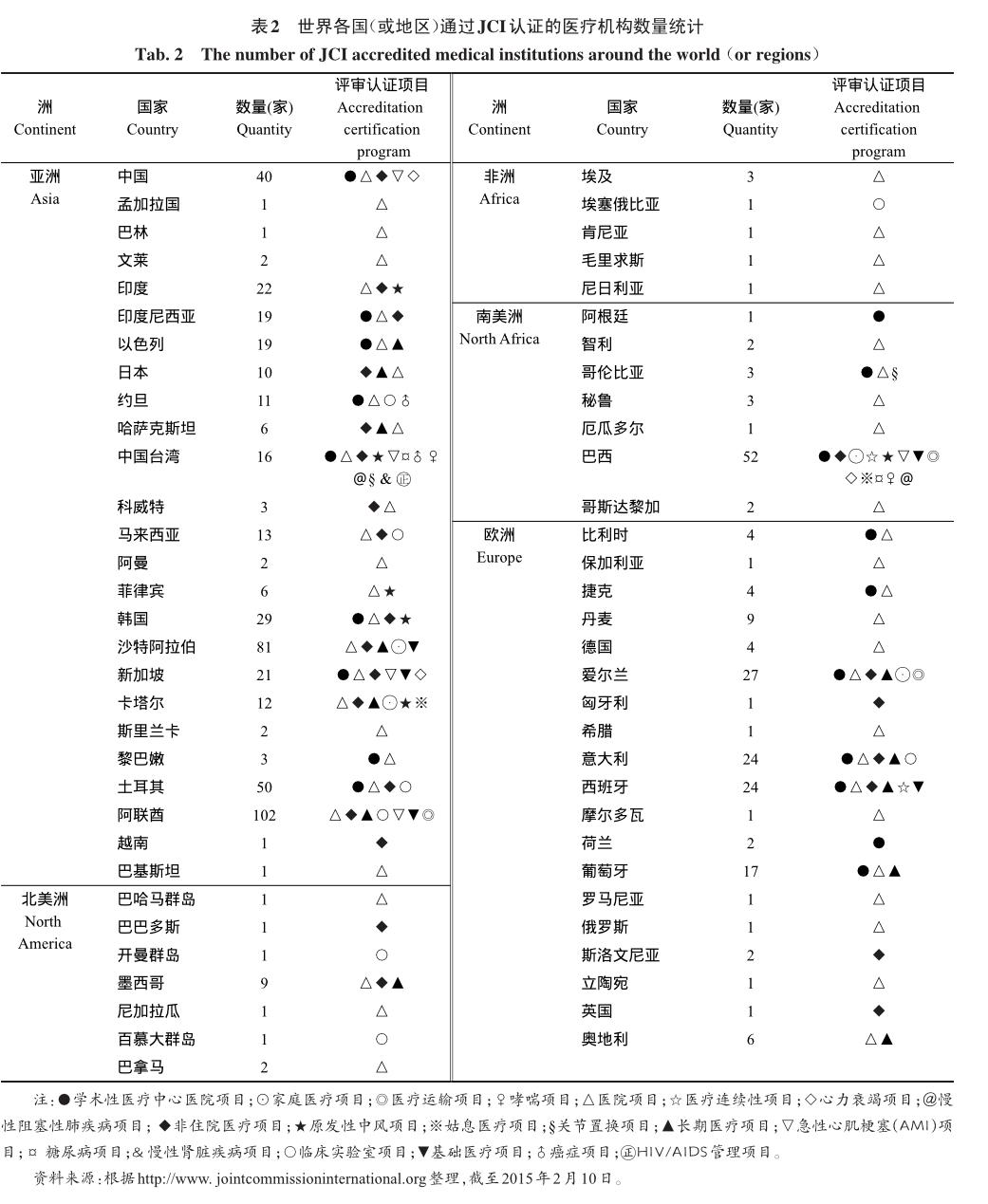
醫療旅游通常依托一定的醫學知識、醫療設施與醫務人員。從國際醫療旅游產生的動因來看,服務水平是影響其發展的重要因素[27, 59]。醫療旅游服務水平,既能客觀描述目的地的醫療基礎設施現狀及醫療旅游質量,又能揭示不同國家游客對醫療服務水平構成要素的滿意度等。具體而言,醫院服務能力與技術結構可由醫院基礎設施、醫院規模與等級等反映。在世界上認可度較高的有醫療機構評審聯合會(Joint Commission on Accreditation of Healthcare Organizations,JCAHO)和國際聯合會(Joint Commission International,JCI)。其中,JCAHO是針對美國境內的醫療機構認證,JCI則為美國境外各國醫療機構資質進行認證。醫療機構是否屬于JCI的認證項目,及其評審認證等級成為決定游客是否前往目的地的重要參考因素。通過對比各國JCI數量及其由JCI評審認證項目(表2)發現,通過JCI評審認可的醫療機構數量與地區醫療旅游發展程度存在相關性。由前面醫療旅游的定義可知,游客由于在本國的醫療成本較高或醫療資源的可獲取性等因素的影響,一般是前往海外醫療機構接受治療,這也表明一國JCI認證醫療機構的數量是影響游客選擇醫療目的地國家的重要因素。此外,隨著醫療旅游全球化的不斷發展,醫療旅游組織者在處理游客由于語言、文化習俗、行程安排等差異化問題中的協調作用日益凸顯。因此,醫療旅游組織者的作用也成為衡量醫療旅游服務水平的指標之一[60]。
3.5醫療旅游營銷途徑
由于現代生活方式增添了人們對營銷渠道需求的多樣性、復雜性,醫療旅游營銷已成為全球化、信息化背景下,影響醫療旅游發展的一大重要因素。有研究發現,醫療旅游營銷要綜合考慮游客、商務人士、醫療旅游產品運營商和供應商等主體,既需要滿足消費群體的需求和一般的營銷趨勢[57,61-63],又需要綜合醫療旅游模式[64]。綜合國內外旅游學界對醫療旅游營銷的豐富研究發現:廣告策略的使用在醫療旅游營銷中占據重要的地位,學界對此的研究興趣也日益增長[15, 23, 65-67]。而醫療旅游模式取決于旅游市場的決策者,如高檔酒店更愿意投資建設醫療旅游[68];“醫療套餐(medical packages)”也逐漸成為醫療旅游營銷中的新寵,即游客選擇套餐項目,其家人可在該醫療機構的不同中心,接受醫療服務,或游客獲得免費的往返機票及醫療旅游費用的減免等優惠政策。
3.6醫療旅游的倫理道德風險
盡管缺乏對醫療旅游倫理(medicaltourismethics)影響的實證研究,但無論在個人層面、社會層面,還是在目的地和客源國層面,以及在全球范圍內,醫療旅游潛在影響的倫理問題已經引起了學者們的廣泛關注[12, 69-70]。有學者表示應該控制醫療旅游的發展[71]。一方面,由于缺乏風險溝通,存在患者對醫療風險不知情等的影響[69-70],醫療旅游可能產生侵犯個人健康的負面影響。另一方面,醫療旅游行業可能將資源從公共部門轉向私營部門,或者調整醫療服務的優先次序,以便獲得更高的盈利,使醫療資源的配置出現錯位[72]。再一方面,患者的跨界流動也將增加感染性疾病的傳播風險[67]。同時,醫療旅游的倫理問題還體現在對全球健康公平性造成沖擊。因為如果一個國家積極推廣自己作為醫療旅游目的地的舉措,為了追求行業擴張與經濟利益增長[73],往往容易破壞一個國家內部地區間以及國與國之間的醫療平衡。
除此之外,由于各國的法律和倫理上的差異,一些特殊醫療服務項目如肥胖手術、器官移植等將會導致社會問題的產生。Caroline等提出了肥胖外科手術會提高道德和倫理的風險[46]。有學者從現象學的角度來探究醫療旅游,發現女性的性冒險旅游現象是一個較復雜且多維的問題,它涉及到文化與地域之間的沖突,并相互影響,而語言障礙以及旅行風險的不可預知性,也提高了醫療旅游過程中道德文化悖論的發生率[74-75]。另有研究認為,生育醫療盡管能夠適用于醫療旅游,但是并沒有完全反映病人的實際情況,其隱藏的部分信息在于研究者的意圖和目標人群。比如在德國和以色列的公共媒體中,對“生育旅游”多數持批評的態度[76]。Adams等進一步認為醫療旅游的發展需要有諸如網站一樣的工具作為支撐,并強化醫療旅游企業的社會倫理責任[77]。總之,醫療旅游的道德倫理問題影響到了醫療旅游業的發展。
4醫療旅游的綜合評價
4.1醫療旅游評價方法
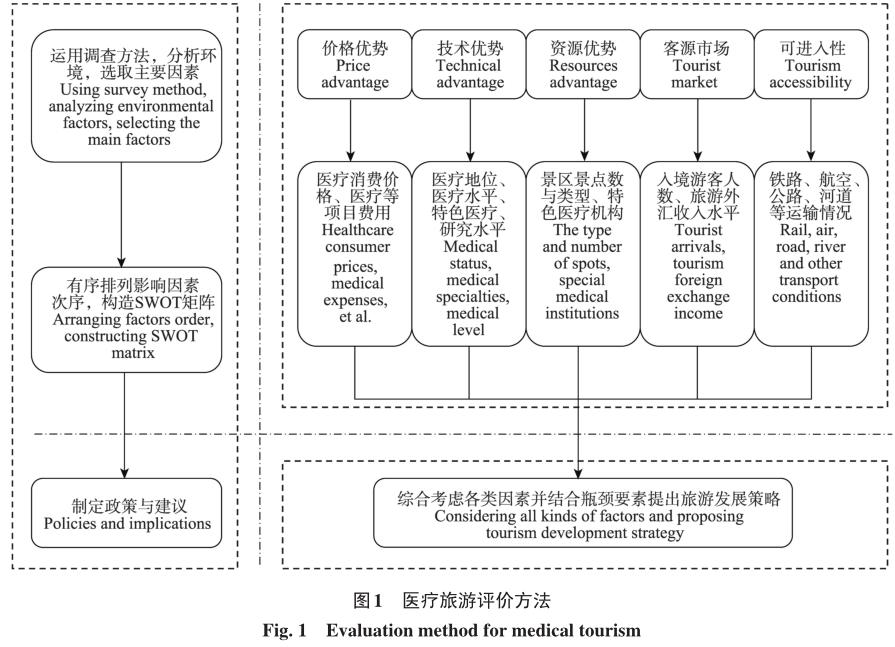
醫療旅游的評價方法很多,如采用調查和計量分析的方法對醫療旅游進行評價分析[78-79];運用半結構化訪談的分析方法等[80-81]。William和Lefteris基于是否應該鼓勵醫療旅游,如果是的話以何種形式進行的前提,采用ANP(Analytic Network Process)的方法,從醫療旅游的收益、機會、成本和風險4個方面進行分析,研究認為自我選擇醫療旅游優于雇主或者政府資助計劃的形式[82]。還有學者運用價格、技術、相關資源、客源市場,以及區域可進入性等綜合數據,對醫療旅游進行多維度的評價[12-13, 24, 72, 83]。如綜合運用調查研究方法,分析環境因素,選取主要影響因素;有序排列影響因素次序,構造SWOT矩陣;最終制定醫療旅游發展的政策建議(圖1)。
4.2醫療旅游的可行性評價及其范式
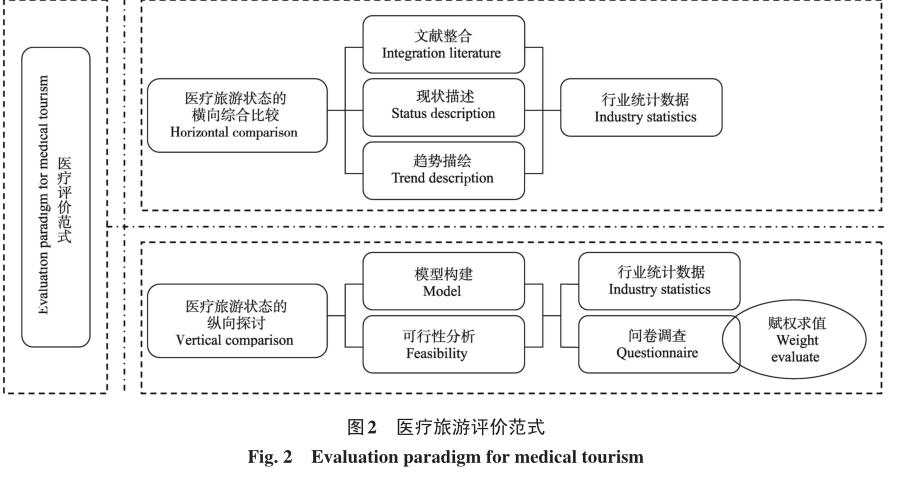
醫療旅游綜合評價是針對醫療旅游可持續發展或醫療旅游市場可行性等問題部分綜合或全面勾勒了醫療旅游的狀態及其發展趨勢。由于評價過程,評價內容、方法等不同,其研究范式存在差異。但是主要集中在對醫療旅游的橫向和縱向綜合評價上。在醫療旅游的橫向綜合比較方面,主要是尋找發展醫療旅游的優劣勢,研究醫療旅游發展存在的問題及其破解途徑,多采用經濟數據和社會環境數據來評估醫療的發展[24, 76]。在醫療旅游的縱向探討方面,主要是評價地區開展醫療旅游的可行性態勢,采用政治、經濟、社會、環境等統計數據進行綜合衡量[3, 12-13, 28, 41-44, 49-50]。
4.3醫療旅游的評價領域
醫療旅游評價,多選擇國家、城市或某一地區的特色醫療服務為研究對象。以國家或城市為尺度的醫療旅游評價研究,主要是深入分析其醫療發展水平及其影響因素等。研究的國家主要包括印度、新加坡、伊朗等;研究的城市主要集中在廈門、香港、上海、長沙和北京等[24, 84-87]。實證研究表明:這些國家或地區醫療旅游整體發展狀況趨好,其中醫療旅游服務設施要素等硬環境優于軟環境;經濟發達的區域與欠發達區域的醫療旅游差異較大,居民的醫療旅游服務需求呈現多元化的趨勢;同時,明確城市的醫療旅游特色產品是發展醫療旅游的基礎。此外,醫療旅游的風險也是評價的內容之一。一些學者認為,致力于醫療旅游發展的國家還需考慮其潛在的不利因素,如資金周轉、醫療隊伍、醫療技術及預防措施等,都將阻礙醫療旅游的發展壯大,特殊醫療服務人員的需求不斷提高,會使醫療旅游的成本增加;醫療旅游可能擴大傳染病和毒品在全球范圍的傳播[11, 15, 65, 67, 88]。而且,醫療旅游產生不良后果的情況下,患者如何尋求補救也是學者們關注的一大領域。有警告說,海外診所不根據當地的標準和法規進行監管。由此選擇海外醫療旅游會帶來一定的挑戰,比如醫療失敗如何追究投訴和得到補償[4]。誰應該資助術后并發癥患者的后續治療,術后的護理和副作用等問題都面臨一系列倫理和道德的困境[89]。
4.4醫療旅游的經濟效應評價
盡管目的地國家缺乏醫療游客的數量和所產生的經濟利益方面的可靠數據,但醫療旅游的經濟效益得到學者們的普遍關注[90]。Horowitz等[91]曾經預測,2012年亞洲地區醫療旅游收入為400萬美元以上。Lautier的研究認為,每年醫療旅游的消費約為 600億美元[92]。當然,目前尚未有該方面的可靠數據。一些學者通過對醫療游客的數量進行分析,發現醫療旅游產業帶來的收益是被高估的[22, 93-94]。但一些事實也得到了印證,如美國跨境醫療服務收益以每年20%的比例增長;由于人力資源的充裕和醫療技術水平的發達,泰國、新加坡、馬來西亞、菲律賓和印度等國家的醫療旅游收入非常可觀,且進入了世界先列水平之列[59]。
4.5醫療旅游的社會效應評價
醫療旅游的發展促進了全球知識的交流與互動,帶動了醫療業與旅游業相關產業的發展,而且也帶動了社會的發展。醫療旅游不僅提高國民收入生產總值、增加國民收入與外匯,而且也是提高服務與就業率、保持國際貿易收支平衡和旅游業繁榮的重要渠道[11]。Schroth和Khawaja[95]的研究認為,突尼斯的醫療服務提供的就業崗位約為5000個,為國家出口總額的貢獻率達到1%。當然,醫療旅游業的發展也帶來較多的負面影響。一方面,正如Keckley和Underwood[96]的研究所表征的:對客源國來說,病人外流導致了醫療產品供應商的損失,如美國醫療提供商損失159億美元,而當病人外流數量達到一定規模之后,將導致本國醫療從業人員面臨失業的威脅。另一方面,如Bauer[97]認為,對目的地國家而言,醫療旅游的負面效應主要體現在其所帶來的激烈的行業競爭、目的地資源承載力的加重、當地居民享受醫療服務質量可能會下降等沖擊,尤其是對于醫療資源匱乏的旅游目的地而言,可能會侵害目的地居民的健康利益。
4.6醫療旅游的文化效應評價
Yu和Ko[25]從文化的視角,運用探索性因子分析法,對中、日、韓三國游客在韓國濟州島的醫療旅游進行研究,發現影響他們追求醫療旅游的因素存在巨大差異。該研究描述了醫療旅游的3個文化群體之間的鮮明特色。韓國游客更加看重目的地的便利;日本游客更加關注相關的醫療服務和保健服務的便捷性、停留時間的長短和成本的高低;而對中國游客來說,醫療旅游的成本更具敏感性。從醫療內容上看,中國游客首選小手術,最令中國游客感興趣的是美容等審美方面的醫療服務。這種文化的差異決定了“韓流”在中國市場上廣受歡迎,導致中國對化妝品或整形手術的需求增加。而日本游客將重點放在了做大型手術,以及與生活緊密相關的疾病康復上。
5醫療旅游研究的理論視角
從學科性質角度來說,旅游學是一門應用性較強、范圍較廣的學科,理論基礎較為薄弱,可以說很多理論基本上都適用于旅游學領域的任何分支的研究。醫療旅游的發展融合了醫學和旅游學的內容,這就決定了醫療旅游的研究更加缺少理論支撐。這里,嘗試從研究內容和研究方法兩個層面對醫療旅游研究的理論視角進行簡單的梳理。
5.1基于研究內容的理論視角
5.1.1社會交換理論
社會交換理論(social change theory)在醫療旅游的研究中被廣泛地運用。這一理論認為,社會交往是一個交換的過程,其目的是實現社會交換的成本最小化和報酬最大化。也就是說,當能給人們提供較高報酬,且使得人們付出的成本最小化時,人們就會繼續這種社會關系,否則將可能放棄該社會關系。因此,從社會交換理論的角度來研究醫療旅游時,發現當游客從醫療旅游過程中,獲得較高的滿意度或收益時,游客對醫療旅游的發展起促進作用,反之,則會起阻礙效果。一些學者運用社會交換理論對醫療旅游的滿意度進行研究[24, 44, 62]。
5.1.2心境理論
20世紀70年代,關于心境理論(the situational theory)及其實證研究不斷涌現。心境能夠影響人們對接收到的信息的處理情況,從而影響人的期望,是影響滿意度的重要因素之一。這一理論認為,影響人們滿意度的因素包括情緒、期望、體驗、整體滿意度和忠誠度等。其反映的是,當人處于某一特定情形下而出現的短暫、溫和而抽象的情緒狀態。從醫療旅游的研究來看,提及此理論的文獻相對較少,如張維亞等[98]的研究發現,心境狀態對于醫療旅游者的期望、體驗和滿意度的形成有著顯著影響。但是學者們的研究范式表明了心境理論對于醫療旅游的適用性與可行性。心境理論對于研究醫療旅游者的滿意度具有普適性,心境可以通過無意識的方式影響醫療游客對市場做出的期望假設和體驗評價[99-101]。心境同樣受到旅游服務提供商的行為影響[102]。一些文獻中所提及到的醫療服務的滿意度評價就是醫療旅游者的一種內心期望與現實感受對比做出的反映[27, 59]。
5.1.3期望確認理論
期望確認理論(expectation confirmation theory,ECT)認為,消費者的持續意向產品或服務受其先前使用該產品或者服務滿意度的影響[5, 103-104]。ECT受5個方面的影響,包括期望、感知性能、確認、滿意度和持續意向。根據ECT,消費者首先形成某一個特定的產品或服務的初始預期;然后消費者購買并使用這一產品或服務;使用產品或服務后,消費者基于實際使用的性能對其進行評價;接著,消費者會將感知與其初始期望進行比較,判斷是否對產品或服務滿意。一個滿意的消費者開發了一個持續的意圖,而一個不滿意的消費者尋求其他替代品。由于這一理論的實用性,它被用在各種研究的理論基礎領域。早期的文獻中,Gilbert等[105]運用了ECT的相關理論,對醫生、診所和醫院急診室等進行評價,但并沒有提供多少洞察醫療旅游的見解。而后,Guiry和Vequist[106]曾對在美國外進行醫療旅游的美國游客進行了一項調查,其研究內容主要是關于醫療旅游者的期望與醫療服務提供者的服務質量感知,結果發現醫療游客的滿意度和連續性意圖被忽略了。Chou等[107]通過運用ECT,擴展了醫療旅游的研究。在他們的文獻中,提供了影響醫療旅游預期的不同概念模型,使得海外醫療機構服務滿意度的評價更加清晰和易于識別。由此,探究消費者的滿意度,能夠彌補現有醫療旅游文獻缺乏回購意向研究的不足,為未來探究影響游客在海外進行醫療旅游服務滿意度的因素奠定了基礎。
5.2基于研究方法的理論視角
扎根理論(grounded theory)于1967年由社會學家Barney和Anselm提出。其本質上屬于歸納的研究范式,是一種定性的研究方法。這一理論不設定任何理論假設,而是針對某一研究問題,通過對搜集到的原始資料進行系統性的分層歸納,自下而上地建構理論,并提煉出扎根于實際現象和實際資料的理論體系。Petrosoniak等[108]運用扎根理論,對國際醫療旅游中的相關課程進行研究,發現了國際健康課可能的潛在風險,建議醫療和健康教育機構部門在組織醫療旅游者出國前進行相關的課程培訓,以減少對醫療旅游業的負面影響,同時建議醫療旅游者進行自我反思,并對參加的國際健康課程批判評估。Snyder等[69]通過對加拿大15名參與國外慢性腦脊髓靜脈功能不全(CCSVI)治療的患者進行跟蹤研究,發現這些患者之所以去往國外治療,是因為對加拿大衛生系統失去了信任,尤其是對醫療專家的信任喪失較為嚴重,并建議政府部門重塑醫療衛生體系。總之,現有文獻充分表明了這些理論方法在醫療旅游研究中的運用。
6評價與展望
6.1旅游學界對醫療旅游研究的貢獻與不足
旅游學術共同體從未將醫療旅游拒之門外,相反對這一領域的關注越來越多[110]。旅游學的性質和研究對象決定了對醫療旅游進行研究大有作為。盡管國內對這一問題的研究相對比較滯后,但國內外研究的貢獻主要集中在:醫療旅游的概念界定、醫療旅游的影響因素及發展醫療旅游帶來的效應評價等方面,而且部分內容相對較為成熟。但從評價內容上來看,現有文獻普遍關注醫療旅游的現狀這一表象,缺少對醫療旅游演變的影響因素、規律和機制的研究;從研究數據上看,現有數據較為單一,缺乏連續性的數據資料。總之,現有研究仍存在一些缺憾。
6.2醫療旅游研究的可能方向
通過對現有文獻的梳理,筆者認為醫療旅游的研究需要在如下議題進行深入探討:
(1)以理論問題研究為突破口,厘清相關理論問題。綜觀國內外文獻,可以發現對于醫療旅游的理論問題尚未有清晰的脈絡。已有研究多局限于實際經驗的總結,缺少對醫療旅游的影響因素及其機理系統全面的研究。有鑒于此,需要從理論層面對醫療旅游的相關理論內涵、影響因素及其機理等進行系統而全面地分析。
(2)關注醫療旅游發展靜態現狀的同時,需要深入剖析其動態演進規律。現有研究普遍關注醫療旅游的現狀,缺少從不同空間尺度、不同時間維度對醫療旅游動態演進規律性特征的深入研究。因此,深入把握醫療旅游發展的動態演進規律性特征尤為重要。
(3)需多角度分析醫療旅游發展的動力機制。從已有文獻來看,關于醫療旅游動力機制的深入探討略顯不足,需要多角度分析醫療旅游業的動力機制。從醫療旅游的需求層面來看,需要深入分析不同游客的醫療旅游動機和游客的產品需求,從而便于細化醫療旅游市場;從醫療旅游的供給角度來看,不同地區需要結合其資源稟賦的優勢來提供差異化的產品和服務。
(4)醫療旅游發展的相關政策體系研究亟待展開。伴隨旅游業的不斷發展,醫療旅游迎來了全新的發展機遇,但是醫療旅游的發展仍然受到體制機制的制約。如何通過發展醫療旅游,實現優勢醫療資源面向國內外提供醫療旅游服務,如倡導生活方式類醫療旅游,弘揚中國傳統文化;引導相對閑置的私立醫院吸引境外醫療旅游客源等等,實現中國旅游業的轉型升級、創新發展是中國旅游發展政策的一大理論課題,而現有研究難以滿足國家政策的需求。
(5)需要關注發展醫療可能產生的負面影響。醫療旅游不僅包括醫療旅游者的流向、需求及醫療旅游市場的發展重點、醫療旅游帶來的經濟發展等正面效應,還需要深刻剖析醫療旅游可能帶來的負面效應。如一些研究發現的醫療旅游帶來的道德風險,不容易監管等諸多問題。
總之,在經濟全球化與世界經濟一體化發展的背景下,未來的方向需要緊密結合國家發展所需,以學科交叉為途徑,推動跨學科的集成研究,彰顯旅游特色,從醫療旅游研究的不足出發,對醫療旅游的相關理論內涵進行研究;深入分析醫療旅游的影響因素及其機理;研究醫療旅游的靜態現狀和動態演變規律;剖析醫療旅游的動力機制及其效應;加強醫療旅游發展的政策體系研究等。
參考文獻(References)
[1]Guo Liping. Light medical visitors [EB/OL]. Nandu weekly, 2014 twenty-ninth.http://www.nbweekly.com/news/special/201408/ 37188. Aspx. 2014-08-13. [郭麗萍.“輕醫療”游客[EB/OL].南都周刊, 2014年第29期http://www.nbweekly. com/news/special/201408/ 37188.Aspx.2014-08-13.]
[2]Dong D, Chen X. Progress of Asian Economic Integration (Annual Report 2013) [R]. University of International Business and Economics Press, 2013: 49-58.
[3]Bookman M Z, Bookman K R. Medical Tourism in Developing Countries[M]. New York and Hampshire: Palgrave Macmillan, 2007:1-10.
[4]MacReady N. Developing countries court medical tourists[J]. The Lancet, 2007, (2): 1849-1850.
[5]Kellar G M, Preis M W. Satisfaction and repurchase intention: B2B buyer-seller relationships in medium technology industries[J]. Academy of Information and Management Sciences Journal, 2011, 14(2): 11-26.
[6]Runnelsa V, Carrerab P M. Why do patients engage in medical tourism?[J]. Maturitas, 2012, 73(4): 300-304.
[7]Milstein A, Smith M. Americas new refugees- seeking affordablesurgeryoffshore[J].NewEnglandJournalof Medicine, 2006, 355(16): 1637-1640.
[8]Burkett L. Medical tourism: Concerns, benefits, and the American legal perspective[J]. Journal of Legal Medicine, 2007, 28(2): 223-245.
[9]Dunn P. Medical tourism takes flight[J]. Hospitals and Health Networks, 2007, 81(11): 40-42; 44.
[10]Masi D C E, Sutton B. Transnational body projects: Media representations of cosmetic surgery tourism in Argentina and the United States[J]. Journal of World-Systems Research, 2013, 19(1): 57-81.
[11]Annette B, Arellano R D. Patients without borders: The emergence of medical tourism[J]. International Journal of Health Services, 2007, 37(1): 193-198.
[12]Turner L. First world health care at third world prices: Globalization, bioethics and medical tourism[J]. Bio Societies, 2007, 2(3): 303-325.
[13]Turner L. Medical tourism: Family medicine and international health related travel[J]. Canadian Family Physician, 2007, 53(10): 1639-1641, 1646-1648.
[14]Muzaffar F, Hussain I. Medical tourism: Are we ready to take thechallenge?[J].JournalofPakistanAssociationof Dermatologists, 2007, 17(2): 215-218.
[15]Connell J. Medical Tourism[M]. Wallingford and Cambridge: CAB International, 2011: 1.
[16]Reed C M. Medical tourism[J]. Medical Clinics of North America, 2008, 92(6): 1433-1446.
[17]Liu Tingfang, Su Yanfang, Su Chengfu. Review of medical tourism in Asia and inspiration for China [J]. Chinese Hospitals, 2009, 13(1): 74-77.[劉庭芳,蘇延芳,蘇承馥.亞洲醫療旅游產業探悉及其對中國的啟示[J]中國醫院, 2009, 13(1): 74-77.]
[18]Christine N B, Careen Y. Therapeutic landscapes and postcolonial theory: A theoretical approach to medical tourism[J]. Social Science& Medicine, 2012, 74(5): 783-787.
[19]Goodrich J N. Health tourism: A new positioning strategy for tourist destinations[J]. Journal of International Consumer Marketing, 1993, 6(3-4): 227-238.
[20]Mueller H, Kaufmann E L. Wellness tourism: Market analysis of aspecialhealthtourismsegmentandimplicationsfor the hotel industry[J]. Journal of Vacation Marketing, 2001, 7(1): 5-17.
[21]Nahrstedt W. Wellness: A new perspective for leisure centers, health tourism, and spas in Europe on the global health market[J]. Weiermair K, Mathies C. The Tourism and Leisure Industry: Shaping the Future[M]. Binghamton, Haworth Hospitality Press, 2004:181-198.
[22]Connell J. Medical tourism: Sea, sun, sand and surgery[J]. Tourism Management, 2006, 27(6): 1093-1100.
[23]Lunt N, Carrera P. Medical tourism: Assessing the evidence on treatment abroad[J]. Maturitas, 2010, 66(1): 27-32.
[24]Crooks V A, Turner L, Snyder J, et al. Promoting medical tourism to India: Messages, images and the marketing of international travel patient[J]. Social Science & Medicine, 2011, 72(5): 726-732.
[25]Yu J Y, Ko T G. A cross-cultural study of perceptions of medical tourism among Chinese, Japanese and Korean tourists in Korea[J]. Tourism Management, 2012, 33(1): 80-88.
[26]Chang L, Beise Z R. Consumer perception of healthfulness and appraisal of health- promoting tourist destinations[J]. Tourism Review, 2013, 68(1): 34-47.
[27]Chen K H, Chang F H, Wu C. Investigating the wellness tourism factors in hot spring hotel customer service[J]. InternationalJournalofContemporaryHospitality Management,2013, 25(7): 1092-1114.
[28]Loh C P. Health tourism on the rise? Evidence from the balance of payments statistics[J]. The European Journal of Health Economics, 2014, 15(7): 759-766.
[29]Shahzad K, Shariful A. Kingdom of Saudi Arabia: A potential destination for medical tourism[J]. Journal of Taibah University Medical Sciences, 2014, 9(4): 257-262.
[30]Scheper H N. The global traffic in human organs[J]. Current Anthropology, 2000, 41(2): 191-224.
[31]Kangas B. Hope from abroad in the international medical travel of Yemeni patients[J]. Anthropology & Medicine, 2007, 14(3): 293-305.
[32]Kangas B. Complicating common ideas about medical tourism: Gender, class, and globality in Yemenis international medical travel[J]. Signs Journal of Women in Culture and Society, 2011, 36(2): 327-332.
[33]WhittakerA,SpeierA.Cycling overseas:Care, commoditization,and stratification in crossborderreproductive travel [J]. Medical Anthropology, 2010, 29(4): 363-383.
[34]Smith M C, Manderson L. The baggage of health travelers[J]. Medical Anthropology, 2010, 29(4): 331-335.
[35]Naraindas H, Bastos C. Healing holidays? Itinerant patients, therapeutic locales and the quest for health special issue[J]. Anthropology & Medicine, 2011, 18(1): 1-6.
[36]Mazzaschi A, McDonald E A. Comparative perspectives symposium: Gender and medical tourism symposium[J]. Signs Journal of Women in Culture and Society, 2011, 36(2): 1-9.
[37]Sobo E J. Medical travel: What it means, why it matters[J]. Medical Anthropology, 2009, 28(4): 326-335.
[38]Sobo E J, Herlihy E, Bicker M. Selling medical travel to US patient- consumers: The cultural appeal of website marketing messages[J].Anthropology & Medicine, 2011, 18(1): 119-136.
[39]WeiszG.Historicalreflectionsonmedicaltravel[J]. Anthropology & Medicine, 2011, 18(1): 137-144.
[40]Sadler P, Archer B. The economic impact of tourism in developing countries[J]. Annals of Tourism Research, 1975, 3(1): 15-32.
[41]Archer B, Fletcher J. The economic impact of tourism in the Seychelles[J].Annals of Tourism Research, 1996, 23(1): 32-47.
[42]Jafari J. The scientification of tourism[A]// Smith V, Brent M. Hosts and Guests Revisited: Tourism Issues of the 21stCentury[M]. Elmsford: Cognizant Communication Corporation, 2001:28-41.
[43]Sugiyarto G, Blake A, Sinclair T. Tourism and globalization: Economic impact on Indonesia[J]. Annals of Tourism Research, 2003, 30(3): 683-701.
[44]Serio S J. Las Islas de los Changos (the Monkey Islands): The economic impact of ecotourism in the region of Los Tuxtlas, Veracruz, Mexico[J]. American Journal of Primatology, 2006, 68(5): 499-506.
[45]Johnston R, Crooks V A, Snyder J.“I didnt even know what I was looking for”: A qualitative study of the decision- making processes of Canadian medical tourists[J]. Global Health, 2012, 8:23.http://www.globalizationandhealth.com/content/8/1/ 23.2015-01-10.
[46]Caroline E, Erica L W, Shahzeer K, et al. The cost of bariatric medical tourism on the Canadian healthcare system[J]. The American Journal of Surgery, 2014, 207(5): 743-747.
[47]Martin A R, Klemensberg J, Klein L. Comparison of public and private bariatric surgery services in Canada[J]. Can Journal Surge, 2011, 54(3): 154-160.
[48]Han H, Hyun S S. Customer retention in the medical tourism industry: Impact of quality, satisfaction, trust, and price reasonableness[J]. Tourism Management, 2015, 46(1): 20-29.
[49]Kumar R. Health and medical tourism in India: An overview[A]// Kumar R. Global Trends in Health and Medical Tourism[M]. SBS Publishers and Distributors, India, 2009:228-250.
[50]Joppe M. Health Tourism: Social Welfare through International Trade[M]. Edward Elgar Publisher, 2010:118-147.
[51]Zhang Guanghai, Wang Jia. Study on the resources and function zoning of medical tourism in China[J]. Resources Science, 2012, 34(7): 1325-1332. [張廣海,王佳.中國醫療旅游資源及功能區劃研究[J].資源科學,2012,34(7): 1325-1332.]
[52]Canales M T, Kasiske B L, Rosenberg M E. Transplant tourism: Outcomes of United States residents who undergo kidney transplantation overseas[J]. Transplantation, 2006, 82(12): 1658-1661.
[53]Birch J, Caulfield R, Ramakrishnan V. The complications of‘cosmetic tourism——An avoidable burden on the NHS[J]. Journal of Plastic, Reconstructive & Aesthetic Surgery, 2007, 60(9): 1075-1077.
[54]Anahi V, Rita B F. Medical tourism in tango paradise: The internet branding of cosmetic surgery in Argentina[J]. Annals of Tourism Research, 2014, 45(2): 116-131.
[55]Johnston R, Crooks V A, Snyder J, et al. What is known about the effects of medical tourism in destination and departure countries? A scoping review[J]. International Journal of Equity in Health, 2010, 9: 24. http://www.equityhealthj.com/content/9/ 1/24.2015-01-09.
[56]Johnston R, Crooks V, Adams K. An industry perspective on Canadianpatientsinvolvementinmedicaltourism: Implications for public health[J]. BMC Public Health, 2011, 11: 416. http://www.biomedcentral.com/1471-2458/11/416.2014-12-30.
[57]Viladrich A, Baron F R. Repackaging cross-border reproductive care inArgentina[J].Anthropology News, 2010, 51(1): 9-40.
[58]Ye B H, Qiu H Q, Yuen P P. Motivations and experiences of Mainland Chinese medical tourists in Hong Kong[J]. Tourism Management, 2011, 32 (5): 1125-1127.
[59]Sammita J, Rajiv Y, Meenal K. Cross-border healthcare access in south Asian countries: Learnings for sustainable healthcare tourism in India[J]. Procedia- Social and Behavioral Sciences, 2014,(157): 109-117.
[60]Wan N M, Azizah O, Mahmod S H. The moderating effect of medical travel facilitators in medical tourism[J]. ProcediaSocial and Behavioral Sciences, 2012, (65): 358-363.
[61]Smith E, Behrmann J, Martin C, et al. Reproductive tourism in Argentina:Clinicaccreditationanditsimplicationsfor consumers,healthprofessionalsandpolicymakers[J]. Developing World Bioethics, 2010, 10(2): 59-69.
[62]Cormanya D, Baloglub S. Medical travel facilitator websites: An exploratory study of web page contents and services offered to the prospective medical tourist[J]. Tourism Management, 2011, 32(4): 709-716.
[63]Viladrich A, Baron F R. Medical tourism and health care outsourcing in a global world[J]. Advances in Medicine and Biology, 2012, 61(1): 159-170.
[64]Neringa L. Changing patterns in the health tourism services sector in Lithuania[J]. Procedia - Social and Behavioral Sciences, 2014, (156): 310-316.
[65]Whittaker A. Pleasure and pain: Medical travel in Asia[J]. Global Public Health, 2008, 3(3): 271-290.
[66]Nassab R, Hamnett N, Nelson K, et al. Cosmetic tourism public opinion and analysis of information and content available on the internet[J].Aesthetic Surgery Journal, 2010, 30(6): 465-469.
[67]Connell J. A new inequality? Privatisation, urban bias, migration and medical tourism[J].Asia Pacific View, 2011, 52(3): 260-271.
[68]Ioannis S, Katsoni V, Mary G. A supply side investigation of medical tourism and ICT use in Greece[J]. Procedia - Social and Behavioral Sciences, 2014, (148): 370-377.
[69]Snyder J, Crooks V A, Johnston R. Perceptions of the ethics of medical tourism by Canadian patients: Comparing patient and academic perspectives[J]. Public Health Ethics, 2012, 5(1): 38-46.
[70]Snyder J, Adams K, Crooks V A, et al. I knew what was going to happen if I did nothing and so I was going to do something”: Faith, hope, and trust in the decisions of Canadians with multiple sclerosis to seek unproven interventions abroad[J]. BMC Health Services Research, 2014, 14: 445. http://www. biomedcentral.com/1472-6963/14/445.2014-12-25.
[71]Niechajev I, Frame J. A plea to control medical tourism[J]. Aesthetic Plastic Surgery, 2012, 36(1): 202-206.
[72]Ormond M, Sothern M. You, too, can be an international medical traveler: Reading medical travel guidebooks[J]. Health& Place, 2012, 18(5): 935-941.
[73]Terry N. Under-regulated healthcare phenomena in a flat world: Medical tourism and outsourcing[J]. Western New England Law Review, 2007, 29(4): 415-463.
[74]Runnels V, Turner L. Bioethics and transnational medical travel: India,“medical tourism”, and the globalization of health care[J]. Indian Journal of Medical Ethics, 2011, 8(1): 42-44.
[75]Penney K, Snyder J, Crooks V A. Risk communication and informed consent in the medical tourism industry: A thematic content analysis of Canadian broker websites[J]. BMC Medical Ethics, 2011, 12: 17. http://www.biomedcentral.com/1472-6939/ 12/17. 2014-12-26.
[76]Bassan S, Michaelsen M A. Honeymoon, medical treatment or big business? An analysis of the meanings of the term“reproductive tourism”in German and Israeli public media discourses[J]. Philosophy, Ethics, and Humanities in Medicine, 2013, 8: 9. http://www.peh-med.com/content/8/1/9.2015-01-16.
[77]Adams K, Snyder J, Crooks V A, et al. Promoting social responsibility amongst health care users: Medical tourists perspectives on an information sheet regarding ethical concerns in medical tourism[J]. Philosophy, Ethics, and Humanities in Medicine, 2013, 8: 19. http://www.peh- med.com/content/8/1/ 19.2014-12-18.
[78]Janet D N, Joseph S M, Muzaffer U. Measuring the effect of tourism services on travelers quality of life: Further validation[J]. Social Indicators Research, 2004, 69(3): 243-277.
[79]Philippa H J. Cancer and tourism[J]. Annals of Tourism Research, 2005, 32(1): 70-92.
[80]Brook S, Robertson D, Makuwaza T, et al. Canadian residents teaching and learning psychiatry in Ethiopia: A grounded theory analysis focusing on their experiences[J]. Academic Psychiatry, 2010, 34(6): 433-437.
[81]Sloane P D, Cohen L W, Haac B E, et al. Health care experiences of U.S. retirees living in Mexico and Panama: A qualitative study[J]. BMC Health Services Research, 2013, 13: 411. http://www.biomedcentral.com/1472-6963/13/411. 2014-12-30.
[82]William B, Lefteris Z. Medical tourism: Outsourcing surgery[J]. Mathematical and Computer Modelling, 2007, 46 (7- 8): 1144-1159.
[83]Zhang Wenju. SWOT analysis on the development of the medical tourism in Guangxi[J]. Tourism Forum, 2010, 3(3): 279-283. [張文菊.廣西醫療旅游發展SWOT分析[J].旅游論壇,2010,3(3): 279-283.]
[84]Lee C G. Health care and tourism: Evidence from Singapore [J]. Tourism Management, 2010, 31(4): 486-488.
[85]Heung V C S, Kucukusta D, Song H Y. A conceptual model of medical tourism: Implications for future research[J]. Journal of Travel and Tourism Marketing, 2010, 27(3): 236-251.
[86]Heung V C S, Kucukusta D, Song H Y. Medical tourism development in Hong Kong: An assessment of the barriers[J]. Tourism Management, 2011, 32(5): 995-1005.
[87]Farhad M, Mohammad H N E. Decisive factors in medical tourism destination choice: A case study of Isfahan, Iran and fertilitytreatments[J].TourismManagement,2011, 32(6): 1431-1434.
[88]Hall C M, James M. Medical tourism: Emerging biosecurity and nosocomial issues[J]. Tourism Review, 2011, 66(1): 118-126.
[89]Jeevan R, Armstrong A. Cosmetic tourism and the burden on the NHS[J]. Journal of Plastic, Reconstructive & Aesthetic Surgery, 2008, 61(12): 1423-1424.
[90]Keckley P H. Coughlin S. Survey of Health Care Consumers GlobalReport:KeyFindings,StrategicImplications[R]. Washington: Deloitte Center for Health Solutions, 2011: 10-14.
[91]Horowitz M D, Rosenweig J A, Jones C A. Medical tourism: Globalization of the healthcare marketplace[J]. Medscape General Medicine, 2007, 9(4): 1-7.
[92]Lautier M. Export of health services from developing countries: The case of Tunisia[J]. Social Science & Medicine, 2008, 67(1): 101-110.
[93]Ehrbeck T, Guevara C, Mango P D. Mapping the Market for Medical Travel[R]. The McKinsey Quarterly, 2008, (5): 1-11.
[94]Connell J. Contemporary medical tourism: Conceptualization, culture and commodification[J]. Tourism Management, 2013, 34(1): 1-13.
[95]Schroth L, Khawaja R. Globalization of healthcare[J]. Frontiers of Health Services Management, 2007, 24(2): 19-30.
[96]Keckley P, Underwood H. Medical Tourism: Consumers In Search of Value[D]. Washington D C: Deloitte Center for Health Solutions, 2007:10-25.
[97]Bauer I. The health impact of tourism on local and indigenous populations in resource-poor countries[J]. Travel Medicine and Infectious Disease, 2008, 6(5): 276-291.
[98]Zhang Weiya, Tao Zhuomin, Cai Bifan. The satisfaction of medical tourists based on situational theory[J]. Social Scientist, 2013, (1): 92-96. [張維亞,陶卓民,蔡碧凡.基于心境理論的醫療旅游者滿意度研究[J].社會科學家,2013,(1): 92-96.]
[99]Hosany S, Gilbert D. Measuring tourists emotional experiences toward hedonic holiday destinations[J]. Journal of Travel Research, 2010, 49(4): 513-526.
[100] Sameer H, Girish P. Patterns of tourists emotional responses, satisfaction, and intention to recommend[J]. Journal of Business Research, 2011, 66(6): 730-737.
[101] Alexandra B, Mike P, Andreas S. It is all about the emotional state: Managing touristsexperiences[J]. International Journal of Hospitality Management, 2012, 31(1): 23-30.
[102] Faullanta R, Matzlerb K, Mooradianc T A. Personality, basic emotions,andsatisfaction:Primaryemotionsinthe mountaineering experience[J]. Tourism Management, 2012, 32(6): 1423-1430.
[103] AndersonEW,SullivanMW.Theantecedentsand consequences of customer satisfaction for firms[J]. Marketing Science, 1993, 12(2): 125-143.
[104] Oliver R L. Cognitive, affective, and attribute bases of the satisfaction response[J]. Journal of Consumer Research, 1993, 20(3): 418-430.
[105] Gilbert F W, Lumpkin J R, Dant R. Adaptation and customer expectations of health care options[J]. Journal of Health Care Marketing, 1992, 12(3): 46-55.
[106] Guiry M, Vequist D G. Traveling abroad for medical care: U.S. medical tourists expectations and perceptions of service quality[J]. Health Marketing Quarterly, 2011, 28(3): 253-269.
[107] Chou S Y, Kiser A I T, Rodriguez E L. An expectation confirmation perspective of medical tourism[J]. Journal of Service Science Research, 2012, 4(2): 299-318.
[108] Petrosoniak A, McCarthy A, Varpio L. International health electives: Thematic results of student and professional interviews[J]. Medical Education, 2010, 44(7): 683-689.
[109] Hopkins L, Labonte R, Runnels V, et al. Medical tourism today: What is the state of existing knowledge?[J]. Journal of Public Health Policy, 2010, 31(2): 185-198.
Medical Tourism: Literature Review and Research Prospects
LIU Jianguo, ZHANG Yongjing(Tourism College of Beijing Union University, Beijing 100101, China)
Abstract: With the all-round development of social economy, tourism, far beyond traditional service industry, is upgrading and shifting towards the strategic maintains industry and modern service industry. For the goal of pursuing good health, medical tourism has become the new trend in the tourism development. By way of extracting the essence of relevant studies home and abroad, the paper will manifest that so far there hasn?t been an absolute normative scientific definition for the concept of medical tourism, and also point that the exploration for medical tourism has been stepping in the primary period because results of researches in this field have been still controversial.
The influential factors on the development of medical tourism include medical expenditure, medical tourism resource, tourist demands, medical marketing, the quality and the moral and ethical issues of medical service and so on. Among these factors, medical expenditure is the significant one in that one of the features of medical tourism is“high quality, low price”. As to medical tourism resource, resource endowment is also an important reason. For the aspect of tourist demands, demands of different tourist groups can also play a role in medical tourism development. With respect to the quality of medical service, the condition of local medical infrastructure and the quality of medical tourism can be objectively expressed, so does the responses from tourists home and abroad to the medical service. Moreover, under the background of globalization and informatization, the demands of marketing channel has become diversity and complex because of the development of modern life style as well as medical marketing has made contribute to the development of medical tourism. As for the moral and ethical issues in medical tourism, although lacking of empirical study, it could be found that whether from the aspect of individuals or the society, destination or the place of departure, the problem has drew the attention of scholars all over the world.
In terms of research paradigm of medical tourism, the research subject is always chosen to be a place such as a country or a city, or a certain specific brooch of medical service industry. Both the longitudinal and the cross aspects of medical tourism in overall evaluation will be involved. Concerning the cross aspects of medical tourism, evaluation of medical tourism development is concentrated on economic data and social environment, for the purpose of seeking for the advantage and disadvantage, obstacles and solutions of medical tourism development. For the longitudinal aspects of medical tourism, politic, economic, social, and environmental statistics are all taken into consideration to evaluate medical tourism comprehensively. Medical tourism not only makes efforts to the global communication and interaction, but also boots the development of medical service industry and other industries related to tourism and benefits the whole society.
Actually, tourism academic community never close the door on medical tourism, but pay more and more attention to this field. The character of tourism and research subjects of medical tourism decides the future of research of medical tourism which can be foresight and bright.
In addition, tourism academic community has made great contributions on the definition, influential factors and evaluation of medical tourism. Although some of them are mature relatively, as to the evaluation, among the literature related to medical tourism, research in influential factors, principles, and rules of medical tourism development is lacking; as to the means and statistics, they are monotonous and without continuity.
In a word, under the background of economic globalization, we should follow the demands of national development by exploiting the achievements of multidisciplinary to stimulate the integration research of interdisciplinary and express features and characters of tourism. Considering the deficiency during research, we need to strengthen the study on theoretical issues, foster the analysis of influential factors, principles, rules, and phenomenon of medical tourism development, and intensify the research on policy framework, which are the study directions on medical tourism in future.
Keywords: medical tourism; literature review; research prospect
猜你喜歡
現代畜牧科技(2021年8期)2021-10-13 07:21:46
昆明醫科大學學報(2021年3期)2021-07-22 07:40:08
心肺血管病雜志(2019年9期)2019-12-09 08:34:04
制造技術與機床(2019年10期)2019-10-26 02:47:12
中成藥(2017年9期)2017-12-19 13:34:44
老年醫學與保健(2017年6期)2017-02-06 05:30:03
中國塑料(2016年4期)2016-06-27 06:33:22
中國醫藥導報(2015年27期)2015-02-28 22:08:05
西南軍醫(2015年2期)2015-01-22 09:09:38
西南軍醫(2015年1期)2015-01-22 09:08:36