雙螺旋之家,東京,日本
2017-09-29 11:59:01大西麻貴OnishiMaki
世界建筑 2017年9期
關(guān)鍵詞:設(shè)計
大西麻貴/Onishi Maki
雙螺旋之家,東京,日本
大西麻貴/Onishi Maki
Double Helix House, Tokyo, Japan, 2011
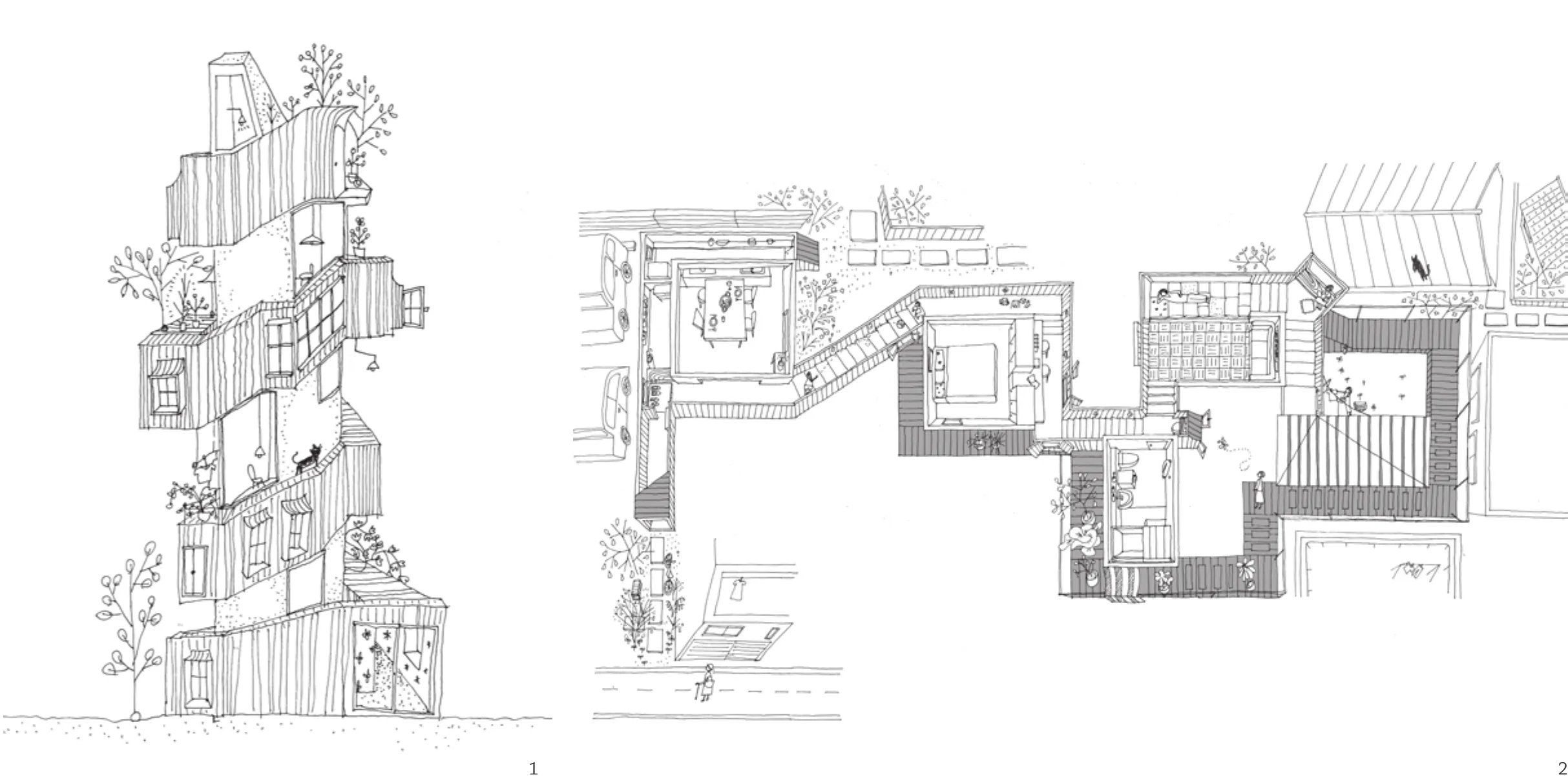
1.2 草圖/Sketches
我們?nèi)タ椿睾螅劝严胍龅募业男蜗螽嬃顺鰜怼_@個項目的基地位于東京一個叫谷中的普通住宅區(qū),狹窄的小路中充盈著生活的場景,非常有魅力。所以我們就設(shè)想了一個將谷中的小路延伸到空中、一邊纏繞一邊上升的方案。等設(shè)計進(jìn)展到相當(dāng)程度以后,我們就把表達(dá)空間體驗的“展開繪圖”畫了出來。因為我想,城市中原本的體驗被接續(xù)到住宅內(nèi)部這個想法,也許可以用繪畫的方式來表現(xiàn)。草圖展現(xiàn)的是我們想在空間中創(chuàng)造一個怎樣與眾不同的世界。比如,用更具體的方式將材質(zhì)、家具、使用者等表現(xiàn)出來后,我們就會冒出更多“這個地方得是這樣”的想法。我們的設(shè)計就是在反復(fù)畫草圖、做模型、繪制圖紙的過程中向前推進(jìn)的。□
After visiting the site, the frst thing I wanted to do was to draw the image of the home.The site is located in a common residential community called Yanaka in Tokyo. The narrow alleys around the site are flled with life scenes, which is very attractive to me. So we came up with the idea of extending and spiralling up the alley into the air. As the design progressed,we began to draw out an "expansion diagram", trying to express the space experience. By doing this, I believe the idea of extending the original city experience into the interior of the house could be manifested in the form of painting. The sketch shows how we want to create a diferent world in space. For example, when we try to present the material, furniture or the users in a more concrete way, some more ideas like "this place should be like this" will emerge during the course. Our design is moving forward in the process of repeated sketching, making models, and producing drawings. □ (Translated by QI Yiyi)

3.4 外景/Exterior views
項目信息/Credits and Data
建筑設(shè)計/Architects:大西麻貴+百田有希建筑事務(wù)所/onishimaki+hyakudayuki/o+h
設(shè)計監(jiān)理/Supervisor: Masao Yahagi, Masao Yahagi Architects
結(jié)構(gòu)設(shè)計/Structural Design: Masato Araya, Atsuhiro Nakahata
攝影/Photos: Kai Nakamura
猜你喜歡
河北畫報(2020年8期)2020-10-27 02:54:06
現(xiàn)代裝飾(2020年7期)2020-07-27 01:27:42
流行色(2020年1期)2020-04-28 11:16:38
電子制作(2019年19期)2019-11-23 08:41:36
電子制作(2019年15期)2019-08-27 01:11:50
電子制作(2019年7期)2019-04-25 13:18:16
藝術(shù)啟蒙(2018年7期)2018-08-23 09:14:18
海峽姐妹(2017年7期)2017-07-31 19:08:17
Coco薇(2017年5期)2017-06-05 08:53:16
商周刊(2017年26期)2017-04-25 08:13:04