外泌體內microRNA—135a跨血腦屏障轉運的初步研究
2017-12-14 20:11:23劉辰庚郝婷楊婷婷孟雙王培昌
中國醫藥導報
2017年33期
劉辰庚++郝婷+楊婷婷++孟雙+王培昌
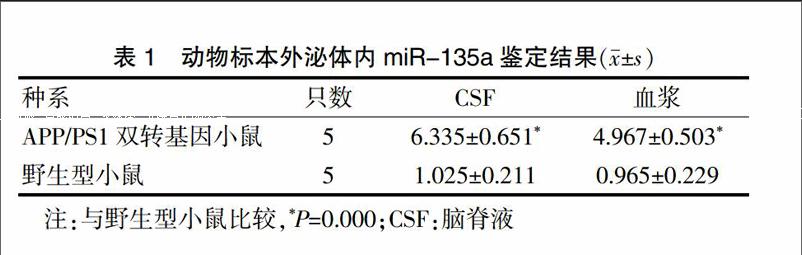
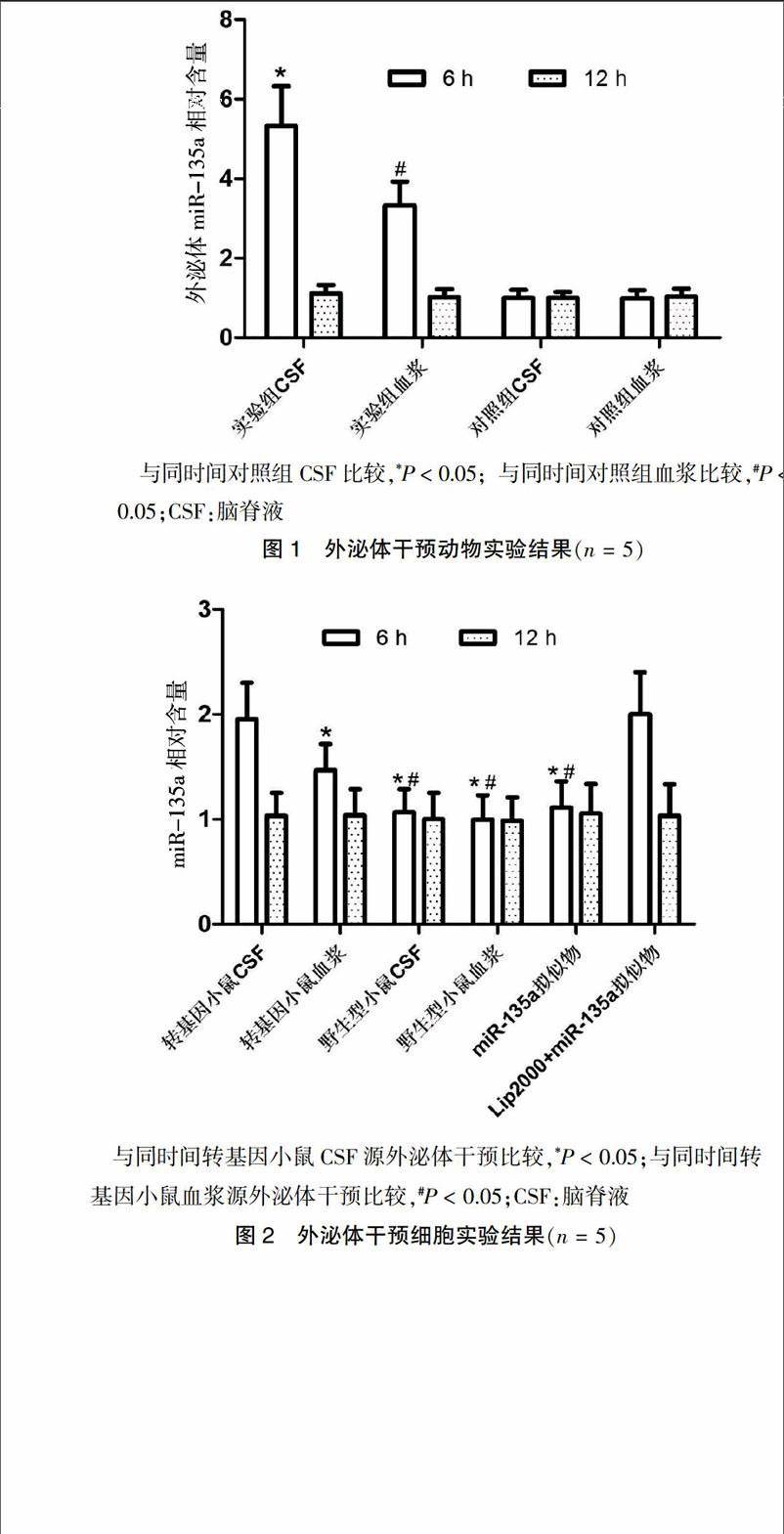
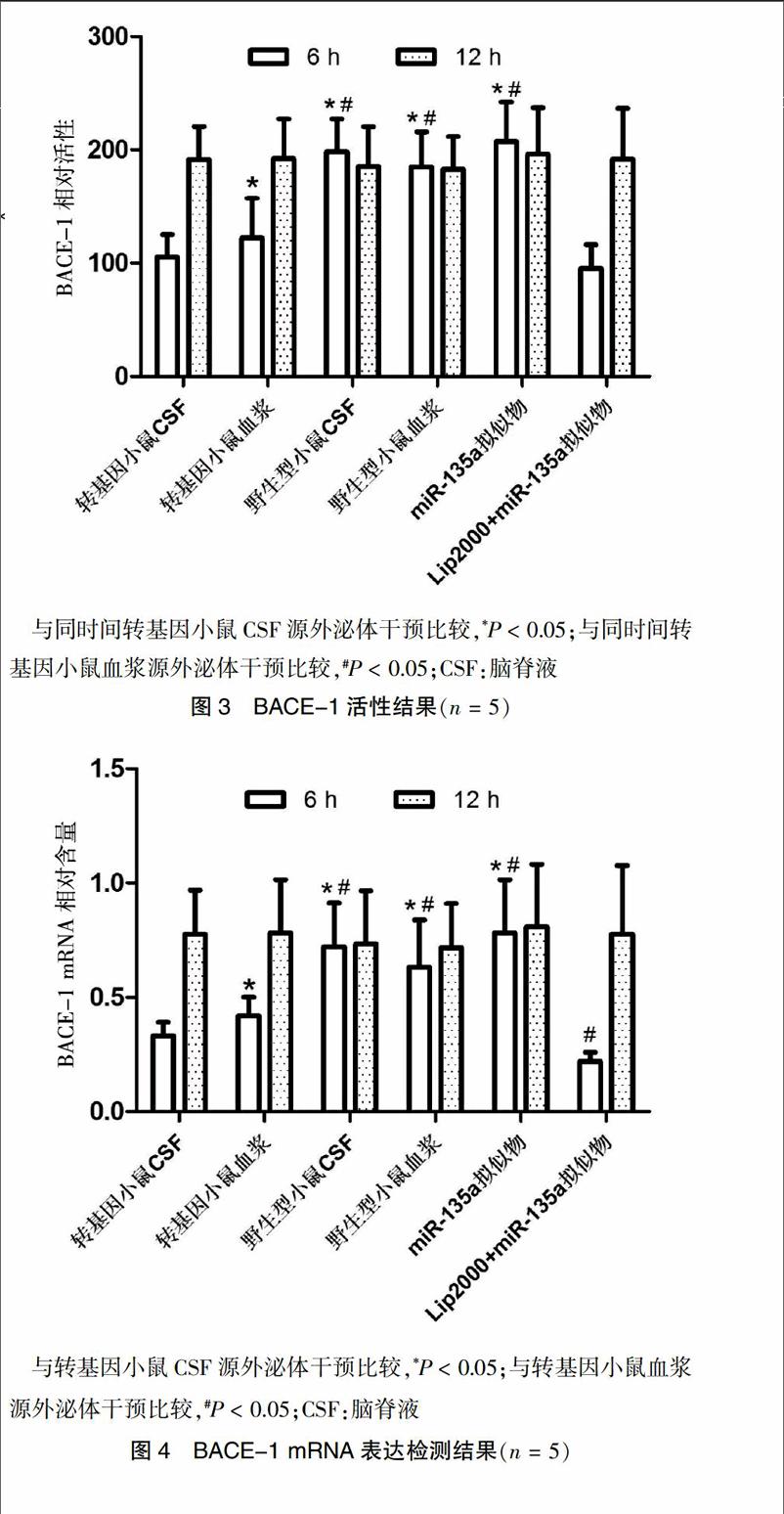
[摘要] 目的 初步研究外泌體內microRNA-135a(miR-135a)跨血腦屏障和細胞轉運的現象。 方法 提取APP/PS1雙轉基因小鼠腦脊液(CSF)的高miR-135a外泌體,將其注射入野生型小鼠腦室并干預SH-SY5Y細胞,檢測小鼠外周血和培養基外泌體內miR-135a水平及SH-SY5Y細胞β分泌酶-1(BACE-1)的表達和活性。 結果 高miR-135a外泌體腦室注射能使野生型小鼠CSF和血漿外泌體miR-135a顯著升高(P < 0.05);經APP/PS1雙轉基因小鼠CSF源外泌體干預的SH-SY5Y細胞,其細胞內的miR-135a含量顯著高于其他干預組和對照組(P < 0.05);SH-SY5Y細胞的BACE-1活性顯著降低(P < 0.05),且其mRNA表達水平的變化趨勢與活性變化趨勢一致。 結論 外泌體可將腦脊液中的“高miR-135a”這一生物信號跨越血腦屏障傳遞至外周血,這為將血漿外泌體miR-135a作為阿爾茨海默病診斷生物標志物提供了更堅實的實驗依據。
[關鍵詞] 阿爾茨海默病;MicroRNA;外泌體
[中圖分類號] R749 [文獻標識碼] A [文章編號] 1673-7210(2017)11(c)-0022-05
A preliminary study on the cross blood-brain-barrier transport of exosomal microRNA-135a
LIU Chengeng1 HAO Ting2 YANG Tingting1 MENG Shuang3 WANG Peichang1
1.Department of Clinical Laboratory, Xuanwu Hospital, Capital Medcial University, Beijing 100053, China; 2.Department of Pathology, Heze Municipal Hospital, Shandong Province, Heze 274000, China; 3.State Key Laboratory of Infectious Disease Prevention and Control, National Institute for Communicable Disease Control and Prevention, Chinese Center for Disease Control and Prevention, Beijing 102206, China
[Abstract] Objective To study the effect of microRNA-135a (miR-135a) on blood-brain barrier and cell transport in exocrine. Methods The high miR-135a exosomes were extracted from the cerebrospinal fluid (CSF) of the transgenic mice and injected into the ventricles of the wild type mice and intervened with SH-SY5Y cells. The levels of miR-135a in the peripheral blood of mice and the exosomes of the culture, and the expression and activity of β-secretase-1 (BACE-1) in SH-SY5Y cells were determined. Results Intraventricular injection of miR-135a exosomes resulted in a significant increase in CSF and plasma exosomal miR-135a in wild-type mice (P < 0.05). The activity of BACE-1 in SH-SY5Y cells treated with exosomes harvest from the CSF of APP/PS1 double transgenic mice was significantly lower than that in other intervention group and control group (P < 0.05), and the mRNA expression level of SH-SY5Y cells was significantly lower than that of control (P < 0.05). The trend of change is consistent with the trend of activity. Conclusion The signal of "high miR-135a" can be transferred from CSF to blood through the blood-brain barrier, which provides a more solid experimental basis for the use of exosomal miR-135a as a biomarker of Alzheimer's disease.
[Key words] Alzheimer′s disease; MicroRNA; Exosome
微小核糖核酸(microRNA,miR)在發育、分化和衰老等方面都扮演了重要角色[1]。作為重要的神經退行性變疾病之一,阿爾茨海默病(Alzheimer′s disease,AD)的發生發展也不乏相關miR的參與[1-2]。本課題組的前期研究表明,miR-135a可抑制重要的AD相關蛋白——β分泌酶-1(β-site APP cleaving enzyme,BACE-1)的蛋白表達并降低其在細胞內的活性,且這種作用是通過其與BACE-1 mRNA的3′非翻譯區(3′-UTR)直接結合而實現的[1,3]。APP/PS1雙轉基因小鼠具有較典型的AD樣病理學和行為學改變,是應用較多的AD模型。本課題組研究表明,APP/PS1雙轉基因小鼠和AD患者的腦脊液(cerebro spinal fluid,CSF)中總體miR-135a水平顯著升高,且小鼠和AD患者CSF和血清中泌體(exosome)內miR-135a亦升高,提示其可作為AD的潛在生物標志物[3]。但外周血中的核酸來源復雜,主要包括組織細胞的病理/生理釋放以及細胞死亡/凋亡釋放等來源[4-6],在前期研究中被檢測到升高的外泌體內miR-135a是否主要來自腦脊液,抑或腦脊液中的高miR-135a狀態是否能直接導致外周血中相應指標的改變并未明確[1,3]。本研究主要就腦脊液外泌體內miR-135a跨血腦屏障向外周血轉運的現象進行初步研究。endprint
1 材料與方法
登錄APP查看全文