
“Job” Cigarette Paper《“喬布”卷
2018-04-02 02:36:24愛藝
英語世界 2018年1期
關鍵詞:藝術
譯/愛藝
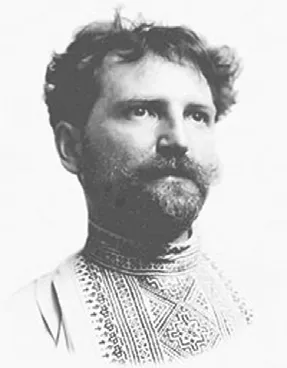
阿爾豐斯·穆夏(1860—1939)是捷克“新藝術運動”畫家和裝飾藝術家,以其獨特的藝術風格聞名于世。
[2]穆夏出生于摩洛維亞小鎮伊梵尼切(在現捷克共和國境內),成長過程中深受兩大文化影響:一個是天主教,另一個就是斯拉夫民族擺脫奧地利帝國統治、實現民族獨立的渴望。鎮上教堂一處巴洛克風格的壁畫激起了穆夏的藝術興趣,后來他搬至維也納做了一名舞臺布景畫師,開始學徒生涯。他以幫人畫肖像維持生計。這份活計讓他結識了重要的資助人庫恩-貝拉希伯爵,伯爵雇請他為艾瑪霍夫古堡繪制壁畫。1894年,穆夏為歌舞劇《吉斯蒙達》制作海報,由此一炮而紅。該劇主演莎拉·伯恩哈特是國際知名女演員,正是因為認識了她,穆夏也迅速成名。伯恩哈特與他簽下一紙合約,他按約為伯恩哈特制作了多幅推廣海報,還負責設計服裝和舞臺布景。
[3]穆夏不僅創作了一系列畫作、海報、廣告招貼畫和圖書插圖,還設計過珠寶首飾、地毯、壁紙和舞臺劇布景,作品呈現的風格最初稱為“穆夏風格”,后來人稱“新藝術運動”。穆夏的作品常常刻畫美麗健康的年輕女子,她們身著略呈新古典主義樣式的飄逸長袍,經常置身繁茂的花叢中,有時頭后飾以花環。穆夏借鑒了拉斐爾前派、漢斯·馬卡特和日本木刻藝術,形成了自己獨特的風格。他的畫風自然而華麗,優雅而靈動,線條彎曲流暢,還配有拜占庭式的邊飾、題字和畫框。他的新藝術風格被世人競相模仿。
[4]這幅令人印象深刻的招貼畫《“喬布”卷煙紙》(彩色平版印刷,66.7厘米×46.4厘米,1896年)是為卷煙紙制造公司約瑟夫·巴爾杜公司所做的廣告招貼。一個手持燃煙的美麗女子占據了畫面中央,裊裊升起的煙氣與女子那拉斐爾前派風格的卷發和商標JOB交織在一起。招貼畫金色鋸齒狀邊飾的靈感來自拜占庭鑲嵌畫,加之盤旋的煙氣和厚重的紫色背景,營造出一種奢華而性感的氛圍。在鋸齒狀畫框富有韻律的線條映襯下,女子秀發與升煙的彎曲線條顯得格外突出。毫無疑問,這個女子在吸煙,更別提多少還帶有情色的意味,這樣的行為為人不齒,因為那個時代的正派女子不會在公開場合吸煙。此外,她的長發瀑布般披散著,性感而大膽,那時的正派女子則都會把頭發扎起。
[5]這些離經叛道的重要細節暗示,吸煙的女子或許輕浮放蕩。她迷失于享樂中——很可能一絲不掛,微閉雙眼,半帶笑容,一副陶醉的樣子。穆夏以圣徒般的喜悅之心描繪這個女子,目的是為一種日常用品做廣告,這也顯示出他完美融合藝術與商業的高超畫技。他將凡常之物提升至具有神秘之美的境界。
[6]這也許是穆夏最知名的廣告招貼畫之一,其后更以各種形式印制了無數版推往國際市場。這幅招貼畫確立了“穆夏女性”的代表形象——擁有一頭格外濃密的大波浪卷發。□
Alphonse Mucha (1860–1939) was a Czech Art Nouveau painter and decorative artist, known best for his distinct style.
[2] Muncha was born in the town of Ivancice, Moravia, and raised in the shadow of two powerful cultural forces:The Catholic Church and the Slav’s desire for independence from the Austrian Empire. A baroque fresco in his local church piqued his interest in art, and he moved to Vienna, where he took an apprenticeship as a stage set painter. To make a living he executed portrait commissions. This led him to an important mentor, Count Khuen-Belasi, who hired him to paint murals in Emmahof Castle.Mucha shot to fame in 1894 with his theatre poster for Gismonda. The leading actress, Sarah Bernhardt was an internationally famous, and by association with her, Mucha quickly became famous as well. Bernhardt put him under contract, and Mucha created many promotional posters for her, as well as costumes and stage sets.
[3] Mucha produced a flurry of paintings, posters, advertisements, and book illustrations, as well as designs for jewellery, carpets, wallpaper, and theatre sets in what was initially called the Mucha Style but became known as Art Nouveau. Mucha’s works frequently featured beautiful healthy young women in flowing vaguely Neoclassical looking robes, often surrounded by lush flowers which sometimes formed haloes behind the women’s heads. Drawing from the influences of the Pre-Raphaelites,Hans Makart1漢斯·馬卡特(1840—1884),19世紀奧地利學院派歷史畫家、設計師,對奧地利后代畫家影響深遠。, and Japanese wood cuts,Mucha developed his unique style. His style was organic and ornate, graceful and dynamic, with curving, swooping lines and Byzantine borders, lettering,and frames. His Art Nouveau style was often imitated.
[4] This striking poster, “Job” Cigarette Paper (Colour lithograph, 66.7 cm × 46.4 cm, 1896), was created as an advertisement for the Joseph Bardou Company, the manufacturer of cigarette papers. A beautiful woman with a lighted cigarette dominates Mucha’s poster, the rising smoke intertwining with her swirling, Pre-Raphaelite hair and the logo—the trademark “JOB”.The poster’s golden zigzag border, in-spired by Byzantine mosaics, combines with the twirling smoke and the rich purple background to create a luxurious and sensual mood. The curving lines of the woman’s hair and rising smoke stand out against the rhythmic lines of the zigzag frame. The very fact that this woman is smoking—let alone that she is somewhat eroticized—was scandalous,since no respectable woman of the time would smoke in public. Furthermore,her sensual tangle of cascading hair was daring, because respectable women of the era wore their hair tied up.
[5] These significant breaks from tradition suggest that the smoker may be wanton and wild. She is lost in pleasure—quite possibly in the nude, her closed eyes and half smile suggesting ecstasy. Mucha depicts his smoking woman in the manner of a rapturous saint to advertise an everyday product, thereby revealing his great skill at blending art and commerce. He elevates the ordinary to a realm of mysterious beauty.
[6] This is perhaps one of Mucha’s best-known advertising posters, with numerous editions subsequently published in a variety of formats for international markets. This poster established the iconic image of the “Mucha woman” with her swirls of exaggeratedly abundant hair. ■
猜你喜歡
家教世界(2022年13期)2022-06-03 09:07:18
家教世界(2022年7期)2022-04-12 02:49:34
中外文摘(2021年23期)2021-12-29 03:54:02
兒童繪本(2018年22期)2018-12-13 23:14:52
藝術啟蒙(2018年7期)2018-08-23 09:14:06
讀者·校園版(2018年13期)2018-06-19 06:20:12
英語學習(2016年2期)2016-09-10 07:22:44
Coco薇(2016年2期)2016-03-22 16:58:59
讀者(2016年7期)2016-03-11 12:14:36
爆笑show(2014年10期)2014-12-18 22:27:48
