
林和靖:隱入湖光山色間
2018-04-04 04:33:24青湖
文化交流 2018年4期
關(guān)鍵詞:杭州
青湖
橫斜浮動(dòng)
宋林逋《山園小梅》寫(xiě)杭州孤山梅花“疏影橫斜水清淺,暗香浮動(dòng)月黃昏”,別具一格,韻味無(wú)窮,使西湖之梅天下著名。其實(shí),林逋這兩句詩(shī)借用了五代南唐江為既寫(xiě)竹又寫(xiě)桂花的殘句:“竹影橫斜水清淺,桂香浮動(dòng)月黃昏”,將“竹”改成“疏”,將“桂”改成“暗”而已,但這“點(diǎn)睛”之筆,使梅花形神活現(xiàn),成為千古佳句。
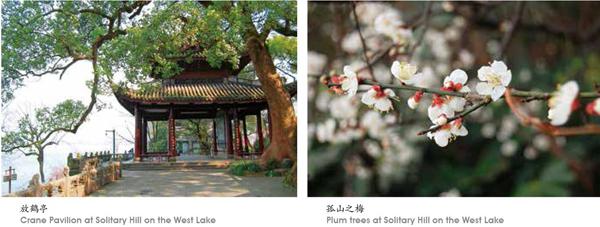
林逋(967—1028),字君復(fù),又稱(chēng)和靖先生,杭州錢(qián)塘人。據(jù)《宋史》本傳等文獻(xiàn)記載,他早年也曾北上江淮壯游,行也不遠(yuǎn),沒(méi)有成果,歸來(lái)后便居住西湖孤山,足跡不到城市20年。他優(yōu)游湖山,吟詩(shī)為樂(lè),多奇句,有300余篇傳世,存集四卷。
西湖“秀美閑雅、渾然天成”,實(shí)為“宇宙賦形之尤物”(近代邵裴子《林和靖先生詩(shī)集·序》)。林逋久居西湖,山色水光已成為他生命與精神的重要組成部分,比如“笛聲風(fēng)暖野梅香,湖上憑闌日漸長(zhǎng)。一樣樓臺(tái)圍佛寺,十分煙雨簇漁鄉(xiāng)”(《酬晝師西湖春望》),又比如“片山兼水繞,晴雪復(fù)漫漫。一徑何人到,中林盡日看”(《孤山雪中寫(xiě)望》)。
宋陳均《九朝編年備要》卷八云:林逋“恬淡好古、不趨榮利”,道出了詩(shī)人的性格和情懷。“竹樹(shù)繞吾廬,清深趣有余。鶴閑臨水久,蜂懶采花疏。酒病妨開(kāi)卷,春陰入荷鋤。嘗憐古圖畫(huà),多半寫(xiě)樵漁”(《小隱自題》),“鶴閑”“蜂懶”就是詩(shī)人自己率性而為的隱居生活的寫(xiě)照。
林逋作為詩(shī)人,在中國(guó)古典文學(xué)中影響最大的是詠梅詩(shī)篇,他以梅花為詠唱主調(diào)的詩(shī)作總共有八首,在宋代即被稱(chēng)為“孤山八梅”,歐陽(yáng)修在《歸田錄》中說(shuō):“‘疏影橫斜水清淺,暗香浮動(dòng)月黃昏,評(píng)詩(shī)者謂前世詠梅者多矣,未有此句也。”
隱入湖山
隱逸是一種特殊的文化現(xiàn)象,以老莊的道家思想為哲學(xué)基礎(chǔ),表現(xiàn)是多方面的,最直接的表現(xiàn)就是遁跡山林,尋求自我修養(yǎng),并在自我構(gòu)筑的理想世界中寄托情操。它普遍地生成于魏晉,成為風(fēng)尚,是中國(guó)古代文人保持人格獨(dú)立的處世哲學(xué),對(duì)這一時(shí)期乃至以后的世俗文化有深遠(yuǎn)的影響。
相傳,林逋栽種了300多株梅樹(shù),用梅子換米度日,姑妄聽(tīng)之。林逋又養(yǎng)鶴為伴,沈括在內(nèi)容豐富的《夢(mèng)溪筆談》里記載:“林逋隱居杭州孤山,常畜兩鶴,縱之,則飛入云霄,盤(pán)旋久之,復(fù)入籠中。逋常泛小艇游西湖諸寺,有客至逋所居,則一童子出應(yīng)門(mén),延客坐,為開(kāi)籠縱鶴。”林逋給自己的鶴取名“鳴皋”,取意清冷孤高。
后人稱(chēng)林逋“梅妻鶴子”。在中國(guó)傳統(tǒng)文化中,鶴的形象優(yōu)雅飄逸,梅經(jīng)霜傲雪,都象征著君子孤高傲岸、隱逸超然的性格,以及追求超凡脫俗的人生境界。
林逋終身布衣、不追求仕進(jìn)而為后世所重,皆因過(guò)去的士人大都面臨著一種境遇:一入仕途就得遵守政治的、思想的、倫理的、文化的諸多規(guī)則,或受世俗的干擾,從而喪失身心自由,于是,通常在仕進(jìn)不達(dá)的境況下選擇歸隱。世間不如意者多,入世與出世的困惑,總以后者為標(biāo)榜。
林逋40多歲時(shí)名氣已經(jīng)很大,范仲淹稱(chēng)之為“山中宰相”。很多人問(wèn)林逋為何過(guò)得這樣清苦,他說(shuō):“然吾志之所適,非功名富貴也,只覺(jué)得青山綠水與我情相宜。”他的這種生活方式,就是傳統(tǒng)士人在林泉間尋求個(gè)性存在的東方哲學(xué)式的解決方法。因此,蘇軾也贊揚(yáng)過(guò)林逋的詩(shī)、書(shū)。
宋真宗趙恒曾下詔杭州官府逢年過(guò)節(jié)慰問(wèn)林逋并送糧米錢(qián)帛。林逋卻說(shuō):“湖上青山對(duì)結(jié)廬,墳前秋色亦蕭疏。茂陵他日求遺稿,猶喜曾無(wú)封禪書(shū)。”林逋死后,謚和靖先生,有哀榮。
孤山不孤
林逋隱居山林,但訪客不斷,而且相晤者大都為達(dá)官貴人,這表明他并不是完全與世隔絕,隱逸不夠徹底,內(nèi)心處在出世、入世的兩難糾結(jié)之間。這種糾結(jié),一方面與中國(guó)傳統(tǒng)知識(shí)分子根深蒂固的功名思想有關(guān),另一方面也和他的隱居地有關(guān)。西湖山水不是隔絕出塵之區(qū),杭州緊鄰西湖立城,西湖的風(fēng)景和城市的煙火是相互融合的。杭州的世俗風(fēng)情的成熟在北宋,南宋之后,西湖的山山水水、一草一木既有歷史沉淀下來(lái)的人文內(nèi)涵,也有市井生活的熱鬧和煙火氣息。林語(yǔ)堂在他的《京華煙云》這部小說(shuō)中就曾借主人公之口說(shuō)出,杭州是盛裝出場(chǎng)的華麗少女,蘇州是溪邊浣紗的婉約少婦。
明末散文家張岱在《西湖夢(mèng)尋》中說(shuō),南宋滅亡后,有賊盜林逋之墓,只找到一方端硯和一支玉簪。端硯自可視為詩(shī)人物件,玉簪難免引人遐思,這讓人憶起林逋的小情詩(shī)《長(zhǎng)相思》:“吳山青,越山青,兩岸青山相對(duì)迎,爭(zhēng)忍離別情。君淚盈,妾淚盈,羅帶同心未結(jié)成,江頭潮難平。”
讀過(guò)這首詩(shī)的人不禁會(huì)想,那個(gè)終身只愛(ài)草木禽羽的隱士,能寫(xiě)出如此柔情百轉(zhuǎn)的詩(shī)嗎?張岱的筆實(shí)在是彎曲。
縱然如此,林逋隱逸西湖在整個(gè)中國(guó)文化史上都有著不同尋常的意義。他一方面避居山林,獲得心靈的自由;另一方面又極注重個(gè)人修為,“窮則獨(dú)善其身”,過(guò)著簡(jiǎn)單、淳樸的生活,以自己獨(dú)特的方式結(jié)合了儒家的道德完善與道家清靜無(wú)為兩大傳統(tǒng),紓解了魏晉以來(lái)困擾士人的“自然”與“名利”之爭(zhēng)。就是這樣一位超塵脫俗的才子,把自己的才華、情感融進(jìn)自然,創(chuàng)造了屬于北宋與杭州的皈依山水的隱逸文化。
所以,林逋之于西湖文化史乃至中國(guó)文化史,都是有代表性的人物。林逋無(wú)論在中國(guó)文化史還是中國(guó)文學(xué)史上都有一席之地。西湖衍生的文化思想、文學(xué)作品以及西湖的文化名人之間是相互造就的。林逋的意義也在于此。
(本文照片由小五拍攝)
If it had not been for Lin Bu (967–1028), a hermit living in Hangzhou in the Northern Song (960-1127) of China, one important aspect of the beauty of the West Lake in Hangzhou would have had to wait for another few hundred years to be discovered. In his , he described the plum blossoms at the Solitary Hill in Hangzhou by ‘borrowing and improving two lines of a poem penned by someone in the Five Dynasties (907-960). It reads “Sparse shadows slant across the clear water shallow; subtle fragrance floats serenely in moonlight mellow”. The ‘plagiary turned out to be quite a success. The borrowed lines, in which only two words were changed to fit the new scenario, most aptly portray the intoxicating scenery. The nondescript artistry of the poem won the recognition from the great Song scholar Ouyang Xiu (1007-1072), who mentioned the verse as “unprecedented”.
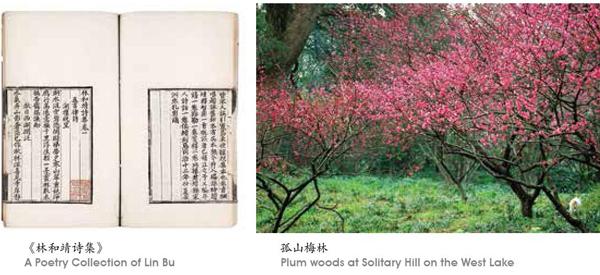
A native of Qiantang (todays Hangzhou) and one of the most famous poets of his time, Lin lived in recluse by the West Lake outside the walled Hangzhou for much of his later life, after wasting many of his younger years traveling to the north and trying in vain to realize his lofty aspirations.
His works and self-imposed solitude won him nationwide fame, and he was offered prestigious government posts, although he stayed away from all civic duties in pursuit of his poetry and a reclusive lifestyle. In his early 40s, Lin Bu was reaching the peak of his fame, called jokingly by Northern Song writer and strategist Fan Zhongyan (985-1052) as “the prime minister living in mountains”. Asked by many for reasons behind his ascetic lifestyle, Lin said “the green mountains and beautiful waters resonate with my disposition”.
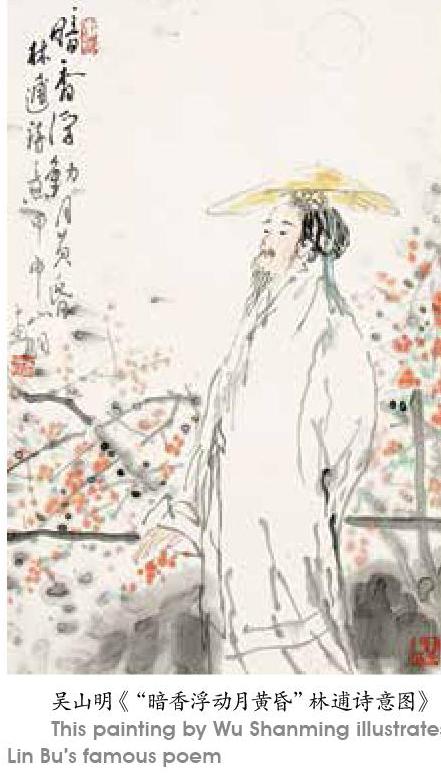
Lin Bu spent his reclusive years on the lake, watching the tumultuous four seasons roll by. The ‘lakescape became part of his blood and flesh, eventually infiltrating his subconscious and dominating his literary thinking, as can be seen in many of his poems dedicated to the changing hues of the lake. Su Dongpo (1037-1101), a major literary personality of the Song era, was one of the fans of Lins soul-purifying poetry and calligraphy.
As a poet, Lin Bu is most remembered for his eight poems celebrating the beauty of the plum blossoms in the Solitary Hill. Rumor has it that Lin Bu had more than 300 plum trees around his lake home, and that he eked out a living by swapping fruits for foodstuff. The mans eccentricity, however, is recorded in great detail by Shen Kuo (1035-1095), a fellow native of Hangzhou, in his . “In his ‘solitary dwelling in Hangzhou, Lin Bu lived with a boy servant and two cranes he named ‘Minggao (meaning aloof and proud), and spent most of the daytime paddling his boat and visiting temples.”
In the strictest sense of the word ‘seclusion, Lin Bu did not truly live in a world of his own. His ‘solitary home was never lacking visitors, most of whom were high officials and eminent personages. The insinuative mentioning by Ming essayist Zhang Dai of what tomb raiders found in Lin Bus grave after the perishing of the Southern Song Dynasty offered food for thought about the inner struggle of the recluse. In his , Zhang wrote: “The tomb robbers found nothing but an inkstand and a jade hairpin.” One feels tempted to imagine what was behind the hairpin and his love poem titled .
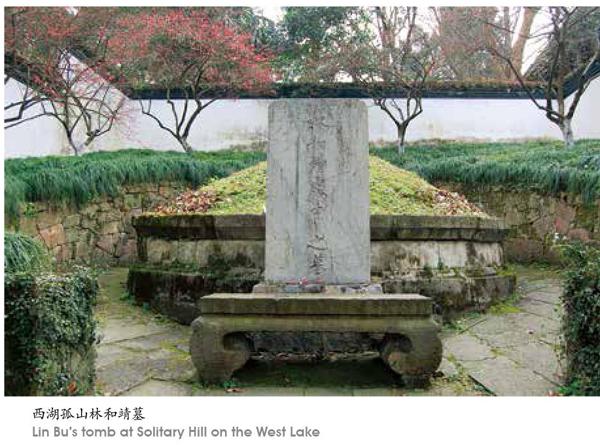
Long after he died, Lins eccentric attitude and his works retained a vivid place in Song cultural imagination. Lin Bu and his West Lake complex constitute a significant chapter of the Chinese literati history and the Chinese culture in general. His pursuit of spiritual freedom and unusual artistic and literary talent forged a ‘reclusive culture unique to the Northern Song times of China and to the city of Hangzhou, where his spiritual legacy has been imbedded into the citys cultural subconscious.
猜你喜歡
科學(xué)大眾(2023年17期)2023-10-26 07:38:38
幼兒畫(huà)刊(2022年11期)2022-11-16 07:22:36
玻璃纖維(2022年1期)2022-03-11 05:36:12
中國(guó)交通信息化(2021年4期)2021-07-21 09:23:34
杭州(2020年6期)2020-05-03 14:00:51
中國(guó)音樂(lè)教育(2017年2期)2017-05-20 10:20:28
傳媒評(píng)論(2017年12期)2017-03-01 07:04:58
汽車(chē)與安全(2016年5期)2016-12-01 05:21:55
中國(guó)衛(wèi)生(2016年8期)2016-11-12 13:27:12
看天下(2016年24期)2016-09-10 20:44:10
