
Study of the thermal pain threshold latency of acupoints based on Fei Teng Ba Fa
2018-06-28 09:27:54WangHongbin王洪彬ZhaoShu趙舒CuiJianmei崔建美CaoYan曹巖SunNa孫娜QiJianshuai齊建帥YuYueyue虞躍躍
Wang Hong-bin (王洪彬), Zhao Shu (趙舒), Cui Jian-mei (崔建美), Cao Yan (曹巖), Sun Na (孫娜), Qi Jian-shuai (齊建帥),Yu Yue-yue (虞躍躍)
1 Chinese Medical School, North China University of Science and Technology, Tangshan 063000, China
2 Modern Educational Technology Center, North China University of Science and Technology, Tangshan 063000, China
Abstract
Objective:By applying moxibustion to the eight confluent points in different periods of time, to observe the changes in thermal pain threshold latency of acupoints based on Fei Teng Ba Fa.
Methods:A total of 468 healthy college student volunteers received moxibustion at the eight confluent points in three different periods of time, i.e. Chen (7:00-9:00), Wu (11:00-13:00) and Xu (19:00-21:00). The thermal pain threshold latency was adopted to measure the changes in pain threshold of the eight confluent points under different conditions (different periods of time, different genders, different acupoints and different states of the acupoints) based on Fei Teng Ba Fa.
Results:Finally, thirty subjects dropped out and 438 subjects were included. The comparison of thermal pain threshold latencies of the eight confluent points in the same opening or closing state based on Fei Teng Ba Fa: latencies of the closing points and adjunct points were significantly different in different periods of time (P<0.05); the latencies of the males were significantly longer than those of the females (P<0.05); there was no significant difference in the latency between the left and right sides (P>0.05); in the female group, there was a significant difference in the latency between the lower-limb points and the upper-limb points (P<0.05). The comparison of thermal point threshold latencies of the eight confluent points in different opening or closing state: in the period of Wu (11:00-13:00), the latencies of the opening points were significantly longer than those of the closing points and adjunct points (P<0.05); for men, their opening and closing points had significantly longer thermal pain threshold latencies than their adjunct points (P<0.05); despite the gender, the latencies of the upper limb opening and closing points were significantly longer than the latency of the adjunct points (P<0.05); in the female group, the latencies of the lower-limb opening points were significantly shorter than those of the lower-limb closing and adjunct points (P<0.05).
Conclusion:Based on Fei Teng Ba Fa, the pain thresholds of the eight confluent points vary in different periods of time,gender, acupoint location and opening/closing state, which can be taken as the evidence of making time-based acupuncture-moxibustion prescriptions.
Keywords:Moxibustion Therapy; Specificity of Acupoints; Research on Acupoints; Chronomedicine; Fei Teng Ba Fa; Points,Eight Confluent; Pain Threshold; Healthy Volunteers
【摘要】目的:通過不同時辰艾灸八脈交會穴, 探析飛騰八法取穴時人體腧穴感熱痛閾時間的變化。方法:共468名健康大學生志愿者, 分別于辰時(7:00-9:00點)、午時(11:00-13:00點)和戌時(19:00-21:00點)艾灸八脈交會穴, 采用感熱痛閾時間評定在不同時辰、不同性別、不同腧穴部位和不同腧穴狀態下飛騰八法按時取穴時八脈交會穴的痛閾變化。結果:脫落、剔除30人, 最終納入研究者438人。飛騰八法按時取穴時, 八脈交會穴在相同開闔狀態下感熱痛閾時間比較: 不同時辰的閉穴、配穴存在統計學差異(P<0.05); 男性痛閾時間顯著長于女性(P<0.05);左側與右側無統計學差異(P>0.05); 女性的下肢穴位與上肢穴位有統計學差異(P<0.05)。八脈交會穴不同開闔狀態下感熱痛閾時間比較: 午時開穴的痛閾時間顯著長于閉穴和配穴(P<0.05); 男性的開穴、閉穴痛閾時間顯著長于配穴(P<0.05);男女上肢的開穴、閉穴痛閾時間均顯著長于配穴(P<0.05); 女性下肢開穴的痛閾時間顯著短于閉穴和配穴(P<0.05)。結論:飛騰八法取穴時, 八脈交會穴的痛閾因時辰、性別、腧穴部位和腧穴開闔狀態而異,可作為按時針灸處方的實驗依據。
【關鍵詞】灸法; 穴位特異性; 穴位研究; 時間醫學; 飛騰八法; 穴, 八脈交會; 痛閾; 健康志愿者
【中圖分類號】R2-03【文獻標志碼】A
Xu Feng’s Fei Teng Ba Fa (a point-selection method according to time) directly matches the eight confluent points and eight diagrams with the twelve earthlybranch day periods[1], and is one of the time- based acupuncture-moxibustion methods. The opening and closing states of acupoints reflect the flow and level of the qi and blood in human body. Studies have found that the thermal sensitivity of the opening and closing points varies significantly in time and gender, suggesting that the state of the eight confluent points and the level of qi and blood are influenced by time[2]. The opening/closing state of the eight confluent points is closely related to the therapeutic efficacy of acupuncture-moxibustion. Using the eight confluent points based on Fei Teng Ba Fa to treat simple obesity,chloasma, chronic eczema, stiff neck and insomnia all can produce a satisfactory efficacy[3-7]. According to the correspondence between human and universe, this study enrolled the second-year and fourth-year undergraduates majored in Chinese medicine from North China University of Science and Technology by adopting a random cluster sampling design. The thermal pain threshold latencies of the eight confluent points were observed during moxibustion to observe how the pain thresholds of the eight confluent points relate to time, gender, acupoints’ location and opening/closing state based on Fei Teng Ba Fa, and to provide evidence of making time-based acupuncturemoxibustion prescriptions.
1 Clinical Materials
1.1 Inclusion criteria
The second-year and fourth-year undergraduates from North China University of Science and Technology who majored in Chinese medicine and healthy; aged between 18 and 25 years; informed consent form obtained.
1.2 Exclusion criteria
With mental disorders or other significant medical conditions so that unable to finish the detection of thermal pain threshold latency; those with an abnormal thermal pain threshold.
1.3 Dropout criteria
Those with poor compliance and withdrew from the trial; those failed to complete the observation.
1.4 Statistical method
The SPSS version 17.0 statistical software was adopted for datxaanalysis. The measurement data wereexpressed by (±s). The dependent samplet-test and one-way ANOVA were used for inter-group comparisons when the homogeneity of variance was conformed, and the least significant difference (LSD) test was used to process multiple comparisons. When the data were in heterogeneity of variance, Welch test was adopted to analyze inter-group comparisons and Dunnett’s T3 was used for multiple comparisons.P<0.05 was taken to indicate a statistical significance.
1.5 General data
From the 14th to 28th of September 2014, a total of 468 healthy college students were selected. After 30 people dropped out, the rest 438 subjects were enrolled to the study. Among them, there were 130 males, whose average age was (22.1±1.3) years and body mass index (BMI) was averaged at (23.03±3.42);with regard to the 308 females, their average age was(21.2±1.4) years and BMI was averaged at (20.52±3.01).There were significant differences in age and BMI between the males and females (P<0.05).
2 Methods
2.1 Materials
Pure moxa sticks (Nanyang Wolong Hanyi Moxa Wool Factory, China); chronograph; and scale.
2.2 Selection of acupoints
The eight confluent points, i.e. Neiguan (PC 6),Gongsun (SP 4), Waiguan (TE 5), Zulinqi (GB 41), Houxi(SI 3), Shenmai (BL 62), Lieque (LU 7) and Zhaohai (KI 6),were located according to theNomenclature and Location of Acupuncture Points(GB/T12346-2006).
2.3 Observation method
Under the controlled conditions, temperature at(25±2) ℃
and relative humidity at (50±5)%, moxibustion was applied by pointing an ignited moxa stick to the acupoint by 1 cm away respectively in the periods of Chen (7:00-9:00), Wu (11:00-13:00) and Xu (19:00-21:00). The measure started immediately when the moxa stick was at the right place until the receiver felt scorching pain, and this period was taken as the thermal pain threshold latency. Each point was measured 3 times in each of the 3 periods of time at an interval of 1 min to obtain a mean value. The points on the left side were detected first.
2.4 Determination of the earthly-branch day periods
The earthly-branch day periods were determined according to the local apparent solar time (a time system based on the sun's apparent position)[8-9].
Local apparent solar time = Standard Beijing time +4 min × (Local latitude – 120°) + 9.5 min × Sin{2 ×[280° + 0.9856° × (Number of days to January 1 of the same year)]} – 7.7 min × Sin[280° + 0.9856° × (Number of days to January 1 of the same year) + 78°].
3 Results
3.1 Thermal pain threshold latencies in different periods of time based on Fei Teng Ba Fa
Based on Fei Teng Ba Fa, the closing points had significantly shorter thermal pain threshold latencies in the period of Wu (11:00-13:00) than in the periods of Chen (7:00-9:00) and Xu (19:00-21:00), (P<0.05); the adjunct points had significantly longer thermal pain threshold latencies in the period of Chen (7:00-9:00)than in the period of Wu (11:00-13:00), (P<0.05); in the period of Wu (11:00-13:00), the opening points had significantly longer latencies than the closing and adjunct points (P<0.05), (Table 1).
3.2 Thermal pain threshold latencies of different genders based on Fei Teng Ba Fa
In the same opening or closing state, the males had significantly longer thermal pain threshold latencies than the females (P<0.05). For men, their opening and closing points had significantly longer thermal painthreshold latencies than their adjunct points (P<0.05),(Table 2).

Table 1. Thermal pain threshold latencies in different periods of time based on Fei Teng Ba Fa (x±s, s)
3.3 Thermal pain threshold latencies of points on different sides based on Fei Teng Ba Fa
In the same gender group and same opening/closing state, there were no significant differences in the thermal pain threshold latencies of the eight confluent points between the left and right sides (P>0.05); in the same gender group, there were no significant differences in the thermal pain threshold latencies among the opening, closing and adjunct points on the same side (P>0.05), (Table 3).

Table 2. Thermal pain threshold latencies of different genders based on Fei Teng Ba Fa (x±s, s)
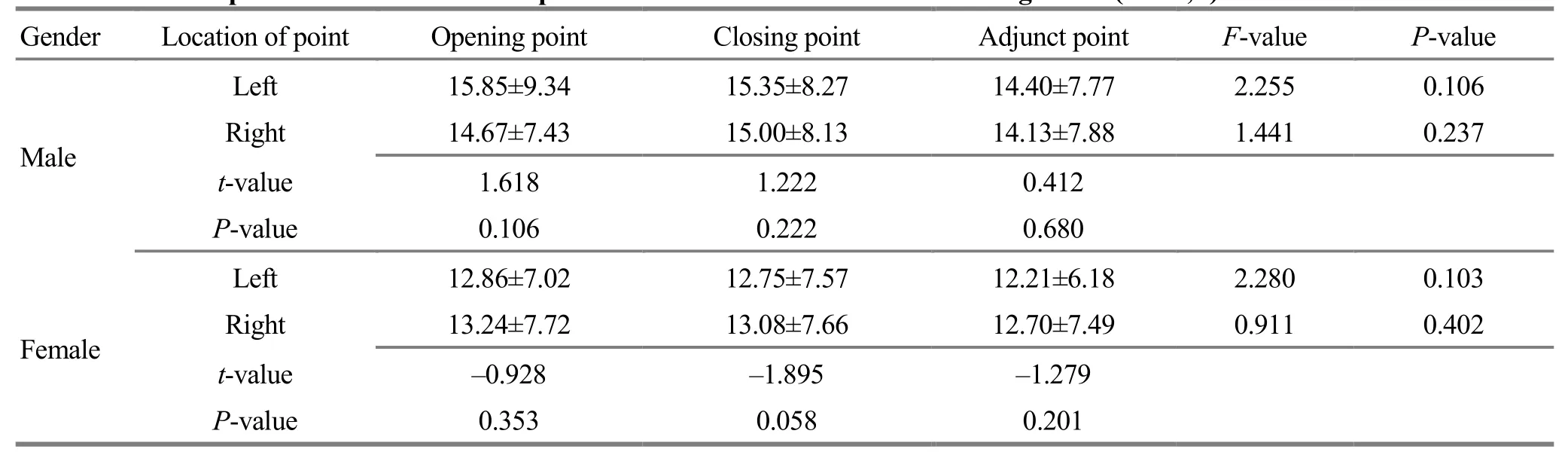
Table 3. Thermal pain threshold latencies of points on different sides based on Fei Teng Ba Fa (x±s, s)
3.4 Thermal pain threshold latencies of the upper-limb and lower-limb points based on Fei Teng Ba Fa
In the female group and same opening/closing state,the eight confluent points of the lower limbs were significantly different from those of the upper limbs in comparing the thermal pain threshold latency (P<0.05);in the male group, the opening and closing points of the upper limbs had significantly longer latencies than the adjunct points (P<0.05); in the female group, the opening points of the upper limbs had significantly longer latencies than the closing and adjunct points(P<0.05), the closing points had markedly longer latencies than the adjunct points (P<0.05), and the lower-limb opening points had significantly shorter latencies than the lower-limb closing and adjunct points(P<0.05), (Table 4).
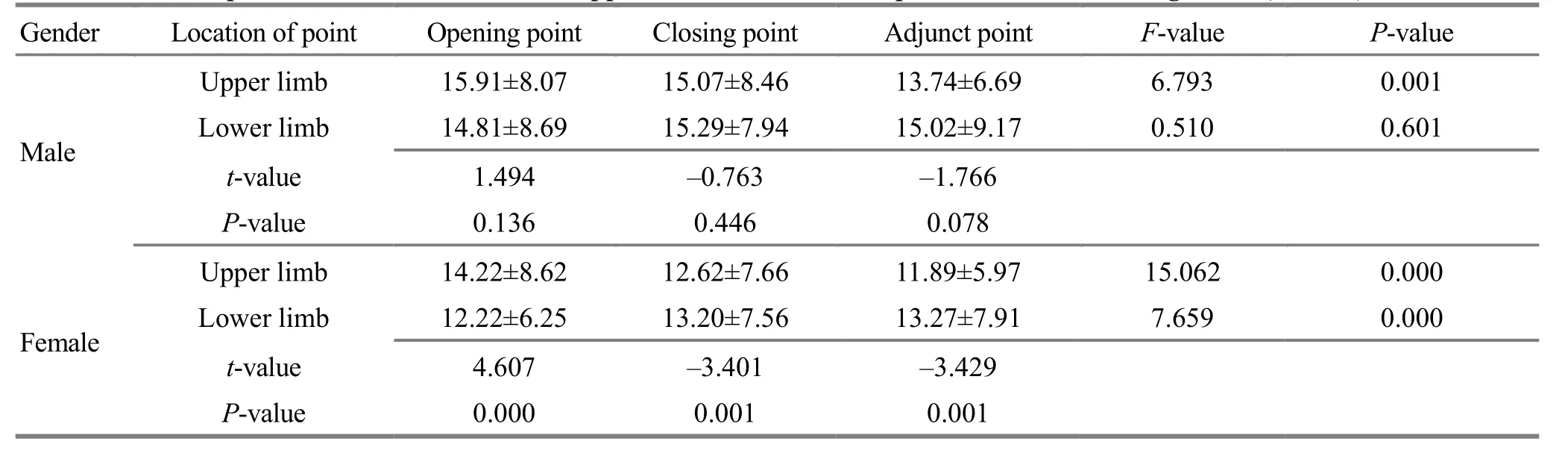
Table 4. Thermal pain threshold latencies of the upper-limb and lower-limb points based on Fei Teng Ba Fa (x±s, s)
4 Discussion
Clinically, Fei Teng Ba Fa uses the eight confluent points to treat diseases when the points are in opening state, by matching Neiguan (PC 6) with Gongsun (SP 4),Waiguan (TE 5) with Zulinqi (GB 41), Houxi (SI 3) with Shenmai (BL 62) and Lieque (LU 7) with Zhaohai (KI 7).This study observed the thermal pain threshold latencies of the eight confluent points when the points were playing different roles based on Fei Teng Ba Fa, i.e.opening, closing and adjunct points. The results showed that the latencies were different upon different periods of time, genders and points when the points were in the same opening or closing state. This is plausibly related to the point specificity. Point is known to have nine features: distant connection, integrity, specificity,bi-direction, stratification, holography, magnification,temporality and dynamic nature. The temporality and dynamic nature highlight a series of dynamic changes of an point in different periods of time following the changes in the function of Zang-fu organs and qi-blood[10-11], and the dynamic changes may be the key factor causing the changes in the thermal pain threshold latencies of the eight confluent points in different periods of time. Pain threshold of human body changes as ageing[12]. In the current study, the male students who were older and had higher BMI showed significantly longer thermal pain threshold latencies than the female students when the points were in same opening or closing state (P<0.05), indicating that there is a significant difference in the pain threshold between the males and females. The visceral sensory threshold and pain threshold in women are markedly lower compared with those in men, and females have higher VAS in cutaneous stimuli than males, which is unexplainable from the psychological perspective but is possibly associated with the innate neurosensory system[13]. There were no significant differences in the latencies between the points on the left and right sides(P>0.05), further suggesting that the circulations of meridian qi and blood on the two sides are symmetric and points are integral. Significant differences were found in the latencies of the eight confluent points between the upper limb and lower limb in the female group (P<0.05), which may be related to the different structures and distributions of nerves and vessels in upper and lower limbs as well as the constitution of females, and also implies the notable specificity of points.
Besides, this study also revealed that the eight confluent points of the same gender and body region and in the same period of time had significantly different thermal pain threshold latencies when the points were in different opening or closing state: in the period of Wu (11:00-13:00), the latencies of the opening points were significantly longer than those of the closing and adjunct points (P<0.05); for men, their opening and closing points had significantly longer thermal pain threshold latencies than their adjunct points (P<0.05); despite the gender, the opening and closing points of the upper limb had significantly longer latencies than the adjunct points (P<0.05); in the female group, the eight confluent points of the lower limb in opening state had significantly shorter latencies than the closing and adjunct points (P<0.05). The results all indicated that the opening and closing states of points should be related to the level of qi-blood, because normally capillary loops increase when the point is in opening state and the loops decrease when the point is in closing state[14].
In a word, the thermal pain threshold latencies of points based on Fei Teng Ba Fa are closely related to time, gender, point location and opening/closing state.This study has provided certain experimental evidence for the application of Fei Teng Ba Fa. However, there were some drawbacks to this study. First, the study was based on the apparent solar time. Only three different periods of time were observed, so the complete data of the rest earthly-branch day periods need supplementing. Second, we analyzed the adjunct points independently in this study, but in fact, they are also in closing state. Whether or not this would affect the result remains a question. Third, points have resting state and sensitized state. The sensitized state reflects pathological changes in the body, which is universal,specific and dynamic. Thermal sensitization and pain sensitization are common types of the sensitized state of points[15-16]. Sensitized points usually react intensively to even a tiny stimulation from the outside and they can trigger the transmission of meridian qi very easily[17-19].Therefore, besides the opening/closing state, the sensitized state of point may also have effect on the thermal pain threshold latency and needs further observation[20].
Conflict of Interest
The authors declared that there was no potential conflict of interest in this article.
Acknowledgments
This work was supported by Scientific Research Project of Hebei Provincial Administration Bureau of Traditional Chinese Medicine (河北省中醫藥管理局科研計劃項目,No. 2015162); Hebei Tangshan Science and Technology Project (河北省唐山市科技計劃項目, No. 14130264B);Cultivation Fund of North China University of Science and Technology (華北理工大學培育基金, No. GP201512).
Statement of Informed Consent
Informed consent was obtained from all individual participants included in this study.
Received: 25 July 2017/Accepted: 29 August 2017
[1] Tang X, Hu YP. Analysis of the theory and clinical application of Fei Teng Ba Fa. Zhongguo Minjian Liaofa,2017, 25(2): 2-3.
[2] Li L, Wen WW. Study on the thermal sensitivity of points in opening or closing state based on Fei Teng Ba Fa. Hubei Zhongyi Zazhi, 2013, 35(5): 57-58.
[3] Piao LY, Liu Y, Zhang XL. Treatment of simple obesity with Fei Teng Ba Fa. Zhongguo Zhongyiyao Xinxi Zazhi,2002, 9(7): 57.
[4] Lü B, Lü Y. Treatment of 32 cases of chronic eczema with Fei Teng Ba Fa plus surrounding acupuncture. Zhongguo Minjian Liaofa, 2011, 19(8): 16-17.
[5] Hao GY, Wang Y, Piao LY. Treatment of 80 cases of chloasma with Fei Teng Ba Fa plus bloodletting cupping.Shanghai Zhenjiu Zazhi, 2007, 26(4): 21.
[6] Li H, Wen L, Liu HY. Eight methods of flight acupuncture combined with pricking and cupping in the treatment of stiff neck for 25 cases. Zhongguo Zhongyiyao Xiandai Yuancheng Jiaoyu, 2015, 13(12): 73-74.
[7] Zhang ZX. Therapeutic observation of Zi Wu Liu Zhu Na Jia plus Fei Teng Ba Fa in treating 30 cases of insomnia.Zhongyi Linchuang Yanjiu, 2013, 5(6): 47-48.
[8] Sun JS, Hong W. Conversion between standard Beijing time and local apparent solar time. Shanghai Zhenjiu Zazhi,1994, 13(1): 25-26.
[9] Lin GY. Conversion between local time and Beijing time.Zhongguo Zhen Jiu, 2012, 32(2): 133-134.
[10] Peng RC. Discussion of the eight features of acupoints.Zhongguo Zhongyiyao Xuebao, 1997, 12(5): 45-47.
[11] Gao J, Liu XG, Yu SG, Tang Y, Liang FR. Primary exploring of ‘dynamic character’ of acupoint. Zhongguo Zhen Jiu, 2010, 30(8): 643-646.
[12] Bi HJ, Wu GC, Chen HY, Zhou QH. Measure of human pain threshold and research progress of its application.Zhongguo Tengtong Yixue Zazhi, 2015, 21(1): 60-63.
[13] Xiao WB, Liu YL, Zhao LL. Gender-related differences of visceral and somatic pain threshold in healthy adults.Zhongguo Tengtong Yixue Zazhi, 2003, 9(1): 11-14.
[14] Yue PP, Lu JZ. Temporal structure of the cutaneous microcirculation of acupoints and Zi Wu Liu Zhu. Jiangsu Zhongyi, 1991, 12(11): 21-23.
[15] Jiang JF, Yu Z, Xu B, Wang LL. Analysis of the meaning of acupoint sensitization. Zhongyi Zazhi, 2012, 53(20): 1714-1716.
[16] Guo Y, Fang JQ. Experimental Acupuncture Science.Beijing: China Press of Traditional Chinese Medicine,2012: 40, 249.
[17] Chen RX, Kang MF. New moxibustion method based on thermal sensitization of acupoints. Beijing: People’s Medical Publishing House, 2006: 10.
[18] Xie HW, Chen RX, Xu FM, Song YE, Tang X, Li LM.Comparative study of heat-sensitive moxibustion in the treatment of knee osteoarthritis. Zhongguo Zhen Jiu, 2012,32(3): 229-232.
[19] Chen RX, Chen MR, Kang MF, Chi ZH, Zhang B. Paying attention to the heat thermal sensitivity of moxibustion is the key for raising the curative effect. Zhen Ci Yan Jiu,2010, 35(4): 311-314.
[20] Chen RX, Xie DY. Second discussion of acupoint sensitization. Anhui Zhongyiyao Daxue Xuebao, 2016,35(3): 50-53.?
 Journal of Acupuncture and Tuina Science2018年3期
- Journal of Acupuncture and Tuina Science的其它文章
- Influence of acupuncture on pulmonary function of patients with asthma: a review
- Observation on lower-reinforcing and upperreducing acupuncture method for hyperplasia of mammary gland and its influence on estradiol and progesterone
- Clinical observation on electroacupuncture at four sacral points for overactive bladder syndrome
- Clinical observation on electroacupuncture plus hydro-acupuncture for low back pain caused by compression fractures
- Observation on clinical efficacy of warm needling therapy for chronic lumbar strain
- Observation on clinical effects of acupuncture plus external medicine application forcervical radiculopathy