機器人將徹底改變快餐業
2018-08-06 20:28:42ByAlanaSemuels
英語學習 2018年7期
By Alana Semuels
Visitors to Henn-na, a restaurant outside Nagasaki, Japan, are greeted by a peculiar sight: their food being prepared by a row of humanoid robots that bear a passing1 resemblance to the Terminator. The “head chef,”incongruously2 named Andrew, specializes in okonomiyaki, a Japanese pancake. Using his two long arms, he stirs batter in a metal bowl, then pours it onto a hot grill. While he waits for the batter to cook, he talks cheerily in Japanese about how much he enjoys his job. His robot colleagues, meanwhile, fry donuts, layer soft-serve ice cream into cones, and mix drinks.
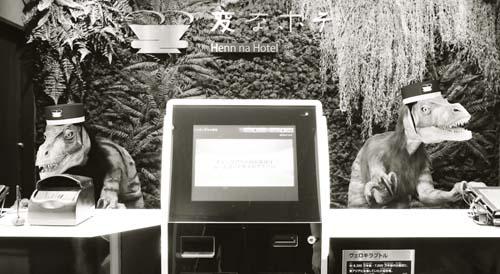
H.I.S., the company that runs the restaurant, as well as a nearby hotel where robots check guests into their rooms and help with their luggage, turned to automation partly out of necessity. Japans population is shrinking, and its economy is booming; the unemployment rate is currently an unprecedented 2.8 percent. “Using robots makes a lot of sense in a country like Japan, where its hard to find employees,”CEO Hideo Sawada said.
Sawada speculates that 70 percent of the jobs at Japans hotels will be automated in the next five years.“It takes about a year to two years to get your money back,” he said. “But since you can work them 24 hours a day, and they dont need vacation, eventually its more cost-efficient to use the robot.”
This may seem like a vision of the future best suited—perhaps only suited—to Japan. But according to Michael Chui, a partner at the McKinsey Global Institute, many tasks in the food-service and accommodation industry are exactly the kind that are easily automated. Chuis latest research estimates that 54 percent of the tasks workers perform in American restaurants and hotels could be automated using currently available technologies—making it the fourthmost-automatable sector in the U.S.
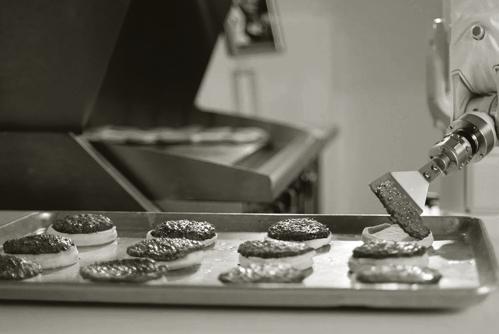
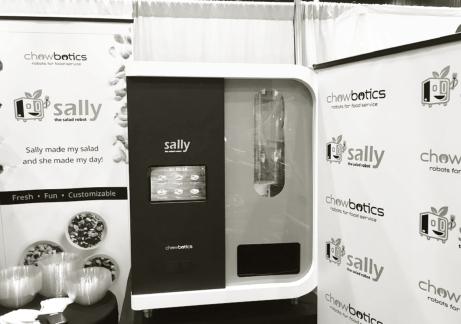
The robots, in fact, are already here. Chowbotics, a company in Redwood City, California, manufactures Sally, a boxy robot that prepares salads ordered on a touch screen. At a Palo Alto café, I watched as she deposited lettuce, corn, barley, and a few inadvertently3 crushed cherry tomatoes into a bowl. Botlr, a robot butler, now brings guests extra towels and toiletries in dozens of hotels around the country.4
One robot, Flippy, can flip5 150 burgers an hour. Ostensibly6, this is worrying. Americas economy isnt humming along nearly as smoothly as Japans, and one of the few bright spots in recent years has been employment in restaurants and hotels, which have added more jobs than almost any other sector. That growth, in fact, has helped dull the blow that automation has delivered to other industries. The food-service and accommodation sector now employs 13.7 million Americans, up 38 percent since 2000. Since 2013, it has accounted for more jobs than manufacturing.
These new positions once seemed safe from the robot hordes7 because they required a human touch in a way that manufacturing or mining jobs did not. When ordering a coffee or checking into a hotel, human beings want to interact with other human beings—or so we thought. The companies bringing robots into the service sector are betting that well be happy to trade our relationship with the chipper8 barista or knowledgeable front-desk clerk for greater efficiency. Theyre also confident that adding robots wont necessarily mean cutting human jobs.
Robots have arrived in American restaurants and hotels for the same reasons they first arrived on factory floors. The cost of machines, even sophisticated ones, has fallen significantly in recent years, dropping 40 percent since 2005, according to the Boston Consulting Group. Labor, meanwhile, is getting expensive, as some cities and states pass laws raising the minimum wage.
Wendys, McDonalds, and Panera are in the process of installing self-service kiosks9 in locations across the country, allowing customers to order without ever talking to an employee. Starbucks encourages customers to order on its mobile app; such transactions now account for 10 percent of sales. The early success of the kiosks suggests that, at least when ordering fast food, patrons prize speed over high-touch customer service.
Technology obviates10 old jobs, but it also creates new ones. At Zume Pizza, in Mountain View, California, I watched an assembly line of robots spread sauce on dough and lift pies into the oven. Thanks to its early investment in automation, Zume spends only 10 percent of its budget on labor, compared with 25 percent at a typical restaurant operation. The humans it does employ are given above-average wages and perks11. Zume also offers tuition reimbursement12 and tutoring in coding and data science. Freedom Carlson, who started in the kitchen where she toiled alongside the robots, has been promoted to culinary-program administrator, and is learning to navigate the software that calculates nutritional facts for Zume pizzas.
However, transitioning to a new type of work is never easy, and it might be particularly difficult for many in the service sector. New jobs that arise after a technological upheaval13 tend to require skills that laid-off workers dont have. A college education helps insulate14 workers from automation, enabling them to develop the kind of expertise, judgment, and problem-solving abilities that robots cant match. Yet nearly 80 percent of workers in food preparation and service-related occupations have a high-school diploma or less, according to the Bureau of Labor Statistics.
The better hope for workers might be that automation helps the food-service and accommodation sector continue to thrive. Paneras Hurst told me that because of its new kiosks, and an app that allows online ordering, the chain is now processing more orders overall, which means it needs more total workers to fulfill customer demand. Starbucks patrons who use the chains app return more frequently than those who dont, the company has said, and the greater efficiency that online ordering allows has boosted sales at busy stores during peak hours. Starbucks employed eight percent more people in the U.S. in 2016 than it did in 2015, the year it launched the app.
Of course, whether automation is a net positive for workers in restaurants and hotels, and not just a competitive advantage for one chain over another, will depend on whether an improved customer experience makes Americans more likely to dine out and stay at hotels, rather than brownbagging15 it or finding an Airbnb.
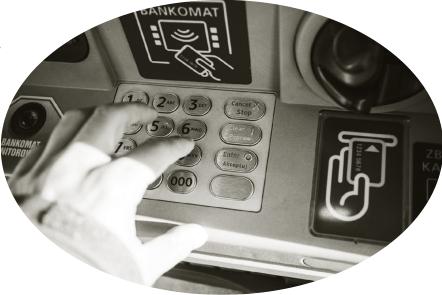
That could be the case. James Bessen, an economist at Boston University School of Law, found that as the number of ATMs in America increased fivefold from 1990 to 2010, the number of bank tellers also grew. Bessen believes that ATMs drove demand for consumer banking: No longer constrained by a branchs limited hours, consumers used banking services more frequently, and people who were unbanked opened accounts to take advantage of the new technology. Although each branch employed fewer tellers, banks added more branches, so the number of tellers grew overall.
And as machines took over many basic cashhandling tasks, the nature of the tellers job changed. They were now tasked with talking to customers about products—a certificate of deposit, an auto loan—which in turn made them more valuable to their employers. Therefore, as Bessen said, “Its still not clear that automation in the restaurant industry will lead to job losses.”
在日本長崎縣外一家名為Henn-na的餐廳里,游客們看到了一種奇特的景象:一排人形機器人在為顧客準備食物,這種景象與《終結者》中的情節有點兒相似。機器人“主廚”名叫安德魯,這個名字顯得不那么適合;他擅長制作大阪燒(一種日式煎餅)。只見他揮起兩條長長的手臂,在一個金屬碗里攪拌面粉,再將面粉倒在一個炙熱的烤架上。在等待面糊烤熟之時,他用日語開心地說著他有多喜歡自己的工作。與此同時,他的機器人同事們在炸甜甜圈、把軟冰淇淋層層擠進甜筒里以及調制飲料。
這家餐廳由H.I.S.公司負責經營,公司旗下還有一家位于附近的酒店,也由機器人為客人辦理住宿,并幫助他們搬運行李。H.I.S.公司這種自動化發展趨勢在一定程度上是出于所需。日本的人口正在不斷減少,但經濟正在蓬勃發展;目前,日本的失業率已降低到史無前例的2.8%。“在日本這樣的國家,使用機器人有非常重要的意義,因為在這里,員工非常匱乏。”首席執行官澤田秀雄(Hideo Sawada)說。
澤田秀雄推測,在未來五年內,日本酒店中70%的工作將實現自動化。“只需要一到兩年的時間,就可以收回成本。”他說道,“但由于機器人可以一天工作24小時,而且不需要休假,因此最終看來,使用機器人會更加合算。”
這看起來像是最適合——或許是只適合——日本未來的一種設想。但麥肯錫全球研究院合伙人邁克爾·崔表示,餐飲服務以及酒店行業的許多任務都很容易實現自動化。邁克爾·崔在最近的研究中預測,在美國的餐廳和酒店里,工人們54%的操作都可以通過現有技術實現自動化,因而使其成為美國第四大可自動化行業。
事實上,機器人在美國早已被應用。加州雷德伍德城有一家名為Chowbotics的公司,其生產的就是一款名為Sally的四方形機器人,她可以為通過觸屏設備下單的用戶制作沙拉。在帕洛阿爾托(美國舊金山附近城市)的一家咖啡館里,我親眼目睹她把萵苣、玉米、大麥和些許不慎搗碎的圣女果丁放進碗里。現在,美國幾十家酒店都應用了一款名叫Botlr的機器人管家,其工作主要是為客人增添毛巾以及洗漱用具。
還有一款名叫Flippy的機器人,每小時可以制作150個漢堡。從表面上看,這不禁令人擔憂。美國經濟的發展并不像日本那樣一路高歌,其中,近年來為數不多的亮點之一就是餐廳和酒店為人們增加了就業機會,而且增加的數量比其他任何行業都要多。事實上,這一增長緩解了自動化對于其他行業的沖擊。餐飲和酒店兩大行業如今能夠解決1,370萬美國人的就業,與2000年相比增加了38%。自2013年以來,與制造業相比,它創造了更多的就業崗位。
在過去,這些新崗位似乎并不會受到機器人大軍的威脅,因為它需要人與人的接觸,而這在制造業或采礦業中卻不是必須的。當點咖啡或入住酒店時,人們需要與他人進行互動——或者我們認為應是如此。將機器人引入服務行業的公司則認為,我們會愿意犧牲與精力充沛的咖啡師和見多識廣的前臺所建立的那些人際關系,從而換取更高的效率。他們也相信,增加機器人并不一定意味著人類工作崗位的減少。
機器人已經出現在美國的餐廳和酒店之中,原因與他們首次進入工廠車間時一樣。據波士頓咨詢集團稱,近年來,機器的成本大幅下降(即便是那些復雜精密的機器),自2005年以來已經下降了40%。與此同時,由于一些城市和州通過了提高最低工資的法律條款,勞動力成本正在逐漸上升。
溫迪國際快餐連鎖集團(Wendys)、麥當勞以及美國面包連鎖品牌Panera正在全國各地安裝自助販賣亭,可以讓顧客在點餐時甚至都不用與員工交談。星巴克鼓勵顧客使用移動應用下單;現在,通過這種方式進行的交易占銷售總額的10%。這些自助販賣亭早期所取得的成功表明,至少在訂購快餐的時候,相比高接觸服務,顧客更看重的是速度。
科技淘汰了舊的工作崗位,但也創造了新的工作。在美國加州山景城的Zume披薩店,我看到了機器人的流水作業,他們在面團上撒上醬汁,再把餡餅放到烤箱里。Zume得益于其在自動化方面的早期投資,勞動力成本只占預算支出的10%,而對于一個普通的餐廳,這一比例則為25%。Zume給雇傭工人的工資和福利都高于行業的平均水平;此外,Zume還為員工提供編碼和數據科學方面的學費補助及輔導。弗里德姆·卡爾森原是廚房的一名工作人員,在那里,她與機器人一起辛勤工作,如今,她已經被提升為“廚房項目管理員”,并且正在學習使用為Zume披薩計算營養成分的軟件。
然而,過渡到一種新型的工作并不是那么容易,而且對于從事服務行業的許多人來說,這可能尤其困難。技術變革后出現的新工作所需要的技能往往是下崗工人所不具備的。大學教育能夠幫助工人免受自動化的影響,培養他們的專業知識、判斷力以及解決問題的能力,而這正是機器人所無法比擬的。然而,根據美國勞工統計局的數據統計,在配制食物以及相關的服務行業中,近80%的工人僅擁有高中或以下的學歷。
對于工人們來說,寄希望于自動化以推動餐飲服務及酒店行業的持續繁榮發展,可能是他們更好的選擇。在Panera工作的赫斯特告訴我,憑借新增添的自助販賣亭以及在線訂購應用,其連鎖店現在能夠處理更多的訂單,這就意味著他們需要增加員工以滿足客戶的需求。星巴克公司表示,使用應用程序下單的顧客,回頭率要比通過傳統方式購買的顧客高,而在線訂購所帶來的更高效率也極大地提高了高峰時段忙碌的店面內的銷售額。自2015年推出應用程序之后,星巴克2016年在美國的員工數量比前一年高出了8%。
當然,對于餐廳和酒店的員工來說,自動化能否實現凈利潤,而不僅僅是連鎖企業之間競爭的優勢所在,將取決于一點,那就是優化的客戶體驗是否會讓美國人更愿意外出就餐并下榻酒店,而不是選擇自備午餐或是在愛彼迎(美國短租平臺)上找一家住宿。
情況可能就是如此。波士頓大學法學院經濟學家詹姆斯·貝森發現,1990年至2010年間,美國自動取款機的數量增加了五倍,而銀行出納員的數量也在增加。貝森認為,自動取款機拉動了消費者對銀行業務的需求:不再受銀行網點工作時間的限制,消費者使用銀行服務的頻率增加了,而沒有銀行賬戶的人則利用新技術開設了賬戶。盡管每個網點的出納員數量都有所減少,但銀行開設了更多的分行,因此出納員的數量總體上反而增加了。
而且,由于機器能夠承擔更多基本的現金處理任務,出納員的工作性質就發生了變化。他們現在的任務是為客戶講解產品——比如一份存款證明,或者一個汽車貸款——而這反過來又使他們對于雇主的價值有所提升。因此,正如貝森所說,“目前還不清楚餐飲行業的自動化是否會導致失業。”
1. passing: 輕微的。
2. incongruously: // 不適當地,不相稱地。
3. inadvertently: 非故意地,無心地。
4. butler: 男管家;toiletries: 梳妝用品。
5. flip: 在快餐店制作食物(如漢堡包)。
6. ostensibly: 表面地,假裝地。
7. horde: 一大群。
8. chipper: 活潑的,精力充沛的。
9. kiosk: 小亭,售貨亭。
10. obviate: 排除,消除。
11. perk: 特殊待遇。
12. reimbursement: 退還,賠償。
13. upheaval: 劇變,動亂。
14. insulate: 使隔絕,使免受影響(常與from, against連用)。
15. brown-bagging: 自備午餐,自帶瓶酒上餐廳。